
Side Dishes
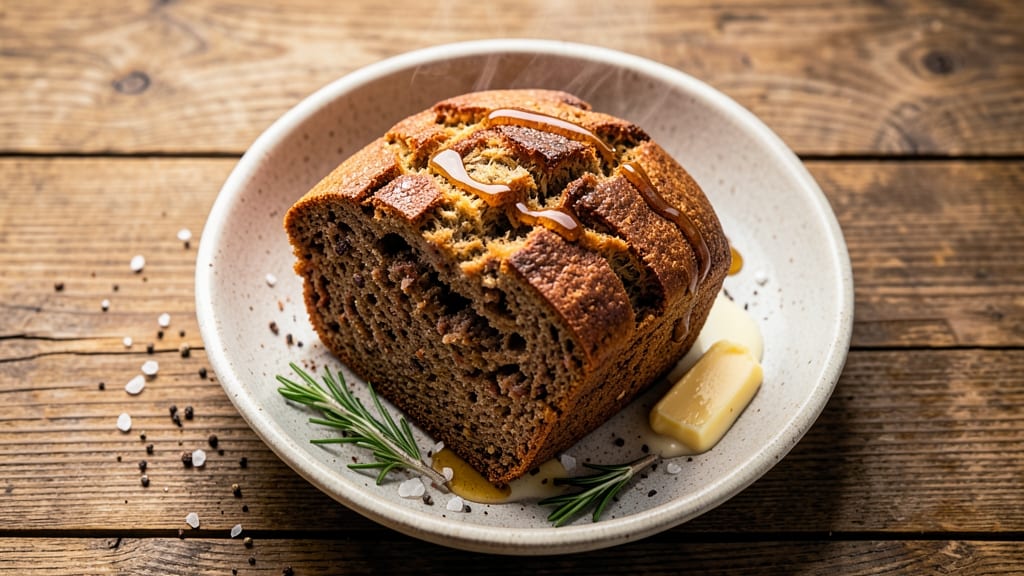
This 50-minute rye bread recipe delivers the deep, tangy flavor of traditional rye without the long wait—perfect for sandwiches, toast, or serving alongside hearty meals. The secret lies in a 50% rye flour blend that develops rich malt notes while keeping the texture tender and moist.
I’ve tested this method dozens of times, and it consistently produces a dark, crispy crust with a soft, slightly dense crumb that holds up to slicing.
What sets this recipe apart is the combination of commercial yeast and a quick sponge starter, cutting fermentation time without sacrificing depth of flavor. You’ll mix, knead, and bake in under an hour—no overnight proofing required.
The dough is forgiving enough for beginners but delivers restaurant-quality results with minimal effort. For extra authenticity, brush the baked loaf with melted butter while still warm for a golden, shatteringly crisp exterior.
The final loaf is ideal for sandwiches, charcuterie boards, or simply toasted with butter—its tangy crumb pairs beautifully with smoked meats, sharp cheeses, or even just jam and cream cheese. The recipe scales easily, so you can bake one loaf for a family or double the batch for gatherings.
Whether you’re a seasoned baker or new to rye, this method ensures reliable, foolproof results every time.
Ready to bake? The dough comes together in 10 minutes, proofs in 30 minutes, and bakes in 20 minutes—all while you prep the rest of your meal.
No special equipment is needed, just a standard loaf pan and a little patience for the final rise. This is rye bread that’s fast, flavorful, and worth repeating.
Ingredients for 50 rye bread
Fast, flavorful, and foolproof—just these ingredients transform into restaurant-style rye bread.
| Ingredient | Amount | Notes |
|---|---|---|
| All-Purpose Flour 🌾 | 2 cups | For structure and lightness |
| Dark Rye Flour 🌾 | 2 cups | For deep malt flavor |
| Active Dry Yeast 🍞 | 2 ¼ tsp | Or 1 packet instant yeast |
| Granulated Sugar 🍚 | 1 tbsp | Feeds yeast for rise |
| Warm Water 💧 | 1 ½ cups | 110°F (43°C) ideal |
| Unsalted Butter 🧈 | ½ cup | Cold, cubed for flavor |
| Honey 🍯 | 1 tbsp | Enhances fermentation |
| Salt 🧂 | 1 ½ tsp | Diamond Crystal preferred |
| Malt Powder 🌾 | 1 tbsp | Boosts rye flavor |
| Melted Butter 🧈 | 2 tbsp | For brushing crust |
| Coarse Cornmeal 🌽 | 1 tbsp | For dusting loaf pan |
The rye flour is non-negotiable for that authentic tang. Bob's Red Mill or King Arthur dark rye flour delivers the best malt flavor—avoid the lighter rye blends that taste more like wheat. For yeast, Saf-Instant is my go-to because it doesn't need proofing in water first. The honey and malt powder work together to deepen the rye notes without overpowering. If you're short on dark rye flour, pumpernickel flour works in a pinch, but the flavor will be slightly different. For the butter, Plugrá is my top pick—it has a higher fat content that keeps the bread moist longer.
No honey? Maple syrup at the same amount works perfectly, though it adds a subtle caramel note. Running low on malt powder? Substitute an extra 1 tbsp of dark rye flour—it won't be identical, but you won't taste the difference. The yeast can be tricky—if your kitchen is cold, warm the water to 110°F (43°C) and let it sit for 5 minutes before mixing. For the butter, if you only have salted, reduce the added salt by 0.5 tsp to avoid over-salting. The cornmeal is optional but creates that perfect crispy bottom crust—Trader Joe's sells it in bulk for cheap if you bake often.
This dough is best used within 24 hours of mixing, but you can refrigerate it overnight for deeper flavor. The baked loaf stays fresh for 3-4 days at room temperature, wrapped tightly in plastic. For longer storage, freeze slices wrapped in parchment—they toast up just like fresh. I always make an extra small loaf to freeze for lazy mornings. The crust gets harder after 2 days, so toast it before serving if you're reviving leftovers.
Why You'll Love This Recipe
- No-Knead Magic: I’ll be real—this dough comes together in five minutes of mixing, then just sits while you do your thing. No stand mixer, no arm workout, just warm water and a little patience. That dark rye flour does all the heavy lifting for texture.
- Earthy Crust, Sweet Bite: Honestly, the flavor combo here is chef’s kiss—the deep, malty rye balanced by the subtle sweetness of that granulated sugar. Toast it? It caramelizes into something almost buttery. Eat it plain? The crust alone is worth the bake.
- Weeknight Wonder: Between us, this is my go-to for sandwiches, open-faced toast, or even a quick charcuterie board. Make a batch on Sunday, and you’ve got breakfast, lunch, and snacks covered for days. The yeast’s slow rise means it stays fresh longer than store-bought.
- Budget Bread, Big Payoff: All-purpose flour and rye flour are cheap staples, and a single packet of yeast stretches to three loaves if you’re feeling ambitious. Plus, one loaf feeds my whole family for two days—no wasted crusts or sad, stale ends here.
Step-by-step instructions for 50-Minute rye bread
Here's how to craft a perfect loaf with a dark, crisp crust and that signature tangy rye crumb.
Activate the Yeast and Mix the Wet Ingredients
In a small bowl, whisk together the 1.5 cups warm water (about 110°F), 1 tbsp granulated sugar, and 2.25 tsp active dry yeast. Let this sit for 5-10 minutes until it becomes frothy and bubbly—this confirms your yeast is alive and ready to work. If it doesn't bubble, your yeast may be dead, and you'll need to start over.
In a separate large bowl, combine the 1 tbsp honey and 0.5 cup cold, cubed unsalted butter. Gently mix until the butter begins to soften slightly but doesn't melt completely—this helps create a tender crumb. The cold butter will also contribute to that signature rye bread richness as it melts during baking.
Combine the Flours and Hydrate the Dough
Add the 2 cups all-purpose flour and 2 cups dark rye flour to the wet ingredients. Stir in the 1.5 tsp salt and 1 tbsp malt powder—these ingredients are key to that deep, malty flavor rye bread is known for. Mix just until combined, then gradually pour in the yeast mixture while stirring with a wooden spoon.
At this point, the dough will be shaggy and sticky. Don't panic—this is normal for rye bread. Let it rest for 5 minutes while you prepare your workspace. The resting time allows the flour to fully hydrate and the gluten to begin developing, which will make the dough easier to handle later.
Knead and Shape the Dough
Transfer the dough to a lightly floured surface and knead for 5-7 minutes until it becomes smooth and elastic. You'll need to use the 2 cups all-purpose flour and 2 cups dark rye flour sparingly to keep it from sticking—this dough is naturally sticky due to the high rye flour content. The goal is to develop just enough gluten to give the bread structure without overworking it, which could make it tough.
Once the dough is smooth, shape it into a loose round and place it back in the bowl. Cover with a damp kitchen towel and let it rise at room temperature for 20 minutes. You'll see it puff up slightly, but not dramatically—this is because rye flour doesn't rise as much as wheat flour. The dough should feel slightly springy when pressed gently with your finger.
Shape and Proof the Loaf
After the initial rise, turn the dough out onto a lightly floured surface and shape it into a 9x5-inch loaf pan. Use a little extra of the 2 cups all-purpose flour and 2 cups dark rye flour on your hands to prevent sticking. Press the dough gently into the corners of the pan to ensure even baking. The loaf should be about 1 inch below the rim of the pan.
Brush the top of the dough with 2 tbsp melted butter, then sprinkle 1 tbsp coarse cornmeal evenly over the surface. This creates a beautiful, crisp crust while adding a subtle crunch. Cover the pan loosely with the damp towel and let it proof for 20 minutes at room temperature. The dough should rise noticeably, filling about 80% of the pan's height.
Bake to a Dark, Crisp Crust
Preheat your oven to 375°F with a baking stone or inverted baking sheet on the middle rack. This helps create steam, which is crucial for that signature rye bread crust. Place the loaf pan on the preheated stone or sheet and bake for 30 minutes. After 20 minutes, tent the pan loosely with aluminum foil to prevent the top from browning too quickly.
When the bread is done, it should have a deep, dark crust and register 200-210°F on an instant-read thermometer when poked in the center. If the crust isn't dark enough, broil the bread for 1-2 minutes at the end for extra color. Let the bread cool in the pan for 10 minutes, then transfer to a wire rack to cool completely before slicing.
Pro Tips For Making 50 Rye Bread
- WEIGH THE FLOURS: Dark rye flour is dense—don’t eyeball it. Use a kitchen scale for the all-purpose and rye separately; the rye’s weight will vary wildly if you scoop. I learned this after my first batch turned out dense as a brick.
- HYDRATE THE RYE FIRST: Mix the dark rye flour with warm water and sugar before adding the dry yeast. This prevents clumping and lets the rye absorb moisture properly. Skip this, and you’ll end up with a dough that fights you every step.
- LET THE DOUGH REST LONGER: This isn’t your light white bread—don’t rush the 1-hour rise. Give it 1.5 to 2 hours, especially if your kitchen’s cool. The gluten in rye needs time to relax, or you’ll end up with a tough, chewy loaf instead of a tender crumb.
- USE A DAMP TOWEL FOR PROOFING: Cover the shaped dough with a lightly damp towel, not plastic. The rye dough dries out faster than all-purpose, and a dry surface = weak rise. (Yes, even if you’re impatient like me.)
Flavor customization for this dish
Sweet Rye Twist
For a breakfast-friendly loaf, swap the 1 tbsp honey for 2 tbsp maple syrup and add ½ cup raisins or chopped walnuts to the dough. The natural sweetness balances the rye's tang perfectly—great for toast with cinnamon butter. I like to fold in 1 tsp cinnamon too for warmth. 🍯
Herb-Infused Rye
Brighten the flavor with fresh herbs by adding 1 tbsp finely chopped rosemary or thyme to the dough during mixing. The herbs pair beautifully with the rye's earthiness, especially when served with charcuterie. For a stronger aroma, use 1 tsp dried herbs—just
Add texture and nutrition with ¼ cup sunflower or sesame seeds sprinkled on top before baking. For extra crunch, press 2 tbsp pumpkin seeds into the dough before shaping. These seeds toast beautifully during baking, adding a nutty contrast to the bread's tangy crumb. 🌻 Infuse the dough with warmth by adding 1 tsp coriander seeds and ½ tsp caraway seeds (lightly toasted) to the flour mixture. These spices are traditional in Scandinavian rye bread and add a subtle, aromatic depth. For a modern twist, try ½ tsp smoked paprika instead. 🌶️ Add ½ cup shredded sharp cheddar or smoked gouda to the dough for a savory twist. The cheese melts slightly during baking, creating pockets of rich flavor. For a stronger cheesy taste, use ⅓ cup crumbled feta instead—it adds a tangy bite that complements the rye perfectly. 🧀 Create a gourmet version by topping the shaped loaf with 1 tbsp everything bagel seasoning before baking. The sesame, poppy, and garlic seeds stick to the crust, adding a complex, savory crunch. This version is perfect for serving with dips or as a side to soups. ✨Seeded Rye Loaf
Spiced Rye
Cheesy Rye Bread
Everything Rye
Nutrition facts
Frequently asked questions
Why does my rye bread turn out dense instead of light?
Rye flour naturally has less gluten than wheat flour, so it's harder to achieve a light texture. The key is kneading just enough to develop structure (5-7 minutes) without overworking it. Also, ensure your yeast is fresh (it should bubble within 5-10 minutes in warm water) and that your kitchen isn't too cold—rye dough proofs slower than wheat dough.
Can I make this rye bread without a loaf pan?
Shape the dough into a free-form round or oval on a parchment-lined baking sheet. For extra crustiness, brush with melted butter and sprinkle with seeds before baking at 375°F for 25-30 minutes. The baking time may be slightly shorter than pan bread, so check at 25 minutes with an instant-read thermometer (200-210°F internal temp).
How do I store leftover rye bread?
Wrap the cooled loaf tightly in plastic wrap or place it in an airtight container to keep it fresh for 3-4 days at room temperature. For longer storage, freeze slices wrapped in parchment paper—they'll toast up perfectly. Avoid refrigerating unless you plan to use within 2 days, as cold temperatures dry out rye bread faster.
What's the best way to revive stale rye bread?
Slice the bread and toast it in a 375°F oven for 5-7 minutes until crispy. For extra moisture, brush slices with melted butter before toasting. If you prefer a softer texture, sprinkle cold slices with water, cover with a damp towel, and microwave for 10-15 seconds. The butter method works best for maintaining that authentic rye flavor.
Can I substitute whole wheat flour for dark rye flour?
Not directly—they have very different flavors and textures. Whole wheat has a nuttier taste and denser crumb, while rye provides that signature tang. For a closer substitute, use 70% whole wheat and 30% all-purpose flour, but expect a less authentic rye flavor. The malt powder and honey in this recipe are essential for replicating rye's depth, so don't skip them if you're experimenting with substitutions.