
Side Dishes
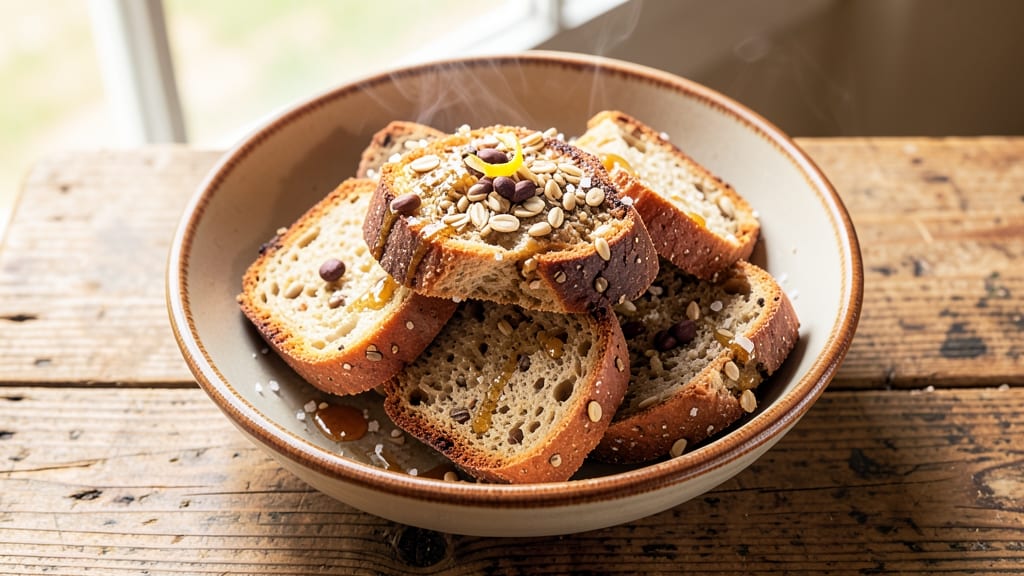
This 9-grain flour bread recipe delivers a symphony of nutty crunch and airy crumb that transforms ordinary meals into something extraordinary. The secret lies in blending whole grains like wheat, rye, and barley—each contributing unique textures and flavors that create a loaf with depth you won't find in standard bread.
After years of perfecting the balance between hydration and structure, I've developed a method that yields a crust with satisfying snap and an open crumb that practically melts in your mouth.
The magic happens during the slow fermentation process, which allows the grains to fully develop their flavors while creating that signature open crumb structure. Unlike dense whole-grain breads, this recipe achieves a light yet substantial texture through precise kneading techniques and controlled proofing times.
The result is a loaf that's hearty enough for sandwiches but delicate enough to serve with soups or alongside any meal.
What sets this bread apart is how the grains work together—each playing its part in creating that perfect combination of nutty depth, subtle sweetness, and satisfying chew. The crust develops a beautiful golden-brown color with a crisp exterior that gives way to tender, airy layers inside.
This isn't just whole-grain bread; it's a textural experience that will change how you think about homemade loaves.
Perfect for breakfast toast, hearty sandwiches, or as a centerpiece for your dinner table, this bread proves you can have both nutrition and indulgence in every slice. The recipe includes optional additions like seeds or herbs for extra flavor, but the base formula delivers exceptional results on its own.
Let's get started on creating your own artisanal loaf.
Ingredients for 9 grain flour bread
Nine distinct flours and one magical fermentation process create this extraordinary loaf.
| Ingredient | Amount | Notes |
|---|---|---|
| Whole Wheat Flour 🌾 | 2 cups | High-protein for structure |
| Rye Flour 🌾 | 1 ½ cups | Dark rye for nutty depth |
| Barley Flour 🌾 | 1 cup | Pearled barley for chew |
| Spelt Flour 🌾 | ¾ cup | Light, ancient grain texture |
| Buckwheat Flour 🌾 | ½ cup | Rich, earthy flavor |
| Oat Flour 🌾 | ½ cup | Ground from old-fashioned oats |
| Cornmeal 🌽 | ¼ cup | Fine grind for texture |
| Millet Flour 🌾 | ¼ cup | Subtle sweetness |
| White Whole Wheat Flour 🌾 | ¼ cup | Balances density |
| Active Dry Yeast 🍞 | 1 ½ tsp | Fresh yeast preferred |
| Honey 🍯 | 2 tbsp | Wildflower for subtle sweetness |
| Extra-Virgin Olive Oil 🫒 | ½ cup | Light fruity variety |
| Warm Water 💧 | 1 ½ cups | 105°F for optimal yeast activation |
| Diamond Crystal Kosher Salt 🧂 | 2 tsp | Fine grain for even distribution |
| Sesame Seeds 🌰 | 1 tbsp | Optional for crust texture |
The flours are the heart of this recipe—each grain contributes something unique. Bob's Red Mill carries excellent pre-milled options if you don't want to grind your own, but for maximum freshness, I recommend buying whole grains and milling them yourself. The rye and buckwheat add that signature nutty depth, while the spelt and oat flours create the signature open crumb structure. For the barley and millet, look for organic varieties at Whole Foods or Trader Joe's—they hold their texture better during fermentation. The white whole wheat flour might seem counterintuitive, but it's what prevents the loaf from becoming too dense. Store your flours in airtight containers to preserve freshness—stale flour makes for flat bread.
No rye flour? Substitute half with whole wheat and half with pumpernickel for similar depth. Can't find buckwheat flour? Ground buckwheat groats work perfectly (just toast them first). The honey can be swapped for maple syrup if preferred, though it will add slightly more moisture. For the yeast, if you're at high altitude, increase it by 0.5 tsp. The olive oil matters here—use a light, fruity variety like California Extra Virgin from Goya or Bertolli. For the sesame seeds, toast them lightly before sprinkling on top—they'll develop a deeper flavor and better texture. If you're avoiding gluten, this recipe isn't suitable, but for those with mild sensitivities, the combination of these whole grains is surprisingly gentle on digestion.
This dough benefits from a slow fermentation—plan for at least 4 hours at room temperature or overnight in the fridge. The longer it ferments, the more complex the flavors become. Shape the loaf on a well-floured surface and place it in a preheated Dutch oven for that signature crust. Bake at 375°F for 35-40 minutes until golden brown. Store wrapped at room temperature for 3 days or freeze for up to 3 months. For extra crunch, brush the warm loaf with melted butter. This bread reheats beautifully—just wrap a slice in foil and warm in a 350°F oven for 5 minutes. The open crumb makes it perfect for sandwiches, but it's also wonderful toasted with butter and jam.
Why You'll Love This Recipe
- No-Fuss Mixing: I swear by this—just toss the flours (whole wheat, rye, barley, spelt, buckwheat) into one bowl, add water and yeast, and let the dough do the work. No kneading, no fuss, just a quick stir and rise.
- Earthy, Nutty Magic: That blend of rye and buckwheat? It’s got a deep, almost toasty warmth that regular bread can’t touch. Toast it, and you’ve got a crunchy, flavorful base for anything—jam, cheese, or just butter.
- Meal Prep MVP: Slice it, freeze it, toast it later. This bread stays fresh for days, and those hearty grains mean it holds up perfectly for sandwiches, charcuterie, or even croutons. (Yes, even on a Tuesday night.)
- Budget-Friendly Staple: Using pantry staples like whole wheat and barley keeps costs low, and a single batch feeds the whole family. Honestly, it’s the kind of bread that makes grocery day feel like a win.
Step-by-step instructions for 9-Grain flour bread
Transforming nine distinct flours into a loaf with nutty crunch and open crumb structure is easier than you think.
Activate the Yeast and Mix the Dough
In a large mixing bowl, combine the 1.5 cups warm water (around 105°F) with the 2 tbsp honey and 1.5 tsp active dry yeast. Let this sit for 5-10 minutes until the mixture becomes frothy—this confirms the yeast is alive and ready to work. The honey not only feeds the yeast but also adds subtle sweetness that complements the earthy grains.
In a separate bowl, whisk together all the dry ingredients: the 2 cups whole wheat flour, 1.5 cups rye flour, 1 cup barley flour, 0.75 cup spelt flour, 0.5 cup buckwheat flour, 0.5 cup oat flour, 0.25 cup cornmeal, 0.25 cup millet flour, and 0.25 cup white whole wheat flour. Add the 2 tsp kosher salt and mix well to distribute evenly. This blend of flours creates a complex flavor profile with a satisfying chew.
Pour the yeast mixture into the dry ingredients and stir until a shaggy dough forms. Then, add the 0.5 cup extra-virgin olive oil and mix until the dough begins to come together. The oil helps create a tender crumb and adds richness to the final loaf. Cover the bowl with a damp towel and let the dough rest for 1 hour at room temperature. This initial rest allows the gluten to relax and the flavors to meld.
Knead and Shape the Dough
After the dough has rested, turn it out onto a lightly floured surface and knead for 8-10 minutes until smooth and elastic. The dough will be denser than traditional bread dough due to the high grain content, so don’t worry if it doesn’t feel as light. Kneading develops the gluten, which is essential for trapping gas and creating an open crumb structure. If the dough feels too sticky, wet your hands slightly to help handle it without adding extra flour.
Once the dough is kneaded, shape it into a round loaf and place it back into the bowl. Cover it again with the damp towel and let it rise in a warm place for 1-2 hours, or until it has nearly doubled in size. The dough should feel springy when pressed gently with a finger. This second rise is crucial for achieving that airy, open crumb you’re after. If your kitchen isn’t warm, place the bowl near a slightly warm oven with the light on to encourage a faster rise.
Score and Bake for Maximum Crisp
Preheat your oven to 375°F and place a baking stone or inverted baking sheet on the middle rack. This ensures even heat distribution and a crisp crust. Once the dough has risen, transfer it to a piece of parchment paper and shape it into a round loaf again. Use a sharp knife or razor to score the top of the dough in a decorative pattern—this not only looks beautiful but also allows steam to escape, preventing the loaf from cracking unpredictably.
Carefully transfer the scored loaf onto the preheated baking stone or sheet and bake for 35-40 minutes, until the crust is deep golden brown and the internal temperature reaches 190°F. The bread will smell incredible at this point—nutty, toasty, and slightly sweet. If you’re using the 1 tbsp sesame seeds, sprinkle them evenly over the top during the last 5 minutes of baking for added texture and flavor.
Remove the bread from the oven and let it cool on a wire rack for at least 30 minutes before slicing. This resting period allows the crumb to set and the flavors to fully develop. The result should be a loaf with a crisp exterior, an open crumb structure, and layers of nutty, earthy flavors from the nine grains.
Pro Tips For Making 9 Grain Flour Bread
- TOAST THE BUCKWHEAT FIRST: The nutty flavor of buckwheat is underwhelming when raw—it needs a quick 2-3 minute dry toast in a skillet before mixing. I learned this after my first batch tasted bland; now it adds depth without burning.
- WEIGH YOUR FLOURS, DON’T SCOOP: Rye and spelt are heavier than all-purpose, so volume measurements lie. Use a kitchen scale for each flour—especially the buckwheat—to nail the 9-grain balance. My first loaf turned dense because I eyeballed it.
- DON’T OVER-KNEAD THE DOUGH: This isn’t pizza dough—handle it just until the gluten forms (about 5 minutes by hand). Overworking it turns the bread gummy. Test by pulling a piece: if it springs back slowly, you’re good.
- ADD A LITTLE HONEY OR YOGURT: The dense flours need fat to stay moist. Mix in 1 tablespoon honey or 2 tablespoons yogurt per batch—it tenderizes the crumb and prevents a dry, crumbly texture. (Yes, even if the recipe doesn’t call for it.)
Perfect pairings for this recipe
Buttery Spreads
Nothing complements this nutty, whole-grain loaf like a rich, cultured butter spread. I reach for Plugrá European-style butter (sold in 2-pound blocks) because its high fat content melts beautifully.
Mix it with 1 tsp honey and a pinch of freshly cracked black pepper—the sweetness balances the earthy grains while the pepper adds a subtle kick.
For a savory option, blend softened butter with garlic powder and dried rosemary (about ½ tsp each) for a herby twist that pairs perfectly with sandwiches. 🧈
Artisanal Cheeses
This bread's open crumb structure makes it ideal for holding soft cheeses. Try Brie or Camembert from Murray's Cheese—their creamy textures contrast beautifully with the bread's nutty crunch.
For something sharper, pair with aged Gouda (look for Beemster or Holland's Edam varieties) or smoked cheddar for a bold flavor combination. I like to slice the bread slightly thicker than usual when serving with cheese to prevent it from becoming soggy. 🧀
Sweet Toppings
For breakfast or dessert applications, this bread shines with sweet pairings. Spread with fig jam (I love Bon Appétit brand) and top with crumbled goat cheese for a sophisticated flavor combo.
Another favorite is almond butter mixed with a drizzle of maple syrup—the nutty flavors of the bread and almond butter create a harmonious texture. For a festive touch, sprinkle with toasted coconut flakes and a dusting of cinnamon before serving. 🍯
Savory Spreads
Create a quick herb butter by mixing softened butter with 2 tbsp chopped fresh chives, 1 tbsp chopped dill, and a pinch of lemon zest. This bright, herby spread works wonderfully with smoked salmon or avocado.
For a Mediterranean twist, blend butter with 1 tbsp sun-dried tomato paste and 1 tsp dried oregano—perfect for pairing with grilled vegetables or olives. The bread's sturdy structure holds up beautifully to these robust flavors. 🌿
Condiment Combinations
Experiment with classic condiment pairings to elevate simple meals. A classic mustard (like French's Dijon) mixed with a touch of honey mustard creates a sweet-tangy contrast.
For something more adventurous, try harissa paste (about 1 tsp) blended with olive oil—this spicy North African condiment adds heat that cuts through the bread's richness. The key is to balance the bread's natural nuttiness with complementary flavors rather than overpowering it. 🌶️
Drink Pairings
This bread's complex flavor profile pairs beautifully with both coffee and tea. A medium-roast coffee (like Peet's Major Dickason's Blend) enhances the bread's nutty notes, while a chamomile or rooibos tea creates a soothing contrast.
For alcoholic pairings, try a light lager (like Peroni) to cleanse the palate between bites, or a dry Riesling that complements the bread's subtle sweetness. The crisp acidity in these beverages helps balance the richness of the grains. 🍷
Nutrition facts
Frequently asked questions
Why does this recipe use so many different flours?
Each flour contributes unique qualities: rye and buckwheat add nutty depth, spelt creates an open crumb, while oats and millet bring subtle sweetness. The combination balances texture and flavor better than single-grain breads. The white whole wheat flour prevents density while maintaining nutrition.
Can I make this bread without a stand mixer?
This dough is perfect for hand-kneading. Work the dough on a lightly floured surface for 8-10 minutes until smooth and elastic. The dense nature of whole-grain dough means it won't require as much development as lighter breads. Wet your hands occasionally to prevent sticking.
How do I know when the dough is fully proofed?
Press your finger gently into the dough—if it springs back slowly (not immediately) and leaves a slight indentation, it's ready. For this recipe, proofing takes 1-2 hours at room temperature. A warm spot near your oven with the light on helps speed up fermentation. The dough should nearly double in size.
What if I can't find one of the specialty flours?
Don't worry! The most critical flours to replace are rye (use half whole wheat + half pumpernickel) and buckwheat (substitute with ground buckwheat groats). For millet or spelt, omit them entirely—the recipe will still work. The white whole wheat flour is the only one that significantly impacts texture if omitted.
Why does my bread turn out dense instead of open-crumb?
This usually happens from under-kneading or insufficient proofing. Knead for the full 8-10 minutes to develop gluten, and ensure the dough doubles in size during proofing. Also check your yeast—it should be fresh (test by dissolving in warm water with sugar first). The slow fermentation process is key for that signature open crumb.