
Side Dishes
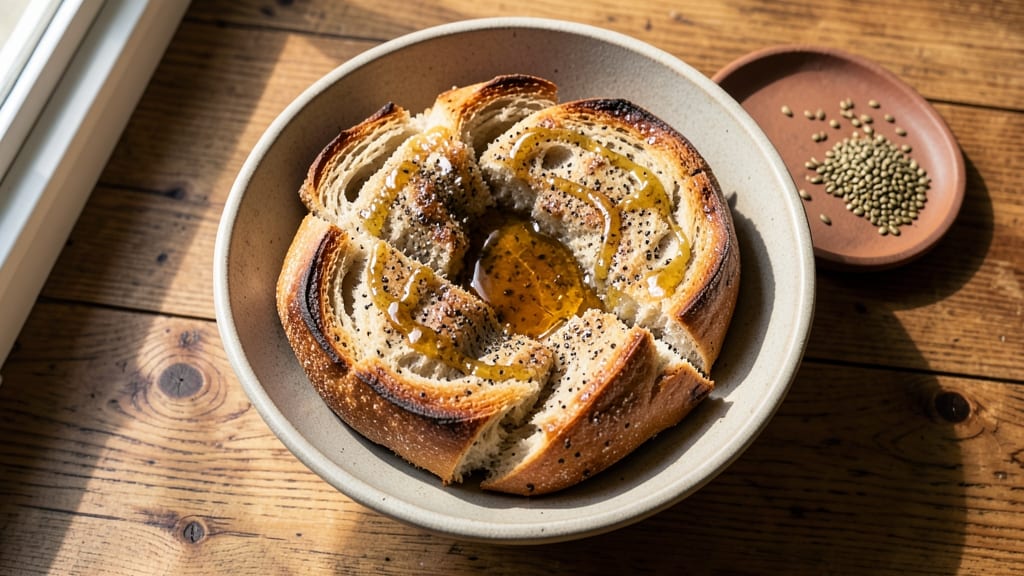
This Ayurvedic bread recipe transforms whole grains and warming spices into a loaf that supports digestion while satisfying the senses. The secret lies in fermenting whole wheat and millet flour with traditional spices like cumin and fennel—ingredients that align with Ayurvedic principles for balancing Vata and Pitta doshas.
Unlike conventional bread, this version incorporates ajwain (carom seeds) for gut-friendly benefits, creating a flavor profile that’s both earthy and subtly sweet.
The dough develops naturally through fermentation, which enhances digestibility and nutrient absorption—no yeast required. Baked until golden with a crisp exterior and tender crumb, this bread pairs beautifully with lentil stews or spiced chutneys, making it a versatile addition to Ayurvedic meals.
The spices not only add warmth but also aid in digestion, turning a simple loaf into a functional food.
What sets this recipe apart is its balance of tradition and simplicity: no specialized equipment, just whole foods and intentional seasoning. The result is a bread that’s nourishing, aromatic, and deeply satisfying—ideal for those seeking both flavor and digestive harmony.
Ready in under 2 hours with minimal effort, it’s perfect for daily meals or special occasions.
For extra depth, consider adding a touch of ghee to the dough or serving warm with a smear of homemade ghee and flaxseeds. This isn’t just bread; it’s a step toward mindful eating, where every bite supports wellness. Let’s bake it together.
Ingredients for ayurvedic bread
Whole grains, fermented warmth, and Ayurvedic spices create a loaf that nourishes body and mind.
| Ingredient | Amount | Notes |
|---|---|---|
| Whole Wheat Flour 🌾 | 3 cups | Stone-ground preferred for texture |
| Millet Flour 🌾 | 1 cup | Adds nutty depth and gluten-free balance |
| Warm Water 💧 | 1 ½ cups | 105°F for optimal fermentation |
| Active Dry Yeast 🍞 | ¼ tsp | For initial fermentation boost |
| Ground Cumin Seeds 🌶️ | 1 tbsp | Freshly toasted for aromatic warmth |
| Ajwain Seeds (Carom) 🌿 | 1 tsp | Digestive benefits, toasted lightly |
| Fennel Seeds 🌿 | 1 tsp | Lightly crushed for subtle anise flavor |
| Honey 🍯 | 2 tbsp | Raw, unprocessed for natural sweetness |
| Salt 🧂 | 1 tsp | Fine sea salt for balanced flavor |
| Ghee 🧈 | 2 tbsp | Clarified butter for richness and binding |
| Flaxseeds 🌰 | 1 tbsp | Ground for omega-3 boost and binding |
| Sesame Seeds 🌿 | 1 tbsp | Toasted for crunch and sesamin flavor |
The foundation begins with stone-ground whole wheat flour—its robust texture and fiber content align perfectly with Ayurvedic principles. For millet flour, Bob's Red Mill or Navitas Organics brands offer finely milled options that blend seamlessly. Cumin, ajwain, and fennel seeds should be sourced from reputable spice merchants like Burlap & Barrel or bulk bins at health food stores. These spices must be freshly toasted in a dry pan for 30 seconds to release their full aromatic potential—pre-ground spices lose potency quickly. The ghee adds richness; Ancient Organics or Organic Valley provide high-quality, grass-fed options that enhance both flavor and digestive benefits.
No whole wheat flour? Spelt flour works beautifully as a 1:1 substitute, though the texture will be slightly denser. Running short on millet? Buckwheat flour adds earthy notes and gluten-free compatibility. Fennel seeds hard to find? Anise seeds provide a similar licorice-like warmth. The honey can be swapped for maple syrup or jaggery—just reduce by 10% to account for moisture differences. For a nutty depth without millet, amaranth flour offers a comparable earthiness. Always toast your spices fresh; pre-toasted seeds from the bulk section at Whole Foods are a convenient shortcut if you're short on time.
This dough ferments best at room temperature for 1-2 hours, developing complex flavors and improved digestibility. Store any unused flour blends in airtight containers with parchment paper between layers to prevent moisture absorption—keeps for up to 3 months in a cool, dark pantry. The baked loaf maintains freshness for 5 days when wrapped in a clean kitchen towel, or freeze slices for up to 3 months. For extra shelf life, brush the cooled loaf with melted ghee before storing. The spices intensify over time, so this bread actually tastes better the next day as the flavors meld.
Why You'll Love This Recipe
- No-Knead Magic: I swear by this dough—just mix, let it rise, and bake. The millet flour makes it light without the fuss of kneading, and the cumin adds warmth that’s impossible to ignore.
- Earthy Warmth: That toasted cumin scent? It’s like a hug in bread form. The whole wheat and millet blend gives it a nutty depth that pairs perfectly with curries or just butter.
- Meal Prep MVP: Bake a batch on Sunday, slice it, and freeze. Toast straight from frozen—no reheating needed. My lunchbox’s new best friend.
- Pocket-Friendly Power: Whole wheat, millet, and yeast cost pennies compared to artisanal loaves. Plus, it stretches to feed four with leftovers that taste fresh for days.
Step-by-step instructions for Ayurvedic bread
This method balances traditional Ayurvedic principles with modern baking techniques for a digestively harmonious loaf.
Activate the Yeast and Toast the Spices
In a small bowl, combine the 1.5 cups warm water (about 105°F) with the 2 tbsp honey and 0.25 tsp active dry yeast. Let this mixture sit for 5-7 minutes until it becomes foamy—this indicates the yeast is active. If it doesn't foam, your yeast may be inactive, and you'll need to start over.
While the yeast activates, toast the 1 tbsp ground cumin seeds, 1 tsp ajwain seeds (carom), and 1 tsp fennel seeds in a dry skillet over medium heat for 2-3 minutes until fragrant. This step enhances their aromatic qualities and digestive benefits. Let them cool completely before adding to the dough.
Mix the Wet and Dry Ingredients
In a large mixing bowl, combine the 3 cups whole wheat flour and 1 cup millet flour. Add the toasted spices, 1 tsp salt, 1 tbsp ground flaxseeds, and 1 tbsp sesame seeds. Mix these dry ingredients thoroughly to distribute the spices evenly.
Create a well in the center of the dry mixture and pour in the yeast-honey mixture. Add the 2 tbsp ghee and begin mixing with a wooden spoon or dough whisk. Gradually incorporate the 1.5 cups warm water until a shaggy dough forms. The dough should be slightly sticky but not wet—this is ideal for Ayurvedic bread texture.
Knead and Ferment the Dough
Transfer the dough to a lightly floured surface and knead for 8-10 minutes until smooth and elastic. You'll know it's ready when it springs back slowly when pressed. If the dough feels too dry, add 1 tsp warm water at a time; if too sticky, add 1 tbsp flour. Shape the dough into a round loaf and place it in a lightly greased bowl.
Cover the bowl with a damp kitchen towel and let the dough ferment in a warm place for 1.5-2 hours, or until it has doubled in size. The dough should feel light and airy when pressed gently. This fermentation step is crucial for developing the bread's digestibility and flavor—don't rush it.
Shape and Proof the Loaf
Punch down the fermented dough to release air, then shape it into an oval loaf about 3 inches thick. Place the shaped dough on a parchment-lined baking sheet and cover it again with the damp towel. Let it proof for an additional 30-45 minutes until it rises noticeably and feels springy to the touch.
Preheat your oven to 375°F during the final proofing stage. The loaf is ready when it has expanded by about 50% and leaves a slight indentation when pressed gently with a finger. This proofing ensures a light, airy crumb that aligns with Ayurvedic principles of easy digestion.
Bake for a Nutrient-Dense Loaf
Bake the loaf for 30-35 minutes until it develops a deep golden-brown crust and sounds hollow when tapped on the bottom. The internal temperature should reach 190-200°F. Rotate the baking sheet halfway through for even browning—this is especially important for the millet flour, which can brown more quickly than whole wheat.
Remove the bread from the oven and let it cool on a wire rack for 15 minutes before slicing. The cooling period allows the ghee to redistribute, creating a tender crumb. Serve warm with ghee or your favorite chutney for a truly Ayurvedic experience that supports digestive harmony.
Pro Tips For Making Ayurvedic Bread
- Bloom Yeast First: Mix the yeast with warm water and a pinch of sugar (yes, even if the recipe doesn’t call for it) in a separate bowl for 5 minutes until frothy—this guarantees it’s active before combining with the flours. I learned this the hard way when my bread turned dense because the yeast was sluggish.
- Toast the Millet: Lightly dry-toast the millet flour in a dry pan for 2-3 minutes until it smells nutty—this removes raw bitterness and prevents a metallic aftertaste in the bread. Skip this, and you’ll taste it later, trust me.
- Knead Less, Rest More: Mix the dough just until combined, then let it rest for 20 minutes before shaping. Over-kneading develops gluten too much, making the bread tough—this recipe relies on the flours’ natural texture, not brute force.
- Use Cumin Early: Add the ground cumin directly to the dry flours before mixing with water—this distributes it evenly and avoids clumpy pockets of spice. I used to sprinkle it on top after kneading, and it always ended up uneven.
Troubleshooting this dish
Dough Too Sticky
If your dough feels excessively sticky, resist the urge to add more flour—this disrupts the fermentation balance. Instead, wet your hands slightly and knead for an extra 2-3 minutes to develop gluten.
For stubborn stickiness, add 1 tbsp rice flour (not wheat) at a time, as it absorbs moisture without altering texture. Remember, Ayurvedic dough should hold shape but remain slightly tacky for optimal fermentation. 💧
Fermentation Issues
If your dough doesn’t rise after 2 hours, check yeast freshness first—old yeast loses potency. Try increasing fermentation time to 3 hours in a warm spot (like a turned-off oven with the light on).
For extra warmth, place the bowl on top of your fridge. If using millet flour, expect slightly slower fermentation due to its lower gluten content—be patient, as this contributes to the bread's digestibility. 🌡️
Uneven Baking
Millet flour burns faster than wheat, so rotate your baking sheet at halfway point (after 17-18 minutes) for even browning. If the top browns too quickly, tent loosely with aluminum foil.
For a crispier crust, brush the loaf with melted ghee before baking. If the bottom stays pale, increase oven temp to 390°F for the final 5 minutes of baking. 🔥
Crumb Too Dense
Over-kneading or under-fermenting causes dense texture. Aim for 8-10 minutes of kneading—just until the dough springs back slowly when pressed. If your loaf feels heavy, try adding 1 extra tbsp ghee to the dough for moisture retention.
For extra lightness, let the dough ferment 30 minutes longer before shaping. The millet flour adds density, so balance it with proper fermentation time. ✨
Spice Overpowering
Toast spices for exactly 2-3 minutes—any longer burns their delicate flavors. For milder heat, reduce cumin to ½ tbsp and add ½ tsp cardamom instead. If spices still dominate, increase the millet flour to 1.25 cups to dilute the intensity while maintaining Ayurvedic benefits.
The fennel and ajwain provide digestive benefits without overpowering when used in moderation. 🌿
Storage Problems
To prevent staling, store cooled bread in a clean kitchen towel (not plastic) at room temperature for up to 5 days. For longer storage, slice and freeze—wrapped in parchment, it keeps for 3 months.
If bread dries out, revive slices by warming in a 200°F oven for 5 minutes with a damp paper towel. Ghee-coated bread stays fresher longer—brush the crust lightly before storing. ❄️
Nutrition facts
Frequently asked questions
Can I make this Ayurvedic bread without yeast?
Yes! For a yeast-free version, replace the yeast with 1 tbsp active sourdough starter or 1 tsp baking soda combined with 1 tbsp vinegar or lemon juice. The fermentation process will be shorter (30-45 minutes), but the digestive benefits remain. Use this method for a quicker loaf that still honors Ayurvedic principles.
How does millet flour affect the bread's texture?
Millet adds a nutty depth and subtle earthiness while creating a denser, heartier crumb compared to all-wheat bread. The lower gluten content means the dough requires slightly longer fermentation (1.5-2 hours) for optimal rise. For a lighter texture, reduce millet to ½ cup and increase whole wheat to 3.5 cups.
Which spices are best for balancing Pitta dosha?
For cooling Pitta, reduce cumin slightly (½ tbsp) and add ½ tsp coriander seeds or ¼ tsp turmeric instead. Fennel and ajwain remain excellent choices—they're neutral for Pitta while supporting digestion. Always toast spices lightly to preserve their cooling properties.
Can I make this bread gluten-free?
Yes, but with adjustments: replace whole wheat with 2 cups gluten-free oat flour and 1 cup brown rice flour. Add 1 tsp xanthan gum to bind the dough. Ferment for 30 minutes longer (up to 2.5 hours) as gluten-free flours ferment slower. The texture will be slightly denser but still delicious.
How can I use this bread in Ayurvedic meals?
This bread pairs perfectly with moong dal soup (cooling for Pitta) or turmeric-infused lentil stew (warming for Vata). Serve warm with ghee and flaxseeds for breakfast, or use as a base for vegetable sandwiches with mint chutney. The spices make it ideal for balancing meals with heavy proteins.