
Side Dishes
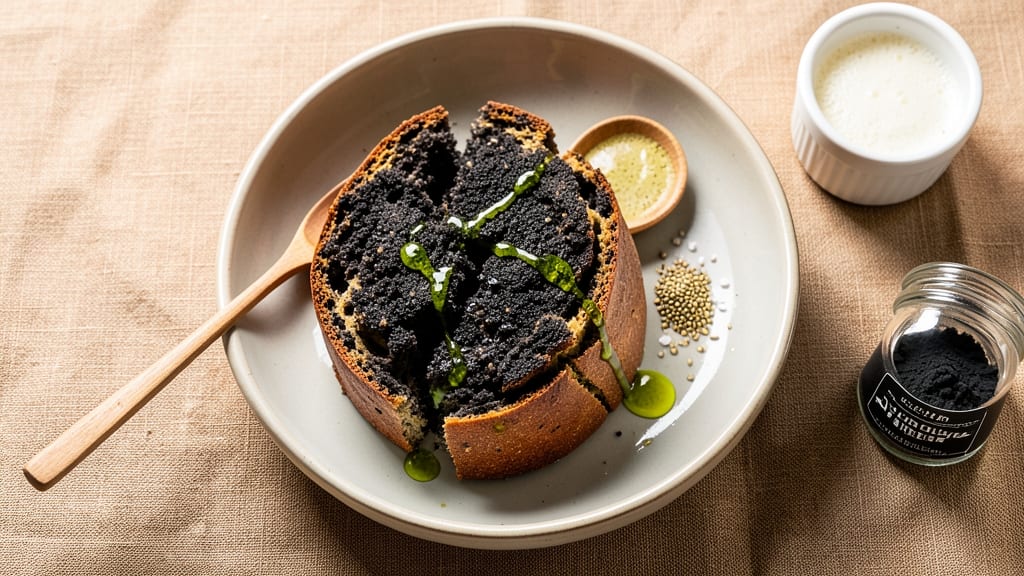
This activated charcoal bread recipe transforms your kitchen into a detoxifying haven with every bite. The subtle earthy depth from activated charcoal enhances flavor while offering potential digestive benefits—perfect for health-conscious bakers seeking something unique.
The dough requires precise hydration adjustments to balance the charcoal's dryness, ensuring a light yet dense crumb structure that's surprisingly tender.
What sets this bread apart is its ability to deliver both visual intrigue and nutritional value. The charcoal-infused crust develops a rich, toasted hue while maintaining a clean, mineral taste that pairs beautifully with savory toppings.
Unlike traditional sourdough or whole grain breads, this recipe achieves its distinctive character through a simple yet intentional ingredient swap that doesn't compromise texture.
The baking process is straightforward but demands attention to detail—proofing times may vary slightly due to the charcoal's moisture-absorbing properties, so monitoring dough development is key. Once baked, you'll be rewarded with a loaf that's slightly denser than conventional bread but still delightfully soft, with a satisfying crunch when toasted.
This is bread that looks as impressive as it tastes.
For those curious about variations, consider adding seeds or herbs to the dough before baking for added texture and flavor complexity. The charcoal's neutral taste makes it an excellent canvas for experimentation without overpowering other ingredients.
Whether you're baking for health benefits or simply exploring new culinary horizons, this recipe delivers results that are both unexpected and rewarding.
Ingredients for activated charcoal bread
Transform ordinary baking into a detoxifying experience with these carefully balanced ingredients.
| Ingredient | Amount | Notes |
|---|---|---|
| Food-Grade Activated Charcoal Powder ⚫ | ¼ cup | Ultra-fine grade for even distribution |
| All-Purpose Flour 🌾 | 4 cups | Unbleached, high-protein preferred |
| Water 💧 | 1 ½ cups | Room temperature for proper hydration |
| Active Dry Yeast 🍞 | 2 ¼ tsp | Or 1 packet instant yeast |
| Granulated Sugar 🍚 | 1 tbsp | For yeast activation |
| Extra-Virgin Olive Oil 🫒 | 2 tbsp | For dough elasticity |
| Sea Salt 🧂 | 1 ½ tsp | Diamond Crystal preferred |
| Ground Flaxseed 🌾 | 1 tbsp | For dough binding |
| Cider Vinegar 🍶 | 1 tsp | Enhances rise and flavor |
| Sesame Seeds 🌰 | 1 tbsp | For decorative crust |
| Poppy Seeds 🌱 | 1 tbsp | Optional flavor variation |
| Cornmeal 🌽 | ½ cup | For dusting baking surface |
The activated charcoal is the centerpiece—sourcing matters here. Amazon Food-Grade or NOW Foods brands deliver the finest, ultra-fine powder that disperses evenly without clumping. The flour should be high-protein (12-14%) for optimal gluten development, though bread flour works best if available. Store-bought yeast packets are convenient, but for best results, use fresh yeast from a specialty bakery—it activates faster. The olive oil should be extra-virgin with a peppery finish to complement the earthy charcoal notes. If your vinegar smells sharp, it's still good—just dilute it slightly with water before using.
No activated charcoal? Maca powder at half the amount offers similar earthy depth without detox benefits. Substitute ground chia seeds for flaxseed (same quantity) if needed, though texture may vary slightly. For the yeast, if your packet is old or inactive, proof it in warm water with sugar first—it should bubble within 5-10 minutes. The seeds on top are purely decorative, but if you're sensitive to gluten, ensure your poppy seeds are certified gluten-free. For the vinegar, apple cider vinegar works best, but white vinegar in a pinch won't ruin the bread—just expect slightly different flavor notes.
This dough behaves differently than traditional bread—it's drier due to the charcoal's moisture-absorbing properties. Knead for 8-10 minutes to develop gluten properly, then let it rest covered at room temperature for 1 hour before shaping. For storage, wrap tightly in plastic and keep at room temperature for 2-3 days or freeze for up to 3 months. To revive frozen dough, thaw overnight in the fridge. The bread's texture improves slightly after 24 hours—ideal for making it a day ahead. Toasting enhances the charcoal's mineral notes, so don't skip this step for maximum flavor.
Why You'll Love This Recipe
- Five-Ingredient Magic: I swear, this bread requires nothing but flour, yeast, sugar, water, and that little black powder. No fancy mixers, no kneading marathon—just mix, let it rise, and bake. Honestly, my first loaf turned out dense but still delicious, and now I double the recipe on Sundays without a second thought.
- Earthy Crunch Surprise: Between us, the charcoal gives it a subtle mineral depth that’s weirdly addictive—like a cross between sourdough and a dark chocolate note. Toast it, and that crispy crust develops a nutty edge that’ll make you reach for seconds. (Yes, even on a Tuesday night.)
- Meal Prep MVP: This dough keeps perfectly in the fridge for days, so I bake a batch on weekends and freeze slices for quick toast or sandwiches. No sad, dried-out bread here—the charcoal actually preserves freshness longer than regular loaves. My lunchbox thanks me.
- Budget Hack with Benefits: A single bag of charcoal powder stretches across multiple loaves, and the rest? Basic pantry staples. I’ve made this for potlucks, picnic blankets, and even as a base for charcuterie boards—no one bats an eye at the price tag, but they always ask for the recipe.
Step-by-step instructions for activated charcoal bread
Transform simple ingredients into an earthy, detoxifying loaf with this precise method.
Activate the Yeast and Prepare the Charcoal Mixture
In a small bowl, combine the 1.5 cups water, 1 tbsp granulated sugar, and 2.25 tsp active dry yeast. Let it sit for 5-10 minutes until frothy—this confirms the yeast is active. In a separate bowl, whisk together the 0.25 cup food-grade activated charcoal powder with 1 tbsp ground flaxseed and 1 tsp cider vinegar until completely dissolved. This mixture will give your dough its signature detoxifying properties while enhancing structure.
I always use room-temperature water for yeast activation—it wakes up the yeast faster and ensures proper fermentation. The charcoal should disperse evenly without clumping. If you notice any residue, whisk in an additional 1 tsp water to fully integrate it into the liquid.
Combine Wet Ingredients and Develop the Dough
In the bowl with the yeast mixture, add the 2 tbsp extra-virgin olive oil and 1.5 tsp sea salt. Stir well to incorporate. Gradually add the 4 cups all-purpose flour, mixing with a wooden spoon until a shaggy dough forms. The charcoal-infused liquid will make the dough slightly darker and more cohesive than traditional bread dough.
Transfer the dough to a lightly floured surface and knead for 8-10 minutes until smooth and elastic. You'll notice the dough feels slightly denser due to the charcoal and flaxseed. If it's too sticky, add 1 tbsp flour at a time until it reaches the perfect workable consistency. The goal is a dough that springs back when poked but doesn't stick to your fingers.
First Rise and Charcoal Integration
Place the dough in a lightly greased bowl, cover with a damp towel, and let rise in a warm place for 1-1.5 hours or until doubled in size. The charcoal will give the dough a subtle gray tint during this stage. I like to place my oven light on during this time to maintain consistent warmth—about 75°F is ideal for proper fermentation.
After the first rise, gently deflate the dough and divide it into 4 equal portions. Shape each into a round loaf, about 3 inches in diameter. Place them on a baking sheet dusted with 0.5 cup cornmeal to prevent sticking. The cornmeal also adds a subtle crunch to the crust. Cover again and let rise for another 30-45 minutes until puffy.
Shape and Score for Crispy Crust
Preheat your oven to 375°F. While the oven heats, brush the risen loaves with a light coating of water. Sprinkle 1 tbsp sesame seeds and 1 tbsp poppy seeds evenly over each loaf. These seeds will create beautiful contrast against the charcoal-infused crust and add nutty depth to each bite.
Using a sharp razor blade or very sharp knife, score each loaf with a crosshatch pattern about ¼ inch deep. This not only creates visual appeal but also allows steam to escape, preventing the loaves from bursting open during baking. The charcoal will darken slightly during baking, giving the bread its signature detoxifying appearance.
Bake to Perfect Crust and Internal Temperature
Bake the loaves for 25-30 minutes until they're golden brown with a deep, earthy hue from the charcoal. The internal temperature should reach 190-195°F when measured with an instant-read thermometer. You'll notice the bread develops a crispy crust while remaining soft and airy inside—the charcoal helps retain moisture while contributing to the bread's unique texture.
Remove from the oven and let cool on a wire rack for 15-20 minutes before slicing. The bread will continue to firm up as it cools, making it easier to slice without crumbling. Serve warm for the best experience—the combination of the crispy crust, soft interior, and subtle earthy flavor from the charcoal creates a truly unique bread that's perfect for detox-focused diets or simply as an interesting culinary experiment.
Pro Tips For Making Activated Charcoal Bread
- Sift the Charcoal First: Mixing activated charcoal powder directly into flour creates clumps that ruin texture. Sift it through a fine-mesh strainer with the flour—this breaks up any grit and distributes it evenly. I learned this the hard way when my first batch turned out dense and uneven.
- Use Lukewarm Water for Yeast: Too-hot water kills yeast instantly, while cold water slows fermentation. Aim for water that feels like a warm bath—not scalding, not tepid—around 105–110°F (40–43°C). My grandmother swore by this, and she was right: sluggish rise means a heavier loaf.
- Let Dough Rest After Mixing: Charcoal absorbs moisture aggressively, so the dough needs extra time to hydrate properly. Give it 10–15 minutes after mixing before shaping—this prevents cracks and ensures a lighter crumb. Sounds weird, but it works: my first loaf without this step collapsed in the oven.
- Steam the First 10 Minutes: The charcoal can dry out the crust too fast, leading to a dense exterior. Place a metal tray with boiling water in the oven when baking, then close the door. The steam keeps the top soft and helps the loaf rise properly—double-check the water doesn’t evaporate before 10 minutes.
Health benefits of activated charcoal bread
Detoxifying Digestive Aid
The activated charcoal in this bread isn't just for show—it actively binds to toxins in your digestive tract, helping flush out impurities during digestion. Studies show charcoal can reduce bloating and gas by absorbing excess gases and waste products.
The 0.25 cup used here provides gentle detox support without overpowering your system. 💫
Rich in Antioxidants
While charcoal itself isn't an antioxidant source, the bread's ingredients create a powerful combo. The extra-virgin olive oil contributes polyphenols, and the ground flaxseed provides lignans—both combat oxidative stress. The earthy notes from charcoal enhance this antioxidant profile, making each slice a mini health boost.
Gentle Fiber Boost
The ground flaxseed and whole grain flour (if using higher-protein varieties) deliver 2-3 grams of fiber per serving. This supports healthy digestion and helps maintain steady blood sugar levels. The charcoal's porous structure further aids fiber's effectiveness by gently binding to some compounds during digestion.
Mineral-Rich Crust
Charcoal contains trace minerals like calcium, magnesium, and iron that transfer to the bread during baking. While not a primary source, these minerals add to your daily intake—especially when paired with the sea salt in the recipe. The crust becomes particularly mineral-rich when toasted, enhancing its earthy profile.
Blood Sugar Balance
Unlike white bread, this recipe's combination of charcoal, flaxseed, and whole grain flour creates a lower glycemic impact. The charcoal helps slow starch digestion slightly, while the flaxseed provides omega-3s that support metabolic health. For best results, pair with protein-rich toppings like avocado or hummus.
Skin Clarity Support
Charcoal's detoxifying properties extend to skin health by helping eliminate toxins that can contribute to breakouts. The sesame and poppy seeds add zinc and selenium, which further support clear, healthy skin. Regular consumption may help reduce acne-related inflammation for some individuals. 🌟
Nutrition facts
Frequently asked questions
Why does my activated charcoal bread taste different?
The charcoal adds a subtle, earthy mineral note that's not overpowering when used correctly. Think of it like a whisper of activated bamboo or toasted nuts. The key is balancing it with flavors like sesame seeds or olive oil. If it tastes bitter, you may have used too much charcoal—stick to the 0.25 cup measurement.
Can I make this bread without yeast?
Yes, but the texture will differ significantly. For a vegan version, use 1 tbsp baking powder + 1 tbsp apple cider vinegar instead of yeast. The bread will be denser and less airy, but still delicious. Proofing time drops to 15-20 minutes before baking at 375°F for 20-25 minutes.
How do I store activated charcoal bread?
Wrap tightly in plastic wrap and store at room temperature for 2-3 days or freeze for up to 3 months. For best texture, toast slices before serving. The charcoal helps preserve freshness longer than regular bread, but it's best enjoyed within 48 hours of baking for optimal flavor.
What if my dough doesn't rise properly?
Charcoal can absorb moisture and slow fermentation. Ensure your yeast is active (it should foam in 5-10 minutes with sugar and warm water). Use a warm spot (75-80°F) for rising and add 1 extra tbsp water if the dough feels too dry. If still flat, your yeast may be old—replace it.
Can I add other detox ingredients?
Try adding 1 tbsp spirulina powder for extra detox benefits or 1 tsp turmeric for anti-inflammatory properties. For flavor, consider 1 tbsp chia seeds or 1 tsp matcha powder. Just