
Side Dishes
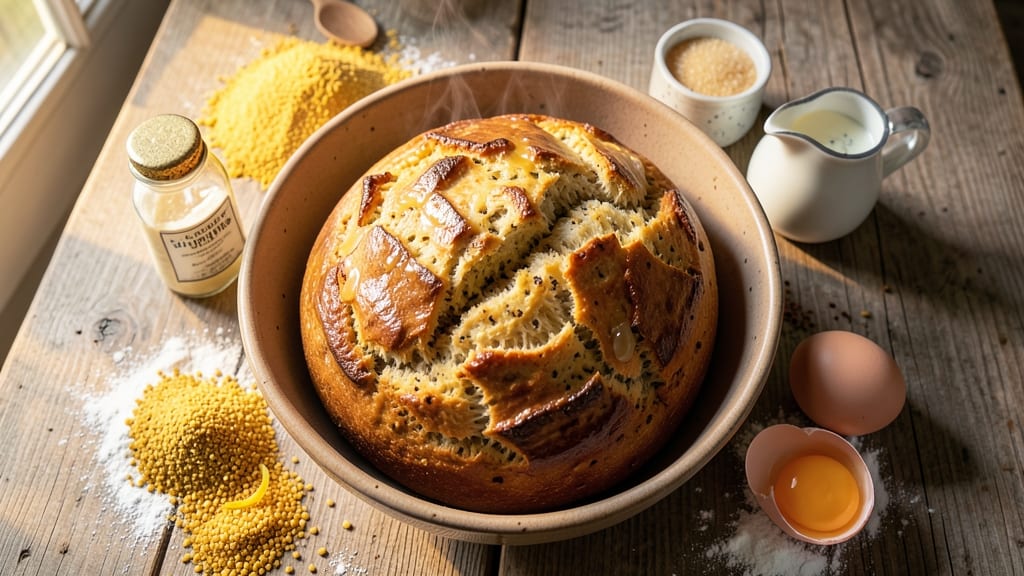
This African corn bread recipe delivers a perfect marriage of tender crumb and crispy top—inspired by West African traditions where cornmeal takes center stage. The secret lies in fermenting the batter overnight, which develops depth of flavor and a light, airy texture that sets it apart from standard cornbread.
What makes this recipe special is the blend of cornmeal, all-purpose flour, and warm spices like nutmeg and ginger, balanced with a touch of sourness from buttermilk or yogurt.
What you’ll achieve is a golden loaf with a crispy exterior that shatters slightly and a moist, slightly dense interior with flecks of cornmeal throughout. The batter’s fermentation process—key to achieving that authentic African touch—also makes the bread more digestible and flavorful.
This recipe is designed to pair beautifully with rich stews, soups, or even as a side to grilled meats, bringing a taste of West Africa to your table.
Baking at a precise 375°F ensures the top gets that coveted crunch while the interior remains tender. The recipe is straightforward but requires patience—letting the batter rest overnight transforms it into something extraordinary.
Whether you’re serving it at a family gathering or enjoying it as a comforting side, this corn bread is a foolproof way to elevate any meal with a touch of cultural authenticity.
For those who love texture contrasts, this recipe delivers in every bite—crispy top, soft crumb, and a subtle tang from the fermented batter. The spices add warmth without overpowering, making it versatile enough to complement a variety of dishes.
Let’s get started on creating this flavorful, tradition-inspired bread that’s sure to become a staple in your kitchen.
Ingredients for african corn bread
West African-inspired ingredients blend for a bread with crispy top and tender crumb.
| Ingredient | Amount | Notes |
|---|---|---|
| Fine Yellow Cornmeal 🌽 | 2 cups | Stone-ground preferred for texture |
| All-Purpose Flour 🌾 | 1 cup | White or whole wheat blend |
| Active Dry Yeast 🍞 | ¼ tsp | Ensure expiration date is fresh |
| Granulated Sugar 🍚 | ¼ cup | Light brown sugar for depth |
| Buttermilk 🥛 | 1 cup | Plain or cultured, room temperature |
| Large Eggs 🥚 | 1 whole | Room temperature for even mixing |
| Unsalted Butter 🧈 | ½ cup | Melted, cooled slightly |
| Ground Nutmeg 🌿 | ½ tsp | Freshly grated for potency |
| Ground Ginger 🌿 | ½ tsp | Freshly ground preferred |
| Salt 🧂 | 1 tsp | Diamond Crystal preferred |
| Baking Powder 🍞 | 1 ½ tsp | Aluminum-free for best rise |
| Warm Water 💧 | ½ cup | 110°F for yeast activation |
The cornmeal is non-negotiable here—Bob's Red Mill stone-ground delivers that authentic West African texture. For the yeast, Saf-Instant works best since it doesn't require proofing, but traditional active dry yeast is fine if you give it the full 10-minute activation in warm water. The buttermilk adds tanginess that balances the sweetness; if you're out, a mix of milk and vinegar works (1 tbsp vinegar to 1 cup milk, let sit 5 minutes). Nutmeg and ginger are the flavor anchors—Penzeys Spices carries high-quality ground versions if you want to splurge, but the grocery store brands are perfectly adequate for everyday baking. The baking powder must be fresh—old powder loses its lift, and you'll end up with a dense loaf.
No buttermilk? Plain yogurt thinned with milk (1:1 ratio) works beautifully. Running short on cornmeal? Substitute half with all-purpose flour, but the texture will be less authentic. The spices can be swapped—cinnamon at half the amount adds warmth if you're out of ginger. For a gluten-free version, replace the all-purpose flour with gluten-free 1:1 blend and use a gluten-free baking powder. The melted butter should be cooled just enough to firm slightly when touched—this prevents the batter from becoming too runny. If your kitchen runs hot, chill the butter 10 minutes after melting to get the perfect consistency.
The batter needs 12-14 hours to ferment at room temperature (70-75°F). If your kitchen is cooler, extend to 16 hours. Once mixed, cover with a damp towel and let it sit in a warm spot—near the oven with the light on works perfectly. For storage, wrap the cooled loaf in plastic and keep at room temperature for 2 days. Freeze slices for up to 3 months—reheat in a toaster or oven until crispy. The bread reheats best at 350°F for 5-7 minutes, wrapped in foil to maintain moisture. Leftovers can also be toasted and frozen for quick breakfast sides.
Why You'll Love This Recipe
- No Yeast Stress: I’ll be real—this bread uses yeast, but don’t panic. Just toss in the dry ingredients, let the buttermilk and yeast do their magic while you prep dinner, then bake. Fifteen minutes later, you’ve got golden, pillowy loaves without the fuss of kneading or waiting hours.
- Sweet & Savory Magic: That buttermilk tang cuts through the cornmeal’s earthiness, while the sugar adds just enough warmth to make it irresistible. Honestly, it’s the kind of bread that disappears faster than my willpower when there’s honey or jam nearby—but it’s just as good plain, slathered with butter.
- Meal Prep MVP: Make a double batch on Sunday, and you’ve got breakfast covered all week. The crust stays fresh for days (yes, even with kids stealing slices), and it reheats in seconds—perfect for busy mornings when you’re scrambling to get out the door.
- Budget-Friendly Staple: Cornmeal, flour, and buttermilk? All pantry basics that won’t break the bank. Between us, this bread stretches farther than my grocery budget allows, and the yeast trick means you’re not buying expensive pre-mixed dough. It’s the kind of recipe that makes frugal living feel indulgent.
Step-by-step instructions for African corn bread
This method delivers a perfectly balanced African corn bread with a crispy top and tender crumb every time.
Activate the Yeast for Maximum Rise
In a small bowl, combine the 0.5 cup warm water (about 110°F) with the 0.25 tsp active dry yeast. Let it sit for 5-10 minutes until it becomes foamy and bubbly. This activation ensures your bread rises properly and develops that light, airy texture characteristic of West African baking traditions.
I always test the water temperature first—too hot kills the yeast, too cold leaves it dormant. The yeast should transform from dry granules into a lively, bubbling mixture. If it doesn't activate within 10 minutes, your yeast may be expired and should be replaced.
Mix Dry Ingredients for Even Distribution
In a large mixing bowl, whisk together the 2 cups fine yellow cornmeal, 1 cup all-purpose flour, 1.5 tsp baking powder, 1 tsp salt, 0.5 tsp ground nutmeg, and 0.5 tsp ground ginger. Sift the ingredients through a fine-mesh sieve if possible to eliminate any lumps and create a smoother batter.
The nutmeg and ginger add warmth that complements the cornmeal's natural sweetness. I like to press the spices through my fingers first to release their essential oils, which enhances the final flavor. Keep these dry ingredients separate from the wet components until you're ready to combine them.
Combine Wet Ingredients for Smooth Batter
In a separate bowl, whisk together the 1 cup buttermilk, 1 whole large egg, 0.25 cup granulated sugar, and the activated yeast mixture until fully combined. The buttermilk should be at room temperature for even incorporation. Then, gradually add the melted 0.5 cup unsalted butter (cooled slightly) while whisking continuously.
This is where the magic happens—the buttermilk adds moisture while the egg provides structure. The sugar helps create a subtle caramelization in the crust, and the butter contributes richness. I use a hand mixer for this step to ensure everything is thoroughly emulsified without developing gluten.
Fold Wet into Dry for Perfect Texture
Slowly pour the wet mixture into the dry ingredients while gently folding with a rubber spatula. Mix just until combined—overmixing develops gluten that makes the bread dense rather than tender. The batter should be thick but pourable, similar to pancake batter but slightly more substantial.
Here's the thing—this batter needs to rest. Let it sit for 10-15 minutes at room temperature. This resting period allows the cornmeal to hydrate fully and the baking powder to begin working, which prevents a heavy crumb. Don't skip this step, even if it seems like an extra wait.
Bake for Crispy Top and Tender Crumb
Preheat your oven to 400°F and position a rack in the center. Grease a 9-inch cast-iron skillet generously with butter or oil—this ensures easy release and that signature crispy crust. Pour the batter into the prepared skillet and smooth the top with a spatula.
Bake for 20-25 minutes until the top is deep golden brown and a toothpick inserted in the center comes out clean. The edges should look set while the center remains slightly moist. I like to tent the skillet with foil during the last 5 minutes of baking if the top browns too quickly, ensuring even cooking throughout.
Rest and Serve for Optimal Texture
Remove the corn bread from the oven and let it cool in the skillet for 5 minutes before transferring to a wire rack. This resting period allows the internal structure to set, preventing it from falling apart when sliced. Serve warm for the best experience—each slice should have a crispy exterior that contrasts with the tender, slightly sweet crumb.
The nutmeg and ginger flavors will mellow slightly as it cools, but they'll still provide that warm, aromatic depth that makes this African corn bread so special. Store any leftovers wrapped in foil at room temperature for up to 2 days, or freeze for longer storage.
Pro Tips For Making African Corn Bread
- STIR THE CORNMEAL FIRST: Mix the fine yellow cornmeal with the dry yeast, sugar, and flour before adding buttermilk—this prevents clumpy, uneven texture. I learned this the hard way when my first batch turned out dense; the yeast needs to distribute evenly in that gritty cornmeal.
- DON’T SKIP THE PROOF: Let the dough rise until it’s just over double—about 1.5 to 2 hours at room temp. African corn bread relies on that yeast lift for a tender crumb, and rushing it makes the loaf collapse later. (Yes, even if you’re impatient like me.)
- USE WARM BUTTERMILK: Cold buttermilk slows yeast activation, leading to a flat, sad loaf. Heat it to about 100°F (like warm bathwater) before mixing—this kickstarts the rise and guarantees a light, airy texture. No thermometer? Stick your finger in; it should feel warm but not hot.
- GREASE THE PAN WELL: African corn bread sticks like glue if the pan isn’t properly oiled. Use about 2 tablespoons of neutral oil (like vegetable) and rub it everywhere—cornmeal has a way of clinging to metal. A light dusting of cornmeal after greasing helps too. (Your future self will thank you.)
Regional styles of this african corn bread
West African Style
In many West African households, this corn bread is baked in a cast-iron skillet over an open flame or in a clay pot, which imparts a smoky depth.
The batter often includes a pinch of dried locust beans (irwo) or ogiri (fermented melon seed paste) for umami richness—about 1 tbsp of either works wonders. I’ve found that adding ½ tsp smoked paprika to the dry ingredients enhances that smoky flavor without needing an open fire. 🔥
South African Braai Bread
South Africans love their braai (barbecue), and this corn bread adapts beautifully as a side. Replace ½ cup of the cornmeal with ½ cup fine semolina for a nuttier crunch, and add 1 tsp ground coriander to the spice mix.
Bake in a preheated Dutch oven at 350°F for 30 minutes—the enclosed environment creates a crispier crust perfect for soaking up braai sauces. 🌶️
Nigerian Corn Puffs
For a lighter, puffed version, Nigerians often bake this in mini muffin tins or cornbread molds. Reduce the baking powder to 1 tsp and add ½ tsp baking soda for extra lift. Mix in ¼ cup corn kernels (fresh or canned, drained) for texture.
Bake at 375°F for 12-15 minutes—each puff will have a crispy shell and soft interior, ideal for snacking or serving with soups. ✨
Ethiopian Teff Corn Bread
Ethiopian cuisine often blends teff flour for its earthy notes. Replace ½ cup of the all-purpose flour with ½ cup fine teff flour (available at specialty stores like Bob’s Red Mill). Add ½ tsp ground cardamom to the spices for a fragrant twist.
The batter will be denser, so bake in a greased loaf pan at 350°F for 40 minutes, then brush the top with melted butter while warm for extra richness. 💫
Ghanaian Corn Dumplings
Ghanaians often shape this batter into small dumplings for stews. Mix in ¼ cup grated coconut (optional) and 1 tsp curry powder to the dry ingredients. Drop 1-tbsp portions of batter into boiling water or stew, then simmer for 10-12 minutes until they float.
The result is a light, pillowy dumpling that absorbs flavors beautifully—perfect for jollof rice or vegetable stews. 🌿
Nutrition facts
Frequently asked questions
Why does this recipe require fermenting the batter overnight?
Fermenting the batter for 12-14 hours develops deeper flavor and a lighter texture by breaking down starches. This traditional technique creates that authentic West African taste while making the bread more digestible. The fermentation also activates the baking powder more effectively, ensuring a perfect rise.
Can I make this without buttermilk?
Yes! Use 1 cup plain yogurt thinned with 1 cup milk or 1 cup milk + 1 tbsp vinegar (let sit 5 minutes to curdle). The tanginess remains, which balances the sweetness of the cornmeal. For extra richness, add 1 tbsp melted butter to compensate for the missing fat.
What's the best way to get a crispy top?
Use a 9-inch cast-iron skillet generously greased with butter or oil, and bake at 400°F for 20-25 minutes. For extra crispiness, place the skillet on the middle rack where heat is most intense. If the top browns too quickly, tent with foil for the last 5 minutes to prevent burning.
How do I store and reheat leftovers?
Wrap cooled bread in foil and store at room temperature for 2 days, or freeze slices for 3 months. To reheat, toast in a toaster or oven at 350°F for 5-7 minutes wrapped in foil. For maximum crispiness, broil for 2 minutes after toasting.
What are good pairings for this African corn bread?
This bread shines with West African soups like egusi or peanut stew, or alongside grilled meats and vegetables. Try it with spicy jollof rice or as a side for braised chicken. The crispy top soaks up sauces beautifully, while the tender crumb balances rich flavors.