
Side Dishes
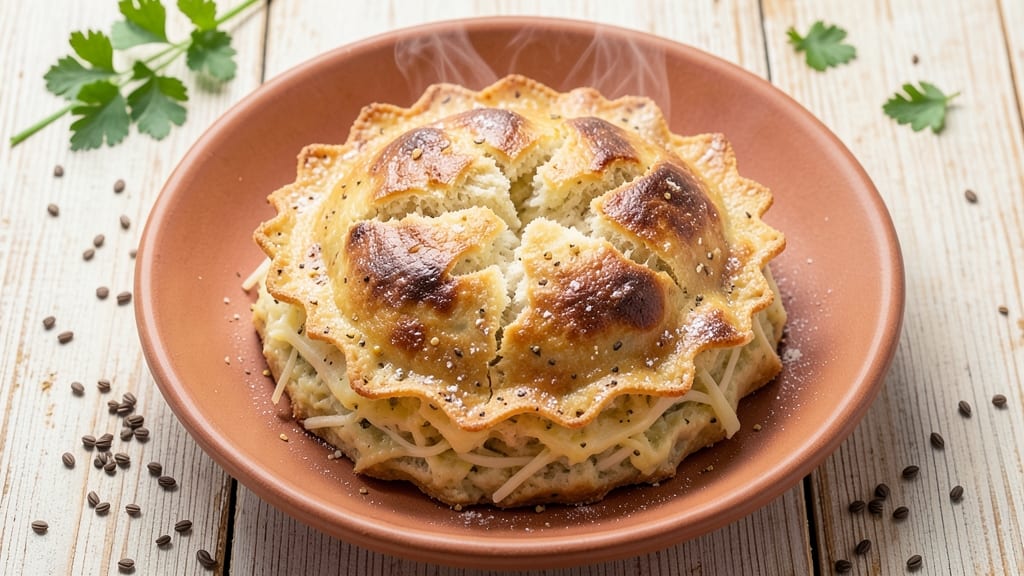
This Algerian matlouh bread recipe transforms simple dough and potatoes into a showstopping dish with layers so flaky they'll have everyone asking for seconds. The secret lies in the technique of folding spiced potato filling between sheets of dough, creating a rustic, golden-brown package that's both satisfying and impressive.
I first discovered this dish during a trip to Algeria, where it's a staple at family gatherings and special occasions.
The dough is straightforward—just flour, water, yeast, and a touch of oil—but the magic happens in the folding. Each layer of dough encases the potato filling, which is seasoned with cumin, coriander, and paprika for warmth and depth.
The dish bakes until golden and crispy, with tender potatoes peeking through the flaky crust. This recipe delivers restaurant-quality results without requiring a wood-fired oven.
What makes matlouh truly special is its versatility. Serve it as a main dish with a side salad or as part of a mezze spread. The combination of crispy, flaky layers and tender, spiced potatoes creates a balance of textures and flavors that's hard to resist.
Once you try this authentic Algerian recipe, you'll understand why it's a beloved classic.
The beauty of matlouh is in its simplicity and tradition. This recipe stays true to its roots while being accessible for home cooks. With just a few ingredients and some careful folding, you'll create a dish that feels like a hug from Algeria. Let's get started on this flavorful journey!
Ingredients for algerian bread matlouh
Simple dough meets spiced potatoes for Algeria's iconic layered bread—just 13 ingredients create restaurant-quality flakiness.
| Ingredient | Amount | Notes |
|---|---|---|
| All-Purpose Flour 🌾 | 4 cups | Sifted for best texture |
| Active Dry Yeast 🍞 | ¼ oz | Or 2.25 tsp, dissolved in warm water |
| Russet Potatoes 🥔 | 3 medium | Peeled, boiled, mashed |
| Unsalted Butter 🧈 | ½ cup | Cold, cubed for flakiness |
| Ground Cumin 🌿 | 1 tsp | Toasted for deeper flavor |
| Ground Coriander 🌿 | 1 tsp | Freshly ground preferred |
| Smoked Paprika 🌶️ | ½ tsp | For authentic Algerian warmth |
| Salt 🧂 | 1 ½ tsp | Diamond Crystal preferred |
| Black Pepper 🌶️ | ½ tsp | Freshly ground for brightness |
| Olive Oil 🫒 | 2 tbsp | For dough and brushing |
| Warm Water 💧 | 1 ¼ cups | 110°F for yeast activation |
| Garlic Cloves 🧄 | 2 cloves | Minced for potato filling |
| Fresh Parsley 🌿 | ¼ cup | Chopped for garnish |
The flour is non-negotiable here—King Arthur or Gold Medal gives the best rise. Yeast loses potency fast, so grab fresh from the baking aisle or bulk bins. For the potatoes, Russets are ideal—they mash smoothly and hold their shape. If you can't find them, Yukon Golds work too, but they're slightly waxier. The spices? Penzeys or the bulk section at Whole Foods for the freshest ground cumin and coriander. Toast your spices in a dry pan for 30 seconds before grinding—that extra step makes all the difference in flavor.
No smoked paprika? Regular paprika plus a pinch of liquid smoke gets you close. The butter should be cold and cubed—don't melt it first. For the olive oil, California Extra Virgin from Trader Joe's is my go-to, but any good-quality oil works. Fresh parsley is ideal for garnish, but dried parsley at one-third the amount works in a pinch. The garlic can be pre-minced from a jar if you're short on time, but fresh has more punch. If you're making this ahead, prep the dough and filling separately—they keep for 24 hours in the fridge before assembling.
The dough and filling can be prepped 1 day ahead—store them separately in airtight containers. Assemble and bake just before serving for the crispiest crust. Leftover matlouh? Warm in a 350°F oven for 10-15 minutes to restore crispness. This freezes beautifully too—wrap individual portions in foil and freeze for up to 3 months. I always make two batches—one for dinner, one to freeze for lazy weeknights. The flavor actually improves after a day or two as the spices meld.
Why You'll Love This Recipe
- No Yeast Fuss: I swear by this—just toss in the yeast with warm water and flour, then let it sit while you prep the potatoes. No kneading, no waiting hours, no stress. That cumin-infused dough rises while you boil the spuds, and honestly? It’s the kind of recipe that makes me feel like a lazy genius.
- Cumin Butter Magic: The moment that buttery, cumin-spiced dough hits the pan with those mashed potatoes? My mouth waters just thinking about it. That earthy, toasty cumin cuts through the richness of the butter and potatoes, giving it this addictive, warm kick that’s neither sweet nor savory—just perfect.
- Weeknight Crowd Pleaser: This feeds a family of four (or two very hungry people) with leftovers that reheat beautifully. Pack it for lunch, serve it at dinner, or bring it to a potluck—it’s the kind of dish that disappears faster than I can say “second helping.” (Yes, even on a Tuesday night.)
- Stretch Your Budget: Russet potatoes and flour are pantry staples, and a little butter goes a long way when you’re layering it with dough. I’ve made this for under $8 total, and it’s the kind of meal that makes grocery day feel like a win. Plus, the leftovers keep for days—no sad, wilted bread here.
Step-by-step instructions for Algerian matlouh bread
Create restaurant-quality matlouh with perfectly flaky layers and aromatic potato filling.
Prepare the Potato Filling
Peel the 3 medium russet potatoes and cut them into even chunks. Boil in salted water for 15-20 minutes until fork-tender. Drain well and mash until completely smooth with no lumps. Transfer to a mixing bowl and let cool slightly.
While still warm, stir in the 0.5 cup unsalted butter, 1 tsp ground cumin, 1 tsp ground coriander, 0.5 tsp smoked paprika, 1.5 tsp salt, and 0.5 tsp black pepper. Add the 2 minced garlic cloves and 0.25 cup chopped fresh parsley. Mix until the spices are evenly distributed and the filling has a vibrant golden color. Let cool completely before using.
Make the Yeast Dough
In a large mixing bowl, combine the 4 cups sifted all-purpose flour and 1.5 tsp salt. Add the 0.25 oz active dry yeast and mix gently to distribute. Pour in the 1.25 cups warm water (about 110°F) and 2 tbsp olive oil, then mix with a wooden spoon until a shaggy dough forms.
Turn the dough onto a lightly floured surface and knead for 8-10 minutes until smooth and elastic. The dough should be slightly tacky but not sticky. If it's too dry, add 1 tsp olive oil at a time. Shape into a ball, place in a lightly oiled bowl, cover with a damp towel, and let rise in a warm place for 1-1.5 hours or until doubled in size.
Assemble the Matlouh
Preheat your oven to 375°F. Roll out the risen dough on a floured surface into a 12x16-inch rectangle, about 1/8-inch thick. Spread the potato filling evenly over the dough, leaving a 1-inch border around the edges. Fold the dough up like a letter, sealing the edges tightly.
Transfer to a baking sheet and make a few small slits on top to allow steam to escape. Brush the top generously with olive oil and sprinkle with additional smoked paprika for color. Bake for 45-50 minutes until golden brown and the internal temperature reaches 190°F.
Rest and Serve
Remove from the oven and let rest for 10 minutes before slicing. The bread should have perfectly flaky layers that separate easily, with a fragrant potato filling visible between each layer. Serve warm with extra chopped parsley sprinkled on top.
For best results, slice through the center and serve immediately. The contrast between the crispy outer layers and tender, spiced potato filling makes this Algerian classic unforgettable. Store leftovers wrapped in a clean towel to maintain freshness.
Pro Tips For Making Algerian Bread Matlouh
- Boil Potatoes Until Fork-Tender: Matlouh relies on those potatoes breaking down into a creamy, mashable texture—not mushy, not undercooked. Test with a fork: if it slides in like butter, you’re good. Over-boiling turns them gluey, and no one wants gluey potato bread. (Yes, even if you’re impatient like me.)
- Toast the Cumin Dry: Skip the raw cumin straight into the dough—it’ll make your bread taste bitter and uneven. Dry-toast it in a small pan over medium heat for 30 seconds until fragrant, then cool before mixing. This step guarantees that warm, nutty aroma cuts through the richness of the butter.
- Let the Dough Rise Twice: The first rise is obvious, but the second—after shaping—is where most people rush. Give it 15–20 minutes under a towel at room temp. This ensures the bread holds its shape when baked and doesn’t collapse into a dense brick. (Your future self will thank you.)
- Use Cold Butter for Layers: Cut that unsalted butter into cubes and freeze them for 10 minutes before layering into the dough. Cold butter creates flaky, distinct layers instead of melting into a greasy mess. Trust me, this isn’t the time to skip the chill.
Pro cooking tips for great algerian bread matlouh
Dough Perfection
Your dough is the foundation—don’t rush the kneading! Use a stand mixer with a dough hook on medium speed for 5-6 minutes to avoid overworking the gluten.
The dough should be slightly tacky but not sticky; if it sticks to your fingers, add 1 tsp olive oil at a time. For extra flakiness, let the dough rest for 15 minutes after kneading before shaping. This relaxes the gluten, making it easier to roll out thinly. 💫
Layering Like a Pro
The secret to those signature flaky layers is even spreading and tight folding. Roll the dough into a 12x16-inch rectangle (about 1/8-inch thick) and spread the potato filling evenly, leaving a 1-inch border.
Fold it up like a letter envelope, sealing the edges tightly with your fingers. Press down firmly to prevent air pockets—this ensures crispy layers instead of soggy ones. 🌟
Steam Control
Those slits on top aren’t just for looks—they’re steam escape valves. Without them, steam gets trapped, leading to a dense, gummy interior. Brush the top with olive oil and sprinkle with smoked paprika right before baking.
For extra crispiness, place a small baking tray with 1 cup hot water on the lower oven rack to create steam during the first 15 minutes of baking. 🔥
Temperature Mastery
Preheat your oven to 375°F and let it stabilize for 10 minutes before baking. Use an infrared thermometer to check the internal temperature—it should reach 190°F for perfect doneness. If the top browns too quickly, tent loosely with aluminum foil for the last 10 minutes to prevent burning.
The filling should be tender but not mushy when done. ⏰
Resting Matters
Never skip the 10-minute rest after baking! This allows the layers to set and the filling to firm up slightly. Slice through the center with a sharp serrated knife—don’t saw back and forth.
The layers should separate cleanly, revealing the golden potato filling between each crispy sheet. Serve immediately for the best texture. 💪
Make-Ahead Hack
Prep the dough and filling 1 day ahead—store them separately in airtight containers. Assemble and bake just before serving for the crispiest crust. For leftovers, wrap in a clean kitchen towel and reheat at 350°F for 10-15 minutes to restore crispness.
Freeze unbaked matlouh (wrapped tightly in foil) for up to 3 months—thaw overnight in the fridge before baking. 🧊
Nutrition facts
Frequently asked questions
Can I use sweet potatoes instead of russet potatoes?
Sweet potatoes work, but they'll change the texture and flavor. Russets are ideal because they mash smoothly and create a light, fluffy filling. If you must use sweet potatoes, boil them until very tender (they take longer), mash thoroughly, and reduce the butter to 0.375 cup to prevent a gummy consistency.
Why is my matlouh not flaky?
Flakiness comes from proper layering and steam control. First, ensure your dough is rolled thinly (1/8-inch) and spread evenly. Second, fold tightly like an envelope to create distinct layers. Finally, steam is key—place a tray of hot water in the oven during baking to create moisture that separates the layers.
Can I make matlouh without yeast?
Traditional matlouh requires yeast for that signature rise, but you can make a quick version with 1 tsp baking powder and 1 tsp baking soda added to the flour. The texture will be denser and less flaky, but it'll still be delicious. Reduce the water by 2 tbsp since baking powder releases moisture.
What other fillings work well with matlouh?
While potatoes are traditional, you can experiment with other spiced fillings! Try mashed chickpeas with cumin and lemon zest, or a mix of sautéed onions, garlic, and caramelized apples. Keep the filling moist but not wet—it should hold its shape when folded. For authenticity, stick to warm spices like cumin, coriander, or turmeric.
How do I store leftovers?
Matlouh is best fresh, but you can revive leftovers! Wrap cooled pieces in a clean kitchen towel and store at room temperature for 2 days. To reheat, warm in a 350°F oven for 10-15 minutes until crispy again. For longer storage, freeze unbaked matlouh (wrapped tightly) for up to 3 months—thaw overnight before baking.