
Beverages
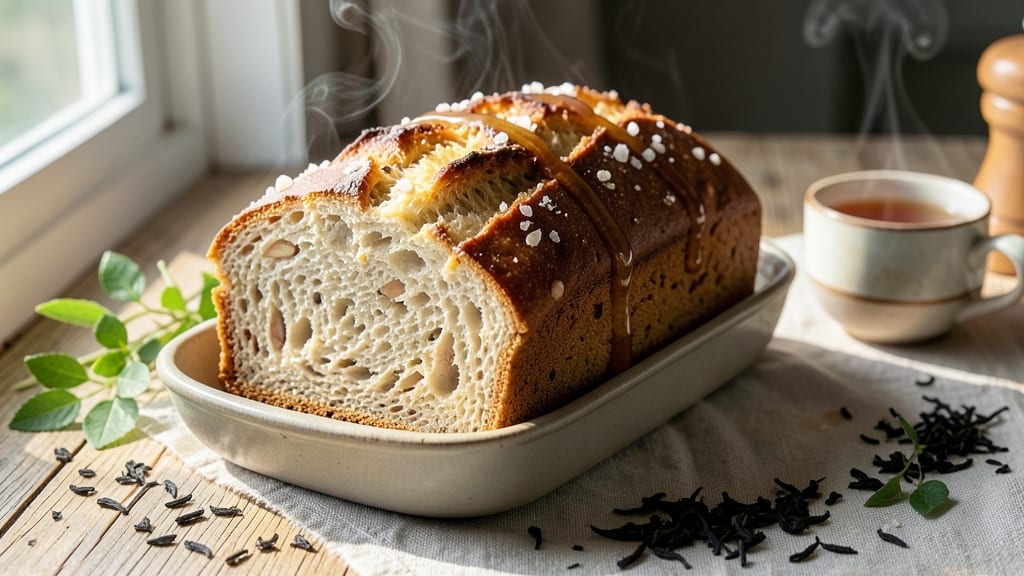
This almond tea bread recipe delivers a symphony of flavors—warm vanilla, nutty almond, and delicate tea notes—all baked into a tender, moist loaf.
The secret lies in infusing the dough with steeped tea and almond extract, creating a fragrant aroma that fills your kitchen long before the bread emerges golden from the oven.
Perfect for breakfast, afternoon tea, or gifting, this recipe balances simplicity with rich, comforting flavors that feel like a hug in every slice.
What sets this recipe apart is the foolproof technique that ensures a perfectly tender crumb without dense, heavy texture. The combination of butter, eggs, and almond flour creates a moist yet sturdy loaf, while the tea infusion adds subtle depth that pairs beautifully with vanilla and almond.
No special equipment is needed—just a standard loaf pan and a little patience for the dough to rest, which allows the flavors to meld into harmony.
The result is a fragrant, lightly sweetened bread with a crackly crust and a soft interior that practically melts in your mouth. Each slice carries the essence of almond, the warmth of vanilla, and the gentle earthiness of tea—a perfect balance that satisfies both sweet and savory cravings.
Whether you enjoy it plain, toasted with butter, or paired with jam, this bread is designed to impress with minimal effort.
For those seeking variations, simple swaps like flax eggs or coconut oil make this recipe adaptable to dietary preferences without sacrificing texture or flavor. The beauty of this almond tea bread lies in its versatility—equally at home on a weekend brunch table or as a thoughtful homemade gift.
Let’s get baking!
Ingredients for almond tea bread
Fragrant tea-infused dough meets buttery almond richness in this simple yet elegant bread recipe.
| Ingredient | Amount | Notes |
|---|---|---|
| Unsalted Butter 🧈 | ½ cup | Softened to room temperature |
| Granulated Sugar 🍚 | ¾ cup | Light brown sugar for depth |
| Large Eggs 🥚 | 2 whole | Room temperature for even mixing |
| Vanilla Extract 🍯 | 1 tbsp | Pure, high-quality extract |
| Almond Flour 🌰 | 1 ½ cups | Fine, blanched almond flour |
| All-Purpose Flour 🌾 | 1 ½ cups | Sifted for light texture |
| Baking Powder 🍞 | 2 tsp | Aluminum-free preferred |
| Salt 🧂 | ½ tsp | Fine sea salt |
| Almond Extract 🌰 | 1 tsp | Pure, not imitation |
| Loose Leaf Black Tea ☕ | 2 tbsp | Earl Grey or chamomile |
| Hot Water 💧 | ½ cup | Steep tea for 10 minutes |
| Milk 🥛 | ¼ cup | Whole milk for richness |
The almond flour is the heart of this recipe—Bob’s Red Mill or Anthony’s Goods are my go-tos for fine texture. If you can’t find almond flour, blend whole almonds into a fine powder (food processor works great), but sift it well to avoid lumps. For the tea, Earl Grey or chamomile work best—the floral notes complement the almond beautifully. Steep it properly: 10 minutes in hot water, then strain before mixing. The butter should be soft but not melted—press a finger into it; if it holds a slight indent, it’s ready. Room-temperature eggs mix more smoothly, so take them out of the fridge 15 minutes before baking.
No almond flour? Substitute with an extra 0.5 cup all-purpose flour plus 0.25 cup ground almonds, but the texture will be slightly denser. Running short on vanilla extract? Vanilla sugar works at half the amount, but pure extract gives that authentic aroma. The milk can be swapped for almond milk or coconut milk if needed, though whole milk adds richness. For a lighter crumb, add 0.5 tsp baking soda along with the baking powder. And if you’re feeling adventurous, swap the tea for hibiscus or lavender—just steep it for 5 minutes max to avoid bitterness. The sugar can be adjusted too: reduce by 2 tbsp if you prefer a subtler sweetness.
This dough is best made 1 day ahead—the flavors deepen as it rests. Store wrapped in plastic in the fridge for up to 2 days or freeze the dough for 3 months (thaw overnight in the fridge). The baked loaf keeps well at room temperature for 3 days, wrapped in a clean kitchen towel to maintain freshness. For extra crispiness, brush the crust with melted butter right after baking. Toast slices lightly for the best texture—butter or jam makes every bite even more special. And if you bake a second loaf? Gift it—it’s that good.
Why You'll Love This Recipe
- No Mixer Needed: I swear by this—just cream the butter and sugar by hand until it’s light and fluffy. The almond flour does all the heavy lifting, so no overworking or dense texture here.
- Buttery Almond Magic: That first bite? Warm, slightly nutty, with a whisper of vanilla cutting through the richness. The butter keeps it moist for days, and the almond flour gives it a tender crumb that’s ridiculously satisfying.
- Tea Time Hero: Between us, this is my go-to for afternoon tea or a quick breakfast. Slice it thick, toast it lightly, and serve with a cup of Earl Grey—it’s basically dessert and a snack in one.
- Leftovers That Don’t Suffer: Honestly, this bread stays fresh for days if wrapped tight. I’ve reheated slices in the oven until golden, and they taste just as good as day one. Perfect for when you bake once and eat twice.
Step-by-step instructions for almond tea bread
Here's the method to create a perfectly moist loaf with that signature vanilla-almond aroma.
Prepare the Tea Infusion
Steep the 2 tablespoons of loose leaf black tea in the 0.5 cup of hot water for 10 minutes. The water should turn a beautiful golden hue—this infusion carries the subtle floral notes that make this bread special. Strain out the tea leaves completely using a fine-mesh sieve, pressing gently to extract every last drop of flavor. Let the infused water cool to room temperature before using. If you're short on time, you can steep the tea for just 5 minutes for a lighter infusion, but I recommend the full 10 minutes for maximum aroma.
This step is where the magic begins—the tea infusion adds depth that balances the sweetness and nutty flavors. Don't skip it, even if you're eager to start baking. The cooled tea water should smell faintly of chamomile or Earl Grey, with no bitterness remaining.
Cream Butter and Sugar
In a large mixing bowl, combine the 0.5 cup of softened unsalted butter with the 0.75 cup of granulated sugar. Using an electric mixer on medium speed, beat for 3-4 minutes until the mixture is light and fluffy, nearly doubling in volume. You'll see the color lighten slightly—this indicates proper aeration, which creates a tender crumb. Scrape down the sides of the bowl occasionally to ensure even mixing.
This creaming process incorporates air into the batter, which prevents a dense texture. If your butter isn't softened enough, the mixture will feel grainy. Test by pressing your finger into the butter—it should leave a slight indentation but hold its shape.
Add Eggs and Extracts
Add the 2 whole large eggs to the butter-sugar mixture, one at a time, mixing well after each addition. Then stir in the 1 tablespoon of vanilla extract and 1 teaspoon of almond extract. Mix on low speed for 1 minute until fully combined. The batter should be smooth and slightly thickened. If you're using room-temperature eggs, they'll blend in seamlessly without curdling.
Here's where the signature flavors come together. The vanilla adds sweetness, while the almond extract provides that distinctive nutty aroma. Don't rush this step—proper incorporation ensures even distribution throughout the batter.
Combine Dry Ingredients
In a separate bowl, whisk together the 1.5 cups of almond flour, 1.5 cups of all-purpose flour, 2 teaspoons of baking powder, and 0.5 teaspoon of salt. Sift the mixture directly into the wet ingredients, then gently fold in using a spatula. Add the cooled tea infusion and 0.25 cup of milk, mixing just until combined. Be careful not to overmix—the batter should have a few small lumps remaining for a tender texture.
The almond flour gives this bread its characteristic moisture and subtle crunch, while the all-purpose flour provides structure. The baking powder ensures a light rise. If your batter looks too thick, add 1 tablespoon more milk to achieve a smooth, pourable consistency.
Bake to Golden Perfection
Preheat your oven to 350°F and grease a 9x5-inch loaf pan lightly with butter. Pour the batter into the prepared pan and smooth the top with a spatula. Bake for 50-55 minutes, or until a toothpick inserted into the center comes out clean and the top springs back when pressed gently. The bread should have a golden-brown hue with a slightly cracked top—this indicates proper baking.
For best results, place the loaf pan on the middle rack of your oven. If the top browns too quickly, tent loosely with foil after 30 minutes of baking. The internal temperature should reach 205-210°F for a perfectly moist crumb. Let the bread cool in the pan for 10 minutes, then transfer to a wire rack to cool completely before slicing.
Pro Tips For Making Almond Tea Bread
- CREAM THE BUTTER SLOW: I learned this the hard way—dumping cold butter into sugar and whipping it into submission just makes your mixer work harder for less. Let the butter sit at room temperature for 20-30 minutes first, then beat it with the sugar until the mixture lightens by at least 50%. That’s when the bread gets its signature tender crumb, not when the dough looks "fluffy enough" to you.
- SIFT THE ALMOND FLOUR: Almond flour is dense, and if you pack it into your measuring cup, you’re asking for a dry, crumbly mess. Spoon it into a dry measuring cup, then level it off with a knife—don’t press it down. Then sift it directly into the bowl with the other dry ingredients. This keeps the texture light and prevents clumping, which is especially important for tea bread’s delicate structure.
- DON’T OVERMIX THE BATTER: Once you add the eggs and vanilla, stop mixing the second everything is just combined. Overmixing develops gluten in the almond flour, turning your tender tea bread into a dense, chewy brick. Fold gently with a spatula—think "marble swirls," not "smooth batter." Your future self will thank you when you slice into a cake with clean layers.
- BAKE UNTIL THE CENTER HITS 205°F: Almond flour bread plays tricks—it might look done at the edges but still be underbaked inside. Insert an instant-read thermometer into the center; it should read 205°F (210°F if you’re using a dark pan). If you’re guessing, you’re risking a gummy middle. And no, the toothpick test isn’t reliable here—almond flour soaks up moisture like a sponge.
Creative variations of this almond tea bread
Spiced Tea Twist
Swap the black tea for hibiscus or chamomile to create a vibrant, floral variation. Steep 2 tbsp of dried hibiscus flowers for 5 minutes in 0.5 cup hot water—this adds a tart, cranberry-like depth that pairs beautifully with the almond.
For chamomile, use 1 tbsp dried flowers steeped for 8 minutes to enhance the bread’s soothing, herbal notes. Both options work well with 1 tsp lemon zest added to the batter for brightness. 🌸
Nutty Variations
Boost the nutty profile by replacing 0.5 cup almond flour with walnut or hazelnut flour for a richer, earthier flavor. Walnut flour adds a slightly bitter contrast, while hazelnut brings a caramel-like sweetness. For extra crunch, fold in 0.25 cup toasted chopped almonds or pecans during the final mixing stage.
These variations work especially well with maple syrup instead of granulated sugar for a deeper, molasses-like undertone.
Vegan Adaptations
Make this recipe vegan by substituting 2 tbsp ground flaxseed mixed with 6 tbsp water (let sit for 5 minutes to thicken) for the eggs. Use vegan butter (like Miyoko’s) and almond milk for the liquid.
For binding, add 1 tbsp ground chia seeds to the dry ingredients. The texture remains tender, though slightly denser. A 1 tsp apple cider vinegar in the tea infusion helps mimic the lift of eggs. 🌱
Seasonal Swaps
In summer, replace vanilla extract with 1 tsp almond extract + 0.5 tsp orange zest for a citrusy brightness. For fall, add 1 tsp cinnamon and 0.5 tsp cardamom to the dry ingredients, and steep 1 cinnamon stick with the tea.
Winter calls for 1 tsp orange extract and a pinch of clove in the batter. Each seasonal twist keeps the bread’s signature moisture while introducing complementary flavors.
Gluten-Free Option
For a gluten-free version, replace all-purpose flour with a 1:1 gluten-free baking flour blend (like King Arthur Measure for Measure). Add 0.5 tsp xanthan gum to the dry ingredients to improve texture. The almond flour already provides structure, but the gluten-free blend ensures a light rise.
Let the batter rest for 10 extra minutes before baking to hydrate the blend fully. The result is a slightly denser but still tender loaf. 🌾
Sweet vs. Savory
Reduce the sugar to 0.5 cup and add 1 tsp smoked paprika and 0.5 tsp garlic powder to the dry ingredients for a savory twist. Top the baked loaf with coarse sea salt and flaky sea salt before serving.
This version pairs perfectly with whipped goat cheese or olive oil and balsamic. For a sweeter-savory balance, fold in 0.25 cup dried cranberries or chopped apricots during the final mix. 🍯
Nutrition facts
Frequently asked questions
Can I make this almond tea bread without almond flour?
Yes! Replace the 1.5 cups almond flour with 1 cup all-purpose flour + 0.5 cup ground almonds (blended in a food processor). For extra moisture, add 1 tablespoon extra milk. The texture will be slightly denser but still delicious. The almond flavor will be more subtle, so boost it with an extra 0.5 teaspoon almond extract.
Why does my almond tea bread turn out dense? Overmixing the batter or skipping the creaming step (beating butter and sugar) are common culprits.
How do I store almond tea bread?
Wrap the cooled loaf tightly in plastic wrap or aluminum foil and store at room temperature for 3-4 days. For longer storage, freeze slices in a sealed bag for up to 3 months. To revive, toast frozen slices for 2-3 minutes in a 350°F oven. The tea-infused flavor actually improves slightly after 24 hours as the aromas meld!
What's the best tea to use for maximum flavor?
Earl Grey or chamomile work best—the floral notes complement almond perfectly. For a bolder tea taste, steep 3 minutes instead of 10, but strain well to avoid bitterness. Avoid strong black teas like Assam, as they can overpower the delicate almond flavor. Herbal teas like hibiscus add vibrant color but require shorter steeping (5 minutes).
Can I make this bread in a different pan shape?
Use a 9-inch round cake pan or 8x8-inch square pan for a different presentation. Reduce baking time by 5-10 minutes—check doneness with a toothpick. For a mini loaf, divide batter into 4 greased ramekins and bake for 25-30 minutes. The tea infusion works equally well in any shape, though rectangular pans maintain the classic bread presentation.