
Side Dishes
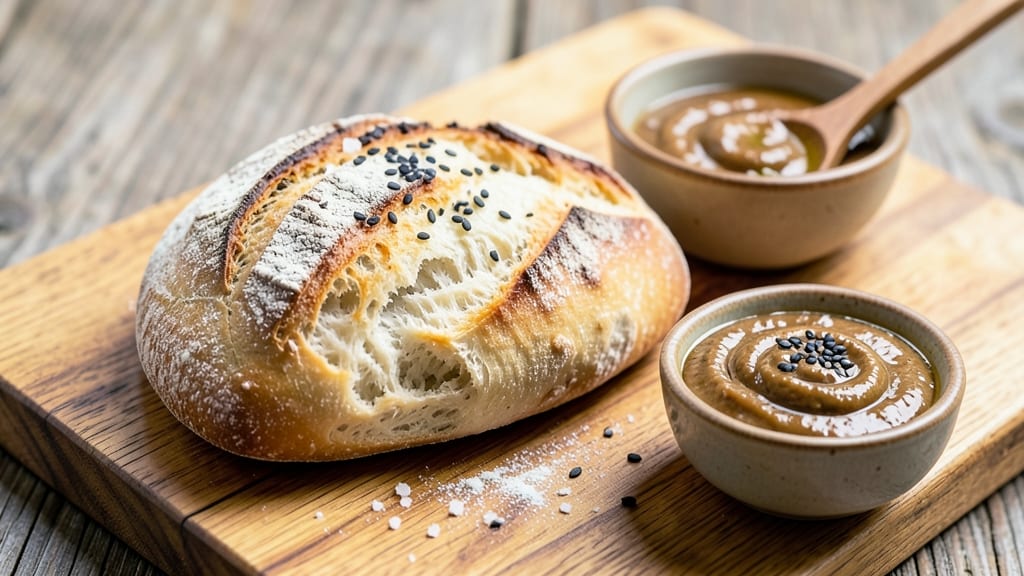
This Armenian tahini bread recipe brings the nutty richness of the Caucasus to your table with every crisp bite. 🌟 The secret lies in the tahini—where creamy sesame paste transforms simple dough into something extraordinary, creating a delicate balance between crunchy edges and tender centers.
Perfect for serving with soups, dips, or as a wrap, this bread is as versatile as it is delicious.
The dough comes together with just a handful of ingredients, including flour, yeast, and a touch of sugar for that subtle sweetness. What makes this recipe special is the tahini—its deep, toasty flavor infuses every layer, while warm spices like cumin and coriander add an aromatic depth that’s pure comfort.
The bread rolls out thin and golden, with a satisfying snap that makes it impossible to resist.
Baking this Armenian tahini bread is straightforward, but the results are anything but basic. The tahini not only enhances the flavor but also keeps the bread moist for days, making it ideal for meal prep.
Whether you’re hosting a dinner or simply craving a taste of Armenia, this recipe delivers a side dish that’s both elegant and effortless.
Serve it warm with garlic yogurt, hummus, or olive oil for dipping, or use it to wrap your favorite fillings. The possibilities are endless, but the foundation—this tahini-infused dough—is what truly sets it apart. Ready to elevate your table with a taste of tradition?
Ingredients for armenian tahini bread
Just 11 ingredients transform simple flour into Armenian tahini bread magic—nutty, crisp, and full of warm spice.
| Ingredient | Amount | Notes |
|---|---|---|
| All-Purpose Flour 🌾 | 4 cups | Plus 2 tbsp for dusting |
| Tahini 🥜 | ½ cup | High-quality, creamy sesame paste |
| Active Dry Yeast 🍞 | 1 package | Or 2.25 tsp (1 packet) |
| Warm Water 💧 | 1 ¼ cups | 110°F for yeast activation |
| Granulated Sugar 🍚 | 1 tbsp | For yeast activation |
| Vegetable Oil 🫒 | 2 tbsp | For dough softness |
| Salt 🧂 | 1 tsp | Fine sea salt preferred |
| Ground Cumin 🌿 | ½ tsp | Toasted for warmth |
| Ground Coriander 🌿 | ½ tsp | Fresh ground if possible |
| Sesame Seeds 🌻 | 2 tbsp | For topping (plus extra) |
| Olive Oil 🫒 | 1 tbsp | For brushing |
The tahini is non-negotiable here—look for creamy, not grainy, and ideally organic. Trader Joe's or Middle Eastern markets have the best quality, but any good store's sesame paste works. Toast your cumin and coriander seeds first if you've got them (just dry-toast in a pan for 30 seconds), then grind them—that extra step makes all the difference. The yeast? Always check the expiration date—old yeast means flat bread. And for the flour, King Arthur or Bob's Red Mill work perfectly—they're consistent and reliable.
No tahini? Substitute with equal parts peanut butter and olive oil (though it won't taste identical), or use sunflower seed butter in a pinch. Running low on sesame seeds? Poppy seeds or extra crushed coriander work for topping. The vegetable oil can be swapped for melted vegan butter if you prefer a richer flavor. For the sugar, maple syrup or agave work 1:1, though white sugar gives that classic sweetness. And if you're short on time, instant yeast can replace active dry yeast (just mix it with the dry ingredients).
This dough keeps beautifully—wrap it in plastic and refrigerate for up to 24 hours if you need to slow down. For best results, let it rise at room temperature (about 1-1.5 hours), but don't let it double—just until puffy. Baked bread stays fresh for 3 days at room temperature, wrapped in a clean towel. Freeze portions for up to 3 months—just thaw at room temperature before serving. Pro tip: Reheat in a 350°F oven for 5 minutes to restore that crispy snap.
Why You'll Love This Recipe
- No-Knead Magic: I swear by this dough—just mix, let it rise, and shape. The tahini does all the work, giving that rich, nutty depth without a single knead in sight.
- Rich Without Effort: That first bite? Creamy tahini swirled into warm, pillowy bread. Honestly, it’s the kind of flavor that makes you forget you didn’t spend hours baking.
- Breakfast to Brunch: Toast it with jam for a lazy morning or serve with hummus for a crowd. Between us, I’ve even used slices to sop up olive oil at dinner—no rules here.
- Budget-Friendly Staple: A single batch stretches for days. Freeze the extras, and you’ve got fresh bread on demand. My wallet (and my lunchbox) thank me every time.
Step-by-step instructions for Armenian tahini bread
This dough comes together with simple steps but delivers incredible flavor and texture.
👨🍳 Step 1: Activate the Yeast with Tahini and Warm Water
In a small bowl, whisk together the 1.25 cups warm water (about 110°F—it should feel warm to your wrist but not hot), 1 tbsp granulated sugar, and 0.5 cup tahini. The tahini will thicken the mixture slightly, which is perfect for creating that signature nutty richness. Add the 1 package active dry yeast and stir gently. Let this sit for 5-10 minutes until it becomes frothy and bubbles form on top.
This step is crucial—if the yeast doesn't activate (no bubbles after 10 minutes), your bread won't rise properly. I always double-check the water temperature first; yeast dies in water hotter than 120°F. If it doesn't bubble, start over with fresh yeast and slightly warmer water.
👨🍳 Step 2: Mix the Dough with Spices and Oil
In a large mixing bowl, combine the 4 cups all-purpose flour, 1 tsp salt, 0.5 tsp ground cumin, and 0.5 tsp ground coriander. Make a well in the center and pour in the yeast-tahini mixture along with the 2 tbsp vegetable oil. Using a wooden spoon or dough whisk, stir until a shaggy dough forms.
Here's where it gets fun—the spices will infuse the dough with warm, earthy notes. I like to press the spices into the flour first so they distribute evenly. Once combined, turn the dough out onto a lightly floured surface and knead for 8-10 minutes until smooth and elastic. The dough should be slightly tacky but not sticky—add a little more flour if needed (but don't overdo it, or the bread will be dense).
⏰ Step 3: First Rise and Shaping
Lightly oil a large bowl, place the dough inside, and cover it with a damp kitchen towel or plastic wrap. Let it rise in a warm place (like near a turned-off oven with the light on) for 1-1.5 hours, or until it has roughly doubled in size. You'll know it's ready when you poke it gently and the indentation stays.
While it rises, preheat your oven to 375°F. Once the dough has risen, punch it down gently to release air, then divide it into 4 equal pieces (about 1 cup each). Roll each piece into a 12-inch rope, then shape it into a loose, slightly irregular round loaf. This rustic shape gives the bread its classic Armenian look.
🔥 Step 4: Second Rise and Baking
Place each shaped loaf on a parchment-lined baking sheet, brush the tops with 1 tbsp olive oil, and sprinkle generously with 2 tbsp sesame seeds. Cover the loaves loosely with a towel and let them rise for another 30-45 minutes until puffy. They should spring back slowly when pressed with a finger.
Bake for 25-30 minutes until the bread is deep golden brown and sounds hollow when tapped on the bottom. The aroma of toasted sesame and warm spices will fill your kitchen—that's your cue it's ready. For extra crispiness, I like to bake for an additional 5 minutes after removing from the oven.
🍞 Step 5: Cool and Serve
Transfer the bread to a wire rack and let it cool for 10 minutes before slicing. The crust will be crisp and fragrant, while the interior should be soft with a subtle chew. I always slice it slightly warm—this is when the tahini flavor really shines.
Serve with your favorite spreads, like garlic butter or whipped feta, or enjoy it plain with a warm cup of Armenian coffee. The sesame seeds will add a satisfying crunch with every bite, and the cumin and coriander will give it that unmistakable Middle Eastern warmth.
Pro Tips For Making Armenian Tahini Bread
- STIR THE TAHINI FIRST: Tahini’s thick, stubborn texture will cling to your bowl like glue if you toss it in dry. Whisk it with the warm water before adding flour—this creates a smooth paste that mixes into the dough effortlessly. I used to fight clumps for five minutes; now it takes 30 seconds.
- LET THE YEAST BLOOM: Skip the instant gratification and let the yeast sit with sugar and water for 5–10 minutes until it’s frothy. This ensures your dough rises properly, especially since tahini’s richness can slow fermentation. Trust me, that extra wait prevents a dense, flat loaf.
- KNEAD JUST ENOUGH: Overworking the dough makes tahini bread tough. Aim for 5–7 minutes by hand (or 3–4 on a stand mixer) until it’s smooth but still slightly tacky. Push it once, let it relax—repeat. It’ll thank you with a soft, chewy crumb.
- USE A LIGHT HAND WITH FLOUR: Tahini dough sticks like crazy, but resist the urge to drown it in flour. Wet your hands slightly and pat the dough gently into shape—just enough to seal the seams. Too much flour turns your bread into a dry, sad brick. (Yes, I’ve made that mistake.)
Essential equipment for this recipe
Must-Have Tools
Start with a stand mixer or hand mixer—this makes kneading the tahini-infused dough effortless. I use my KitchenAid Artisan for consistent results, but a strong hand mixer works too. The dough is sticky, so a dough scraper (like OXO Good Grips) keeps things clean and manageable. 🔥
Rolling Essentials
A rolling pin with a smooth, non-stick surface is critical for thin, even sheets. I prefer marble or granite for temperature control—they prevent the dough from sticking. For extra crispiness, use a pizza peel to transfer the rolled dough to your baking sheet.
A pastry brush (like West Bend) helps spread olive oil evenly for that golden crust.
Baking Gear
Line your baking sheet with parchment paper—it prevents sticking and makes cleanup a breeze. A digital thermometer (like Thermoworks Thermapen) ensures your oven is at the perfect 375°F for even baking. For extra crispiness, I use a wire cooling rack to let the bread cool completely before slicing.
Optional Upgrades
For professional results, consider a proofing box (like Breville) to control humidity and temperature during the second rise. A sesame seed press (or mortar and pestle) ensures even coverage on top. If you love lavash, a lavash maker (like Lavash Press) creates thin, restaurant-quality sheets with minimal effort.
Budget-Friendly Swaps
No stand mixer? A wooden spoon and strong arms work fine—just knead for 10-12 minutes. Skip the proofing box and use a turned-off oven with the light on for warmth.
A spatula can double as a dough scraper in a pinch. The key is patience—let the dough rise fully for that perfect texture.
Nutrition facts
Frequently asked questions
Why does Armenian tahini bread have tahini in the dough?
The tahini isn't just for flavor—it creates that signature nutty crunch and tender texture. The sesame paste keeps the bread moist longer than traditional flatbreads while adding a rich, toasty depth. Historically, tahini was a staple in Armenian households, used to stretch flour during times of scarcity. Today, it's what makes this bread uniquely aromatic and satisfying.
Can I make this bread without tahini?
Yes, but the flavor and texture will differ. For a tahini substitute, mix 0.25 cup peanut butter with 0.25 cup olive oil (though it won't taste identical). The bread will be less nutty but still delicious. For a closer match, try sunflower seed butter or add 1 tbsp sesame oil to the dough—just don't expect the same rich sesame flavor.
How thin should I roll the dough for lavash-style bread?
Aim for ⅛-inch to ¼-inch thickness for that classic Armenian lavash texture. Roll as evenly as possible—thinner sheets crisp up beautifully, while thicker pieces stay softer. If the dough resists rolling, let it rest for 10 minutes at room temperature. For extra crispiness, bake on a preheated stone or steel in your oven.
What's the best way to store leftover tahini bread?
Wrap cooled bread in a clean kitchen towel and store at room temperature for 3 days to maintain crispiness. For longer storage, freeze portions in a sealed bag for up to 3 months. To revive, reheat in a 350°F oven for 5 minutes or toast in a dry skillet until crisp. The tahini keeps it moist even after freezing!
Can I make this bread in a Dutch oven for extra crispiness?
Shape the dough into a round loaf and bake in a 450°F Dutch oven for 20-25 minutes. The enclosed space creates steam, resulting in a crispier crust. For best results, place a baking sheet on the lower rack to catch any drips. This method works especially well if you prefer a thicker, heartier bread rather than thin lavash.