
Side Dishes
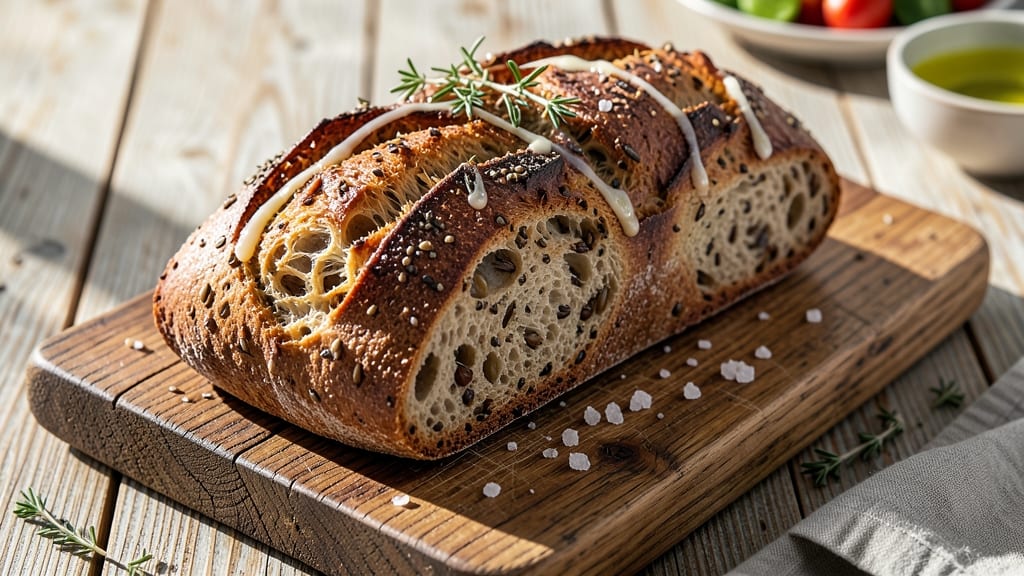
I've been baking this amazing grains salty bread for years, and it's the kind of loaf that makes people ask, "What's in it?" 💛 The secret lies in the mix of whole grains and seeds—barley, rye, and flax—that give it a nutty depth and satisfying crunch.
Every slice has that perfect balance of crispy crust and airy crumb, with just the right amount of salty goodness to make it irresistible.
The dough comes together with simple ingredients but requires patience—kneading, letting it rest, and proofing properly makes all the difference. I love using a mix of sea salt and smoked salt for that extra layer of flavor, and a sprinkle of rosemary or thyme takes it to the next level.
The result? A bread that's hearty enough to stand up to soups or charcuterie but delicate enough to enjoy on its own with a pat of butter.
What makes this bread truly amazing is how versatile it is. Toast it for breakfast, serve it with olive oil and balsamic for a quick meal, or pair it with your favorite cheese and cured meats.
The crust stays crisp even after a few days, and the crumb remains soft and flavorful. Once you try this, you'll never go back to store-bought again.
Ready to bake? This recipe is foolproof, and I promise you won't be disappointed. Let's get started on a loaf that's sure to become a staple in your kitchen.
Ingredients for amazing grains salty bread
Pantry staples meet whole grains for that perfect nutty, salty crunch.
| Ingredient | Amount | Notes |
|---|---|---|
| All-Purpose Flour 🌾 | 3 cups | For structure and texture |
| Whole Wheat Flour 🌾 | 1 cup | Adds hearty texture |
| Barley Flour 🌾 | ½ cup | For nutty depth |
| Rye Flour 🌾 | ½ cup | Enhances flavor |
| Flaxseeds 🌾 | ½ cup | Ground for crunch |
| Active Dry Yeast 🍞 | 2 ¼ tsp | For proper rise |
| Granulated Sugar 🍚 | 1 tbsp | Feeds the yeast |
| Sea Salt 🧂 | 1 ½ tsp | For salty goodness |
| Smoked Salt 🧂 | ½ tsp | Adds depth |
| Olive Oil 🫒 | ½ cup | For softness |
| Warm Water 💧 | 1 ¼ cups | Activates yeast |
| Fresh Rosemary 🌿 | 1 tbsp | Chopped, for aroma |
| Fresh Thyme 🌿 | 1 tbsp | Chopped, for brightness |
| Cornmeal 🌾 | ¼ cup | For dusting |
The flours are what make this bread special—barley and rye give that deep, earthy flavor, while whole wheat adds texture. I grab mine from Bob’s Red Mill for consistency, but any good-quality organic brands work. Flaxseeds are a must for that satisfying crunch—ground them fresh in a coffee grinder right before mixing. The yeast is non-negotiable: use active dry yeast (not instant) and make sure it's fresh—test it by dropping it in warm water with a pinch of sugar. If it bubbles in 5-10 minutes, it's good to go.
No barley flour? Substitute with more rye or whole wheat—just reduce the total flour by 2 tbsp to keep the dough manageable. Smoked salt can be tricky to find, but Trader Joe’s usually has it. No fresh rosemary or thyme? Dried works at half the amount, but the flavor won’t be as bright. For the olive oil, extra-virgin is best—Trader Joe’s or Whole Foods have great options. If your dough feels too sticky, add 1 tbsp more flour. Too dry? Add 1 tsp more water.
This dough needs time—let it rest for at least 2 hours before shaping. Store it in the fridge for up to 3 days if you're not baking it right away. Once baked, the crust stays crisp for 2-3 days at room temperature, but the crumb softens after the first day. Freeze slices for up to 3 months—just toast straight from frozen. I always bake two loaves: one for the week, one for freezing. Trust me, you’ll want extras.
Why You'll Love This Recipe
- No-Knead Magic: I swear by this dough—just mix, let it rise, and bake. The barley and rye flours do all the heavy lifting while I sip coffee, no energy wasted.
- Earthy Crunch Delight: That first bite? The flaxseeds add a nutty bite, while the rye gives it a deep, salty richness—like a hug from a rustic bakery, but homemade.
- Meal Prep MVP: Toss it in lunchboxes, freeze slices for toast later, or serve with soups. Honestly, I make a double batch every Sunday because it disappears fast.
- Pantry Stretch: Using whole grains and all-purpose flour means I’m not breaking the bank, and the flaxseeds add fiber without extra cost. Budget-friendly, but tastes like a splurge.
Step-by-step instructions for crusty grains and salty bread
Here's how to craft bread with nutty depth and irresistible crust—simple steps for perfect results.
👨🍳 Step 1: Mix the Flours and Activate the Yeast
In a large mixing bowl, combine all 3 cups all-purpose flour, 1 cup whole wheat flour, 0.5 cup barley flour, and 0.5 cup rye flour. I like to whisk these together first—they create a fragrant base that sets the stage for the nutty flavors. In a separate small bowl, whisk together the 1.25 cups warm water (about 105-110°F), 2.25 tsp active dry yeast, and 1 tbsp granulated sugar. Let it sit for 5-7 minutes until it becomes frothy—this tells you the yeast is alive and ready to work.
Here's the thing—warm water is crucial. If it's too hot, you'll kill the yeast; if too cold, it won't activate. Test it by dipping your finger in—it should feel warm but not hot. Pour the yeast mixture into the flour and stir with a wooden spoon until just combined. The dough will look shaggy and dry at this stage, but don't worry—it's normal.
🍳 Step 2: Add Wet Ingredients and Knead
Now add the 0.5 cup olive oil, 1.5 tsp sea salt, 0.5 tsp smoked salt, 1 tbsp chopped fresh rosemary, and 1 tbsp chopped fresh thyme to the bowl. Using your hands, mix everything together until the dough starts to come together. Then, turn it out onto a lightly floured surface and knead for 8-10 minutes until smooth and elastic. You'll know it's ready when it springs back when poked and no longer sticks to your fingers.
I press down gently on the dough during the first minute—this prevents it from curling and ensures even contact with the surface. The dough should feel slightly tacky but not sticky. If it's too wet, add 1-2 tablespoons of the all-purpose flour; if too dry, add a splash of warm water. The goal is a dough that's soft but not gummy.
🥘 Step 3: First Rise and Prepare for Shaping
Lightly oil a large bowl, place the dough inside, and cover it with a damp kitchen towel. Let it rise in a warm spot for 1-1.5 hours or until it has nearly doubled in size. You'll see bubbles forming on the surface and the dough will look puffy—this means the yeast is doing its job. While the dough rises, grind the 0.5 cup flaxseeds in a food processor or spice grinder until they resemble coarse sand. This adds texture and crunch to the finished bread.
Real talk: Don't skip the first rise. This step develops the gluten structure, which gives your bread that perfect chewy texture. If your kitchen is cold, place the bowl near a warm oven with the light on to create a cozy environment for the yeast.
🔪 Step 4: Shape and Second Rise
Once the dough has risen, punch it down gently to release the air. Sprinkle a clean surface with 0.25 cup cornmeal and divide the dough into 4 equal pieces. Shape each piece into a round loaf by pulling the edges toward the center and sealing the seams. Place them on a parchment-lined baking sheet, cover with a towel, and let them rise for another 30-45 minutes until puffy again.
Here's where it gets fun—sprinkle the tops with a pinch of sea salt and smoked salt for that extra salty crunch. The cornmeal dusting prevents sticking and adds a subtle flavor. If the dough doesn't rise much during the second rise, it might be too cold—give it a few more minutes in a warmer spot.
🔥 Step 5: Bake to Golden Perfection
Preheat your oven to 375°F with a baking stone or inverted baking sheet inside for 20 minutes. This creates steam, which helps the bread develop a crispy crust. Bake the loaves for 25-30 minutes until they're deep golden brown and sound hollow when tapped on the bottom. If the tops brown too quickly, tent them loosely with foil to prevent over-browning.
You'll see the edges start to crisp—that's your signal to check for doneness. The internal temperature should reach 190-200°F. Let the bread cool on a wire rack for at least 30 minutes before slicing. This resting period allows the crumb to set, making it easier to slice and preventing a gummy texture. The aroma alone will make your kitchen smell amazing!
Pro Tips For Making Amazing Grains Salty Bread
- Mix the Flaxseeds First: Grind the flaxseeds into a fine meal before adding them to the dough—this prevents clumps that turn into dense, gummy spots. I used to toss them in whole, and the bread would taste unevenly nutty. A quick pulse in a spice grinder does the trick.
- Knead Just Until Combined: This isn’t a classic yeast bread—overworking the barley and rye flours makes the dough tough. Stop when the ingredients come together and the surface looks slightly sticky, not smooth. My first loaf was a brick because I kneaded like I was making bagels.
- Steam the Loaf Early: Place a metal bowl of boiling water in the oven before baking—this creates steam that keeps the crust from drying out too fast. The barley flour absorbs moisture like a sponge, so this step guarantees a soft interior. (Yes, even if you’re impatient like me.)
- Use a Thermometer for Oven Temp: The rye flour in this recipe can make the bread bake unevenly, so aim for 375°F (190°C) exactly—not the "hot enough" guess. I learned this the hard way when my first loaf was pale inside and burnt outside. A cheap oven thermometer fixes that.
Best sauces and condiments for these flavors
Olive Oil Drizzle
Start with extra-virgin olive oil—its fruity notes complement the nutty grains beautifully. I like to drizzle 2 tablespoons over warm slices and finish with a pinch of flaky sea salt.
For extra richness, add a sprinkle of crushed black pepper or red pepper flakes for a subtle kick. 🌿
Herb-Infused Compounds
Make a quick herb compound by blending 2 tablespoons fresh rosemary, 1 tablespoon fresh thyme, 1 clove garlic, and 3 tablespoons olive oil in a mini food processor.
Drizzle over toasted bread slices or use as a dip for charcuterie. The flavors meld perfectly with the bread’s crusty exterior and soft crumb.
Garlic-Herb Butter
Mix ½ cup softened butter with 1 minced garlic clove, 1 teaspoon chopped rosemary, and ½ teaspoon smoked salt. Spread on warm bread slices for a luxurious, savory bite.
This butter pairs especially well with soups or grilled meats. I often make a double batch and store it in the fridge for up to 2 weeks.
Whole Grain Mustard
Whole grain mustard adds a tangy contrast to the bread’s richness. Mix 2 tablespoons Dijon mustard with 1 tablespoon honey and a pinch of smoked paprika for a sweet-spicy glaze.
Brush onto toasted slices or use as a dip for cheese and cured meats. The mustard’s texture and flavor cut through the bread’s density beautifully.
Spiced Honey Drizzle
Combine 2 tablespoons honey, ½ teaspoon ground cinnamon, and a pinch of cayenne pepper for a sweet-spicy drizzle. Warm the mixture slightly and pour over slices for a caramelized finish.
This works especially well with breakfast or as a dessert-like treat with cheese. The honey’s sweetness balances the bread’s saltiness perfectly. 🔥
Tangy Yogurt Dip
Blend ½ cup Greek yogurt with 1 tablespoon lemon juice, 1 teaspoon chopped dill, and ½ teaspoon garlic powder for a creamy, tangy dip. Serve with toasted bread slices or use as a spread for sandwiches.
The yogurt’s acidity brightens the bread’s nutty flavors, making it irresistible for dipping or pairing with smoked fish or pickles.
Nutrition facts
Frequently asked questions
Why does this bread have such a nutty flavor?
The nutty depth comes from the combination of barley flour, rye flour, and ground flaxseeds. Barley adds a malty note, rye brings earthy undertones, and flaxseeds contribute a toasty crunch. Using organic whole grains enhances these flavors naturally. For extra richness, try toasting the flours lightly before mixing!
Can I make this bread without a stand mixer?
This recipe is designed for hand-kneading. Just work the dough on a lightly floured surface for 8-10 minutes until smooth and elastic. Press down gently with the heel of your hand to prevent curling. The dough should feel slightly tacky but not sticky—add flour only if needed. Your arms will thank you for the workout!
How can I tell if my dough is properly kneaded?
Test it by doing the "windowpane test": stretch a small piece of dough between your fingers. If it's ready, it should thin out to ¼-inch thickness without tearing. Another sign is when the dough springs back slowly when poked. Over-kneading can make the bread tough, so aim for 8-10 minutes total kneading time.
What's the best way to store leftover bread?
Keep it in an airtight container at room temperature for 2-3 days to maintain crispy crust. For longer storage, slice and freeze individual pieces for up to 3 months. Toast straight from frozen for maximum crunch. The crumb softens after the first day, but the crust stays perfect for days!
Can I substitute any of the grains or seeds?
Yes! For the flours, swap barley or rye with equal parts whole wheat or spelt. For seeds, try sesame or sunflower seeds instead of flaxseeds—just grind them first. If you're avoiding gluten, use a 1:1 gluten-free flour blend, but note the texture may be slightly denser. The key is maintaining that nutty flavor profile!