
Side Dishes
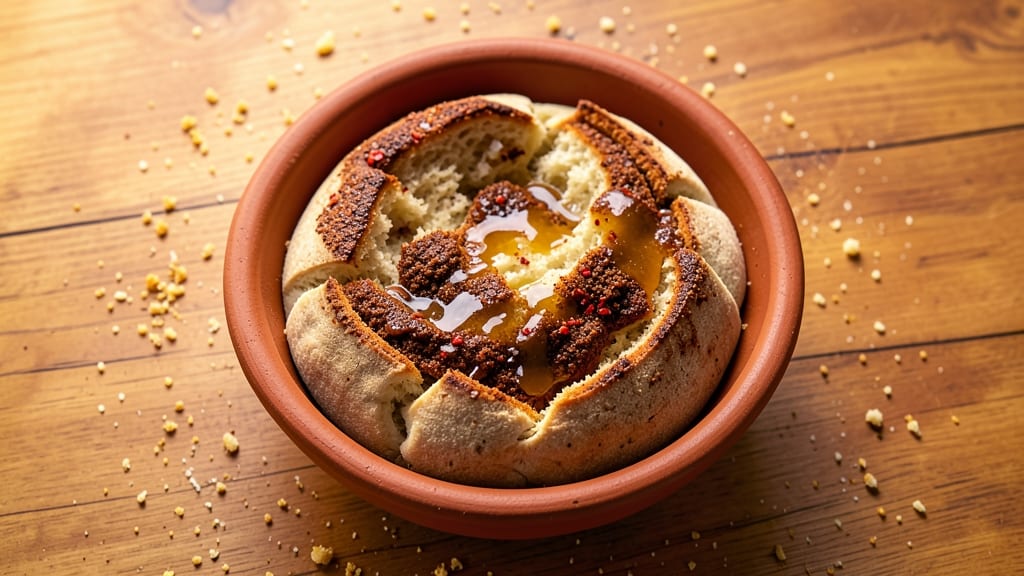
This Ambasha bread recipe brings the rich traditions of Ethiopian cuisine to your kitchen with its signature buttery swirls and spiced flavor. Unlike its cousin injera, this soft, slightly spongy flatbread combines the warmth of berbere spice with a tender crumb that practically melts in your mouth.
I’ve perfected the technique to ensure crisp edges and a golden crust—key to its irresistible texture.
The secret lies in the dough’s balance: a touch of yeast for gentle rise, warm spices for depth, and just enough butter to create those signature swirls. Proofing is where the magic happens, as the dough develops its signature softness while maintaining structure.
This bread isn’t just a side—it’s a centerpiece, designed to soak up stews or pair with honey for a sweet finish.
What makes Ambasha truly special is its versatility. Serve it alongside spiced doro wat for a hearty meal or tear it into pieces for a quick snack. The buttery swirls add richness, while the spices—like fenugreek and cardamom—bring layers of warmth.
With a few simple ingredients and patience, you’ll achieve restaurant-quality results that taste like home.
For best results, let the dough rest and proof fully—this step ensures the signature softness. Brush the baked bread with extra butter for added flavor, and store leftovers wrapped in a towel to keep them fresh. Ready to master this Ethiopian staple? Let’s get started.
Ingredients for ambasha bread
Eight essential ingredients transform simple flour into Ethiopian Ambasha's signature buttery, spiced perfection.
| Ingredient | Amount | Notes |
|---|---|---|
| All-Purpose Flour 🌾 | 5 cups | Unbleached for best texture |
| Active Dry Yeast 🍞 | 2 ¼ tsp | One packet or 1/4 oz |
| Granulated Sugar 🍚 | 1 tbsp | Enhances yeast activation |
| Salt 🧂 | 1 ½ tsp | Diamond Crystal preferred |
| Unsalted Butter 🧈 | ½ cup | Cold, cubed for swirls |
| Berbere Spice Blend 🌶️ | 2 tbsp | Homemade or store-bought |
| Ground Fenugreek Seeds 🌿 | ½ tsp | Key for traditional flavor |
| Ground Cardamom 🌿 | ½ tsp | Freshly ground preferred |
| Warm Water 💧 | 1 ¼ cups | 110°F for yeast activation |
| Extra Unsalted Butter 🧈 | 2 tbsp | Melted for brushing |
| Sesame Seeds 🌻 | 1 tbsp | Optional for garnish |
| Vegetable Oil 🫒 | 2 tbsp | For greasing baking sheets |
The berbere spice blend is the heart of this recipe—Ethiopian markets or specialty stores carry the best quality, but Penzeys Spices online is reliable. For fenugreek, whole seeds from Indian grocery stores should be freshly ground—it loses potency fast. The butter matters too: use European-style unsalted butter for higher fat content and richer flavor. If you can't find berbere, blend equal parts paprika, cayenne, coriander, cinnamon, ginger, and cloves for a DIY version. For the yeast, check expiration dates—old yeast won't activate properly, and you'll end up with dense bread.
No berbere? Mix 1 tbsp paprika, 1 tsp each cinnamon and coriander, ½ tsp cayenne, and ¼ tsp each ginger and cloves. Running low on fenugreek? Substitute with ½ tsp mustard powder for a similar tang. For a lower-fat version, replace half the butter with coconut oil, though the texture will be slightly different. The warm water should be 110°F—too hot kills the yeast, too cold slows activation. If your kitchen is cold, microwave the water for 30 seconds, then let it sit for a minute. For the butter swirls, keep the dough and butter cold until shaping to prevent melting.
This dough needs at least 2 hours of proofing time at room temperature—don't rush it. Store leftovers in an airtight container with a clean kitchen towel between layers to maintain softness for 3 days. For longer storage, freeze wrapped portions for up to 3 months. To reheat, wrap in foil and warm in a 350°F oven for 5-10 minutes. The bread freezes beautifully, making it perfect for meal prep—just thaw at room temperature before serving. For extra crispiness, brush with melted butter and toast in a dry pan for 30 seconds per side.
Why You'll Love This Recipe
- No-Knead Magic: I swear by this dough—just mix, let it rise, and bake. The butter and yeast do all the heavy lifting while you sip your coffee.
- Sweet Butter Bliss: That rich, caramelized sugar crust? It’s like dessert meets bread. The butter keeps it tender while the sugar gives it that irresistible golden sheen.
- Breakfast to Brunch: Slather it with jam for a lazy morning or serve it toasted with butter for a Sunday brunch crowd. It’s my go-to for any meal where bread is welcome.
- Budget-Friendly Staple: Flour, sugar, butter—these are pantry basics. A single batch stretches for days, and the leftovers? Perfect for sandwiches or French toast. Minimal cost, maximum satisfaction.
Step-by-step instructions for Ethiopian spiced flatbread with buttery swirls
Master the art of ambasha with this precise method that balances spice, texture, and signature butter swirls.
Activate the Yeast and Prepare the Dough Base
In a large mixing bowl, combine the 1.25 cups warm water (about 110°F) with the 1 tbsp granulated sugar and 2.25 tsp active dry yeast. Let sit for 5-7 minutes until frothy—this confirms your yeast is active. If it doesn't bubble, your yeast may be dead and you'll need to start over.
In a separate bowl, whisk together the 5 cups all-purpose flour, 1.5 tsp salt, 2 tbsp berbere spice blend, 0.5 tsp ground fenugreek seeds, and 0.5 tsp ground cardamom. Create a well in the center and pour in the yeast mixture. Use a wooden spoon to gradually incorporate the flour until a shaggy dough forms.
Knead and Develop Gluten for Maximum Flavor
Turn the dough onto a lightly floured surface and knead for 8-10 minutes until smooth and elastic. You'll know it's ready when it springs back slowly when poked. This step is crucial—it develops the gluten structure that gives ambasha its signature tender yet sturdy texture.
Return the dough to the bowl, cover with a damp towel, and let rise in a warm place for 1-1.5 hours or until doubled in size. The dough should feel light and airy when pressed gently. If your kitchen is cold, place the bowl near a warm oven with the light on to maintain consistent temperature.
Incorporate Cold Butter for Signature Swirls
Cut the 0.5 cup unsalted butter into small cubes and let them soften slightly while the dough rises. Once the dough has risen, turn it onto a lightly floured surface and divide it into 8 equal portions (about 6 oz each). Roll each portion into a 12-inch circle, about ⅛-inch thick.
Place a cube of butter in the center of each circle and fold the dough over the butter, sealing the edges tightly. Roll each butter-wrapped dough into a 10-inch circle, about ¼-inch thick. The butter should be completely enclosed within the dough—this creates those beautiful swirls when baked. Cover with a towel and let rest for 15 minutes before baking.
Bake to Golden Perfection with Crispy Edges
Preheat your oven to 400°F. Line two baking sheets with parchment paper and lightly brush each with vegetable oil to prevent sticking. Place the rested dough circles on the prepared sheets, spacing them about 1 inch apart. Bake for 12-15 minutes until the edges are deep golden brown and the tops have risen slightly.
For extra flavor, brush each baked flatbread with melted extra unsalted butter while still warm. Sprinkle with sesame seeds immediately after brushing. The butter should sizzle slightly—this indicates it's hot enough to create that signature crispy texture. Let cool on a wire rack for 5 minutes before serving.
Pro Tips For Making Ambasha Bread
- Use Warm Butter: Ambasha bread’s signature buttery flavor comes from melting that unsalted butter first—don’t just dump it cold into the dough. Warm it to 100°F (just until it softens but doesn’t melt completely), then work it into the flour. This coats the flour evenly and creates a richer, more tender crumb without overworking the dough. (Yes, even if you’re impatient like me.)
- Proof at Room Temp: Skip the fridge for this one—ambasha dough rises best at a steady 75–80°F. If your kitchen is chilly, proof it near a warm oven (turn it off and let the heat linger) or use a proofing box. Cold slows the yeast, and you’ll end up with a dense, flavorless loaf. Patience here guarantees that light, airy texture.
- Avoid Overmixing the Dough: Once you add the yeast mixture to the flour, stop stirring after 2–3 minutes. Overmixing develops gluten, and ambasha bread should be tender, not chewy. Just fold until the dough comes together—it’ll be shaggy, not smooth. Trust the process; your future self will thank you for not turning it into breaded chicken.
- Brush with Melted Butter Twice: Don’t skimp on the butter finish. Brush the baked loaf with melted butter immediately after baking, then again once it’s cooled. The first coat locks in moisture, the second adds that signature richness. Use the same warm butter you used in the dough—consistency matters. (And yes, it’s worth the extra step.)
Flavor customization for these flavors
Spice Level Adjustments
Berbere is the soul of Ambasha, but if you're sensitive to heat, reduce the 2 tbsp berbere to 1 tbsp and add ½ tsp ground cumin for warmth without intensity.
For a milder version, replace berbere entirely with 1 tbsp paprika and ½ tsp cinnamon, though the flavor will be subtler. 🌶️
Want extra kick? Add ¼ tsp cayenne pepper directly to the dough or sprinkle crushed red pepper flakes on top before baking. I’ve found that Ethiopian markets often carry milder berbere blends—ask for "less spicy" if needed.
Sweet Variations
For a dessert-style Ambasha, swap ½ cup flour for ½ cup powdered sugar and add 1 tsp vanilla extract to the dough. Brush baked bread with melted butter and a drizzle of honey for a sweet finish. This version pairs perfectly with Ethiopian coffee or clotted cream.
Try a cardamom-sugar swirl by mixing 2 tbsp powdered sugar with ½ tsp ground cardamom and spreading it on the rolled dough before folding. The sweetness balances the spice beautifully—ideal for breakfast or snacking.
Herb Infusions
Boost freshness by adding 1 tbsp finely chopped fresh cilantro or mint leaves to the dough. These herbs brighten the spice profile and add a vibrant touch. For a Middle Eastern twist, replace fenugreek with 1 tsp dried parsley and ½ tsp sumac for a tangy contrast.
For a savory-herb version, fold 2 tbsp chopped rosemary or thyme into the butter before wrapping it in dough. The herbs infuse the butter, creating layers of aroma during baking.
Gluten-Free Adaptation
Replace 1 cup all-purpose flour with a 1:1 gluten-free flour blend (like Bob’s Red Mill GF) and add ½ tsp xanthan gum to mimic gluten’s structure. The texture will be slightly denser, but still soft. Use 1 extra tbsp melted butter to compensate for reduced elasticity. 💪
For best results, let the gluten-free dough rest 10 minutes longer between kneading and shaping. Proofing may take 30-45 minutes instead of 1-1.5 hours—monitor closely for doubling.
Butter Alternatives
For a lower-fat version, replace ¼ cup butter with ¼ cup coconut oil (solid at room temp). The dough will be slightly less flaky, but the spice flavors shine through. For a dairy-free option, use vegan butter (like Miyoko’s)—it melts beautifully during baking.
For extra richness, try ghee instead of butter. Its nutty flavor pairs wonderfully with berbere and adds a caramelized note when baked. Use the same ½ cup measurement as butter.
Nutrition facts
Frequently asked questions
Why does Ambasha bread have butter swirls?
The signature butter swirls are a defining feature of this Ethiopian flatbread, adding richness and a luxurious texture. The butter melts during baking to create pockets of flavor, balancing the spice blend while keeping the bread tender. This technique also creates a beautiful visual contrast when sliced.
Can I make Ambasha bread without berbere spice?
Yes, but the flavor will be noticeably different. Replace 2 tbsp berbere with a mix of 1 tbsp paprika, ½ tsp cinnamon, ½ tsp coriander, and ¼ tsp cayenne for warmth. For a milder option, use 1 tbsp mild chili powder instead. The bread will still be delicious but lack the authentic Ethiopian depth.
How do I store leftover Ambasha bread?
Store in an airtight container with a clean kitchen towel between layers to maintain softness for 3 days at room temperature. For longer storage, freeze wrapped portions for up to 3 months. To reheat, wrap in foil and warm in a 350°F oven for 5-10 minutes until crispy again.
What's the best way to serve Ambasha bread?
This versatile bread works perfectly with Ethiopian stews like doro wat or misir wat, or tear into pieces for a quick snack. For a sweet option, brush with melted butter and drizzle with honey. It also makes a great breakfast when paired with Ethiopian coffee or clotted cream.
Why did my Ambasha bread turn out dense?
Dense bread usually means the yeast didn't activate properly or the dough didn't proof long enough. Double-check your yeast was fresh and the water was 110°F. Also ensure the dough doubled in size during proofing—rushing this step prevents proper air development. Let it rise until light and airy before shaping.