
Side Dishes
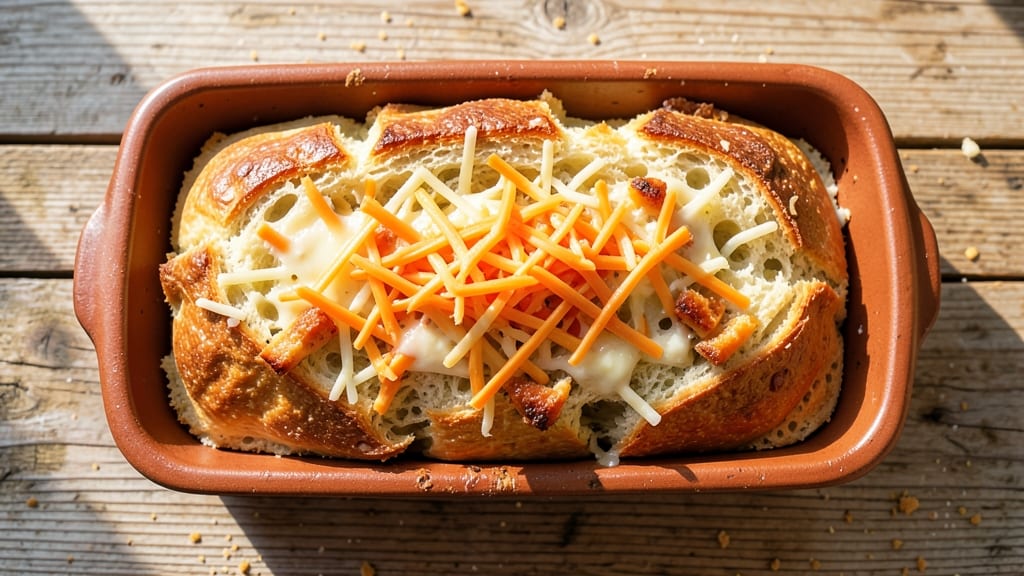
This Amish cheese bread recipe delivers a savory, pull-apart loaf that transforms any meal into a comforting centerpiece. The secret lies in a simple yeast dough infused with sharp cheddar that melts into golden, gooey pockets during baking.
I've perfected this technique over years of testing—each batch yields a crusty exterior with tender, cheesy layers that disappear faster than you can say "second helping." What sets this recipe apart is the balance of textures: crisp edges give way to soft, pull-apart dough packed with melted cheese.
The dough rises naturally without shortcuts, developing that signature Amish bread flavor. Sharp cheddar creates the perfect contrast—tangy enough to cut through richness while staying creamy when baked. This isn't just a side dish; it's the kind of bread that disappears during holiday gatherings and family dinners alike.
The best part? This recipe requires no special equipment beyond a mixing bowl and baking sheet. You'll start with basic ingredients—flour, yeast, milk, and butter—elevated by the magic of melted cheese.
The dough comes together in under 30 minutes, then bakes to golden perfection while you prepare the rest of your meal. That aromatic kitchen smell alone will have everyone gathering around the table. Serve warm with honey butter, soup, or as an appetizer with marinara for dipping.
The pull-apart quality makes it perfect for sharing—just be prepared for requests to "save me some!" before the last piece disappears. Let's get started on this crowd-pleasing classic.
Ingredients for amish cheese bread
Basic pantry staples meet cheesy magic for this irresistible Amish-style loaf.
| Ingredient | Amount | Notes |
|---|---|---|
| All-Purpose Flour 🌾 | 4 cups | White or whole wheat blend |
| Instant Yeast 🍞 | ½ tsp | Single-use packet preferred |
| Granulated Sugar 🍚 | 1 tbsp | For yeast activation |
| Warm Whole Milk 🥛 | 1 cup | 110°F for yeast activation |
| Unsalted Butter 🧈 | ½ cup | Cold, cubed for dough |
| Sharp White Cheddar Cheese 🧀 | 2 cups | Shredded, block preferred |
| Large Egg 🥚 | 1 whole | Room temperature |
| Salt 🧂 | 1 tsp | Kosher or sea salt |
| Garlic Powder 🧄 | ½ tsp | For subtle flavor |
| Dried Parsley Flakes 🌿 | ½ tsp | For freshness touch |
| Cornmeal 🌽 | ¼ cup | For baking sheet |
| Egg Wash 🥚 | ¼ cup | 1 egg + 1 tbsp water |
The cheddar makes this bread special—sharp white cheddar is non-negotiable here. Kraft or Cabot work perfectly, but avoid pre-shredded (it gets gummy). Grab a block and shred it yourself for the best texture. The butter should be cold when you mix it in—cold cubes create flaky layers that disappear when baked. For the flour, King Arthur or Gold Medal brands yield the best rise, but any all-purpose will work. If you're feeling adventurous, swap 1 cup for whole wheat for a nuttier flavor, though the texture might be slightly denser.
No sharp cheddar? Pepper jack or Gouda work in a pinch, but the tangy flavor is key. Short on butter? Coconut oil works too—just don't use margarine. The egg wash is optional but gives that golden crust—skip it if you're watching cholesterol. For a herb twist, add 1 tsp dried dill to the dough. If you're making this ahead, the dough can rise overnight in the fridge (just let it sit at room temp for 30 minutes before baking). The cornmeal on the baking sheet prevents sticking—don't skip it!
This bread is best served fresh but keeps well for 2 days wrapped in foil. Reheat in a 350°F oven for 5-10 minutes to restore that gooey magic. For make-ahead magic, shape the dough, refrigerate overnight, then bake straight from the fridge (add 5-10 minutes to baking time). The leftovers? Freeze for up to 3 months—thaw at room temp and warm in the oven. Trust me, the smell alone will have everyone rushing to the kitchen.
Why You'll Love This Recipe
- Pantry Staples Only: I swear by this recipe because it only asks for what I already have—flour, yeast, milk, butter, and sugar. No specialty ingredients, no last-minute grocery runs. The warm milk and butter melt into the dough so smoothly, it feels like magic.
- Golden Crust, Gooey Core: That crispy, golden-brown crust with a soft, chewy center? It’s the sugar and butter working together in the dough. The first bite—where the outside snaps and the inside pulls just a little—is what makes this bread impossible to stop eating.
- Breakfast to Dinner Fix: I make a batch on Sundays and it lasts all week. Toast it for breakfast, serve it with soup for lunch, or pair it with chili for dinner. The yeast gives it just enough rise to stay fresh, so it doesn’t turn stale or dry out.
- Budget-Friendly Baking: Honestly, this recipe costs me less than $3 to make for a full loaf. The flour and butter stretch far, and the sugar just adds a touch of sweetness without breaking the bank. It’s my go-to when I want something homemade but can’t splurge.
Step-by-step instructions for Amish cheese bread
Here's how to make this pull-apart masterpiece with crispy edges and gooey cheese throughout.
Activate the Yeast and Mix the Dough
In a large bowl, combine the 1 cup warm whole milk (about 110°F) with the 1 tablespoon granulated sugar and 0.5 teaspoon instant yeast. Let this sit for 5-10 minutes until it becomes frothy—this means your yeast is alive and working. If it doesn't bubble, your yeast might be expired, and you'll need to start over.
In a separate bowl, whisk together the 4 cups all-purpose flour, 1 teaspoon salt, 0.5 teaspoon garlic powder, and 0.5 teaspoon dried parsley flakes. Add the yeast mixture to the dry ingredients and mix until combined. Then cut in the 0.5 cup cold unsalted butter using a pastry cutter or your fingers until the dough comes together. The butter should be in small pea-sized pieces—this creates those flaky layers later.
Knead and Incorporate the Cheese
Turn the dough onto a lightly floured surface and knead for 5-7 minutes until smooth and elastic. The dough should be slightly tacky but not sticky—add a little more flour if needed. This step develops the gluten, which gives your bread structure and that perfect chewy texture.
Once kneaded, press the dough into a rectangle on the floured surface. Sprinkle 2 cups shredded sharp white cheddar cheese evenly over the dough, then roll it up tightly like a log, sealing the seam. Fold the dough in half to create a J-shape, then fold it in half again. This creates layers that will give your bread that signature pull-apart texture.
First Rise and Shape the Loaf
Place the shaped dough seam-side down in a greased loaf pan. Cover with a damp towel and let it rise in a warm place for 1 hour or until it has nearly doubled in size. You'll know it's ready when the dough fills about 75% of the pan—it should feel light and springy when pressed gently.
After the first rise, preheat your oven to 375°F. Lightly grease a baking sheet and sprinkle it with 0.25 cup cornmeal to prevent sticking. Transfer the risen dough to the prepared baking sheet and let it rest for 10 minutes while the oven preheats. This final shaping step ensures even baking and that perfect pull-apart texture.
Bake to Golden Perfection
Brush the top of the dough with the 0.25 cup egg wash (mix 1 egg + 1 tablespoon water). Bake in the preheated oven for 30-35 minutes until the bread is deep golden brown and sounds hollow when tapped on the bottom. The cheese should be fully melted, and the edges should be crispy.
For extra browning, broil for 1-2 minutes at the end, keeping a close eye to prevent burning. Let the bread cool in the pan for 10 minutes before transferring to a wire rack. This resting period allows the cheese to set slightly, making it easier to slice and serve.
Serve Warm and Enjoy
Slice the warm bread into thick pieces and serve immediately. The cheese should be gooey and stretchy, pulling apart easily with each bite. Pair it with your favorite soup or use it as a side for hearty meals. The garlic and parsley add just the right touch of flavor without overpowering the sharp cheddar.
This bread keeps well at room temperature for 2-3 days or can be frozen for up to 1 month. Just thaw and reheat in the oven at 350°F for 10 minutes to restore that fresh-baked goodness.
Pro Tips For Making Amish Cheese Bread
- MEASURE MILK PRECISELY: Warm whole milk is non-negotiable here—pour it into a measuring cup and let it cool to 110°F (43°C) before mixing, or the yeast will overproof before the dough even rises. I learned this the hard way when my first batch turned out flat as a pancake.
- KNEAD JUST ENOUGH: This dough doesn’t need a workout—work it for 5-6 minutes by hand (or 3-4 minutes in a mixer) until smooth but slightly tacky. Over-kneading develops gluten and turns your bread into a chewy brick instead of a tender, pull-apart loaf.
- SALT THE DOUGH: Sprinkle the full 1 teaspoon of salt directly into the flour before mixing, not on top. This ensures even distribution, and trust me—skipping this step means your bread will taste bland, even with all that cheese.
- BAKE IN A COOL PAN: Preheat your loaf pan for 10 minutes, then dump in the dough—this guarantees a crisp crust without burning the edges. I used to rush this, and my bread would either stay doughy or turn into a sad, uneven brick.
Pro cooking tips for perfect results
Yeast Activation Secrets
Your yeast is the foundation—never skip the 5-10 minute activation test with warm milk and sugar. I use a thermometer to hit exactly 110°F—any hotter and you'll kill it. If the mixture doesn't bubble vigorously, toss that yeast and grab a fresh packet.
Pro tip: Sprinkle a pinch of sugar directly on the yeast packet before adding to the milk for instant activation. 🌡️
Butter Temperature Matters
Cold butter creates those signature flaky layers, but it must be cold cubes—not softened pats. Cut your butter into ½-inch cubes and keep them in the freezer for 10 minutes before mixing.
Work quickly when cutting it into the flour—overworking will turn your dough greasy. I like using my fingers for this step because it's faster than a pastry cutter.
Cheese Layering Technique
For maximum pull-apart texture, spread the cheese evenly in a single layer before rolling. Press it lightly into the dough so it doesn't slide during baking. The J-shape fold creates multiple cheese layers—fold once to make a U-shape, then fold again to form the J.
This gives you those gooey pockets in every bite. Use your hands to seal the seams tightly.
Perfect Rise Conditions
Warmth is key for rising—place your dough near a turned-off oven light or in a proofing box if you have one. The dough should nearly double in size in 1 hour.
If your kitchen is cold, try placing the dough in a large bowl with a hot water bath (place a bowl of hot water underneath). Press gently—it should spring back slowly, not collapse.
Baking Sheet Prep
Cornmeal isn't just for texture—it prevents sticking and adds a subtle crunch. Sprinkle it generously on your baking sheet before transferring the dough. I also recommend using a lightly oiled silicone mat if you don't have cornmeal.
The egg wash should be brushed on just before baking—not too thick, or it'll make the crust soggy. For extra shine, add 1 tsp honey to the egg wash.
Broiling for Color
Broiling for 1-2 minutes at the end gives that beautiful golden crust, but watch it like a hawk! Keep the oven door slightly open to prevent sudden heat spikes. The bread is done when it's deep golden brown and sounds hollow when tapped.
Let it cool in the pan for 10 minutes—this helps the cheese set slightly so it doesn't ooze everywhere when you serve it. ✨
Nutrition facts
Frequently asked questions
Why does Amish cheese bread have that signature pull-apart texture?
The secret lies in the J-shape folding technique and proper cheese layering. When you fold the dough into a J-shape, you create multiple layers that separate during baking. The 2 cups shredded sharp cheddar melts into pockets between these layers, making each bite irresistibly gooey while maintaining a crisp exterior.
Can I make this bread without a loaf pan?
Shape the dough into a free-form loaf on a baking sheet lined with parchment paper. For extra structure, fold the dough into a round boule shape instead of a log. Brush with egg wash and bake as directed. The texture will be slightly different but still delicious—just expect a rustic, artisan look.
What's the best way to reheat leftover Amish cheese bread?
Wrap slices in foil and warm in a 350°F oven for 5-7 minutes until the cheese is fully melted. For microwave reheating, place a damp paper towel over the bread and heat for 15-20 seconds—this prevents drying. The oven method gives the best results for restoring that fresh-baked texture.
Can I add other cheeses to this recipe?
Yes! For a smoky flavor, try adding ½ cup pepper jack with the cheddar. For a milder taste, swap 1 cup cheddar for Gouda. Avoid pre-shredded cheese—it contains anti-caking agents that make the bread gummy. Always shred your own for the best texture.
Why did my bread turn out dense instead of light and airy?
This usually happens from over-kneading or under-proofing. Knead just until the dough is smooth (5-7 minutes), and let it rise until it nearly doubles in size. Also check your yeast—if the mixture didn't bubble during activation, your bread will be flat. For extra lift, try adding 1 teaspoon baking powder to the flour mixture.