
Main Courses
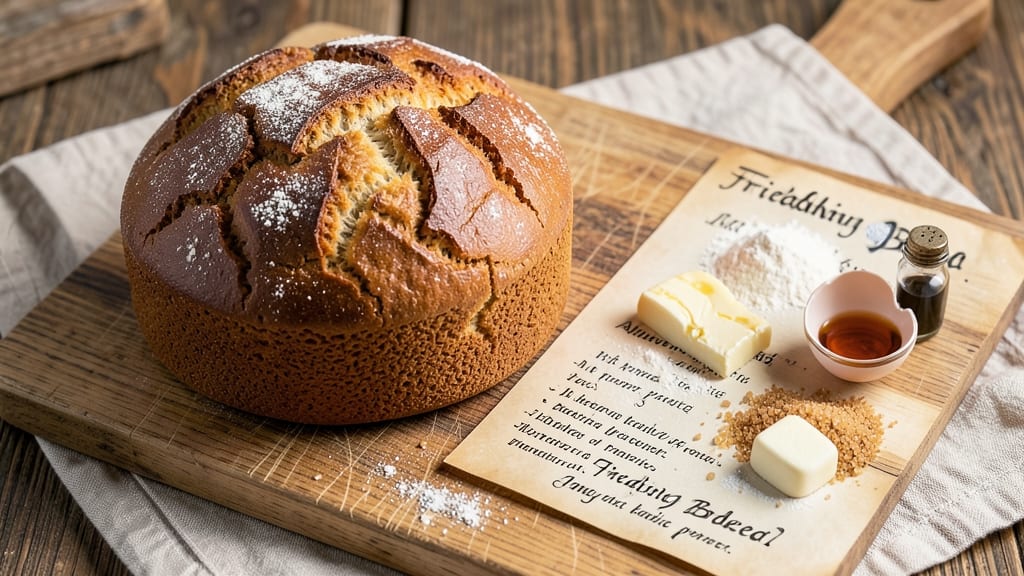
This Amish friendship bread recipe card brings a taste of tradition to your kitchen with its iconic cardboard-lined loaf and rich walnut swirls. 💛 The bread's tender crumb and golden crust make it a beloved homemade treat, perfect for gifting or enjoying fresh from the oven.
Baked at 350°F for 45-60 minutes, this recipe captures the heartwarming simplicity of Amish baking techniques passed down through generations.
The secret to its signature texture lies in the combination of flour, butter, and brown sugar, which creates a moist, slightly sweet loaf with a perfect balance of richness. The walnut swirl adds a delightful crunch and nutty depth, making every slice irresistible.
Unlike traditional loaves, this recipe uses a cardboard liner—a hallmark of Amish baking—that helps create the bread's signature shape and crispy exterior.
What sets this recipe apart is its cultural significance as a homemade gift, often wrapped in brown paper and tied with twine. The process is straightforward yet rewarding, with each step designed to ensure a foolproof result.
Whether you're baking for a special occasion or simply craving a taste of tradition, this recipe delivers a loaf that's as comforting as it is delicious.
Ready in about an hour, this bread is ideal for beginners and experienced bakers alike. The instructions are clear, and the ingredients are simple, making it easy to achieve restaurant-quality results at home.
Once baked, the aroma alone will fill your kitchen with warmth and nostalgia, proving that some traditions are worth preserving.
Ingredients for amish friendship bread recipe card
Simple ingredients that honor tradition—flour, butter, and walnuts create this iconic Amish gift loaf.
| Ingredient | Amount | Notes |
|---|---|---|
| All-Purpose Flour 🌾 | 3 ½ cups | Sifted for even texture |
| Unsalted Butter 🧈 | 1 cup | Cold, cubed for easier mixing |
| Light Brown Sugar 🍚 | ½ cup | Packed firmly for accuracy |
| Large Eggs 🥚 | 2 whole | Room temperature for even baking |
| Vanilla Extract 🌸 | 1 tsp | Pure, high-quality extract |
| Baking Powder 🧂 | 1 ½ tsp | Diamond Crystal preferred |
| Salt 🧂 | ½ tsp | Fine sea salt for balance |
| Chopped Walnuts 🌰 | 1 cup | Toasted for enhanced flavor |
| Cardboard Loaf Pan Liner 📄 | 1 piece | Standard 9x5-inch size |
| Brown Sugar Coating 🍚 | ¼ cup | Packed for even distribution |
| Milk 🥛 | ½ cup | Warm for softness |
| Ground Cinnamon 🌿 | ½ tsp | Freshly ground preferred |
The cardboard liner is non-negotiable for that signature Amish shape—grab a 9x5-inch pan from craft stores or baking sections. Bob’s Red Mill flour yields the best texture, but any all-purpose works. For butter, Land O’Lakes or Plugrá are reliable choices, but ensure it’s unsalted—this recipe balances its own salt. Walnuts should be lightly toasted (350°F for 8-10 minutes) to deepen their flavor before chopping. The brown sugar makes or breaks the moisture—Domino or Wholesome Sweeteners brands pack consistently.
No vanilla extract? Vanilla bean paste works in a pinch, or almond extract at half the amount for a floral twist. Substitute walnuts with pecans or hazelnuts if needed, but toast them first. For a lighter loaf, reduce butter by 1 tbsp and add 2 tbsp milk. The baking powder must be fresh—test by mixing with water; it should foam immediately. Diamond Crystal is the gold standard, but Aluminum-free brands like Rumford also work. If your pan lacks a liner, parchment paper can substitute, though it won’t crisp the crust identically.
Store the bread in an airtight container at room temperature for 3-4 days—its aroma intensifies over time. For longer storage, freeze slices wrapped in plastic for up to 3 months. The walnut swirl stays freshest when refrigerated, so slice before serving if keeping beyond 2 days. This bread reheats beautifully—5 seconds in the microwave or 10 minutes at 300°F restores its warmth. Gift-wrapped, it’s a homemade treasure that feels as special as it tastes.
Why You'll Love This Recipe
- No-Fuss Mixing: I swear, this dough comes together faster than I can wipe flour off my counter. Just cream butter and sugar, toss in eggs and vanilla, then fold in flour—no standing over a bowl for 20 minutes like some recipes demand.
- Sweet Butter Magic: That brown sugar and butter combo? It’s the kind of richness that makes you pause mid-bite. The crumb stays tender, but the edges get this perfect golden crisp—like a hug from your grandma’s kitchen.
- Breakfast to Dessert: I keep a loaf wrapped in the fridge all week. Toast it for breakfast with jam, crumble it over oatmeal, or serve warm slices with ice cream—it’s the ultimate crowd-pleaser that never gets boring.
- Budget-Friendly Staples: Honestly, you’re using pantry basics here. Flour, butter, sugar—things you already own. And one loaf stretches into days of snacks, so it’s basically free money in bread form. (Yes, even on a Tuesday night.)
Step-by-step instructions for Amish friendship bread
Master the classic technique for tender crumb and signature walnut swirls.
👨🍳 Step 1: Prepare the Dough Foundation
In a large mixing bowl, combine the 3.5 cups all-purpose flour, 1.5 teaspoons baking powder, 0.5 teaspoon salt, and 0.5 teaspoon ground cinnamon. Whisk gently to distribute the dry ingredients evenly. This creates a uniform base that prevents dense pockets in your bread.
In a separate bowl, cream together the 1 cup cold cubed unsalted butter and 0.5 cup packed light brown sugar using an electric mixer on medium speed until light and fluffy—about 3-4 minutes. This step incorporates air, which gives the bread its signature tender crumb. Scrape down the sides of the bowl to ensure even mixing.
🥘 Step 2: Combine Wet Ingredients and Create the Dough
Add the 2 room-temperature large eggs, 1 teaspoon vanilla extract, and 0.5 cup warm milk to the butter-sugar mixture. Mix on low speed until fully incorporated, then gradually add the dry ingredient mixture while mixing on low. The dough will come together when it forms a soft, slightly sticky mass that pulls away from the sides of the bowl.
Turn the dough out onto a lightly floured surface and knead gently for 1-2 minutes just until smooth. Over-kneading develops gluten and makes the bread tough. Divide the dough into two equal portions and flatten each into a 6-inch circle. Place the circles on a parchment-lined baking sheet.
🍳 Step 3: Add Walnuts and Prepare for Baking
Sprinkle 1 cup toasted chopped walnuts evenly over one of the dough circles, leaving a ½-inch border around the edges. Gently press the walnuts into the dough with your fingers. Place the second dough circle on top and press lightly to seal. Using a sharp knife, cut through both layers at ½-inch intervals to create a lattice pattern.
Gently twist the sections in opposite directions to create the signature walnut swirls. Brush the top with a little milk for a golden finish. Place the cardboard loaf pan liner on a baking sheet and position the loaf on top. This ensures even baking and prevents sticking.
🔥 Step 4: Bake to Golden Perfection
Preheat your oven to 350°F. Bake the loaf for 45-50 minutes until the top is golden brown and a toothpick inserted in the center comes out clean. The bread should have a beautiful caramelized crust with visible walnut swirls throughout.
While the bread bakes, prepare the brown sugar coating by mixing 0.25 cup packed brown sugar with 1 tablespoon milk in a small bowl. Once the bread is done, brush this mixture over the top immediately after removing it from the oven. This creates the signature crunchy top that Amish friendship bread is known for.
⏰ Step 5: Cool and Serve
Allow the bread to cool on a wire rack for 15-20 minutes before slicing. The internal temperature should drop to 100°F for clean cuts. Slice into ½-inch thick pieces and serve warm for the best texture—each bite should offer a perfect balance of tender crumb, sweet brown sugar coating, and nutty walnut swirls.
For maximum freshness, store any leftovers wrapped in plastic at room temperature for up to 3 days, or freeze for up to 3 months. The flavor actually improves slightly after a day or two as the sugars caramelize further.
Pro Tips For Making Amish Friendship Bread Recipe Card
- Weigh the Butter: Use a kitchen scale for the butter—no guessing. Packed butter can add 10-15% extra volume, and this recipe is not forgiving. I learned this after making a batch that tasted like it had twice the sugar.
- Mix Dry Ingredients First: Sift the flour and brown sugar together before adding wet ingredients. This prevents lumps and ensures even distribution—especially important when the dough is delicate. (Yes, even if you’re impatient like me.)
- Bake Until Springy: Test doneness by pressing the center: it should bounce back slowly, not immediately. Overbaking dries it out; underbaking leaves it gummy. If unsure, pull it 5 minutes early and check—it’ll finish steaming.
- Use Room-Temp Eggs: Cold eggs make the dough stiff and uneven. Let them sit in warm water for 5 minutes before cracking—this guarantees a smoother mix and better rise. (Your future self will thank you.)
Common mistakes when making perfect results
Overmixing the Dough
The most common mistake is overmixing the dough after combining wet and dry ingredients. Once the dough comes together, mix just until it forms a soft, slightly sticky ball—about 30 seconds in the mixer.
Overmixing develops excess gluten, resulting in a tough, chewy loaf instead of the tender crumb you want. I’ve seen this happen when bakers panic about uneven mixing, but trust the process—the dough will hold together. 🌾
Skipping the Cardboard Liner
Using a regular loaf pan without the cardboard liner is a big no-no—it’s what gives Amish friendship bread its signature shape and crispy exterior. The cardboard absorbs moisture, creating that perfect golden crust while preventing the loaf from sticking.
If you can’t find a liner, parchment paper works in a pinch, though it won’t crisp the crust identically. Pro tip: Grease the liner lightly with butter for extra insurance against sticking.
Uneven Walnut Distribution
Unevenly distributed walnuts can make your loaf look messy and affect flavor balance. Sprinkle the 1 cup toasted walnuts evenly over one dough circle, leaving a ½-inch border around the edges. Press them gently but firmly into the dough so they stay put during baking.
If walnuts clump together, break them up with your fingers before pressing. This ensures every slice has that nutty crunch in every bite. 🌰
Incorrect Baking Temperature
Baking at the wrong temperature is a surefire way to ruin your loaf. The oven must be preheated to 350°F—any lower, and the bread won’t rise properly; any higher, and the crust will burn before the center cooks through.
I’ve seen bakers skip preheating or use an oven thermometer to confirm the actual temperature. A toothpick test is your best friend here—insert it into the center, and it should come out clean after 45-50 minutes.
Forgetting the Sugar Coating
The brown sugar coating isn’t just for show—it’s what gives Amish friendship bread its signature crunchy top. Mix ¼ cup packed brown sugar with 1 tablespoon milk and brush it over the loaf immediately after removing it from the oven.
This step should never be skipped! The coating adds sweetness and texture, making the bread taste even more special. Pro move: Let the coating sit for 2-3 minutes before slicing to let it set slightly. 🍚
Not Letting the Bread Cool
Cutting into the bread too soon is a cardinal sin. The internal temperature should drop to 100°F before slicing, which takes about 15-20 minutes on a wire rack. If you slice too early, the bread will be gummy and uneven.
I’ve seen bakers impatiently slice into warm loaves, only to regret it later. Patience pays off—every slice will be perfect when you wait. ⏰
Nutrition facts
Frequently asked questions
Why does Amish friendship bread use a cardboard liner?
The cardboard liner creates the bread's signature shape and crispy exterior by absorbing moisture during baking. This traditional technique also helps prevent sticking and gives the loaf its distinctive golden crust. Without it, the bread may spread unevenly and lose its characteristic texture.
Can I substitute walnuts in this recipe?
Yes, you can substitute walnuts with pecans or hazelnuts, but toast them first to enhance their flavor. Use the same amount (1 cup) and press them into the dough just like walnuts. For a different texture, you could also try chopped almonds, though they'll be slightly less crunchy.
How do I make this bread extra moist?
For a moister loaf, replace 1 tablespoon of butter with 2 tablespoons of warm milk in the dough. You can also add 1 tablespoon of sour cream or Greek yogurt to the wet ingredients for extra tenderness. The brown sugar coating helps retain moisture too, so don't skip that step!
Can I make this bread without a mixer?
Cream the butter and sugar by hand using a wooden spoon or fork until light and fluffy (about 5 minutes of vigorous mixing). For the dough, mix everything together with a spatula until just combined, then turn it out onto a floured surface and knead gently by hand. The bread will still turn out tender and delicious.
How should I wrap this bread for gifting?
Once completely cool, wrap the loaf in brown paper or kraft paper, securing it with twine or ribbon. For extra presentation, add a handwritten tag with the recipe name and date. The Amish tradition includes giving this bread as a homemade gift, so presentation matters just as much as the flavor!