
Desserts
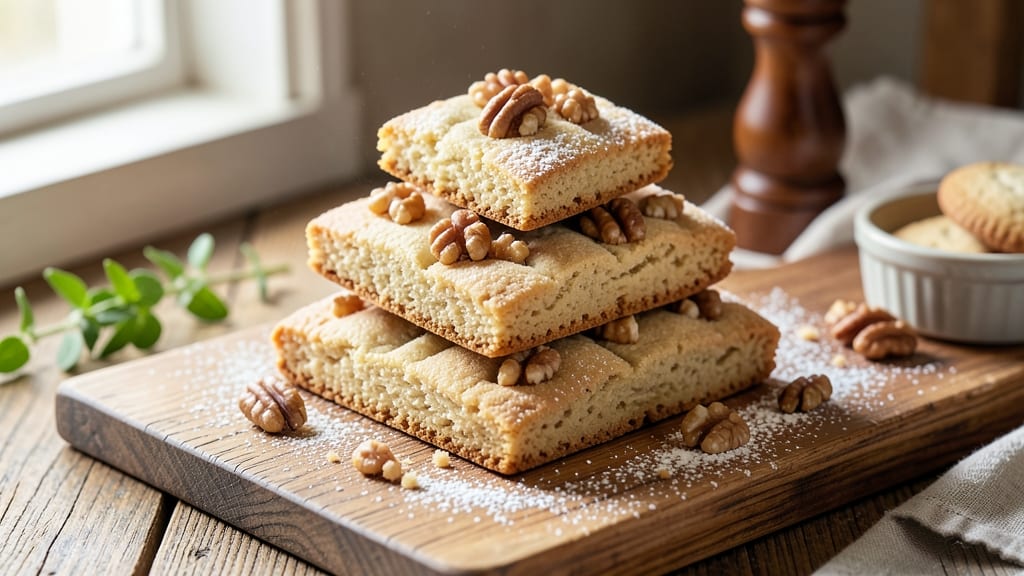
This Amish shortbread cookie recipe delivers the perfect balance of buttery crunch and vanilla-kissed sweetness, a tradition that's been passed down through generations. 💛 The secret lies in high-fat butter and a touch of vanilla extract, creating cookies that stay crisp at the edges while remaining tender inside—no overbaking required.
I've baked these countless times, and they never disappoint, especially when dusted with powdered sugar for that classic Amish touch.
The recipe is surprisingly simple, requiring just five ingredients: all-purpose flour, unsalted butter, powdered sugar, vanilla extract, and a pinch of salt. The dough comes together in minutes, but the real magic happens when you chill it for at least 30 minutes before shaping.
This step ensures the cookies hold their shape and develop that signature crunch. The baking process is equally straightforward, with a 10-minute bake time at 350°F that yields golden, buttery perfection.
What sets these apart is the texture—crisp on the outside, melt-in-your-mouth tender on the inside, with a subtle vanilla aroma that lingers. The cookies are sturdy enough to handle dipping in coffee or tea, yet delicate enough to crumble slightly, adding to their charm.
They’re ideal for holiday gatherings, potlucks, or a simple treat to enjoy with a warm beverage.
Optional toppings like chopped nuts or a sprinkle of cinnamon add extra depth, but the classic version—just powdered sugar—remains timeless. Once you try these, you’ll understand why they’ve been a beloved staple in Amish kitchens for decades. Let’s get baking!
Ingredients for amish shortbread cookie
Five simple ingredients transform into crisp, buttery cookies with that classic Amish crunch.
| Ingredient | Amount | Notes |
|---|---|---|
| All-Purpose Flour 🌾 | 3 cups | Sifted for even texture |
| Unsalted Butter 🧈 | 1 cup | Cold, high-fat (80% minimum) |
| Powdered Sugar 🍚 | ½ cup | For dusting and sweetness |
| Pure Vanilla Extract 🌿 | 1 tbsp | Imitation-free for real flavor |
| Fine Sea Salt 🧂 | ½ tsp | Kosher or Diamond Crystal |
| Optional: Chopped Walnuts 🌰 | ½ cup | Toasted for extra crunch |
| Optional: Ground Cinnamon 🌶️ | ½ tsp | For subtle warmth |
The butter is everything here—Land O'Lakes or Plugrá are my go-tos because they're high-fat and stay cold longer. Grab the tub version, not sticks, for easier mixing. If your kitchen runs warm, chill the butter for 15 minutes before starting. The flour? King Arthur or Gold Medal always deliver consistent results. I buy mine in the 5-pound bags at WinCo—cheaper and fresher than the grocery store. Sift it first to avoid dense cookies, and don't skip the chilling step. Trust me, the wait is worth that perfect crunch.
No vanilla extract? Vanilla bean paste works too—just use half the amount. Short on powdered sugar? Granulated sugar plus 1 tbsp cornstarch mimics the texture. The salt is non-negotiable—it balances the sweetness. If you're feeling fancy, swap the walnuts for pecans or hazelnuts. For cinnamon lovers, I like McCormick ground cinnamon (the good stuff, not the pre-mixed spice packets). The dough should hold together but not be sticky—if it's too soft, chill it another 10 minutes. And whatever you do, don't overbake—they'll keep crisping as they cool.
These cookies stay fresh for 5 days in an airtight container, but honestly? They disappear faster than that. For longer storage, freeze the shaped dough balls on a tray first, then transfer to a bag. Bake straight from frozen (add 1-2 minutes). The powdered sugar dusting? Do it right after baking while they're still warm—it melts slightly for that classic Amish look. Leftovers? Perfect for dipping in coffee or tea. Just don't tell anyone they're not homemade—this secret's safe with me.
Why You'll Love This Recipe
- Four-Ingredient Magic: I swear, if you’ve got cold butter, flour, sugar, and vanilla in your pantry, you’ve got a cookie. No weird ratios, no last-minute store runs—just mix, press, bake. That’s it. The butter stays soft enough to cream but firm enough to hold shape, and the salt cuts through the sweetness like a whisper.
- Butter-Sugar Bliss: Honestly, the moment those edges turn golden while the center stays tender? It’s like biting into a hug. The powdered sugar gives it that melt-in-your-mouth texture, but the vanilla and a pinch of salt make it taste like something from a bakery, not your kitchen. (Yes, even on a Tuesday night.)
- Holiday or Snack Attack: These cookies freeze like champs—wrap them in parchment, toss in a bag, and pull one out for company or a late-night craving. They’re fancy enough for Christmas gifts but simple enough to eat straight from the jar. My in-laws still ask for them every year, and I haven’t even decorated them.
- No-Waste Win: You’ll end up with leftovers, but that’s the best kind. The dough’s so forgiving that if you overmix or underbake, it’s not a disaster—just another excuse to make a second batch. And since you’re using pantry staples, it’s the kind of recipe that costs next to nothing but feels like a treat. Budget-friendly? More like budget-smart.
Step-by-step instructions for Amish shortbread cookies
Here's how to make these melt-in-your-mouth shortbread cookies with perfect texture every time.
👨🍳 Step 1: Mix the Dry Ingredients
In a large bowl, whisk together the 3 cups All-Purpose Flour and 0.5 tsp Fine Sea Salt. I like to use a whisk for this step to ensure the salt distributes evenly throughout the flour. If you're using the optional 0.5 tsp Ground Cinnamon, add it now and whisk until combined. This dry mix forms the foundation of our cookies' signature crumbly texture.
For best results, I recommend sifting the flour before whisking—this aerates the flour and prevents dense cookies. If you don't have a sifter, you can make small holes in a paper towel and shake the flour through, or simply whisk vigorously for about 30 seconds to break up any flour lumps. The goal is to create a smooth, fine powder that will blend seamlessly with the butter.
🍳 Step 2: Cut in the Cold Butter
Add the 1 cup Unsalted Butter (cold and cubed) to the dry ingredients. Using a pastry cutter or two forks, cut the butter into the flour mixture until you achieve pea-sized crumbs with some flour-coated butter pieces remaining. This technique, called "cutting in," is crucial for creating the flaky, crumbly texture that makes Amish shortbread special.
Work quickly but carefully—you want to avoid melting the butter. If the mixture starts to look too shaggy, chill it in the refrigerator for 5-10 minutes before proceeding. You'll know you're on the right track when the mixture resembles coarse sand with some larger butter chunks still visible. This texture is what gives our cookies that perfect crumb when baked.
👨🍳 Step 3: Add Wet Ingredients and Form the Dough
In a small bowl, combine the 0.5 cup Powdered Sugar and 1 tbsp Pure Vanilla Extract. Mix well to dissolve the sugar completely. Then, gradually add this mixture to the flour-butter combination, mixing gently with a wooden spoon or your hands until just combined. If you're using the optional 0.5 cup Chopped Walnuts, fold them in now for added texture and crunch.
Once everything comes together, turn the dough out onto a lightly floured surface and gently knead it just until it forms a cohesive ball. Be careful not to overwork the dough—just enough to bring it together. The dough should be soft but not sticky. If it feels too dry, add 1 tsp cold water at a time until it comes together. Wrap the dough in plastic wrap and chill in the refrigerator for at least 30 minutes (or up to 24 hours).
🔪 Step 4: Roll and Cut the Shortbread
Preheat your oven to 325°F and line two baking sheets with parchment paper. Once the dough is chilled, remove it from the refrigerator and divide it into two equal parts. On a lightly floured surface, roll each part into a ¼-inch thick circle. I like to use a rolling pin, but you can also press the dough with your hands if you don't have one. The goal is an even thickness for consistent baking.
Use a 2-inch round cutter (or a glass of that size) to cut out cookies, pressing straight down and not twisting the cutter. You'll get about 24 cookies from this recipe. Place the cutouts on the prepared baking sheets, spacing them about 1 inch apart for even baking. For extra flavor, I like to sprinkle a tiny bit of the Powdered Sugar on top of each cookie before baking.
🔥 Step 5: Bake to Golden Perfection
Bake the shortbread cookies for 12-15 minutes until the edges are just beginning to turn light golden brown. The centers should still look slightly underbaked—they'll firm up as they cool. I know it's tempting to bake them longer for darker cookies, but these beauties are best when they're just set at the edges.
Remove the baking sheets from the oven and let the cookies cool on the sheets for 5 minutes before transferring them to a wire rack to cool completely. The cookies will firm up as they cool, developing that signature shortbread crunch. For even more buttery flavor, you can brush the tops with a tiny bit of melted butter while they're still warm. Store in an airtight container for up to 5 days or freeze for up to 3 months.
Pro Tips For Making Amish Shortbread Cookie
- Chill the Dough Firmly: I learned this the hard way—skipping the fridge or freezer for even 30 minutes means your cookies will spread like pancakes. Wrap the dough in plastic and let it rest for at least 1 hour in the fridge (or 20 minutes in the freezer for speed). The butter needs time to firm up, or your cookies will turn out flat and greasy instead of those perfect, thick rounds.
- Use Cold Butter, No Exceptions: This isn’t the prettiest method, but it’s the tastiest. Cut that unsalted butter straight from the fridge into cubes—no softening, no room-temperature nonsense. Cold butter creates pockets of steam in the oven, leading to that signature Amish shortbread crumb. If you’re impatient like me, just pop the butter back in the freezer for 10 minutes mid-mixing.
- Salt the Dough Twice: The powdered sugar already has some saltiness, but the butter? None. Sprinkle half the fine sea salt into the dry ingredients, then mix it in with the wet dough. After rolling, sprinkle a light dusting of salt on the baking sheet—this balances the sweetness without overpowering. Trust me, your cookies will taste more complex than if you just eyeball it.
- Press Dough Evenly, No Thickness Wars: Amish shortbread lives or dies by its thickness. Roll the dough to exactly ¼-inch—any thicker, and it stays doughy; any thinner, and it burns before browning. Use a ruler or measuring cup as a guide if you’re unsure. And for heaven’s sake, don’t press down unevenly—consistent pressure means consistent baking. (Yes, I’ve burned edges before. Don’t be me.)
Essential equipment for perfect results
Butter-Cutting Tools
For the cutting-in stage, a pastry cutter (like the Norpro Pastry Blender) is ideal, but two forks or even your fingers work in a pinch. I’ve used a hand mixer on low speed for lazy days—just pulse briefly to avoid melting the butter.
The key is to keep everything cold, so work quickly and don’t overmix. A bench scraper helps gather dough edges neatly during mixing. 🧈
Rolling Essentials
A rolling pin (I love the OXO Good Grips) ensures even thickness, but a wine bottle or mason jar works too. For extra precision, use a dough roller guide (like the Norpro Dough Roller) to keep your circles perfectly ¼-inch thick.
If you’re freehanding, press firmly but evenly—uneven thickness leads to uneven baking. Flour your surface lightly to prevent sticking.
Cookie Cutters
A 2-inch round cutter (like the Wilton Shortbread Cutter) is perfect, but any glass or cookie cutter of that size works. Press straight down without twisting to avoid tearing the dough. For rustic edges, use a knife to cut irregular shapes—just don’t overcrowd the pan.
I keep a small bowl of flour nearby to dip the cutter in between cuts for clean edges. 🔪
Baking Sheets
Use light-colored, heavy-gauge baking sheets (like King Arthur Non-Stick) for even heat distribution. Line them with parchment paper or silpat to prevent sticking—no greasing needed! Avoid dark or thin sheets, which can burn the bottoms.
I stack my sheets in the oven to maximize space, but never overcrowd—1 inch apart ensures even baking. Rotate pans halfway if your oven has hot spots.
Chilling Gear
An airtight container (like Rubbermaid Brilliance) keeps dough chilled for up to 24 hours, but a ziplock bag works too. For quick chilling, I use the freezer for 10 minutes—just don’t freeze longer than that, or the butter will harden too much.
A timer (set for 30 minutes) reminds me not to skip this critical step. Pro tip: Chill the dough on a tray to avoid sticking to the fridge shelf.
Storage Solutions
For short-term storage, airtight containers (like Mason jars with lids) keep cookies crisp for 5 days. For freezing, use quart-sized freezer bags—squeeze out air to prevent freezer burn. Label with the date!
A wire cooling rack prevents soggy bottoms while cooling. I also keep a small sieve handy for dusting powdered sugar post-bake—just tap it gently over the cookies. 💫
Nutrition facts
Frequently asked questions
Why do Amish shortbread cookies need to chill before baking?
Chilling the dough for at least 30 minutes is crucial for two reasons: it firms up the butter so the cookies hold their shape, and it prevents spreading during baking. The cold dough also develops that signature crumbly texture. Pro tip: Chill longer (up to 24 hours) if your kitchen is warm—it makes rolling and cutting much easier!
Can I make these cookies without a rolling pin?
Use a wine bottle, mason jar, or even your hands to press the dough to ¼-inch thickness. For rustic edges, roll the dough between your palms. Just work quickly—warm hands can soften the butter. A bench scraper helps gather edges neatly if needed.
What’s the secret to keeping these cookies crisp?
Bake them just until the edges turn light golden brown (12-15 minutes at 325°F), then cool completely on the baking sheet before transferring. Store in an airtight container with a slice of bread to absorb moisture. For extra crunch, brush tops with melted butter while warm. Avoid overbaking—they’ll crisp up as they cool!
Can I substitute butter with margarine?
Not recommended! Amish shortbread relies on high-fat butter (80% minimum) for that rich, flaky texture. Margarine has lower fat content and adds moisture, which can make cookies spread or turn cakey. If you must substitute, use European-style butter (like Plugrá) for the best results.
How do I fix dough that’s too sticky?
Add 1 tablespoon cold flour at a time until the dough holds together without sticking. If it’s still too soft, chill for another 10-15 minutes. Overworking the dough can also make it sticky—handle it gently! For extra insurance, freeze the dough for 5 minutes before rolling.