
Side Dishes
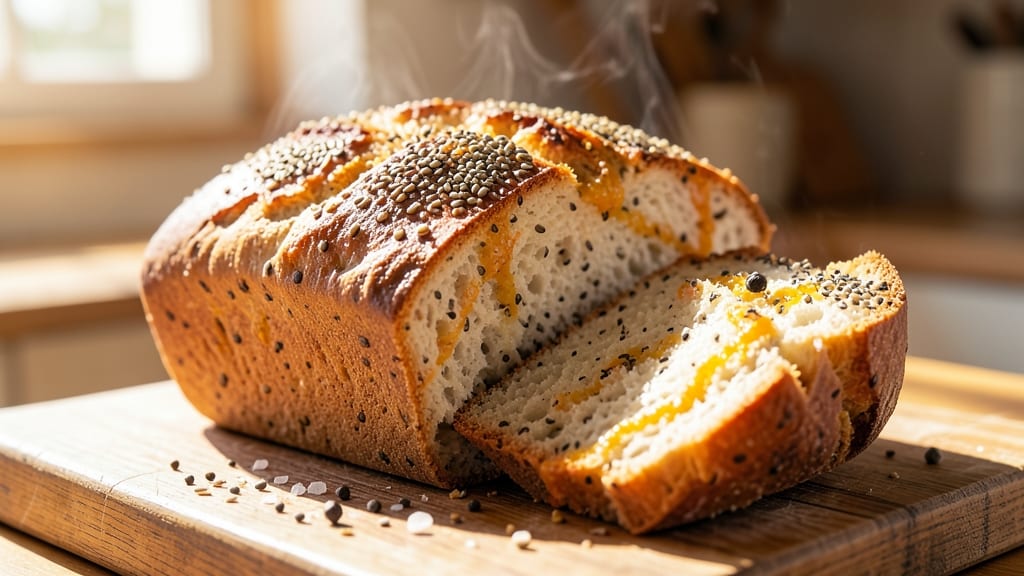
This anti-inflammatory sourdough bread recipe transforms traditional fermentation into a gut-healing powerhouse, blending turmeric’s golden benefits with ginger’s zing. 💛 The secret lies in whole-grain flours and fermented starter—nature’s probiotic—working together to reduce inflammation while delivering a crusty exterior and airy crumb.
Unlike standard sourdough, this version prioritizes ingredients like flaxseed and turmeric, which actively support digestive health and joint comfort.
The process is methodical yet rewarding: a slow fermentation (24 hours) enhances digestibility, while turmeric and ginger infuse the dough with warmth and anti-inflammatory compounds. No special equipment is needed—just patience and a few simple swaps (like replacing white flour with rye).
The result? A loaf that’s not only delicious but also packed with fiber, antioxidants, and gut-friendly bacteria.
What sets this bread apart is its dual purpose: it bakes into a crispy, golden crust with a tender interior, but it also functions as a functional food. The turmeric’s curcumin and ginger’s gingerol work synergistically to combat inflammation, while the sourdough fermentation itself improves nutrient absorption.
Perfect for toast, sandwiches, or simply enjoyed with olive oil and sea salt.
Whether you’re managing chronic inflammation or simply seeking a healthier sourdough option, this recipe delivers restaurant-quality texture with science-backed benefits. Let’s get started on a loaf that nourishes as much as it satisfies.
Ingredients for anti inflammatory sourdough bread
Whole-grain flours, fermented starter, and anti-inflammatory spices create a gut-healing loaf with golden crust and tender crumb.
| Ingredient | Amount | Notes |
|---|---|---|
| Unbleached White Flour 🌾 | 2 ½ cups | High-protein for structure |
| Organic Rye Flour 🌾 | 1 cup | Boosts fiber content |
| Ground Flaxseed 🌰 | ½ cup | Rich in omega-3s |
| Active Sourdough Starter 🍞 | 1 cup | 100% hydration preferred |
| Filtered Water 💧 | 1 ½ cups | Room temperature |
| Turmeric Powder 🌿 | 1 tbsp | Organic preferred for purity |
| Fresh Ginger 🌿 | 2 tbsp | Grated, for potent flavor |
| Sea Salt 🧂 | 1 ½ tsp | Diamond Crystal preferred |
| Honey 🍯 | 1 tbsp | Raw, for natural enzymes |
| Extra-Virgin Olive Oil 🫒 | 2 tbsp | Cold-pressed for quality |
| Black Peppercorns 🌶️ | ½ tsp | Freshly cracked |
| Sesame Seeds 🌰 | 1 tbsp | For topping, optional |
The organic rye flour and ground flaxseed are non-negotiable for fiber and omega-3s—they're what transform this into a functional food. King Arthur Unbleached Flour is my go-to for the white flour base, as it handles hydration well during the long fermentation. For the sourdough starter, 100% hydration (equal parts flour and water) yields the most probiotic activity. Bob's Red Mill organic rye flour has a deeper flavor, but any high-quality rye will work. The turmeric and ginger should be fresh or organic powder—Frontier Co-op carries excellent organic spices for this purpose. Always check for vibrant color in your turmeric; faded powder loses potency.
No organic rye flour? Whole wheat flour works in a pinch, though the texture will be denser. Substitute ground flaxseed with chia seeds at the same ratio, but flaxseed has a milder taste. Honey can be swapped for maple syrup if needed, though honey's natural enzymes support fermentation. For the sourdough starter, if you don't have one, store-bought active dry yeast (1/4 tsp) can kickstart fermentation, though it won't offer the same gut benefits. Fresh ginger can be substituted with ground ginger at half the amount, but fresh delivers more potent anti-inflammatory compounds. The sesame seeds are optional but add crunch and extra nutrients—Trader Joe's carries them at a reasonable price.
Ferment the dough for 24 hours in a cool environment (around 68°F) to enhance digestibility and flavor development. Store the starter in a clean glass jar with a loose lid in the fridge—it'll last weeks. The flaxseed keeps best in the freezer for up to 6 months to preserve its omega-3s. Baked loaves stay fresh for 3-4 days at room temperature, but slice and freeze for longer storage. For reheating, toast directly from frozen or warm in a 350°F oven for 5-10 minutes to restore crispiness. The turmeric and ginger lose potency over time, so replace after 6 months of storage.
Why You'll Love This Recipe
- No-Fuss Fermentation: I’ll admit, I used to avoid sourdough thinking it’d take days. But this recipe? Just mix the unbleached flour, organic rye, and ground flaxseed with your starter—no kneading, no fuss. The flaxseed even adds a subtle nuttiness that cuts down on active time.
- Earthy & Tangy: The rye flour gives it a deep, almost coffee-like richness, while the sourdough starter brings that familiar tang. Honestly, it’s the kind of bread that makes toast taste like a small victory—especially when you slather it with almond butter.
- Meal Prep MVP: Between us, this bread keeps for ages in the fridge, and it reheats beautifully. I slice it up on Sundays, freeze half, and pull out slices for quick sandwiches or charcuterie boards. The flaxseed also adds fiber, so it’s actually better the next day.
- Budget-Friendly Staple: Unbleached flour and rye are cheap, and a little starter goes a long way. I make a big batch, and it lasts my family for weeks—no sad, stale loaves here. Plus, the flaxseed adds protein, so it’s cheaper than buying fancy artisanal bread. Win-win.
Step-by-step instructions for anti-inflammatory sourdough bread
This method transforms gut-friendly ingredients into a vibrant, nutrient-rich loaf with turmeric's golden hue and ginger's zesty warmth.
👨🍳 Step 1: Mix the Fermented Dough Base
In a large mixing bowl, combine the 2.5 cups unbleached white flour and 1 cup organic rye flour. Add the 0.5 cup ground flaxseed, 1 cup active sourdough starter, 1.5 cups filtered water, 1 tbsp turmeric powder, 2 tbsp fresh ginger, 1.5 tsp sea salt, 1 tbsp honey, and 2 tbsp extra-virgin olive oil. Mix vigorously with a wooden spoon until a shaggy dough forms—this ensures even distribution of the anti-inflammatory ingredients.
I like to press the dough down firmly with my fingers to break up any dry pockets. The mixture should look thick and sticky, like wet sand. Let it rest for 10 minutes at room temperature while you prepare the next step. This initial rest allows the flaxseed to begin absorbing moisture and the starter to activate fully.
🥘 Step 2: Develop the Dough Through Autolyse
After the initial rest, use your hands to knead the dough gently for 5-7 minutes until it becomes smooth and elastic. The ground flaxseed will add density, so don't overwork it—just enough to develop gluten without activating it too aggressively. The dough should be slightly tacky but not sticky enough to cling to your fingers.
Shape the dough into a loose ball and place it in a lightly oiled bowl. Cover with a damp kitchen towel and let it undergo autolyse (a resting period) for 1 hour. This step is crucial—it allows the flours to hydrate fully and the starter to ferment gently. You'll notice the dough relax and become more pliable as it rests.
🔥 Step 3: Bulk Ferment with Turmeric-Ginger Infusion
After the autolyse, perform a series of stretch-and-folds every 30 minutes for 2 hours. To do this, wet your hands, grab one side of the dough, stretch it upward, and fold it over itself. Rotate the bowl and repeat, working through all four sides. This builds strength while distributing the turmeric and ginger evenly throughout the dough.
The dough should nearly double in size during this time, becoming light and airy. You'll see small bubbles forming on the surface—a sign the fermentation is active. The active sourdough starter will contribute to this rise, while the honey adds subtle sweetness that balances the earthy ginger and warm turmeric. Keep the dough at 70-75°F during this process for optimal fermentation.
⏰ Step 4: Shape and Final Proof
Once the dough has risen significantly (about 70-80% increase in volume), turn it onto a lightly floured surface and shape it into a round loaf. I press gently from the center outward to create surface tension, which helps develop an open crumb. Place the shaped dough in a banneton or bowl lined with a floured kitchen towel, seam-side up.
Cover loosely and let it proof for 2-3 hours until it has risen to about 120-150% of its original size. The dough should feel springy when pressed gently—if it springs back slowly, it needs more time. The extra-virgin olive oil will keep the dough supple during this final proof, while the black peppercorns add subtle heat that complements the turmeric's earthiness.
🔥 Step 5: Bake for Maximum Anti-Inflammatory Benefits
Preheat your oven to 425°F with a Dutch oven inside for 45 minutes. This creates a steam environment that promotes an open crumb and crispy crust. Carefully transfer the dough (with its proofing bowl) into the hot Dutch oven, then remove the bowl and bake for 30 minutes. You'll see the crust develop a golden-brown hue with hints of turmeric's signature color.
Remove the lid and bake for an additional 10-15 minutes until the internal temperature reaches 205-210°F and the crust is deep golden brown. The bread should sound hollow when tapped on the bottom. Let it cool on a wire rack for at least 1 hour before slicing—this allows the sesame seeds (sprinkled on top before baking) to adhere properly and the crumb to set fully.
Pro Tips For Making Anti Inflammatory Sourdough Bread
- STORE FLAXSEED DRY: Ground flaxseed goes rancid fast—store it in the freezer in an airtight container, not the pantry. I learned this the hard way when my bread tasted bitter after sitting too long; now I pull it straight from the freezer and let it warm to room temp before mixing.
- WEIGH YOUR STARTER: Use a scale for your sourdough starter—eyeballing it throws off hydration and fermentation. A 100g starter (fed and bubbly) gives consistent results; mine used to fail because I’d guess and end up with dense, gummy bread.
- BULK FERMENT COOLER: After mixing, let the dough rise at 70°F (21°C) for 4-6 hours, then move it to the fridge overnight. The slow cold ferment develops more flavor and reduces gluten—my bread used to taste flat until I discovered this two-stage rise.
- SCORE DEEP AND HOT: Use a razor blade to slash the dough just before baking at 450°F (232°C). The high heat makes the cuts open wide for that crispy crust; I used a dull knife at first and got sad little slashes instead of dramatic ear-like rises.
Serving suggestions for leftovers
Gut-Friendly Toppings
Start with avocado slices and smashed heirloom tomatoes—their healthy fats and lycopene complement the bread’s anti-inflammatory properties beautifully. I love drizzling extra-virgin olive oil (same as in the recipe) and sprinkling freshly cracked black pepper to enhance the turmeric’s warmth.
For extra protein, add smoked salmon or hummus made with ground flaxseed (just like in the dough). 🥑
Probiotic Pairings
Serve with fermented foods like kimchi or sauerkraut to amplify gut benefits. The lactic acid in these pairings works synergistically with the sourdough’s natural probiotics. I also recommend miso soup with tofu and scallions—its umami depth balances the bread’s earthy spices.
For a quick option, Greek yogurt with honey and chia seeds makes a refreshing spread.
Anti-Inflammatory Spreads
Cream the bread with almond butter (rich in vitamin E) or cashew cream for a dairy-free option. Add sliced banana and a pinch of cinnamon for natural sweetness that won’t spike inflammation.
For savory lovers, try mashed white beans with garlic, lemon zest, and olive oil—this Mediterranean-style spread is packed with fiber and antioxidants.
Seasonal Serving Ideas
In spring, pair with roasted asparagus and a poached egg for a protein boost. Summer calls for grilled vegetables (zucchini, bell peppers) and feta cheese. For fall, try caramelized onions and goat cheese with a drizzle of balsamic glaze.
In winter, warm the bread with bone broth and top with sautéed mushrooms and thyme for cozy comfort. 🍂
Breakfast Boosts
Toast slices and top with mashed avocado, everything bagel seasoning, and a soft-boiled egg. For a sweet option, spread with almond butter, sliced strawberries, and a sprinkle of hemp seeds.
The turmeric and ginger in the bread add natural sweetness that pairs perfectly with these toppings. Store leftovers in an airtight container for up to 3 days—reheat in a toaster or oven to restore crispiness.
Meal Prep Tips
Slice the bread and freeze portions in ziplock bags for quick toast later. To reheat, wrap slices in parchment paper and warm at 350°F for 5-7 minutes.
For sandwiches, use lettuce wraps or collard greens to avoid sogginess. The sesame seeds add crunch, so sprinkle them fresh after toasting to keep them crisp. 💡
Nutrition facts
Frequently asked questions
Why does this recipe use turmeric and ginger?
These spices are powerhouse anti-inflammatory ingredients! Turmeric's curcumin and ginger's gingerol work together to reduce inflammation in the body while adding warm, earthy flavor to the bread. The fermentation process actually enhances their bioavailability, making their benefits even more effective when consumed.
Can I make this bread without a sourdough starter?
Yes, but you'll miss out on some gut benefits. Use 1/4 teaspoon active dry yeast instead of the starter, but know this won't provide the same probiotic benefits. For best results, create a starter first by mixing 1 cup flour and 1 cup water, letting it ferment at room temperature for 5-7 days until bubbly.
How do I know when the dough is properly fermented?
Look for visual and tactile cues: the dough should nearly double in size with visible bubbles on the surface. When you press it gently, it should spring back slowly (not immediately). The aroma will be tangy and slightly sweet. For optimal fermentation, keep the dough at 70-75°F—a warm spot like near your oven with the light on works well.
What's the best way to store this anti-inflammatory bread?
Keep it in an airtight container at room temperature for up to 3-4 days. For longer storage, slice and freeze portions in ziplock bags. To restore freshness, toast directly from frozen or warm at 350°F for 5-7 minutes. The sesame seeds should be sprinkled fresh after toasting to maintain their crunch.
Can I substitute any of the flours?
You can, but texture and nutritional benefits may change. For the 1 cup rye flour, use whole wheat flour for similar fiber content (though denser). Replace 1/2 cup flaxseed with chia seeds at equal measure. Avoid white bread flour—it lacks the fiber and nutrients that make this bread anti-inflammatory. The rye and flaxseed are key for gut health benefits!