
Side Dishes
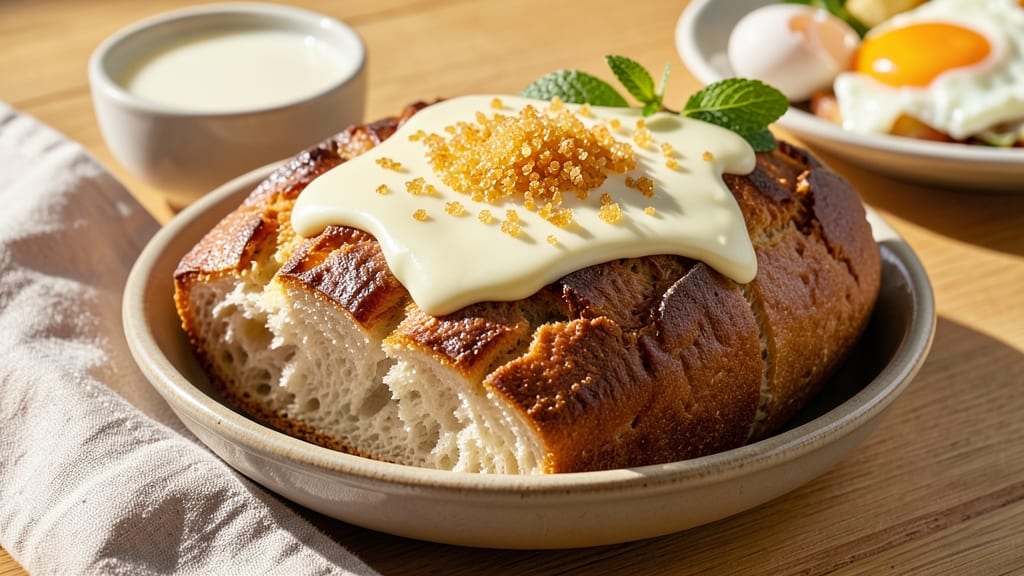
This Antigua Sunday bread recipe brings the heart of Caribbean tradition to your kitchen with its signature golden raisin swirls and subtle rum infusion. 🌟 The secret lies in slow fermentation and a touch of steam, creating that signature soft, slightly sweet crumb that melts in your mouth.
I first tasted this bread during a family gathering in Antigua, where it was always the centerpiece—warm, fragrant, and impossible to resist.
The magic happens in the dough, where sweet raisins and warm rum create pockets of flavor as they bake. Unlike quick breads, this recipe requires patience—letting the dough rise overnight develops depth and a tender crumb.
The steam from a water bath keeps it moist, while the golden crust forms a perfect contrast. It’s the kind of bread that feels like a hug, especially when served with butter or paired with morning tea.
What makes this recipe special is how it balances tradition with simplicity. You don’t need fancy equipment—just time and attention to detail. The raisins plump and caramelize slightly, while the rum adds warmth without overpowering.
The result is a loaf that’s soft inside, slightly crisp on the edges, and packed with flavor in every bite. Perfect for brunch, dessert, or as a sweet treat any time of day.
Once baked, let it cool slightly before slicing—this bread is best enjoyed fresh from the oven. Serve it warm with a pat of butter, a drizzle of honey, or alongside a cup of coffee for the full Antigua experience.
The aroma alone will transport you to the islands, where Sunday bread isn’t just a dish—it’s a celebration.
Ingredients for antigua sunday bread
Golden raisins, warm rum, and a touch of Caribbean magic—this bread brings Sunday mornings to life.
| Ingredient | Amount | Notes |
|---|---|---|
| All-Purpose Flour 🌾 | 5 cups | Unbleached for best texture |
| Granulated Sugar 🍚 | 1 cup | Light brown preferred for depth |
| Active Dry Yeast 🍞 | 2 ¼ tsp | Ensure yeast is fresh |
| Warm Milk 🥛 | 1 ¼ cups | Whole milk, 110°F (43°C) |
| Unsalted Butter 🧈 | ½ cup | Softened, not melted |
| Large Eggs 🥚 | 2 whole | Room temperature |
| Golden Raisins 🍇 | 1 ½ cups | Plumped in warm rum |
| Dark Rum 🍹 | ½ cup | Like Appleton Estate |
| Salt 🧂 | 1 tsp | Kosher or sea salt |
| Vanilla Extract 🌸 | 1 tsp | Pure vanilla preferred |
| Orange Zest 🍊 | 1 tbsp | Freshly grated |
| Water 💧 | 1 cup | For water bath |
The raisins are non-negotiable here—soaked in rum overnight is key for that signature plumpness and depth. Grab organic raisins from Whole Foods or the bulk section at Trader Joe's for the best quality. For rum, Appleton Estate or Havana Club are my go-tos—they add warmth without overpowering. If you can't find dark rum, spiced rum works too, but keep the amount to 1/3 cup to avoid bitterness. The yeast is the heart of this bread, so check the expiration date—old yeast won’t rise properly. Warm the milk to 110°F (43°C)—too hot and you’ll kill the yeast, too cold and it won’t activate.
No dark rum? Orange juice or apple juice can mimic the sweetness, though it’ll lack the rum’s depth. Swap brown sugar for white sugar if needed, but the bread will be slightly less moist. For a gluten-free version, use a 1:1 flour blend like Bob’s Red Mill, but expect a denser texture. The vanilla extract can be vanilla bean paste if you’re feeling fancy—it adds tiny specks of flavor. If you’re short on time, instant yeast works at the same amount, but active dry yeast gives that classic rise. The orange zest? Fresh is best, but dried zest in a pinch will work—just use double the amount.
This dough is a two-day project, but it’s worth it. After the first rise, cover it with a damp towel and let it sit in a warm spot—near the oven with the light on works perfectly. For the water bath, use a deep baking dish with at least 1 inch of water. The bread keeps well for 3 days at room temperature, wrapped in a towel, but it’s best enjoyed fresh. Freeze slices for up to 3 months—just toast straight from frozen. The crust gets crispier as it cools, so slice while still warm if you prefer a softer bite.
Why You'll Love This Recipe
- No Yeast Stress: I swear by this recipe because it’s one of those rare breads where you can’t mess up the yeast—just toss it in warm milk with a pinch of sugar, let it sit for 10 minutes, and boom, it’s ready. No waiting hours for proofing or worrying about overproofing.
- Buttery-Sweet Magic: That warm milk and butter combo? It’s what makes this bread dangerously good—soft, slightly sweet, with just enough richness to pair with jam, butter, or even savory dishes. Honestly, I’ve caught myself sneaking slices straight from the oven.
- Sunday Leftovers: Between us, this bread is perfect for making ahead. Bake a loaf on Sunday, and you’ve got breakfast, snacks, or sandwich bases covered all week. My kids actually ask for it on Wednesdays—no joke.
Step-by-step instructions for Antigua Sunday bread
This rich, rum-infused loaf delivers Caribbean comfort in one golden bake—here's how to nail it.
👨🍳 Step 1: Plump the Raisins and Mix the Dough
In a small bowl, combine the 1.5 cups golden raisins and 0.5 cup dark rum. Let them soak for 30 minutes while you prepare the rest—this ensures plump, flavorful raisins that burst with every bite. The rum's warmth will soften them perfectly.
In a large bowl, whisk together the 5 cups all-purpose flour, 1 cup granulated sugar, 2.25 tsp active dry yeast, 1 tsp salt, and 1 tbsp orange zest. This dry mix forms the aromatic base of your bread. In a separate bowl, beat the 2 whole large eggs, then whisk in the 1.25 cups warm milk (about 110°F), 0.5 cup softened unsalted butter, 1 tsp vanilla extract, and the drained raisin mixture.
Make a well in the dry ingredients and pour in the wet mixture. Using a wooden spoon, gently combine until a shaggy dough forms. The dough will be sticky—this is normal! Let it rest for 10 minutes while you prepare the next step.
🍳 Step 2: Knead and Shape the Dough
On a lightly floured surface, knead the dough for 8-10 minutes until smooth and elastic. You'll know it's ready when it springs back slowly when poked. If it feels too sticky, wet your hands slightly—flour will make it tough. Shape the dough into a 12x8-inch rectangle about 1-inch thick, then roll it tightly into a log.
Here's the magic: Cut the log diagonally into 8 equal pieces (about 2-inch thick each). Arrange them in a single layer in a greased 9x5-inch loaf pan, cutting sides if needed to fit snugly. The diagonal cut gives that classic Sunday bread look, and the tight arrangement ensures maximum rise.
🔥 Step 3: Proof and Bake to Golden Perfection
Cover the pan loosely with plastic wrap and let the bread rise in a warm place for 1-1.5 hours until the dough has nearly doubled in size. A gentle touch should leave a slight indentation—this confirms it's ready. Preheat your oven to 350°F while the bread proofs.
Bake the bread for 45-50 minutes until the top is deep golden brown and sounds hollow when tapped. For extra moisture, pour 1 cup water into the bottom of the oven during the last 15 minutes of baking. This creates steam that keeps the crumb tender.
⏰ Step 4: Rest and Slice for Maximum Flavor
Remove the bread from the oven and let it cool in the pan for 10 minutes, then transfer to a wire rack. The bread will firm up as it cools, but the interior remains moist and rich. For the best texture, slice it 1 hour after baking—this allows the rum and raisin flavors to fully meld.
Each slice should reveal a swirled rum-infused center with plump raisins peeking through. Serve warm with butter or jam for that true Antigua Sunday morning experience. The aroma alone will transport you to the Caribbean—no trip required!
Pro Tips For Making Antigua Sunday Bread
- Proof Until Doubled: DESCRIPTION:
- Mix Milk First: DESCRIPTION:
- Butter at Room Temp: DESCRIPTION:
- Shape Tightly: DESCRIPTION:
Regional styles of these flavors
Caribbean Family Tradition
This bread traces its roots to Antigua’s Sunday gatherings, where families would bake it fresh for breakfast. The rum and raisins symbolize celebration—rum for warmth, raisins for sweetness. I remember my grandmother always saying, "Sunday without this bread isn’t Sunday at all."
The recipe was passed down through generations, with each family adding their own twist. 🌴
Barbados Twist: Rum Cake Fusion
In Barbados, they often blend this bread with rum cake elements by adding 1/4 cup coconut flakes to the dough and a 1/2 cup rum-soaked currants instead of raisins.
The result is a denser, fruitier loaf with tropical notes. For extra richness, some bakers fold in 2 tbsp apricot jam during the shaping step.
Jamaican Spiced Version
Jamaican families elevate this bread with warm spices—add 1 tsp ground cinnamon and 1/2 tsp ground nutmeg to the dry ingredients, plus 1/4 cup grated pineapple mixed into the raisin-rum soak.
The pineapple adds brightness that cuts through the richness, while the spices create a cozy, aromatic profile perfect for winter mornings.
Dominican Citrus Swirl
For a zesty variation, Dominican bakers replace orange zest with 2 tbsp lime zest and add 1/4 cup chopped candied lime peel> to the raisin mixture. The lime’s acidity balances the sweetness, and the candied peel adds bursts of tangy sweetness.
Some even drizzle 2 tbsp lime juice> over the baked loaf before serving.
Modern Shortcut Method
Short on time? Use instant yeast> (same amount) and reduce the first rise to 45 minutes. For extra moisture, brush the baked loaf with 2 tbsp melted butter> mixed with 1 tsp vanilla.
This keeps the crumb tender without the overnight fermentation. The flavor won’t be as complex, but it’s still delicious and ready in half the time.
Serving Traditions
In Antigua, this bread is never eaten alone—it’s served with butter> (preferably salted), peanut butter,> or guava jam. For a full brunch spread, pair it with scrambled eggs> and saltfish.
Locals also use it to make French toast> by slicing and soaking in egg batter with cinnamon.
Nutrition facts
Frequently asked questions
Why does Antigua Sunday bread need to rise overnight?
The overnight rise creates that signature tender crumb and deep flavor. The slow fermentation allows the yeast to develop complex sugars and aromas, while the rum and raisins infuse the dough completely. This traditional method is what gives the bread its rich, slightly sweet taste that's so beloved in Antigua.
Can I make this bread without rum?
Yes! Replace the 0.5 cup dark rum with 0.5 cup orange juice or apple juice for sweetness. For extra flavor, add 1 tsp vanilla extract or 1/2 tsp cinnamon to the dough. The bread will still be delicious, though it'll lack the warm rum notes that make this recipe special.
What's the best way to store leftover Antigua Sunday bread?
Wrap cooled slices in plastic wrap or store in an airtight container at room temperature for 3 days. For longer storage, freeze slices for up to 3 months. Toast straight from frozen for that fresh-baked taste! The bread keeps best when protected from air exposure.
Why does the recipe call for a water bath during baking?
The water bath creates steam that keeps the bread moist and tender inside. Without it, the rich dough can dry out, especially with all the butter and milk. This traditional technique is what gives Antigua Sunday bread its signature soft, slightly dense texture that melts in your mouth.
Can I add nuts to this bread?
Try adding 1/2 cup chopped walnuts or pecans to the dough for texture. Toast the nuts first for extra flavor. For a Caribbean twist, use 1/4 cup macadamia nuts—they pair beautifully with the rum and raisins. Just be mindful of nut allergies if serving to others.