
Side Dishes
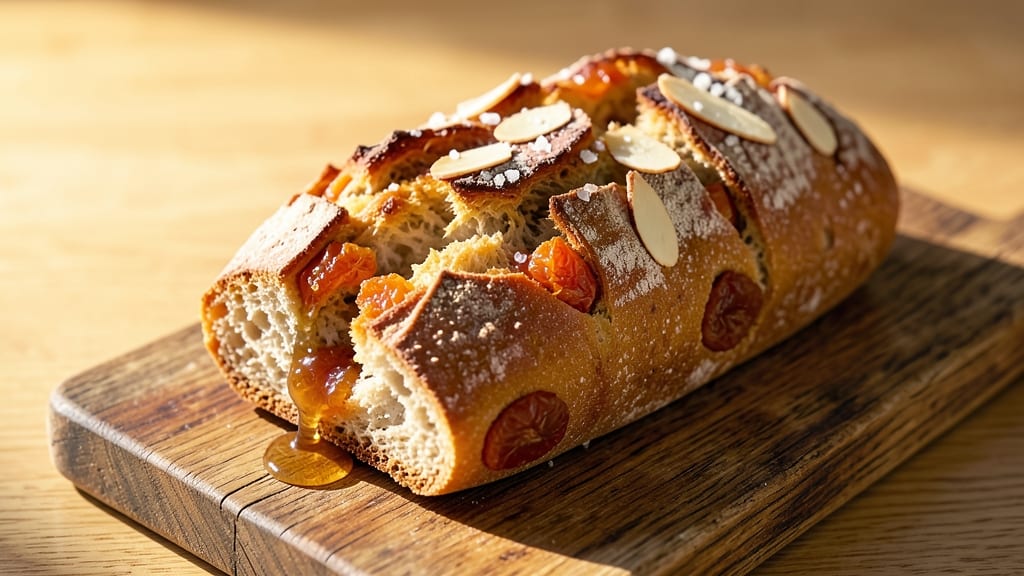
Apricot sourdough bread transforms your kitchen into a bakery with its golden crust and sweet-tart fruit swirls—no fancy equipment required. 🌟 The secret lies in balancing the tangy sourdough with apricots (fresh, dried, or jam) for a loaf that’s both rustic and irresistibly flavorful. This recipe delivers a crispy exterior, airy crumb, and pockets of jammy goodness that make every slice a showstopper.
What sets this recipe apart is the patient fermentation process, which develops deep flavor while keeping the bread light.
You’ll work with a hydrated dough (around 75%) that’s easy to handle, and the apricots—whether folded into the dough or baked as a topping—add natural sweetness that cuts through the sourdough’s acidity. The result? A loaf that’s perfect for breakfast, charcuterie boards, or gifting.
With precise timing and a few key techniques, you’ll achieve a loaf that’s crusty yet tender, with a golden-brown crust and a crumb studded with apricot bursts.
The recipe includes step-by-step guidance for sourdough starter prep, dough mixing, and baking, so even beginners can master this artisanal-style bread. No more store-bought loaves—just homemade perfection.
Once baked, the aroma alone will have everyone asking for seconds. Serve it warm with butter, or toast slices for a breakfast that feels like a vacation. Let’s get started on this foolproof recipe that turns simple ingredients into something extraordinary.
Ingredients for apricot sourdough bread
Transform your kitchen into a bakery with these twelve essential ingredients for artisanal apricot sourdough bread.
| Ingredient | Amount | Notes |
|---|---|---|
| Active Sourdough Starter 🍞 | ½ cup | 100% hydration, bubbly and active |
| All-Purpose Flour 🌾 | 4 cups | Unbleached, high-protein preferred |
| Granulated Sugar 🍚 | ¼ cup | For fermentation and sweetness |
| Unsalted Butter 🧈 | ½ cup | Softened, European-style preferred |
| Large Eggs 🥚 | 2 whole | Room temperature for even mixing |
| Whole Milk 🥛 | ¾ cup | Warmed for optimal hydration |
| Diamond Crystal Kosher Salt 🧂 | 1 ½ tsp | Adjust to taste for balance |
| Fresh Apricots 🍑 | 1 cup | Pitted and chopped, or jam substitute |
| Apricot Jam 🍯 | ¼ cup | High-quality, no added sugar preferred |
| Cornmeal 🌽 | ¼ cup | For dusting baking sheet |
| Water 💧 | ½ cup | Room temperature for mixing |
| Instant Yeast 🍞 | ¼ tsp | Optional, for extra rise |
The sourdough starter is the heart of this recipe—look for a bubbly, active culture that doubles in size within 4-6 hours. King Arthur or Caputo flour yields the best crumb structure, but unbleached all-purpose works in a pinch. For apricots, fresh is ideal (peach or nectarine work too), but high-quality jam like Bonne Maman adds convenience. The butter should be European-style—Plugrá or President brands deliver superior flavor. If your starter isn't ready, instant yeast can jumpstart fermentation, though purists may skip it entirely.
No fresh apricots? Dried apricots soaked in warm water work beautifully—just chop them finely. The jam should be unsweetened or low-sugar to avoid overpowering the dough. For a gluten-free adaptation, swap the flour for a 1:1 gluten-free blend and increase the water by 10%. The milk can be substituted with whole oat milk for a dairy-free version, though texture may vary slightly. When measuring flour, use the spoon-and-sweep method for consistency—packing the cup compresses the dough and alters fermentation.
Store your sourdough starter in the fridge between uses—it'll keep for up to 2 weeks. The dough can be shaped and refrigerated overnight for a slower rise and more complex flavor, then baked the next morning. Once baked, the bread stays fresh for 3-4 days at room temperature, wrapped in a clean kitchen towel. For longer storage, slice and freeze portions—up to 3 months. Toasting frozen slices restores crispiness perfectly. The jam swirls are best enjoyed within 2 days of baking for maximum fruit freshness.
Why You'll Love This Recipe
- Sweet & Simple Mix-In: This bread lets you use pantry staples—no fancy techniques. Just fold in chopped apricots (fresh or dried) and let the sourdough do the rest. My lazy Sundays now include a warm loaf with zero stress.
- Apricot Butter Magic: That caramelized sugar and butter combo with the jammy apricots? It’s like a hug in bread form. The eggs add richness, but the real star is how the fruit stays tender without turning mushy.
- Breakfast to Brunch: Slice it thick for French toast—trust me, the butter and sugar make it next-level. Or pack it in lunchboxes; kids actually eat the fruit-infused version. (Yes, even my picky teen.)
- Budget-Friendly Luxury: Dried apricots stretch further than fresh, and you’re using basic flour and starter you already have. A single batch feeds four for days, and the leftovers? Toasted with a smear of butter? Heavenly.
Step-by-step instructions for apricot sourdough bread
Master this technique and you'll achieve a perfectly balanced loaf with tender crumb, crisp crust, and sweet-tart apricot swirls.
👨🍳 Step 1: Prepare the Apricot Filling
In a small saucepan, combine the 1 cup fresh apricots (pitted and chopped) and 0.25 cup apricot jam. Warm over medium-low heat for 3-4 minutes until the jam melts and the mixture becomes syrupy. Mash the apricots slightly with a fork to create a chunky texture with pockets of fruit.
Remove from heat and let cool completely. This prevents the filling from steaming during baking, which would make your bread soggy. The cooled filling should be thick enough to hold its shape when swirled into the dough but still spreadable. Taste and adjust sweetness if needed—you want the apricot flavor to complement, not overpower, the bread's tangy sourdough character.
👨🍳 Step 2: Mix the Dough Components
In a large mixing bowl, combine the 0.5 cup active sourdough starter, 0.5 cup water, 0.25 tsp instant yeast, and 0.25 cup granulated sugar. Mix until the sugar dissolves completely—this kickstarts fermentation. Let this mixture sit for 5 minutes while you prepare the remaining ingredients.
In a separate bowl, whisk together the 4 cups all-purpose flour and 1.5 tsp diamond crystal kosher salt. The flour should be sifted to eliminate lumps and ensure even distribution. Warm the 0.75 cup whole milk and 0.5 cup unsalted butter together until the butter melts completely. This warm dairy mixture creates a tender crumb and helps develop gluten more efficiently.
🥘 Step 3: Combine and Develop the Dough
Add the flour mixture to the wet ingredients and mix with a wooden spoon until a shaggy dough forms. Gradually incorporate the 2 whole large eggs (room temperature) one at a time, mixing just until combined. The dough will be sticky at this stage—this is normal with sourdough. Transfer the dough to a lightly floured surface and knead for 8-10 minutes until smooth and elastic.
Here's the thing—sourdough dough behaves differently than commercial yeast dough. You're not looking for a perfectly smooth, windowpane-tight dough. Instead, aim for a slightly tacky, cohesive mass that springs back slowly when poked. If the dough feels too wet, add 1 tablespoon flour at a time until it holds together without sticking to your hands.
🥘 Step 4: Incorporate the Filling and First Rise
Transfer the dough back to your mixing bowl and create a well in the center. Add the cooled apricot filling and gently fold it into the dough using a spatula. Be careful not to overmix—you want the filling to create swirls rather than break up completely. Cover the bowl with a damp kitchen towel and let rise at room temperature for 1-2 hours or until doubled in size.
I recommend doing this rise in a warm spot, like near the oven with the light on. The dough should rise steadily without collapsing. If it rises too quickly (within 30 minutes), it's likely too warm—move it to a cooler spot. The goal is to develop flavor during this initial fermentation, so don't rush it. When the dough has clearly doubled, it's ready for shaping.
🔥 Step 5: Shape, Proof, and Bake to Golden Perfection
Line a baking sheet with parchment paper and dust it generously with 0.25 cup cornmeal. Transfer the risen dough to the prepared sheet and shape it into a round loaf by gently pulling the edges toward the center. The filling will naturally create beautiful swirls as you shape. Cover again and let proof for 30-45 minutes until the dough has risen another 25-30%.
Preheat your oven to 375°F with a baking stone or inverted baking sheet on the middle rack. Score the top of the loaf with a sharp serrated knife in a decorative pattern—this allows the bread to expand properly and creates that coveted artisan look. Bake for 30-35 minutes until the crust is deep golden brown and the internal temperature reaches 190-195°F.
For that perfect crust, I like to spray the oven walls with water during the first 5 minutes of baking. This creates steam that promotes oven spring and enhances browning. Let the bread cool on a wire rack for at least 1 hour before slicing—this allows the crumb to set properly and prevents a gummy texture.
Pro Tips For Making Apricot Sourdough Bread
- STRETCH THE DOUGH: Don’t rush the final fold—give the apricot-infused dough at least 20 minutes of gentle stretching and folding (every 30 minutes, three times total). I learned this the hard way when my first batch turned out dense; the apricots need time to distribute evenly, and the gluten structure builds slowly with the extra fruit weight.
- SOAK THE FRUIT: Toss chopped apricots in 1 tablespoon of sugar and let them sit for 10 minutes before mixing into the dough. This jumpstarts their juices and prevents them from drying out the bread. (Yes, even if you’re impatient like me—just don’t skip it.)
- WEIGH THE BUTTER: Use a scale for the butter (85g for this recipe) and let it soften to room temp, but not greasy. Packed cups lie—you’ll end up with a greasy dough that won’t hold its shape. I was skeptical until I tried it: the crumb stays tender without turning gummy.
- PROOF AT 75°F: Skip the oven or warm drawer if your kitchen’s below 72°F—proof the dough in a turned-off oven with a bowl of hot water nearby to maintain steady warmth. My first batch in a chilly kitchen took five hours to rise properly. A cheap thermometer ($10) saves sanity.
Essential equipment for perfect results
Must-Have Baking Tools
Start with a large mixing bowl (at least 8-quart capacity) for combining dough ingredients—stainless steel or glass works best. A wooden spoon and dough scraper help prevent sticking, while a digital kitchen scale ensures precise measurements for consistent results.
For shaping, a lightly floured surface or banneton basket (if making a boules-style loaf) creates professional texture. 🌟
Pro Equipment Upgrades
Invest in a baking stone or steel to mimic commercial oven performance—preheat it alongside your bread for 30 minutes before baking. A laser thermometer (like Thermoworks Thermapen) ensures your bread reaches 190-195°F internal temperature without guesswork.
For scoring, a sharp serrated knife or lamé gives clean cuts that encourage expansion.
Budget-Friendly Swaps
Skip the scale? Use measuring cups and spoons—just level them off for accuracy. A cast-iron skillet can double as a baking vessel if you don’t have a stone.
For proofing, repurpose a clean glass jar with a lid to create a mini proofing chamber by placing it in a warm oven with a bowl of boiling water for humidity.
Apricot Prep Essentials
For fresh apricots, a small saucepan and wooden spoon work perfectly to warm the filling. A fine-mesh sieve helps strain excess liquid if your jam is too runny.
Store-bought jam? Use Bonne Maman or Smucker’s—both melt smoothly without graininess. Keep a small bowl nearby to cool the filling completely before mixing into dough.
Oven and Heat Control
Your oven’s broiler setting isn’t just for toasting—use it for 5 minutes at the end of baking to crisp the crust. A thermometer probe (like Meater) clips to the oven rack to monitor temperature fluctuations.
For even heat, rotate your baking sheet halfway through if your oven has hot spots. 🔥
Cooling and Storage Gear
Let bread cool on a wire rack (not a countertop!) to prevent sogginess. Store leftovers in an airtight container with a paper towel to absorb moisture. For freezing, wrap slices in plastic wrap and place in a ziplock bag—they’ll stay fresh for 3 months.
A sharp bread knife (like German-style with serrated edges) ensures clean slices every time.
Nutrition facts
Frequently asked questions
Can I substitute dried apricots for fresh in this recipe?
Use ½ cup dried apricots soaked in warm water for 20 minutes to rehydrate, then drain well and chop finely. The texture will be slightly denser than fresh, but the flavor remains rich. For a jam substitute, blend soaked apricots with a little water until smooth, then proceed with the recipe.
Why does my sourdough starter need to be active?
The starter provides natural yeast and bacteria that create the bread's signature tangy flavor and light texture. An active starter (bubbly, doubles in 4-6 hours) ensures proper fermentation. If yours is sluggish, feed it 1:1:1 ratio (starter:flour:water) 12-24 hours before baking. A weak starter can result in dense bread or flat loaves.
How do I know when the dough has risen enough?
Look for the dough to double in size and feel noticeably lighter when pressed gently. It should spring back slowly (not immediately) when poked. For this recipe, aim for 1-2 hours at room temperature. If it rises too quickly (30 minutes), your kitchen is too warm—move it to a cooler spot. Overproofing makes the bread dense and flat.
Can I make this bread without a baking stone?
Yes! Use a cast-iron skillet or inverted baking sheet on the middle oven rack. For extra crustiness, place a tray of boiling water in the oven during baking to create steam. Preheat everything for 30 minutes to mimic professional results. The bread may take 5-10 extra minutes to bake without a stone.
What if my apricot filling is too runny?
Strain excess liquid through a fine-mesh sieve or simmer the filling uncovered for 2-3 minutes to thicken. For a quick fix, mix in 1 tsp cornstarch with 1 tsp water, stir into the filling, and cook until thickened. The filling should hold its shape when swirled but remain spreadable. Too-thin fillings can make the bread soggy.