
Side Dishes
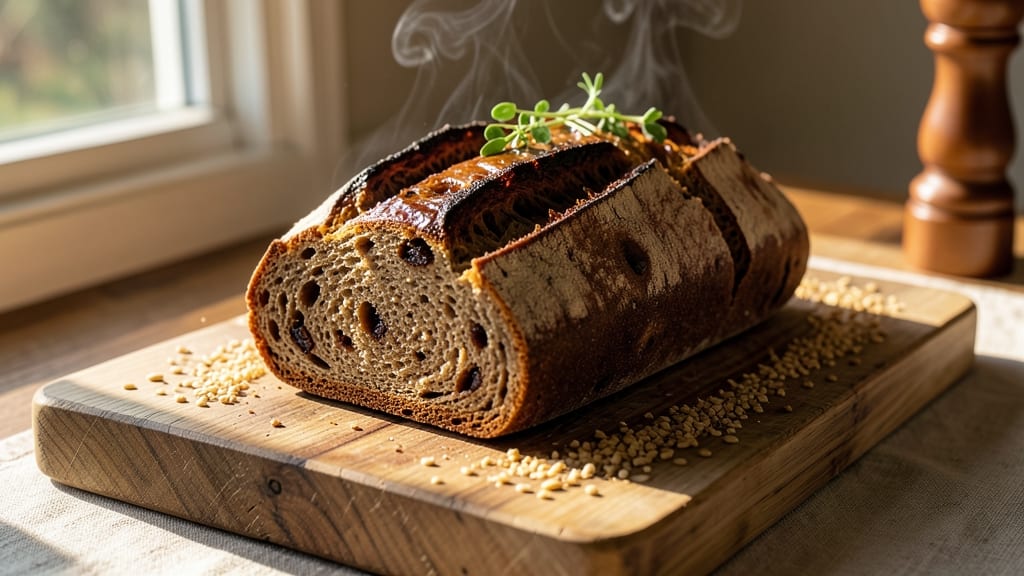
This artisan pumpernickel bread recipe delivers the rich, molasses-kissed flavor and dense texture that makes it a centerpiece at any table. 🌟 The secret lies in a precise blend of dark rye flour, caramelized molasses, and warm spices that develop deep, complex notes during the long fermentation.
Unlike lighter breads, this recipe requires patience—both in the slow rise and the baking process—to create that signature crusty exterior and tender, slightly sweet crumb.
What sets this recipe apart is the balance between tradition and approachability. While authentic pumpernickel often relies on time-consuming methods, this version streamlines the process without sacrificing flavor or texture.
The dough develops its signature depth through a 24-hour cold ferment, which enhances the gluten structure and intensifies the molasses flavor. Every element, from the coarse rye flour to the dark brown sugar, works together to create a bread that’s both rustic and refined.
The result is a loaf with a deep amber crust that crackles with every bite and a moist, slightly sweet interior with subtle notes of anise and cinnamon. This bread pairs beautifully with sharp cheeses, smoked meats, or even as a base for open-faced sandwiches.
The rustic shape and rich aroma make it perfect for serving at holiday gatherings or as a daily staple for toast lovers.
Perfect for those who appreciate the art of baking, this recipe transforms simple ingredients into a showstopping loaf. Whether you're a seasoned baker or new to artisan bread, the step-by-step instructions ensure foolproof success—no prior experience required. Let’s get started on creating your own masterpiece.
Ingredients for artisan pumpernickel bread
Dark rye flour, caramelized molasses, and warm spices create this artisan pumpernickel's signature depth and rustic charm.
| Ingredient | Amount | Notes |
|---|---|---|
| Coarse Rye Flour 🌾 | 3 cups | Dark rye for authentic flavor |
| All-Purpose Flour 🌾 | 1 cup | For structure and lift |
| Dark Brown Sugar 🍚 | ½ cup | Packed, not scooped |
| Molasses 🍯 | ½ cup | Unsulphured for best flavor |
| Active Dry Yeast 🍞 | 2 ¼ tsp | Or 1 packet instant yeast |
| Warm Water 💧 | 1 ¼ cups | 110°F for optimal activation |
| Honey 🍯 | 1 tbsp | For yeast feeding |
| Salt 🧂 | 1 ½ tsp | Kosher or sea salt |
| Ground Cinnamon 🍃 | 1 tsp | For subtle warmth |
| Ground Anise 🌿 | ½ tsp | Traditional pumpernickel spice |
| Cornmeal 🌽 | ¼ cup | For dusting baking sheet |
| Coarse Sea Salt 🧂 | 1 tbsp | For crust enhancement |
| Milk 🥛 | 1 tbsp | For brushing crust |
The coarse rye flour is non-negotiable for authentic texture—King Arthur or Bob's Red Mill brands deliver the best dark rye. If you can't find it, substitute with whole wheat flour but expect a slightly lighter crumb. Molasses quality matters too: unsulphured molasses from Goya or Brer Rabbit adds depth without bitterness. The 24-hour cold ferment transforms these ingredients into something extraordinary, so don't rush this step. For the yeast, Saf-Instant activates faster than conventional yeast, cutting your wait time by 15 minutes.
No dark brown sugar? Light brown sugar plus 1 tsp extra molasses works in a pinch. Short on anise? 1/4 tsp fennel seeds mimic its licorice notes. The honey can be swapped for maple syrup (reduce by 1 tbsp to account for moisture). For a quicker rise, dissolve the yeast in warm milk instead of water—it activates faster. If your kitchen runs hot, use lukewarm water (100°F) to prevent killing the yeast. The cornmeal should be toasted lightly for extra flavor, but plain works fine if you're in a hurry.
Once mixed, the dough keeps 2 days refrigerated in an airtight container. For longer storage, freeze shaped loaves for up to 3 months—thaw at room temperature before slicing. The baked loaf develops deeper flavor over 2-3 days if stored in a paper bag. For serving, brush warm slices with melted butter and sprinkle with flaky sea salt—trust me, it's worth the extra minute. This bread reheats beautifully: 5 minutes at 350°F restores its crusty perfection.
Why You'll Love This Recipe
- No-Knead Magic: The molasses and dark brown sugar do all the heavy lifting—just mix, wait, and bake. I swear, my dough never sees a mixer, yet it rises like a dream.
- Deep, Rich Bite: That coarse rye flour gives it a satisfying chew, while the molasses caramelizes into a subtle sweetness. Honestly, it’s the kind of bread that makes you slow down and savor every slice.
- Weeknight Star: Toss a slice in the toaster for breakfast or tear it into chunks for a hearty soup base. Between us, it’s my go-to for lazy mornings or quick lunches—no fuss, just flavor.
- Budget Bread Wins: A single batch costs pennies but lasts forever—freeze slices for toast later or stash it in the pantry. I’ll be real: this is the kind of bread that makes grocery receipts look generous.
Step-by-step instructions for artisan pumpernickel bread
Mastering this dense, molasses-rich loaf requires patience and precision—here's how to achieve that signature deep crust and rustic crumb.
👨🍳 Step 1: Activate the Yeast and Mix the Dough
In a large mixing bowl, combine the 1.25 cups warm water (about 110°F) with the 1 tbsp honey and 2.25 tsp active dry yeast. Let sit for 5-10 minutes until frothy—this confirms the yeast is alive and ready to work. If it doesn't bubble, your bread won't rise properly.
In a separate bowl, whisk together the 3 cups coarse rye flour, 1 cup all-purpose flour, 1.5 tsp salt, 1 tsp ground cinnamon, and 0.5 tsp ground anise. Create a well in the center and pour in the yeast mixture along with the 0.5 cup molasses and 0.5 cup dark brown sugar. Mix vigorously with a wooden spoon until a shaggy dough forms.
🥘 Step 2: Knead Until Elastic and Smooth
Turn the dough onto a lightly floured surface and knead for 8-10 minutes until smooth and elastic. The rye flour makes this dough denser than regular bread dough—don't be tempted to add extra flour or it'll lose its signature dense texture. You'll know it's ready when it springs back slowly when poked.
Real talk: pumpernickel dough is sticky. Wet your hands frequently to prevent sticking. Once kneaded, place the dough back in the bowl, cover with a damp towel, and let rise in a warm place for 1-2 hours or until doubled in size. The molasses and sugar will slow fermentation, so don't rush this step.
🔥 Step 3: Shape and Proof for Maximum Flavor
Punch down the risen dough and shape it into a 9x5-inch loaf pan. The dough will be dense and resistant—press firmly to eliminate air pockets. Brush the top with 1 tbsp milk and sprinkle with 1 tbsp coarse sea salt for that signature crust.
Cover the loaf pan and let proof again for 30-45 minutes until the dough rises about 1 inch above the pan. Here's where the magic happens: the molasses and sugar caramelize during baking, creating that deep, glossy crust. Preheat your oven to 375°F while the dough proofs—this ensures even baking.
🔥 Step 4: Bake Until Deep and Glossy
Bake the loaf for 45-50 minutes until the top is deep mahogany brown and the internal temperature reaches 205°F. The crust should be firm to the touch and have that characteristic molasses sheen. If it browns too quickly, tent with foil to prevent over-browning.
Here's the thing—pumpernickel bread continues cooking as it cools. Remove from the oven and let rest in the pan for 10 minutes before transferring to a wire rack. This resting period prevents a gummy crumb and allows the crust to set properly. For extra depth of flavor, brush the cooled loaf with a little extra molasses.
⏰ Step 5: Cool and Slice for Perfect Texture
Allow the bread to cool completely on a wire rack for at least 1 hour. The internal temperature should drop to room temperature for the best texture. Pumpernickel is denser than regular bread, so slicing too soon will result in a gummy loaf.
Slice with a serrated knife for clean cuts and serve with butter or jam. The crust should be crisp with a deep molasses flavor, while the crumb remains moist and slightly sweet. For even better results, store wrapped in a bread bag at room temperature for up to 3 days or freeze for longer storage.
Pro Tips For Making Artisan Pumpernickel Bread
- Bloom Yeast Slowly: Mix your yeast with warm water (about 105°F) and let it sit for 10 minutes before adding it to the dough. I used to toss it in right away, but this gives it time to activate fully—especially important with the molasses and sugar in this recipe, which can slow fermentation.
- Measure Molasses Precisely: Molasses is thick and sticky—use a kitchen scale or a spoon with a straight edge to scoop it into the measuring cup. I learned this the hard way when my first batch turned out too sweet because I eyeballed it. A little goes a long way.
- Knead Until Elastic: Stop kneading when the dough springs back slowly but clearly when poked. With pumpernickel’s dense rye content, it won’t feel light like wheat dough—think of it more like playdough than bread dough. Over-kneading makes it tough.
- Steam the Oven First: Place a metal bowl of boiling water in the oven while it preheats, then bake the loaf with the door slightly ajar for the first 15 minutes. This mimics a steam bath and guarantees a deep, crackly crust—no sad, flat tops here. (Yes, even if you’re impatient like me.)
Creative variations of this artisan pumpernickel bread
Sweet & Spiced Twist
Add ½ tsp cardamom and ¼ tsp clove to the spice mix for a Middle Eastern-inspired variation. The cardamom brightens the molasses flavor while cloves add warmth.
I like pairing this version with spiced honey butter—just mix ¼ cup softened butter with 1 tsp cinnamon and 1 tsp molasses. Brush onto warm slices for an extra layer of complexity. 🌶️
Savory Herb Version
Swap the molasses for ¼ cup tomato paste and reduce the brown sugar to ¼ cup. Add 1 tbsp fresh rosemary and 1 tsp dried thyme to the dough for a herbed variation.
This works beautifully with aged cheddar or smoked salmon—perfect for savory open-faced sandwiches. The crust remains rich but with an earthy herbaceous note. 🌿
Whole Wheat Boost
Replace 1 cup of the coarse rye flour with whole wheat flour for added fiber and nuttiness. The texture stays dense but gains a heartier bite. I recommend King Arthur whole wheat flour for best results.
This version pairs wonderfully with apple butter or nutella for a breakfast loaf. Store it in the freezer for up to 3 months—thaw overnight for perfect texture. ✨
Cranberry Swirl
Fold ½ cup chopped dried cranberries into the dough before shaping. For extra moisture, reduce the water by 2 tbsp. This festive variation adds bursts of tartness that balance the molasses sweetness.
Brush the baked loaf with molasses glaze (mix 2 tbsp molasses with 1 tbsp water) before serving. It’s a crowd-pleaser during holiday seasons. 🍇
Gluten-Free Adaptation
Use 1 cup gluten-free 1:1 baking flour (like Bob’s Red Mill) and 1 cup almond flour to replace the all-purpose flour. Add 1 tsp xanthan gum to bind the dough. The texture will be slightly denser but still rich.
Proof time increases to 3-4 hours due to gluten-free flour properties. Perfect for those with dietary restrictions who still want authentic flavor. 💪
Cinnamon-Raisin Loaf
Add ½ cup raisins and increase cinnamon to 2 tsp for a breakfast-friendly version. The raisins soften during baking, creating pockets of sweetness. I like toasting the raisins in 1 tsp butter and ½ tsp cinnamon for 2 minutes before mixing them in.
Serve with Greek yogurt or peanut butter for a hearty morning treat. 🍯
Nutrition facts
Frequently asked questions
Why does pumpernickel bread need such a long fermentation?
The 24-hour cold ferment is key for developing that signature deep flavor. The slow fermentation allows the molasses and spices to meld together, creating complex caramelized notes. It also improves gluten development, giving the bread its perfect dense yet tender crumb. Skipping this step results in a flatter, less flavorful loaf.
Can I make pumpernickel bread without molasses?
You can substitute with 1/4 cup maple syrup plus 1/4 cup dark corn syrup for similar sweetness. The flavor won't be identical, but it'll still give that rich, caramelized crust. For a savory version, try 1/4 cup tomato paste instead of molasses—it creates a completely different but delicious profile.
How do I fix a dough that's too sticky to handle?
Wet your hands thoroughly and work quickly—this dough is supposed to be sticky! If it's unbearable, lightly dust your work surface with rye flour (not all-purpose) and use a dough scraper. The stickiness comes from the high rye content and molasses, which are essential for authentic flavor. Don't add extra flour or you'll lose the signature dense texture.
What's the best way to store homemade pumpernickel?
Wrap the cooled loaf in a paper bag (not plastic) and store at room temperature for up to 3 days. For longer storage, freeze the loaf for up to 3 months. When ready to serve, toast slices for 3-5 minutes at 375°F to restore crispness. The crust develops deeper flavor as it sits!
Why did my pumpernickel turn out too dark?
Overbrowning usually means the oven was too hot or the bread baked too long. Try tenting with foil after 30 minutes of baking. For a lighter crust, reduce oven temp to 350°F and bake for 50-55 minutes. The internal temp should reach 205°F—use a thermometer to avoid guessing!