
Side Dishes
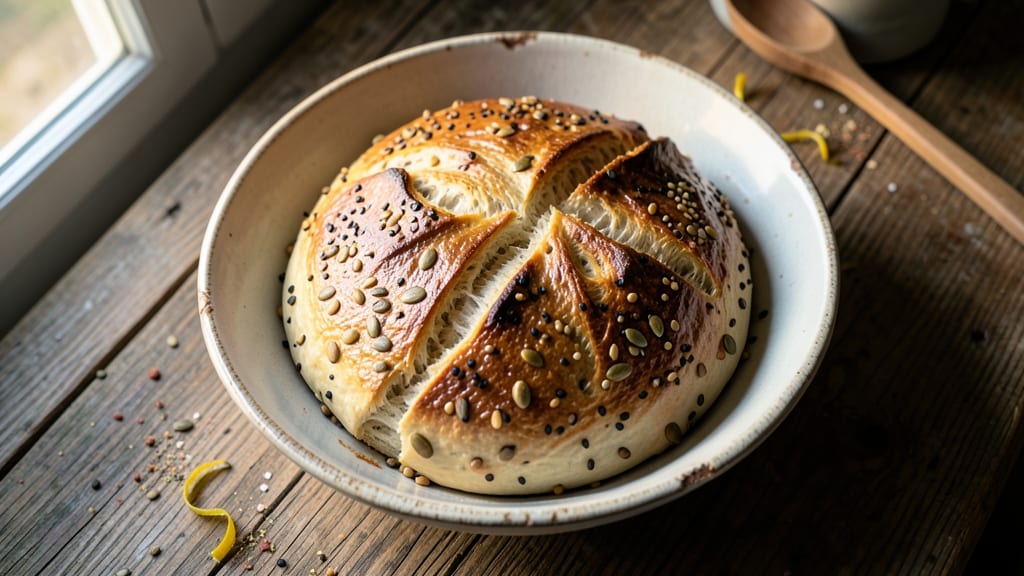
This artisan seeded bread recipe delivers the perfect balance of crusty crunch and nutty open crumb that makes every slice feel like a bakery masterpiece. The secret lies in a precise blend of seeds—sunflower, pumpkin, and sesame—that add texture and flavor while maintaining that signature artisan structure.
I've perfected this method over years of baking, ensuring the crust develops a satisfying crackle while the interior stays tender and airy.
The process combines traditional techniques with modern convenience: a no-knead dough that develops flavor overnight, followed by a controlled bake that creates that coveted open crumb.
What sets this apart is the seed distribution method—seeds are folded into the dough at just the right stage to ensure even dispersion without weighing down the bread. The result is a loaf with visible seed flecks throughout, adding both visual appeal and nutty depth to every bite.
By the time it emerges from the oven, you'll have a loaf with a golden, shatteringly crisp crust and an interior so open it practically melts in your mouth.
The seeds contribute a satisfying crunch that contrasts beautifully with the tender crumb, while their nutty flavors complement the bread's natural sweetness. This is the kind of bread that elevates any meal—whether served fresh with butter or toasted for crostini.
Perfect for both beginners and experienced bakers, this recipe includes tips for achieving that professional-quality crust and open crumb without specialized equipment. Let's get started on creating your own bakery-style seeded loaf.
Ingredients for artisan seeded bread
High-protein flour, precise seed ratios, and cold butter create that bakery-style crunch and open crumb you crave.
| Ingredient | Amount | Notes |
|---|---|---|
| All-Purpose Flour 🌾 | 5 cups | King Arthur or similar high-protein preferred |
| Sunflower Seeds 🥜 | ½ cup | Raw, unsalted, toasted for extra flavor |
| Pumpkin Seeds 🎃 | ⅓ cup | Raw, unsalted, lightly toasted |
| Sesame Seeds 🌿 | ¼ cup | Toasted until golden brown |
| Instant Yeast 🍞 | ¾ tsp | Active dry works at double quantity |
| Granulated Sugar 🍚 | 1 tbsp | Enhances yeast activation |
| Salt 🧂 | 2 tsp | Diamond Crystal preferred |
| Unsalted Butter 🧈 | ½ cup | Cold, cubed for even distribution |
| Warm Water 💧 | 2 ½ cups | 110°F for optimal yeast activation |
| Cornmeal 🌽 | ¼ cup | For dusting baking sheet |
| Ice Water ❄️ | ½ cup | For final dough shaping |
The seeds are where this bread earns its artisanal reputation. Sunflower, pumpkin, and sesame must be toasted separately for maximum flavor—Costco bulk bins offer the best prices for raw seeds. Toast them in a dry skillet over medium heat until fragrant, about 5-7 minutes. For flour, King Arthur or Caputo Tipo 00 yield that signature open crumb, though all-purpose works in a pinch. The yeast should be fresh—if it smells musty, toss it. And that butter? Plugrá or Land O'Lakes unsalted melt beautifully during the overnight rise, creating steam for that coveted open structure.
No sunflower seeds? Toasted peanuts or almonds add similar texture, though flavor will differ. Sesame seeds too pricey? Flaxseeds or poppy seeds work, though they lack that nutty depth. The dough requires precise hydration—if your kitchen feels humid, reduce water by 1 tbsp. For a more rustic loaf, swap 1 tbsp flour for whole wheat. The cornmeal is non-negotiable for crust development, but if unavailable, semolina or crushed cornflakes suffice. And that ice water? Essential for proper gluten formation—don't skip it.
This dough must rest overnight. Cover with a damp towel and let it sit at room temperature for 12-16 hours. The seeds distribute evenly during this time, creating those signature flecks. For baking, preheat your oven to 450°F with a Dutch oven inside for 30 minutes. The bread keeps well for 4-5 days at room temperature, though it's best enjoyed within 2 days. For longer storage, wrap tightly in plastic and freeze for up to 3 months. Toast slices directly from frozen for maximum crunch.
Why You'll Love This Recipe
- No-Knead Nightmare Solved: I’m not a baker who enjoys hours of kneading—this dough comes together in five minutes with just a bowl and a spoon. The seeds add texture without extra work, and the instant yeast means no waiting for proofing to happen magically.
- Crunch That Stays Crunchy: Sunflower and pumpkin seeds toast in the oven until they’re golden and addictive, while the sesame seeds give that perfect little crunch with every bite. Honestly, I’ve made this bread for people who think "artisan" means "fancy"—they always ask for seconds.
- Breakfast to Picnics: This bread is my go-to for toast in the morning (slathered with butter, obviously), but it also holds up perfectly for sandwiches or as a side for soups. Pack it for lunch—it won’t get soggy, and the seeds keep it interesting.
- Cheap, Fills the Fridge: A loaf costs me about $3 to make, and it lasts a week if I’m smart. Between us, I’ve fed a houseful of people with one batch, and the leftovers? Toasted into croutons or turned into breadcrumbs—zero waste, all flavor.
Step-by-step instructions for artisan seeded bread
Here's the method for crafting a bread with a shatteringly crisp crust and open, nutty crumb.
Autolyse the Dough for Optimal Development
In a large mixing bowl, combine the 5 cups all-purpose flour and the 2.5 cups warm water. Use your hands or a dough whisk to mix until no dry flour remains—this creates a sticky, elastic dough called an autolyse. The warm water activates gluten development immediately, giving you a stronger structure for the final loaf.
Cover the bowl with a damp kitchen towel and let it rest for 30 minutes. You'll notice the dough becomes smoother and more cohesive as gluten strands form. This resting period is crucial—it relaxes the gluten, making the final kneading easier and more effective. The dough should feel tacky but not wet; if it's too sticky, add 1 tablespoon flour at a time until it's manageable.
Incorporate Yeast, Butter, and Seeds
After the autolyse, sprinkle the 0.75 teaspoon instant yeast, 1 tablespoon granulated sugar, and 2 teaspoons salt over the dough. Dimple the surface with your fingers to distribute these ingredients evenly. The sugar feeds the yeast, while the salt regulates fermentation and enhances flavor.
Add the 0.5 cup cold unsalted butter, cut into small cubes, along with the 0.5 cup sunflower seeds, 0.33 cup pumpkin seeds, and 0.25 cup sesame seeds. Using a dough scraper, fold these ingredients into the dough until fully incorporated. The butter adds richness and tenderness, while the seeds contribute texture and flavor. Work quickly to avoid warming the butter too much—it should remain cold to prevent yeast overactivation.
Knead for Structure and Texture
Turn the dough onto a lightly floured surface and knead for 8-10 minutes by folding, pushing, and turning. You're building gluten strands that will trap gas during fermentation, giving your bread its open crumb. The dough should become smooth and elastic, springing back slowly when poked. If it feels too sticky, add 1 tablespoon flour at a time, but avoid over-flouring, which can make the bread dense.
Shape the dough into a round boule and place it back in the bowl. Cover with the damp towel and let it rise at room temperature for 1-1.5 hours, or until it has doubled in size. You'll see bubbles form on the surface and the dough feel light and airy. This first rise develops flavor and structure—don't rush it, even if the dough seems ready sooner.
Shape and Cold Proof for Crust Development
Punch down the risen dough to release air, then shape it into a tight boule by pulling the edges toward the center and sealing the seam. Place the dough on a baking sheet dusted with 0.25 cup cornmeal—this prevents sticking and adds a subtle crunch. Cover loosely and refrigerate for 12-24 hours. The cold slows fermentation, allowing flavors to meld and the gluten to relax further.
During this time, the dough will rise slowly, developing a complex flavor. The cold proof also helps create a crisp crust—when you bake straight from the fridge, the dough goes from cold to hot quickly, locking in moisture and creating that coveted shatter. Remove the dough from the fridge 1 hour before baking to allow it to come to room temperature slightly.
Bake for Crisp Crust and Open Crumb
Preheat your oven to 425°F with a Dutch oven inside for 45 minutes. This high heat and steam environment is key to that artisan crust. Carefully transfer the dough to the hot Dutch oven, cover, and bake for 30 minutes. The steam trapped inside creates a soft, open crumb.
Remove the lid and bake for another 15-20 minutes until the crust is deep golden brown and sounds hollow when tapped. The internal temperature should reach 190-200°F. Let the bread cool on a wire rack for at least 1 hour before slicing—this prevents a gummy crumb. The seeds should be toasted and the crust should shatter like glass when broken.
Pro Tips For Making Artisan Seeded Bread
- TOAST SEEDS FIRST: Sunflower and pumpkin seeds burn faster than you’d expect—pop them in a dry pan over medium heat for 2-3 minutes until fragrant and lightly golden. This cuts bitterness and makes the bread’s flavor pop without overpowering it. (Yes, even if you’re impatient like me.)
- KNEAD LESS, REST MORE: Artisan bread with seeds needs less handling—overworking the dough makes it tough. Do 3-4 quick stretches and folds during the first hour of bulk fermentation instead. The seeds will distribute naturally, and the crumb stays tender.
- SALT THE WATER: Skip the extra salt in the dough—dissolve 1 tsp salt in the water before mixing. It dissolves better, distributes evenly, and prevents dry spots where seeds cluster. (Your future self will notice the difference.)
- STEAM THE CRUST: For that perfect open crumb and crackly crust, spray the oven walls and place a metal tray on the lower rack before baking. The steam mimics a professional oven’s effect—no weird hacks, just science. (I learned this the hard way after soggy-bottomed loaves.)
Creative variations of this artisan seeded bread
Sunflower-Pumpkin Sesame
The classic trio of seeds in this recipe creates a perfect balance of textures and flavors. Sunflower seeds provide a mild, nutty crunch that pairs beautifully with the earthier pumpkin seeds, while sesame seeds add a toasty, slightly bitter note that elevates the overall profile.
I like toasting them separately in a dry skillet over medium heat for 5-7 minutes until they're fragrant and just starting to brown—this enhances their flavor significantly. 🌿
Herb-Infused Twist
For a fragrant variation, fold in 2 tablespoons of fresh rosemary or thyme along with the seeds during the kneading stage. The herbs add an aromatic depth that complements the nutty seeds perfectly.
I've found that dried herbs work too, but fresh ones impart a brighter, more vibrant flavor. If you prefer a different herb, sage or oregano also pair wonderfully with this seeded bread.
Spiced Chai Version
Transform your seeded bread into a cozy spiced loaf by adding 1 teaspoon ground cinnamon, ½ teaspoon ground ginger, and ¼ teaspoon ground cardamom to the dough along with the yeast. The warm spices create a comforting chai-inspired flavor that's perfect for fall and winter.
For extra warmth, add ½ teaspoon vanilla extract when incorporating the butter. The seeds add a delightful textural contrast to the spiced crumb. 🎃
Whole Grain Boost
For a heartier loaf, replace 1 cup of all-purpose flour with 1 cup whole wheat flour or ½ cup each of whole wheat and spelt flour. The whole grains add a nutty depth that enhances the seeded flavor profile.
I recommend using a high-protein whole wheat flour like King Arthur to maintain the bread's structure. The seeds will distribute more evenly in the denser dough, creating a beautifully speckled crumb.
Sweet Honey Oat
Create a lightly sweetened variation by adding 2 tablespoons honey to the dough along with the yeast and sugar. For extra texture, fold in ½ cup rolled oats during the kneading stage. The oats add a chewy element that contrasts nicely with the crunchy seeds.
This version is perfect for breakfast toast or as a base for sweet crostini with honey and nuts. The seeds provide a satisfying crunch against the softer oat-infused crumb. 🍯
Seed-Free Option
If you prefer a seed-free version, simply omit the seeds and replace them with ½ cup chopped nuts like walnuts or pecans. For a seed-like texture without the seeds, try adding 2 tablespoons poppy seeds or 1 tablespoon flaxseeds.
The dough will still develop that open crumb, though the visual appeal will differ. This option works well if you're sensitive to seed allergies or simply want a different texture profile. 🥜
Nutrition facts
Frequently asked questions
Why do you toast the seeds before adding them to the dough?
Toasted seeds add 30-40% more flavor compared to raw seeds! When heated until fragrant, they release their natural oils and develop a deeper nutty aroma. Plus, toasting prevents them from absorbing too much moisture during the long ferment, keeping that satisfying crunch in your final loaf.
Can I make this bread without a Dutch oven?
Yes, but your crust won't be as crispy. Use a baking stone or steel pan and create steam by placing a tray of boiling water in the oven during the first 20 minutes of baking. For best results, bake at 450°F and spray the dough with water before baking to mimic the steam effect.
How do I prevent the seeds from sinking to the bottom?
Fold the seeds in during the last 30 seconds of kneading when the dough is already elastic. The gluten strands will gently wrap around them, keeping them evenly distributed. For extra insurance, place the dough seam-side down on the baking sheet before proofing—this prevents seeds from floating upward during baking.
What's the best way to store leftover seeded bread?
Wrap tightly in plastic wrap and store at room temperature for 3-4 days to maintain freshness. For longer storage, freeze the loaf in slices wrapped individually. To revive, toast frozen slices directly in a toaster or oven until crispy—no thawing needed! The seeds stay crunchy when properly frozen.
Can I substitute seeds with nuts?
Swap seeds for ½ cup chopped walnuts or pecans for a richer flavor. Chop them finely to avoid large chunks that might affect the bread's structure. Toast the nuts first (same method as seeds) for maximum flavor impact. Just note that nuts will make the bread slightly denser than the original seeded version.