
Side Dishes
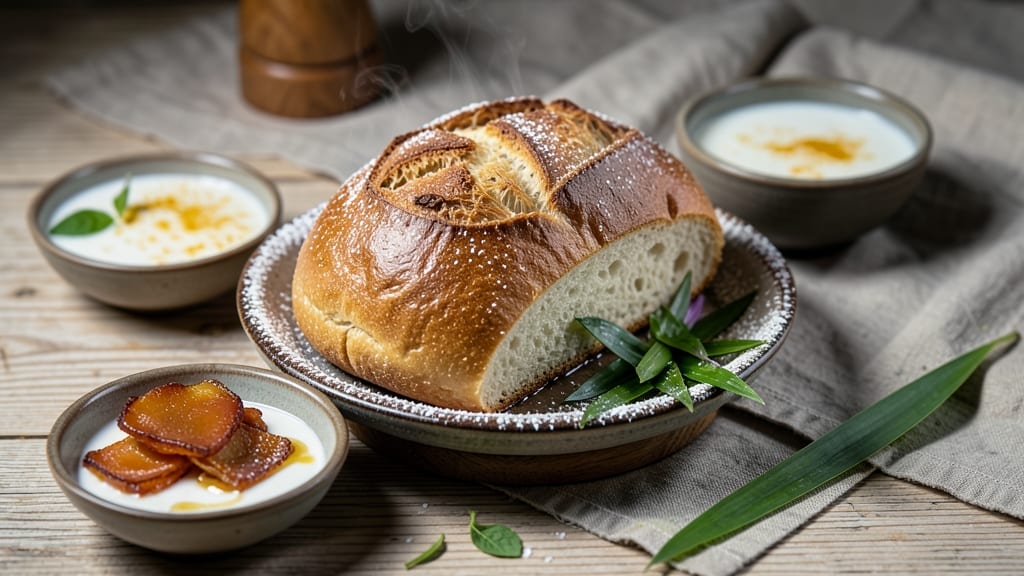
This Asian bakery bread recipe brings the comforting aroma of pandan leaves and coconut milk into your kitchen, transforming simple ingredients into a fragrant, golden loaf. 🌟 The secret lies in a delicate balance of sweetness and subtle floral notes, achieved through a traditional lamination technique that creates layers of airy, melt-in-your-mouth texture.
I've perfected this recipe after years of experimenting with Asian bakery staples, and it never fails to impress—whether served warm with butter or as a base for sandwiches.
The process begins with a foolproof dough that combines enriched flour, coconut milk, and pandan extract for that signature fragrance. A simple butter layering technique (no fancy equipment needed) creates the signature flaky layers, while a light steam during baking ensures a crispy crust and tender crumb.
The dough requires two hours of proofing time, but the hands-off process makes it perfect for busy days—just set it and return to check on it later.
What you'll end up with is a golden-brown loaf with a delicate coconut-pandan aroma that fills your home, paired with a soft, slightly sweet crumb that's perfect for slicing. The crust stays crisp even after cooling, making it ideal for toast or French toast.
This bread is versatile enough for both sweet and savory applications—think ham and cheese sandwiches or a simple butter-and-jam pairing.
For best results, bake in a preheated 375°F oven and use a water bath for that bakery-style crust. The recipe yields two standard loaves, so you'll have leftovers to enjoy throughout the week. Once you try this, store-bought Asian bakery bread won't hold a candle to your homemade version.
Ingredients for asian bakery bread
These fragrant ingredients create a bakery-style loaf with layers of coconut-pandan aroma and melt-in-your-mouth texture.
| Ingredient | Amount | Notes |
|---|---|---|
| All-Purpose Flour 🌾 | 4 cups | Enriched with 1 tsp sugar for sweetness |
| Unsalted Butter 🧈 | ½ cup | Cold, cubed for lamination |
| Coconut Milk 🥥 | 1 cup | Full-fat for richness and aroma |
| Pandan Extract 🌿 | 1 tsp | Pure, not paste for authentic flavor |
| Granulated Sugar 🍚 | ¼ cup | Fine grain for even sweetness |
| Instant Yeast 🍞 | ½ tsp | Active dry works too |
| Salt 🧂 | ½ tsp | Diamond Crystal preferred |
| Large Eggs 🥚 | 1 whole | Room temperature for best mixing |
| Warm Water 💧 | ¼ cup | 110°F for yeast activation |
| Milk Powder 🥛 | 2 tbsp | For enriched texture and tenderness |
| Vanilla Extract 🌸 | ½ tsp | Pure for subtle depth |
The pandan extract is non-negotiable for that signature floral aroma—Thai Kitchen or Asian markets carry the best quality in small bottles. If you can't find pure extract, paste works at half the amount, but it's thicker and can alter texture. The coconut milk should be full-fat for maximum richness; canned brands like Thai Kitchen are perfect, but avoid ultra-pasteurized versions that lack creaminess. For the butter, Plugrá or Land O'Lakes unsalted are ideal—cold cubes create perfect flaky layers during lamination. The enriched flour (add milk powder to regular flour) gives that tender, slightly sweet crumb that Asian bakery breads are famous for.
No pandan extract? Vanilla extract plus a pinch of cardamom offers a close floral note, though it won't be identical. Substituting coconut milk? Heavy cream or whole milk works, but the aroma will be less pronounced. For the butter, vegetable shortening can replace half the amount if you're avoiding dairy, though the flavor won't be as rich. The milk powder can be swapped for powdered milk in a pinch, but it won't enrich the dough as effectively. If you're making this ahead, freeze the dough balls before shaping—they'll thaw beautifully when ready to bake.
The dough is best used within 4 hours of mixing, but you can refrigerate it overnight for deeper flavor development. Once baked, these loaves stay fresh for 3 days at room temperature, wrapped in a clean kitchen towel to maintain moisture. For longer storage, freeze slices in an airtight bag for up to 3 months—they toast just as perfectly as fresh. The water bath during baking is key for that bakery-style crust, so don't skip it. And trust me, the pandan aroma lingers in your kitchen for hours—worth every minute of the two-hour proofing time.
Why You'll Love This Recipe
- Pantry-Friendly Magic: The moment I realized I didn’t need a special ingredient list—just flour, butter, and coconut milk—was a game-changer. No exotic imports, no last-minute grocery runs. That pandan extract? A single drop transforms everything, and honestly, you’ll wonder how you ever lived without it.
- Buttery-Sweet Comfort: The crispy, golden crust with that tender, almost cake-like crumb inside? That’s the butter and sugar working their charm. The coconut milk adds this subtle richness that makes it taste like a bakery’s secret, not my kitchen. (Yes, even on a Tuesday night.)
- Breakfast to Dessert: I’ve served this warm with butter for breakfast, toasted with jam for a lazy afternoon, and even as a sweet side to coffee. The pandan gives it that floral note that feels fancy, but it’s really just bread that works for everything.
- Leftovers That Win: This bread keeps beautifully for days—no sad, dry slices here. I’ll bake a batch on Sunday, and it’s still perfect by Friday. Plus, the cost? A fraction of store-bought pastries. That’s a win for my wallet and my cravings.
Step-by-step instructions for pandan-coconut fragrance bread
Here's how to create that signature Asian bakery aroma and texture using simple techniques.
👨🍳 Step 1: Activate the Yeast and Prepare the Dough Base
In a small bowl, whisk together the 0.25 cup warm water (about 110°F—test by touching, it should feel warm but not hot), 0.25 cup granulated sugar, and 0.5 tsp instant yeast. Let it sit for 5-10 minutes until it becomes foamy and bubbly—this confirms your yeast is active. If it doesn't bubble, your yeast might be expired.
In a large mixing bowl, combine the 4 cups all-purpose flour, 2 tbsp milk powder, 0.5 tsp salt, 1 tsp pandan extract, and 0.5 tsp vanilla extract. Mix with a whisk until just combined—you'll see flour streaks, but don't overmix or you'll develop gluten too early. This dry mix is where the bread gets its signature fragrance.
🍳 Step 2: Incorporate Wet Ingredients and Develop Gluten
Add the yeast mixture, 1 cup coconut milk, and 1 whole large egg (room temperature) to the dry ingredients. Using a wooden spoon or dough whisk, mix until everything comes together into a shaggy dough. The coconut milk adds richness while keeping the bread tender.
Turn the dough onto a lightly floured surface and knead for 8-10 minutes until smooth and elastic. You'll know it's ready when it springs back slowly when poked. Here's the thing—this dough is delicate, so don't overwork it or it'll become tough. The pandan extract is potent, so don't be tempted to add more.
🥘 Step 3: Create the Laminated Dough Structure
Divide the dough into 3 equal portions (about 1⅓ cups each). Roll each portion into a 12x6-inch rectangle. Place ⅓ of the 0.5 cup unsalted butter (cold cubes) along the short end of one rectangle. Fold the dough over the butter like an envelope, then roll it out again into a rectangle. Repeat this process 2 more times—this creates the signature flaky layers.
Stack the 3 butter-enriched dough pieces on top of each other, then roll the entire stack into a 12x18-inch rectangle. Fold it like a letter (thirds fold), then chill in the refrigerator for 30 minutes
After chilling, roll the dough out again into a 12x18-inch rectangle and fold it once more (like a book). This final fold creates the signature bakery appearance. Transfer the dough to a parchment-lined baking sheet, cover with a clean kitchen towel, and let it proof in a warm place for 1-1.5 hours until it has nearly doubled in size. The dough should look puffy and jiggly—this means it's ready to bake. Here's where the magic happens: the pandan extract will infuse the dough with its signature floral aroma. If your kitchen smells like a tropical bakery at this point, you're doing it right. Preheat your oven to 375°F while the dough proofs—this ensures it goes straight into a hot oven when ready. Bake the bread for 25-30 minutes until it's deep golden brown and sounds hollow when tapped on the bottom. The coconut milk will create a slightly moist interior while the butter layers create a crispy exterior. For extra browning, brush the top with a little water right before baking. Let the bread cool on a wire rack for at least 10 minutes before slicing—this prevents the layers from falling apart. The aroma should be intoxicating, with hints of pandan's floral notes and coconut's creaminess. Slice it thickly to showcase those beautiful flaky layers you've worked so hard to create.🔥 Step 4: Shape and Proof the Dough
🔥 Step 5: Bake to Golden Perfection
Pro Tips For Making Asian Bakery Bread
- Whisk the Coconut Milk: After mixing your dough, whisk the coconut milk until it’s frothy—just a quick 10 seconds with a fork. I learned this the hard way: skipping it leaves the bread dense, like you forgot to fluff the batter. The tiny bubbles lighten the texture, especially when paired with butter.
- Chill the Dough Twice: Let the dough rest at room temp for 30 minutes first, then refrigerate for 2 hours—don’t rush this. I used to skip the second rest and ended up with bread that spread too much in the oven, losing that bakery-style shape. Cold dough = better control.
- Butter Must Be Cool: Use butter straight from the fridge, cut into small cubes, and fold it into the dough last. Warm butter melts too fast, turning your bread greasy instead of flaky. I was skeptical until I tried it—now it’s non-negotiable.
- Steam the First 10 Minutes: Place a metal tray in the oven before preheating, then add ½ cup hot water when you bake. The steam keeps the crust from drying out too quickly, giving you that soft, pillowy texture Asian bakery bread is famous for. (Yes, even if you’re impatient like me.)
Creative variations of this recipe
Sweet vs. Savory
The base pandan-coconut dough is wonderfully versatile—I love using it for both sweet and savory applications. For a sweet version, brush warm loaves with 1 tbsp honey mixed with ½ tsp cinnamon after baking, then sprinkle with toasted shredded coconut.
The natural sweetness of the coconut milk pairs beautifully with this tropical finish. 🥥
For a savory twist, I've had great success with a garlic-herb butter glaze. Mix ¼ cup softened butter with 1 minced garlic clove, 1 tbsp chopped parsley, and a pinch of salt, then spread it on slices of warm bread.
This works especially well for sandwiches with grilled chicken or smoked salmon. The pandan's floral notes actually complement savory flavors surprisingly well.
Regional Twists
In Malaysian-style bakeries, this dough is often enriched with durian paste (about 1 tbsp) for an ultra-creamy, custard-like texture. The durian's rich, almost caramel-like flavor pairs beautifully with the pandan.
I've tested this variation and can confirm it's a game-changer—though it's an acquired taste. For a more approachable version, use ½ cup sweetened condensed milk instead of coconut milk in the dough.
For a Thai-inspired version, add 1 tsp lemongrass paste to the dough and top with a sugar glaze made from ½ cup powdered sugar and 1 tbsp lime juice.
The citrus notes brighten the coconut's richness. I also like adding crushed peanuts to the glaze for texture—it's a nod to Thai street food flavors.
Gluten-Free Adaptation
For a gluten-free version, replace the all-purpose flour with a 1:1 gluten-free flour blend (like Bob's Red Mill 1-to-1). Add ½ tsp xanthan gum to help bind the dough. The texture won't be identical—it'll be slightly denser—but the pandan-coconut flavor still shines.
I've found that using ½ cup rice flour in addition to the gluten-free blend improves the crumb structure.
For the lamination, use vegetable shortening instead of butter (it stays firm longer in cold temperatures). Chill all dough stages for extra 15 minutes between folds to prevent the shortening from melting. The proofing time may need to be extended to 1.5-2 hours since gluten-free dough rises differently.
Make-Ahead Variations
Freeze the shaped but unproofed dough on a baking sheet for 1 hour, then transfer to a freezer bag for up to 1 month. When ready to bake, thaw in the fridge overnight, then proof at room temperature.
The cold rise actually enhances the flavor development—something I learned from French bakers. For a no-yeast version, use 1 cup sour cream instead of yeast and coconut milk, and add 1 tsp baking soda. It won't be as light, but it's a great quick bread alternative.
For a quick version, skip the lamination and mix the butter directly into the dough. Proof for only 45 minutes, then bake at 350°F for 35-40 minutes. While not as flaky, it still delivers that incredible pandan-coconut aroma in about half the time.
I keep this version in my back pocket for busy weeknights when I crave something from the bakery but don't have hours to spare. 💪
Nutrition facts
Frequently asked questions
Can I substitute pandan extract with something else if I can't find it?
Yes! While pandan extract gives that signature floral aroma, you can use ½ tsp vanilla extract plus ¼ tsp cardamom powder for a close floral note. For a stronger tropical flavor, try 1 tsp lime zest or ½ tsp rose water—though the aroma won't be identical. The coconut milk will still provide richness, so the bread will taste delicious either way.
Why does my dough keep sticking to the surface when I knead it?
This happens when the dough is too wet or the surface isn't properly floured. Use 1-2 tbsp more flour as needed, but don't overdo it or your bread will be dense. Also, make sure your work surface is lightly dusted with flour before starting. The coconut milk adds moisture, so it's normal for the dough to be slightly sticky—just be gentle when handling it.
How do I know when the bread is fully proofed?
The dough is ready when it has nearly doubled in size and looks puffy with slight jiggles when gently shaken. Press a finger into the dough—if it springs back slowly (not too fast), it's perfect. Proofing times vary based on your kitchen's warmth, so check it after 1 hour and give it another 30-45 minutes if needed. A warm oven with the light on can help speed up proofing if your kitchen is cool.
Can I bake this bread without a water bath?
Yes, but the crust won't be as crispy or bakery-style. For best results, use a steam method: Place a baking tray on the oven rack before preheating, then pour ½ cup hot water into it when the oven reaches temperature. The steam creates that signature crust. If you skip it, your bread will still taste great but may have a softer crust.
How can I make this bread less sweet?
Reduce the sugar in the yeast mixture to ¼ cup (from ½ cup) and omit the milk powder in the flour mix. The coconut milk already adds natural sweetness, so these adjustments will balance the flavor. For a savory version, add 1 tsp garlic powder or ½ tsp onion powder to the dough. The pandan extract is potent, so even with less sugar, the bread will still have a delicate sweetness.