
Side Dishes
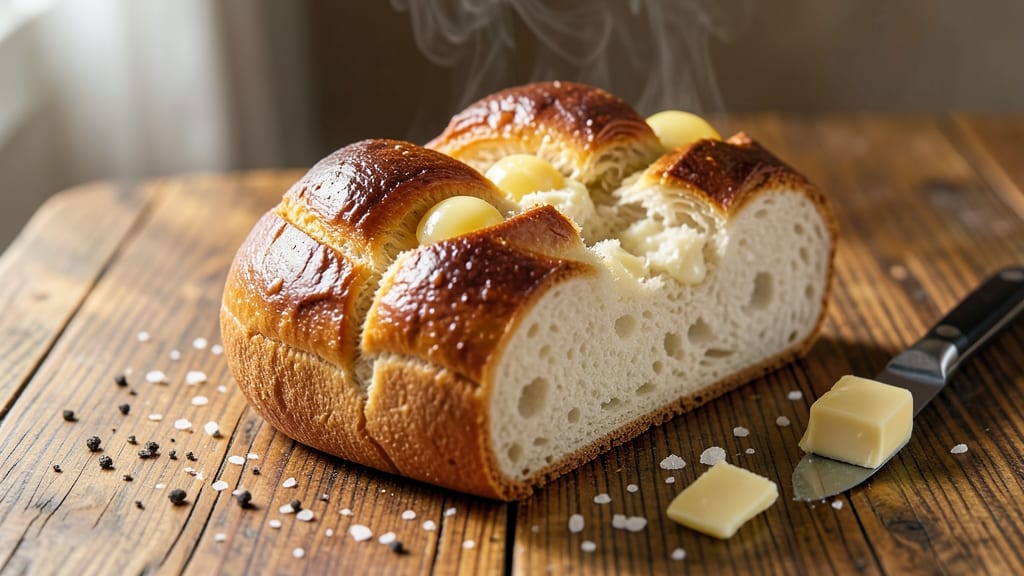
This authentic brioche bread recipe transforms simple ingredients into layers of buttery, golden perfection with a tender crumb that melts in your mouth. 🔥 The secret lies in an enriched dough—loaded with eggs and butter—that develops into a light, airy loaf with a crisp exterior.
I’ve perfected this French technique over years of baking, ensuring every slice delivers that signature richness and rise. The process begins with a slow fermentation that builds flavor and structure, followed by careful shaping and proofing to achieve those signature domed tops.
A high-heat bake creates a caramelized crust while keeping the interior impossibly soft. No shortcuts here—just traditional methods refined for home bakers. What you’ll end up with is a loaf so tender it practically dissolves, with layers of buttery richness in every bite.
The aroma alone will transform your kitchen into a Parisian bakery. Perfect for breakfast pastries, French toast, or simply enjoying with butter and jam. This recipe delivers restaurant-quality brioche without the complexity—just patience and attention to detail. Let’s get started on creating your masterpiece.
Ingredients for authentic brioche bread
Buttery, golden layers start with these nine essential ingredients—each playing its part in that signature brioche magic.
| Ingredient | Amount | Notes |
|---|---|---|
| Unsalted Butter 🧈 | 1 cup | Cold, cut into cubes |
| Large Eggs 🥚 | 4 whole | Room temperature |
| All-Purpose Flour 🌾 | 4 cups | Plus 2 tbsp for dusting |
| Granulated Sugar 🍚 | ½ cup | Superfine preferred |
| Instant Yeast 🍞 | 0.03 oz | 2 1/4 tsp, or 1 packet |
| Diamond Crystal Kosher Salt 🧂 | ½ tsp | Fine grain preferred |
| Whole Milk 🥛 | ½ cup | Room temperature |
| Vanilla Extract 🍯 | 1 tsp | Pure extract preferred |
| Cornmeal 🌽 | ¼ cup | For dusting |
The butter is non-negotiable—European-style unsalted (like Plugrá or Land O'Lakes) has the right fat content for layers. Grab it cold from the fridge, cut into cubes—never melted. The eggs should be room temperature (pop them in warm water for 5 minutes if cold). Flour matters too—King Arthur or Gold Medal bakers' flour has the protein for structure. Yeast? Fresh is best, but instant works in a pinch. I always double-check the expiration date—nothing kills a brioche faster than dead yeast.
No superfine sugar? Pulse regular granulated in a food processor for 10 seconds. Short on butter? Substitute with equal weight of coconut oil (though texture won't be identical). Vanilla extract is a must—imitation won't cut it. For the milk, whole is non-negotiable—it's what gives brioche its signature richness. Cornmeal? Any brand works, but it needs to be fine-ground for even dusting. Pro tip: If your kitchen's humid, chill the dough 30 minutes before shaping—prevents sticky hands and helps with the domed tops.
Store the dough in the fridge for up to 24 hours if you need to slow down. The baked loaf? Room temperature in a bread box keeps it fresh for 3 days, but honestly, it's best eaten within 2 days—the butter starts to soften after that. For longer storage, wrap tightly in foil and freeze for up to 3 months. I always slice mine before freezing—thaws straight to perfection. And if you're making brioche buns? Freeze shaped, unbaked buns for 1 month—just add 10 minutes to bake time.
Why You'll Love This Recipe
- Butter-Kissed Richness: The moment you pull that golden crust from the oven, you’ll know why this recipe is worth the wait. That cloud-soft crumb? Pure magic from the butter and eggs—no shortcuts, just layers of tender, buttery heaven in every bite.
- No-Knead Magic: Honestly, I was skeptical about brioche being "easy," but this method proves it. Just mix, let it rise overnight, and bake—no punishing kneading, no stress. The yeast does all the work while you sleep.
- Breakfast to Brunch: This isn’t just bread—it’s my go-to for French toast, garlic butter toast, or even sandwiches. The richness stands up to anything, and the leftovers? They last forever in the freezer, ready to toast in seconds.
- Budget Luxury: You’d never guess this tastes like a bakery’s finest from a simple pantry staples list. The sugar and eggs give it that premium texture, but the butter? That’s the real game-changer—just a stick or two makes it feel like a treat, not a splurge.
Step-by-step instructions for authentic brioche bread
Here's how to craft restaurant-quality brioche with those signature buttery layers and golden crust.
👨🍳 Step 1: Prepare the Dough with Perfect Butter Incorporation
In a stand mixer fitted with the dough hook attachment, combine the 4 cups all-purpose flour, 0.5 cup granulated sugar, 0.5 tsp Diamond Crystal kosher salt, and 0.03 oz instant yeast. Mix on low speed for 30 seconds to aerate the flour and distribute the yeast evenly. This initial blending ensures the yeast activates properly throughout the dough.
Add the 4 room-temperature eggs and 0.5 cup whole milk, mixing on medium speed for 2 minutes until fully incorporated. Here's the thing—brioche's signature richness comes from the butter, so we'll add it gradually. With the mixer running on low speed, add the 1 cup cold cubed butter one piece at a time, allowing each cube to fully incorporate before adding the next. This creates those beautiful laminations that make brioche so irresistible.
🍳 Step 2: Knead Until Silky and Elastic
Continue mixing on medium speed for 5-7 minutes until the dough becomes smooth, elastic, and pulls away from the sides of the bowl. You'll know it's ready when it reaches about 80°F internally—it should feel warm to the touch but not hot. The dough should be slightly tacky but not sticky (add a bit more flour if needed).
Here's a pro tip: brioche dough is more delicate than standard bread dough. Over-kneading develops too much gluten, which makes the final bread dense. Stop when the dough is just shy of perfect—it will continue to develop during the rest periods. Once kneaded, transfer the dough to a lightly greased bowl, cover with plastic wrap, and let it rise in a warm place for 1-1.5 hours or until doubled in size. The dough should spring back slowly when poked with a finger.
🥘 Step 3: Shape and Second Rise for Optimal Flavor
Turn the risen dough out onto a lightly floured surface and divide it into 4 equal portions (about 1 pound each). Gently shape each portion into a smooth, round ball, then place them in a buttered 9x5-inch loaf pan or directly onto a parchment-lined baking sheet. The key here is to keep the shaping gentle—brioche dough is fragile and will deflate easily. Cover loosely with a damp towel and let rise again for 30-45 minutes until puffy and just about to overflow the pan.
While the dough rises, preheat your oven to 350°F. Here's where the cornmeal comes in—sprinkle the 0.25 cup cornmeal on your baking sheet or in the loaf pan. This creates a crisp, golden crust that contrasts beautifully with the tender interior. Just before baking, brush the tops of the brioche with a bit of melted butter and sprinkle with a pinch of granulated sugar for extra browning and sweetness.
🔥 Step 4: Bake to Golden Perfection
Bake in the preheated oven for 25-30 minutes until the brioche is deep golden brown and sounds hollow when tapped on the bottom. The internal temperature should reach 190-200°F. Don't be tempted to open the oven door early—this causes the bread to collapse. If the top browns too quickly, tent loosely with foil after 15 minutes.
Real talk: brioche is forgiving but not overly so. If you see the edges browning too fast, rotate the pan and use the foil to shield those areas. The bread is done when it pulls away from the sides of the pan and has that glorious golden crust. Remove from the oven and let cool on a wire rack for at least 15 minutes before slicing—this prevents the layers from tearing and allows the butter to redistribute for maximum tenderness.
Pro Tips For Making Authentic Brioche Bread
- CHILL THE BUTTER FIRST: Take that cold butter straight from the fridge and cut it into cubes before mixing—no need to soften it to room temp. I learned this the hard way when my dough turned greasy and sticky; cold butter creates tiny pockets that make brioche light, not dense. Just let it sit out for 10 minutes after cubing, so it’s pliable but not melted.
- WEIGH YOUR FLOUR: Scooping flour from the bag? Stop. Use a kitchen scale for accuracy—brioche is fussy about ratios, and too much flour will make it dry. I used to eyeball it, and my loaves always came out tough. A gram or two matters more than you’d think.
- DON’T OVERPROOF THE DOUGH: The dough is ready when it’s just puffed past the bowl’s rim—no waiting for it to collapse. Overproofing kills that signature brioche tenderness. I once left mine rising overnight (bad idea), and it turned out like a sad, dense brick. Set a timer for 1.5–2 hours max at room temp.
- USE ROOM-TEMP YEAST: Skip the warm water activation—just mix the instant yeast directly into the flour. I was skeptical until I tried it: no waiting, no guessing water temps, and the flavor stays cleaner. Works every time, and saves you a step. Just make sure your yeast isn’t expired.
Creative variations of this authentic brioche bread
Classic French Brioche
This is the traditional method that gives brioche its signature layers and richness. Start with a slow fermentation (2-3 hours) in a warm environment—place your dough in a proofing box or near a turned-off oven with the light on.
The extended rise develops complex flavors and a tender crumb. For shaping, divide into 4 equal rounds and place in a buttered loaf pan—this creates a domed top that's perfect for French toast. 🥖
Italian Brioche Dolce
Add 1 tsp orange zest and 1 tbsp Grand Marnier to the dough for a citrusy twist. Shape into smaller rounds (about 6 oz each) and bake on a parchment-lined sheet for 20-25 minutes at 350°F.
These mini brioche are ideal for dessert—drizzle with melted chocolate or honey after baking. The alcohol in the Grand Marnier enhances browning for a caramelized crust.
Sweet Brioche Buns
Increase the sugar to ¾ cup and add ½ cup raisins or chopped candied fruit. Shape into 12 small buns (about 2 oz each) and bake on a cornmeal-dusted sheet for 18-20 minutes.
Brush with egg wash before baking for a glossy finish. These are perfect for cinnamon rolls or French toast sticks—the extra sugar caramelizes beautifully.
Savory Brioche Twist
Reduce the sugar to ¼ cup and add 1 tbsp fresh rosemary and ½ tsp garlic powder to the dough. Shape into a free-form loaf and bake until golden.
This works perfectly as a garlic bread or cheese pull-apart. The rosemary adds an aromatic depth that pairs wonderfully with grilled meats or soups. 🌿
Gluten-Free Brioche
Replace the all-purpose flour with 4 cups gluten-free 1:1 baking flour (like Bob's Red Mill) and add 2 tbsp xanthan gum. Use 1 extra egg for structure, and let the dough rest 30 minutes after mixing to hydrate the flour.
The texture won’t be identical, but it’s still tender and rich. Bake for 5-10 minutes longer at 350°F—gluten-free dough browns faster.
Quick-Rise Brioche
Double the yeast to 0.06 oz (4 ½ tsp) and use warm milk (110°F) to activate it faster. Mix the dough, then let it rise in a warm oven (off) with a bowl of hot water for 45-60 minutes until puffy.
This cuts the wait time by half while keeping the texture surprisingly light. Perfect for busy mornings—just add 10 extra minutes to the bake time for a crisp crust.
Nutrition facts
Frequently asked questions
Why does my brioche turn out dense instead of light and fluffy?
Over-kneading is the #1 culprit—it develops too much gluten, making brioche tough. Stop mixing when the dough is just smooth (about 5-7 minutes total). Also, cold butter or eggs can slow yeast activity, so always use room-temperature ingredients. Finally, ensure your yeast is fresh and your oven isn't too hot during proofing (aim for 75-80°F).
Can I make brioche without a stand mixer?
Use a large bowl and wooden spoon to mix the dough by hand. For the butter, cut it into tiny cubes and work it in gradually, folding it in with a dough scraper. Knead by hand for 8-10 minutes until elastic. The process just takes more elbow grease—patience is key! Cover with a damp towel and let it rest while you work.
How do I get that perfect golden crust without burning?
Brush the tops with melted butter and sprinkle with granulated sugar before baking for even browning. Start with a 350°F oven and tent loosely with foil after 15 minutes if needed. For extra shine, egg wash (1 egg + 1 tbsp water) works wonders. Pro tip: Rotate your pan halfway through baking to ensure even color.
What's the best way to store brioche to keep it fresh?
Wrap cooled brioche tightly in plastic wrap or foil and store at room temperature for 2-3 days. For longer storage, freeze slices in a sealed bag for up to 3 months. To revive frozen brioche, warm it in a 200°F oven for 5-10 minutes—it'll taste almost as good as fresh!
Can I add chocolate or nuts to brioche?
Yes! For chocolate, fold in ½ cup chopped dark or milk chocolate during the final kneading stage. For nuts, add ½ cup toasted pecans or walnuts after shaping. Just reduce the butter by 2 tbsp to maintain the right ratio. These additions work best in sweet variations—try them in the brioche buns recipe for extra decadence!