
Side Dishes
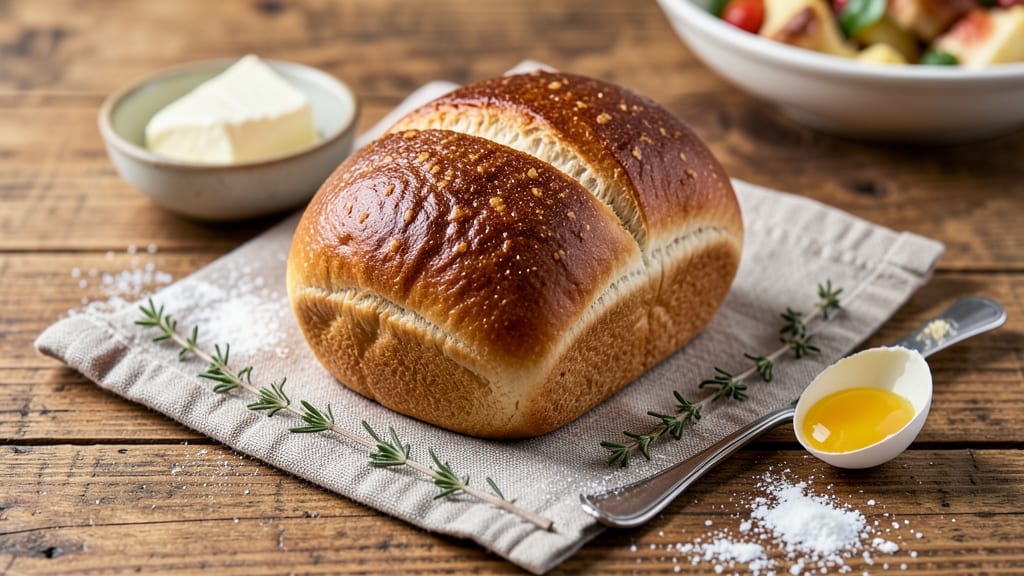
This authentic Japanese milk bread recipe delivers the signature cloud-like texture and delicate sweetness that makes shokupan legendary. 💛 The secret lies in a precise blend of milk powder, butter, and a slow fermentation that develops unmatched tenderness—no shortcuts, just traditional technique refined for home kitchens.
What sets this recipe apart is the tangzhong method (roux), where a small portion of flour and water is cooked into a gelatinous paste before mixing with the dough. This creates the bread's signature ultra-soft crumb that stays fresh for days.
The dough requires careful kneading and multiple proofing stages, but the results—light, airy, and slightly buttery—are worth every step.
By the time you pull this bread from the oven, you'll have golden-brown loaves with a crackly crust and a crumb so tender it nearly dissolves on your tongue.
The subtle sweetness from milk powder and sugar balances perfectly with the buttery richness, making it ideal for breakfast toasted with jam or butter.
The beauty of this recipe is its versatility—serve it warm as is, toasted for extra crispiness, or even as a base for French toast. Once you master this technique, you'll never buy milk bread again. Let's begin with the dough preparation, where precision is key to that signature texture.
Ingredients for authentic japanese milk bread
Precision ingredients for legendary Japanese milk bread texture—where science meets tradition.
| Ingredient | Amount | Notes |
|---|---|---|
| Bread Flour 🌾 | 3 ½ cups | High-protein for structure and elasticity |
| Unsalted Butter 🧈 | ½ cup | Cold, cubed for tangzhong method |
| Whole Milk Powder 🥛 | ¼ cup | Japanese milk powder preferred |
| Granulated Sugar 🍚 | ⅛ cup | Superfine preferred for even dissolving |
| Large Eggs 🥚 | 2 whole | Room temperature for even incorporation |
| Instant Yeast 🍞 | 0.01 oz | 2 1/4 tsp, active dry equivalent |
| Salt 🧂 | 0.01 oz | 1 tsp, Diamond Crystal preferred |
| Water 💧 | ¼ cup | Room temperature, filtered preferred |
| Vegetable Oil 🫒 | 0.01 oz | 1 tsp, for dough handling |
| Egg Wash 🥚 | ½ whole | 1 egg beaten with 1 tsp water |
| Coarse Sugar 🍚 | 0.02 oz | 1 tbsp, for topping |
The bread flour is non-negotiable here—King Arthur or Caputo deliver the high protein needed for that signature elasticity. For the milk powder, Japanese brands like Snow Brand are ideal, but Nestlé or Carnation work in a pinch. The unsalted butter must be cold when making the tangzhong (roux)—Plugrá or Land O'Lakes are reliable choices. Measure the granulated sugar precisely; superfine dissolves more evenly, but regular works if sifted. Instant yeast (like Red Star) activates faster than active dry, saving time during the critical fermentation stages. For the Diamond Crystal salt, remember it's finer than table salt—use half the amount if you only have kosher salt.
No Japanese milk powder? Powdered whole milk from the grocery store will suffice, though the flavor won't be as rich. Substituting butter in the tangzhong? Olive oil or shortening works, but the texture will differ slightly. The egg wash can be made with just water if you're avoiding eggs entirely, though it won't brown as beautifully. For the coarse sugar topping, turbinado or raw sugar adds a delightful crunch, but brown sugar is a quick alternative. The water should be room temperature—cold water can shock the yeast, while warm water activates it too quickly. If your kitchen is humid, reduce water by 1 tbsp to avoid a sticky dough.
Store the tangzhong mixture in an airtight container in the fridge for up to 3 days—it's the heart of this recipe. The finished dough can be refrigerated for 24 hours or frozen for 3 months (thaw overnight in the fridge). For the coarse sugar topping, keep it in a sealed container to prevent clumping. Once baked, these loaves stay fresh for 3-4 days at room temperature, wrapped in a bread bag or beeswax wrap. For longer storage, freeze slices wrapped in parchment and reheat in a 350°F oven for 5-10 minutes to restore that cloud-like softness.
Why You'll Love This Recipe
- No-Knead Magic: That’s right—no stand mixer, no arm workout. The dough comes together in minutes, then rests while you sip your coffee. The butter gets folded in like a lazy Sunday, and suddenly you’ve got that signature flaky, airy texture without the fuss.
- Buttery Cloud Perfection: The moment you bite into this—warm, with that crisp crust and tender crumb—you’ll understand why milk powder and cold butter are a match made in heaven. It’s not just bread; it’s a hug in dough form, especially when slathered with that first spread of jam or butter.
- Breakfast to Picnic Star: I’ve used this for everything from toast with miso butter to packed lunches (yes, it holds up in bags) to a fancy charcuterie board. Freeze the extras, toast them later—it’s the ultimate blank canvas. Honestly, I’ve even convinced my picky teenage nephew to eat it plain.
- Leftovers That Won’t Let You Down: This bread peaks after a day or two—yes, really. The flavor deepens, and it’s still soft enough to slice without a serrated knife. Plus, you’re using pantry staples (milk powder lasts forever, butter stretches further than you’d think), so it’s a win for your wallet and your fridge.
Step-by-step instructions for authentic Japanese milk bread
Master the tangzhong method and delicate balance of ingredients for that signature cloud-like texture.
👨🍳 Step 1: Create the Tangzhong (Water Roux)
In a small saucepan, combine the 0.25 cup water and 0.5 cup unsalted butter (cold, cubed). Heat over medium-low heat while stirring constantly with a silicone spatula. The mixture will gradually thicken into a smooth, glossy paste that coats the back of the spoon.
This is the secret to milk bread's signature softness—the tangzhong absorbs moisture and releases it slowly during baking. Remove from heat when the mixture reaches 160°F (it should hold its shape when dropped from a spoon). Let it cool completely to room temperature before using. If you rush this step, your bread will develop a gummy texture instead of that coveted pillowy interior.
👨🍳 Step 2: Mix the Dough Base
In the bowl of a stand mixer fitted with the dough hook attachment, combine the 3.5 cups bread flour, 0.25 cup whole milk powder, 0.125 cup granulated sugar, 0.01 oz instant yeast, and 0.005 oz salt. Mix on low speed for 30 seconds to aerate the dry ingredients thoroughly.
Add the cooled tangzhong mixture and mix on low speed for 2 minutes until the flour is fully hydrated and the mixture forms a shaggy dough. Then add the 2 whole large eggs (room temperature) and 0.01 oz vegetable oil, mixing for another 2 minutes until the dough comes together but still appears slightly tacky. Avoid overmixing—this develops gluten too much and creates a tough crumb.
🥘 Step 3: Knead and Develop Gluten
Switch to the dough hook attachment and knead the dough on medium speed for 5-7 minutes until smooth and elastic. The dough should pull away from the sides of the bowl and form a tight, shiny ball when pressed. If it's too sticky, add 1 tablespoon bread flour at a time until it becomes manageable.
Here's the thing—Japanese milk bread dough should be slightly softer than Western bread dough. Test for doneness by doing the "windowpane test": stretch a small piece of dough between your fingers until it's thin enough to see light through (about 1/8-inch thick). If it tears, knead for another minute. Once perfect, cover the bowl with a damp towel and let the dough rest for 1 hour at room temperature. This resting period allows the gluten to relax and the flavors to develop fully.
🔥 Step 4: Shape and Proof the Dough
Turn the rested dough onto a lightly floured surface and gently divide it into 4 equal pieces (about 8 ounces each). Shape each piece into a smooth ball by pulling the dough toward you in a rolling motion. Place the balls onto a parchment-lined baking sheet, cover with a damp towel, and let them proof at room temperature for 1-1.5 hours or until they've nearly doubled in size.
For the authentic look, I like to make a small dimple in the center of each ball using my thumb before the final proof. This creates the signature "milk bread crown" when baked. The dough is ready when it springs back slowly when poked gently with a finger (about ½ inch indentation). If your kitchen is cold, proofing may take longer—don't rush this step or your bread will be dense.
🔪 Step 5: Bake to Golden Perfection
Preheat your oven to 350°F with a baking stone or inverted baking sheet on the middle rack. Brush the proofed dough balls with the 0.5 whole egg wash, then sprinkle each with 0.02 oz coarse sugar (about 1 tablespoon total). Bake for 25-30 minutes until the tops are golden brown and the internal temperature reaches 190-195°F.
Here's where precision matters: the bread should sound hollow when tapped on the bottom. If the tops brown too quickly, tent with foil. For that signature crack on top, I like to give the loaves a gentle twist with a sharp knife right before the final 5 minutes of baking. Let the bread cool on a wire rack for at least 30 minutes before slicing—this prevents a gummy texture and allows the crumb to set properly.
Pro Tips For Making Authentic Japanese Milk Bread
- Soften Butter Properly: Japanese milk bread requires butter at exactly 24°C (75°F)—no colder, no warmer. I used to eyeball it and end up with dense, greasy loaves. Invest in a thermometer or the "finger test": press your thumb into the butter; if it leaves a slight dent but doesn’t flatten completely, you’re golden. (And yes, this is why your first few batches might feel like a science experiment.)
- Whisk Eggs Like a Pro: Skip the food processor for the egg whites—they’ll lose volume. Instead, beat them by hand in a chilled bowl until they’re frothy but still hold soft peaks. Fold them into the batter last, and do it gently with a spatula in a "J" motion to keep air trapped. (I learned this after a batch collapsed like a sad soufflé.)
- Don’t Overmix the Dough: Once you add the milk powder and sugar, mix just until combined—overworking it develops gluten and turns your fluffy bread into dense, chewy bricks. Stop when the dough clumps together; it’ll come together perfectly during the rest. (I’ve ruined batches by turning them into bread dough, not milk bread.)
- Proof at Room Temp: Place your shaped loaves in a bare bowl (no parchment) and let them rise at 25°C (77°F) for 1.5–2 hours until they’ve doubled. The high humidity of a covered bowl traps steam and weakens the structure—this is why your bread might look puffy but taste gummy. (Trust me, your first loaf will be the proof you need.)
Best sauces and condiments for this recipe
Classic Butter Spread
Nothing complements Japanese milk bread like softened unsalted butter—I recommend Plugrá or Land O'Lakes—melted slightly and spread generously. For extra richness, mix in 1 tsp honey or maple syrup before spreading.
The butter's creaminess enhances the bread's tender crumb while adding a touch of sweetness that balances the dough's natural mildness. 🧈
Japanese Condiments
Try kinako (roasted soybean flour) mixed with sugar and a splash of warm water for a nutty, slightly sweet spread. Another favorite is black sugar (kurogoma) butter—mix ½ cup softened butter with 2 tbsp black sesame seeds and 1 tsp sugar for a nutty crunch.
These pair beautifully with the bread's delicate flavor profile.
Jam Pairings
Strawberry or Japanese strawberry jam (ichigo jam) is a classic choice—its bright acidity cuts through the bread's richness. For something more exotic, try yuzu curd or matcha-infused jam.
Spread a thin layer on warm slices and toast lightly for a luxurious breakfast. The jam's sweetness elevates the bread's subtle buttery notes without overpowering them.
Sweetened Whipped Cream
Whip ½ cup heavy cream with 1 tbsp powdered sugar and a pinch of vanilla extract for a light, airy topping. This adds a cloud-like texture that mirrors the bread itself.
Drizzle with honey or caramel sauce for extra indulgence. The cream's lightness contrasts perfectly with the bread's dense yet tender crumb.
Savory Options
For a savory twist, try miso butter—mix ½ cup softened butter with 1 tbsp white miso paste and 1 tsp soy sauce. Spread on lightly toasted slices for a umami-rich bite.
Another great option is avocado mash with a squeeze of lime and sprinkle of sea salt, which adds a creamy, fresh contrast to the bread's warmth.
Nutrition facts
Frequently asked questions
Why does Japanese milk bread have that signature soft texture?
The secret lies in the tangzhong method, where a small portion of flour and water is cooked into a gelatinous paste before mixing with the dough. This creates a moisture reservoir that keeps the bread tender for days. The combination of milk powder, butter, and careful fermentation also contributes to its cloud-like texture.
Can I make this recipe without a stand mixer?
Yes, but you'll need to knead by hand for 10-12 minutes until the dough becomes smooth and elastic. Use a dough scraper to help fold and stretch the dough, focusing on developing the gluten evenly. The dough should pass the windowpane test (stretching thin without tearing). Patience is key—this extra effort ensures that signature softness!
What's the best way to store leftover milk bread?
Wrap cooled loaves tightly in a bread bag or beeswax wrap and store at room temperature for 3-4 days. For longer storage, slice the bread and freeze between parchment paper for up to 3 months. To revive frozen slices, reheat in a 350°F oven for 5-10 minutes until warm and soft again.
Why did my milk bread turn out dense instead of soft? Dense bread usually results from over-kneading (which develops too much gluten), skipping the resting period after mixing, or proofing the dough too long.
Can I make this recipe with all-purpose flour instead of bread flour?
While possible, it won't yield the same professional results. Bread flour has a higher protein content (12-14%) that creates the signature elasticity and chewiness. If you must substitute, add 1 tablespoon vital wheat gluten per cup of all-purpose flour to mimic bread flour's structure. The texture will be slightly less tender but still delicious!