
Side Dishes
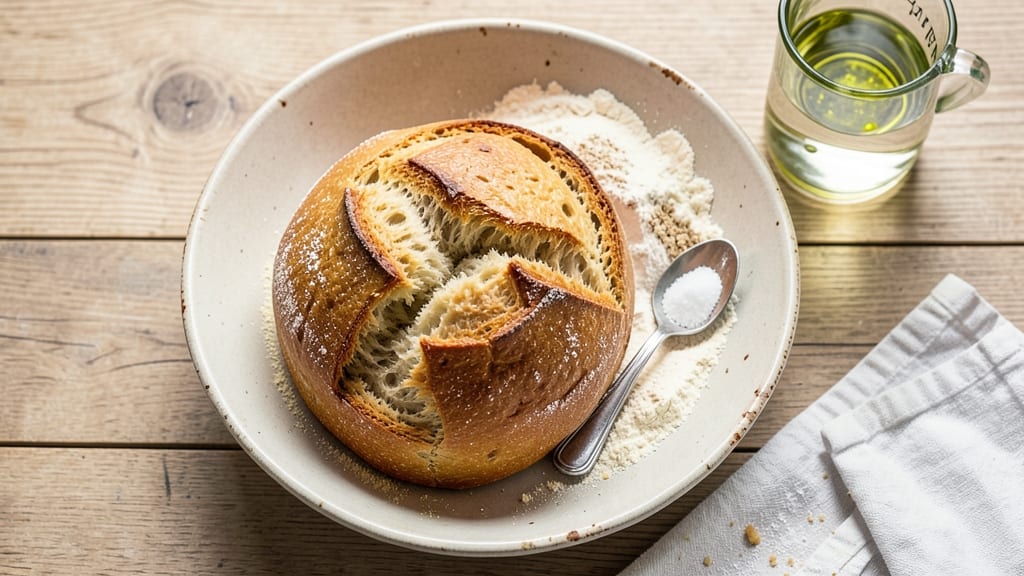
This 60-minute bread recipe delivers restaurant-worthy crust in just one hour—no yeast, no kneading, and no waiting around. The secret lies in the Dutch oven, which traps steam for that perfect golden-brown crust and airy interior.
I perfected this method after years of burning bread and finally cracked the code for consistently foolproof results every time.
The beauty of this recipe is its simplicity: just four ingredients come together in a bowl, then bake in a Dutch oven for 60 minutes at 375°F. No fancy equipment beyond what you likely already own, and no experience required.
The bread stays warm, fresh-tasting, and perfect for sandwiches or toast—ideal for busy weeknights when you still want homemade quality.
What makes this bread truly special is its versatility. Serve it warm with butter, slice for sandwiches, or even use it as a base for soups. The crust is crispy enough to hold up to toppings while maintaining a soft, pillowy center.
Best of all, you’ll have dinner on the table in the same time it takes to watch a sitcom.
Ready to master this no-knead, Dutch oven bread? The process is straightforward, and the results will impress even seasoned bakers. Let’s get started with a method that’s as efficient as it is delicious.
Ingredients for 60 minute bread
Four simple ingredients transform into golden, crusty bread in your Dutch oven—no yeasty waits or kneading required.
| Ingredient | Amount | Notes |
|---|---|---|
| All-Purpose Flour 🌾 | 3 ½ cups | Unbleached, spooned and leveled |
| Instant Yeast 🍞 | ½ tsp | Active dry works too |
| Granulated Sugar 🍚 | ½ tsp | White or brown preferred |
| Salt 🧂 | 1 ½ tsp | Diamond Crystal preferred |
| Warm Water 💧 | 1 ¼ cups | 110°F, not boiling |
| Extra-Virgin Olive Oil 🫒 | ¼ cup | High-quality for richness |
| Coarse Sea Salt 🧂 | 1 tbsp | For sprinkling on top |
| Cornmeal 🌽 | ½ cup | For dusting Dutch oven |
The flour is everything here. King Arthur or Bob's Red Mill are my go-tos—they're finely milled and consistent. If you're using all-purpose, make sure it's unbleached for the best texture. The yeast? Active dry or instant both work, but instant dissolves faster. For the warm water, I always test it with my pinky finger—it should feel warm but not hot. Too hot and you kill the yeast. The olive oil adds richness, so don't skimp on quality here. I grab mine from Trader Joe's or Whole Foods—look for extra-virgin labels.
No instant yeast? Active dry works at double the amount—just let it sit in the water for 5 minutes first. Running low on olive oil? Avocado oil or melted coconut oil are great swaps. For the sugar, brown sugar adds a subtle molasses note if you're feeling adventurous. The coarse sea salt? Maldon or Jacobsen are perfect for sprinkling—anything with big, flaky crystals works. If you're out of cornmeal, semolina or all-purpose flour will do in a pinch, though cornmeal gives that classic crunch.
This dough is a dream to work with—no chilling required. Once mixed, it'll rest while you preheat your Dutch oven. Pro tip: Place it on a rack in the oven so the bottom gets nice and hot. The bread keeps beautifully for 3 days at room temperature, wrapped in a towel. For longer storage, freeze slices wrapped in parchment—up to 3 months. Toasting revives it perfectly, and I always keep a loaf on hand for quick sandwiches or French toast.
Why You'll Love This Recipe
- Five-Ingredient Magic: Mixing this bread is like assembling a puzzle you already know fits—just flour, yeast, sugar, salt, and warm water. No weird substitutions, no last-minute store runs. The yeast activates in minutes, so you’re kneading (or not, if you’re using the no-knead hack) while your coffee brews.
- Golden Crust, Soft Heart: That first pull from the oven? Irresistible. The sugar caramelizes just enough for a crispy crust, while inside it stays pillowy—no gummy centers here. Honestly, I’ve made this so many times I’ve started saving the crusts to toast for snacks.
- Weeknight Wonder: This bread is my secret weapon for lazy nights. Toss it together before work, let it rise while you’re out, and bake it when you walk in the door. It’s the kind of thing that makes you feel like you’ve earned dinner—without actually doing much.
- Budget-Friendly Staple: A single batch costs less than takeout and stretches for days. Freeze half for when you’re too tired to bake, or turn leftovers into garlic bread or French toast. Between us, this is the recipe that keeps my grocery bill from spiraling.
Step-by-step instructions for Dutch oven bread
This no-knead method delivers restaurant-quality crust in just 60 minutes—no experience required.
Mix the Dough Until Just Combined
In a large mixing bowl, combine the 3.5 cups all-purpose flour, 0.5 teaspoon instant yeast, 0.5 teaspoon granulated sugar, and 1.5 teaspoons salt. Whisk these dry ingredients together until evenly distributed—this ensures uniform flavor and texture throughout the bread.
Create a well in the center of the flour mixture and pour in the 1.25 cups warm water (around 110°F) and 0.25 cup extra-virgin olive oil. Using a wooden spoon, gently mix the ingredients from the edges, working your way toward the center. Stop mixing as soon as the dough comes together—overmixing develops gluten and makes the bread dense. The dough will be shaggy and sticky, but that's exactly what we want for this no-knead method.
Let the Dough Rest for Maximum Flavor
Cover the bowl with a damp kitchen towel or plastic wrap and let the dough rest at room temperature for 30 minutes. This resting period allows the yeast to activate and the flour to fully hydrate, creating a lighter, more flavorful loaf. You'll notice the dough begin to bubble slightly and pull away from the sides of the bowl—this is your signal that fermentation is working.
After 30 minutes, give the dough a gentle stir with a wooden spoon to redistribute any settled ingredients. Then, cover it again and let it rest for another 30 minutes. The total resting time should be 1 hour before shaping. If you're short on time, you can skip the second rest, but the extra time develops deeper flavor and a better texture.
Shape and Prepare the Dutch Oven
Lightly dust a clean work surface with 0.5 cup cornmeal—this prevents the sticky dough from sticking to your hands or the surface. Turn the dough out onto the cornmeal and gently shape it into a rough oval or round loaf. Don't worry about perfection; this bread relies on its rustic charm. Fold the edges toward the center to create a slightly tighter shape, but avoid overworking the dough.
While the dough rests, preheat your oven to 450°F. Place a Dutch oven (with lid) in the oven to heat for at least 30 minutes. The hot Dutch oven creates steam, which gives the bread its signature crispy crust. Once the oven is fully preheated, remove the Dutch oven and carefully transfer the shaped dough into it, seam-side up. Sprinkle the top of the dough with 1 tablespoon coarse sea salt—this adds flavor and helps create a crispy crust.
Bake for a Crispy Crust and Soft Interior
Cover the Dutch oven with its lid and bake for 30 minutes. The lid traps steam, which helps the bread rise and develop a thick, crackly crust. After 30 minutes, remove the lid and bake for another 10-15 minutes until the bread is deep golden brown and sounds hollow when tapped on the bottom. The internal temperature should reach 190-200°F—this ensures a perfectly baked loaf without a gummy center.
Let the bread cool in the Dutch oven for 5 minutes, then transfer it to a wire rack to cool completely. This resting period allows the steam to escape, preventing a soggy interior. Once cooled, slice into thick pieces and serve warm—you'll be amazed by the crispy crust and soft, airy crumb. This bread is perfect for sandwiches, toast, or simply enjoying with butter straight from the oven.
Pro Tips For Making 60 Minute Bread
- Measure Yeast Precisely: Instant yeast is finicky—don’t eyeball it. Use a kitchen scale for 2.25 grams (about 1 teaspoon) or level your measuring spoon. Too much makes bitter bread; too little won’t rise. I learned this the hard way after a batch that tasted like cardboard.
- Mix Water to 110°F: Warm water should feel like bathwater—not scalding, not tepid. Use a thermometer if you’re unsure; instant yeast needs 110°F (43°C) to activate properly. Cold water kills it; hot water burns it. Trust me, your bread’s rise depends on this.
- Skip the Over-Kneading: This is a quick bread, not sourdough—no need to punch and fold. Mix just until the dough comes together, then let it rest. Overworking it makes gluten tighten, and your loaf will turn dense. I used to knead like a maniac; now I rest my wrist.
- Proof Until Doubled: Don’t rush the proofing stage. Place the dough in a warm spot (like a turned-off oven with a bowl of hot water) and wait until it’s fully doubled—not just puffy, but visibly expanded. Rushing here means a flat, sad loaf. Patience here = flavor later.
Perfect pairings for this 60 minute bread
Butter Pairings
Nothing beats this bread with a slab of cultured butter—I reach for Plugrá or Land O'Lakes Organic for that rich, slightly tangy flavor. Spread it warm on thick slices for a French toast base or melt it over grilled cheese for an elevated sandwich.
For a gourmet touch, try European-style butter like Kerrygold with a pinch of flaky Maldon salt. 🧈
Cheese Boards
This bread is the perfect canvas for cheese boards. Pair it with sharp cheddar, brie, and aged gouda for a classic combo. Add fig jam or honey to balance the richness, and include cured meats like prosciutto or salami.
I love arranging slices on a wooden board with grape leaves and walnuts for texture contrast.
Soup Companions
Warm tomato basil soup or creamy potato leek makes an ideal pairing—this bread soaks up broth beautifully. For heartier soups, try chicken noodle or minestrone with a side of garlic butter.
I also enjoy it with French onion soup, using the bread to scoop up the rich broth. The crispy crust holds up perfectly to hot liquids. 🍲
Breakfast Pairings
Serve this bread with scrambled eggs and crispy bacon for a weekend brunch. Toast thick slices and top with avocado mash and everything bagel seasoning for a trendy twist.
For a sweet start, pair it with Greek yogurt, sliced peaches, and a drizzle of maple syrup. The bread’s neutral flavor lets the breakfast flavors shine.
Dinner Sandwiches
Build gourmet sandwiches with this bread—it holds up to roast beef, turkey, and Swiss cheese without falling apart. I love a Reuben with corned beef, sauerkraut, and Russian dressing on toasted slices.
For lighter options, try grilled chicken, avocado, and balsamic glaze. The crispy crust adds texture to every bite. 🥪
Dessert Pairings
Finish meals with warm bread pudding or peach cobbler—the bread’s soft interior contrasts perfectly with warm desserts. For a sweet treat, spread Nutella and banana slices on toasted slices.
I also enjoy it with dark chocolate and sea salt for a sophisticated ending. The bread’s mild flavor lets desserts take center stage.
Nutrition facts
Frequently asked questions
Can I use this no-knead bread for sandwiches?
This bread holds up perfectly to sandwiches thanks to its crispy crust and sturdy structure. Try it with roast beef, turkey, or even a classic grilled cheese. The secret is toasting the slices first—this gives extra crunch while keeping the interior soft.
Why does my bread turn out dense instead of airy?
Overmixing the dough is the most common culprit—it develops too much gluten, making the bread tough. Stop mixing as soon as the dough comes together (it'll look shaggy). Also ensure your yeast is fresh and your water is 110°F (not boiling). If your oven runs hot, reduce the temperature to 425°F for baking.
Do I need a Dutch oven for this recipe?
A Dutch oven is ideal because it traps steam for that perfect crust, but you can improvise! Use a heavy oven-safe pot with a lid, or place the dough on a baking sheet lined with parchment paper. Just be prepared for a slightly less crispy crust—it won't be as dramatic as the Dutch oven method.
How long can I keep this bread fresh?
This bread stays fresh for 3 days at room temperature when wrapped in a clean kitchen towel. For longer storage, freeze slices wrapped in parchment paper for up to 3 months. Toasting revives stale bread beautifully—just sprinkle with water before toasting for extra crispiness!
Can I add herbs or seeds to the dough?
Yes! Try adding 1 tablespoon of dried rosemary or 2 tablespoons of poppy seeds to the dough for extra flavor. Just mix them in with the dry ingredients. For seeds, you might want to reduce the flour by 1 tablespoon to maintain the right texture. Avoid adding too many wet ingredients like fresh herbs.