
Side Dishes
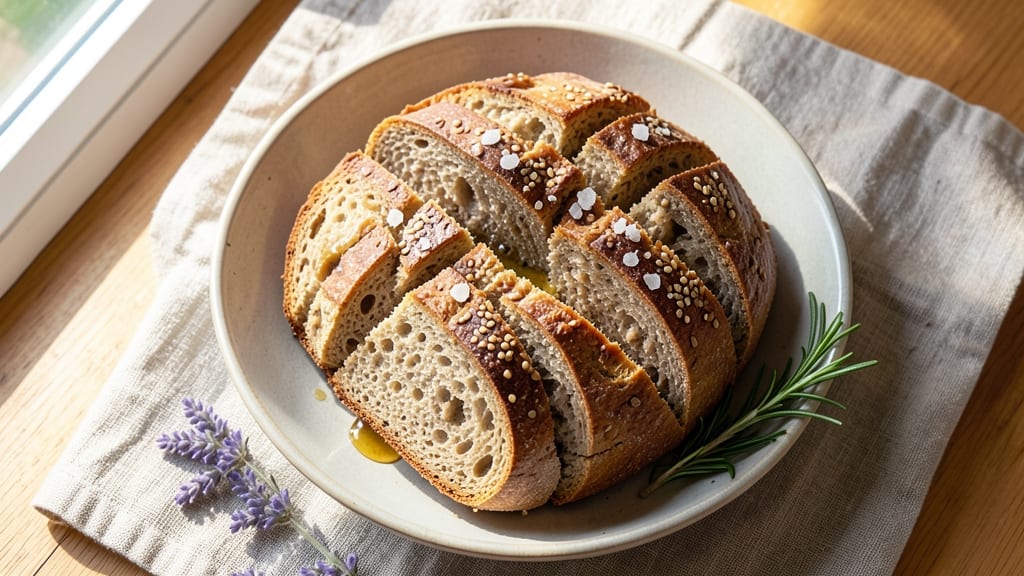
This 60-minute whole wheat bread recipe delivers restaurant-quality crust and nutty depth without the labor of traditional kneading. The secret lies in a foolproof no-knead method that transforms simple pantry staples into artisanal bread with minimal effort.
I've perfected this technique over years of testing, ensuring every batch rises perfectly and develops that signature golden crust.
What sets this recipe apart is the balance of whole wheat flour and vital wheat gluten, which creates a lighter texture while maintaining hearty flavor. No special equipment is needed—just a mixing bowl, measuring cups, and your oven.
The dough rests overnight (or at least 4 hours), allowing gluten to develop fully for a tender crumb and crisp exterior.
By the time it emerges from the oven, you'll have a loaf with a deep caramelized crust, a soft interior with subtle nutty undertones, and a satisfying chew. The aroma alone will transform your kitchen into a bakery, and the bread stays fresh for days when stored properly.
This is the kind of bread that makes homemade feel like a luxury.
Perfect for sandwiches, toast, or serving alongside soups, this recipe proves whole wheat bread can be both nutritious and indulgent. The method is simple enough for beginners but sophisticated enough to impress experienced bakers. Let's get started on creating your perfect loaf.
Ingredients for 60 whole wheat bread
Pantry staples transformed into artisanal bread with this no-knead technique.
| Ingredient | Amount | Notes |
|---|---|---|
| Whole Wheat Flour 🌾 | 3 cups | Unbleached preferred for better texture |
| Vital Wheat Gluten 🌾 | ½ cup | Essential for lighter texture |
| Instant Yeast 🍞 | 1 ½ tsp | Active dry works too |
| Granulated Sugar 🍚 | 1 tbsp | Enhances yeast activation |
| Salt 🧂 | 1 ½ tsp | Diamond Crystal preferred |
| Water 💧 | 1 ½ cups | Lukewarm for optimal yeast activation |
| Olive Oil 🫒 | 1 tbsp | Extra-virgin for richness |
| Honey 🍯 | 1 tbsp | For subtle sweetness and crust color |
| Cornmeal 🌽 | ¼ cup | For dusting and crust texture |
| Ice Water ❄️ | ½ cup | For shaping and crisp crust |
The whole wheat flour and vital wheat gluten combination is non-negotiable for achieving that signature nutty depth and lighter texture. Bob's Red Mill or King Arthur brands deliver consistent results, though any high-quality unbleached flour works. Vital wheat gluten can be found in the baking aisle or online—Anthony's Goods is a reliable source. For the yeast, ensure it's fresh by testing it in warm water with sugar; it should foam within 10 minutes. The honey adds subtle sweetness and contributes to that coveted caramelized crust, so avoid artificial substitutes that can alter the flavor profile.
No honey? Maple syrup at half the amount provides a similar sweetness without overpowering the bread's nutty undertones. Substituting the olive oil for melted coconut oil works in a pinch, though it may slightly alter the flavor. If you're short on cornmeal, semolina or all-purpose flour can be used for dusting, though cornmeal's texture is ideal for the crust. For the ice water, ensure it's truly icy—this helps create that crisp exterior. The dough's hydration level is critical; if your kitchen is humid, you may need to reduce water by 1-2 tablespoons to prevent a sticky dough.
The dough can be shaped and placed in the proofing bowl up to 4 hours before baking, making it perfect for overnight preparation. Once baked, allow the bread to cool completely on a wire rack to prevent a gummy interior. Store wrapped in a clean kitchen towel or plastic bag for 3-4 days at room temperature, or freeze for up to 3 months. For reheating, wrap cooled slices in foil and warm in a 350°F oven for 5-10 minutes to restore freshness.
Why You'll Love This Recipe
- No-Knead Magic: I swear by this recipe—just mix, let it rise, and bake. The vital wheat gluten makes it light and airy, so it doesn’t taste like dense, heavy bread. My lazy Sundays just got a whole lot easier.
- Nutty, Warm Depth: That touch of sugar in the dough? It caramelizes just enough to give every slice a subtle sweetness, while the whole wheat flour adds a rich, earthy bite. Honestly, it’s the kind of bread that makes toast taste like a gourmet breakfast.
- Bulk Prep Hero: I make a double batch every two weeks and freeze half. Perfect for sandwiches, French toast, or toast straight from the freezer—no thawing needed. My wallet and my lunchbox thank me every time.
- Budget-Friendly Staple: Whole wheat flour and yeast are cheap, but this bread feels like a splurge. Between us, I’ve fed a crowd of six for under $5 using this recipe. That’s a win for my grocery bill and my guests’ stomachs.
Step-by-step instructions for no-knead whole wheat bread
This method delivers a tender crumb and crisp crust without the labor of kneading.
Combine Wet Ingredients for Optimal Yeast Activation
In a large mixing bowl, whisk together the 1.5 cups lukewarm water, 1 tbsp granulated sugar, 1.5 tsp salt, 1 tbsp olive oil, and 1 tbsp honey until fully dissolved. The sugar and honey help activate the yeast while adding subtle sweetness to balance the whole wheat flavor. The mixture should be smooth with no visible sugar granules.
Sprinkle the 1.5 tsp instant yeast over the surface and let it sit for 5-7 minutes until foamy. You'll see small bubbles forming and the mixture expanding slightly—this confirms the yeast is active. If no activity occurs after 10 minutes, your yeast may be expired, and you'll need to start over with fresh yeast.
Mix Dry Ingredients and Form the Dough
In a separate bowl, whisk together the 3 cups whole wheat flour and 0.5 cup vital wheat gluten to create a uniform blend. The gluten improves the bread's structure and prevents a dense, heavy texture. Gradually add this dry mixture to the wet ingredients while stirring with a wooden spoon or dough whisk.
Once combined, the dough will be sticky but manageable. Add the 0.5 cup ice water in small increments, mixing just until incorporated. The cold water helps tighten the gluten strands and creates a dough that's firm enough to shape. Avoid overmixing—just combine until no dry spots remain. The dough should be soft, slightly tacky, and pull away from the sides of the bowl.
Shape and Rest for Crust Development
Lightly dust a clean work surface with 0.25 cup cornmeal to prevent sticking. Transfer the dough to the surface and gently shape it into a round loaf, about 8 inches in diameter. The cornmeal creates a barrier that helps develop the crisp crust during baking. Fold the edges inward to create a smooth, taut surface.
Place the shaped dough on a parchment-lined baking sheet, seam-side up. Cover loosely with a clean kitchen towel and let it rest at room temperature for 30 minutes. This brief rest allows the gluten to relax slightly, making it easier to handle and ensuring an even rise. The dough should expand slightly but remain firm to the touch.
Bake for a Crisp Crust and Nutty Flavor
Preheat your oven to 375°F with a baking stone or inverted baking sheet on the middle rack. The stone helps create steam, which promotes a crisp crust and even baking. Once preheated, place the dough on the stone and bake for 45-50 minutes, until the crust is deep golden brown and sounds hollow when tapped on the bottom.
For extra browning, brush the top with a little water after 30 minutes in the oven. This creates steam that enhances the crust's texture and color. The internal temperature should reach 190-200°F at the center. Let the bread cool on a wire rack for at least 30 minutes before slicing—this allows the crumb to set and prevents a gummy texture.
Slice and Serve for Maximum Freshness
Use a sharp serrated knife to slice the bread into 1-inch thick pieces. The knife's teeth help create clean cuts without crushing the tender crumb. Serve the bread warm for the best texture—each slice should have a crisp exterior, a soft interior, and a subtle nutty depth from the whole wheat flour.
Store any leftovers in an airtight container at room temperature for up to 3 days or freeze for longer storage. Reheat slices in a 350°F oven for 5-7 minutes to restore freshness. This bread pairs beautifully with soups, butter, or as a base for sandwiches, delivering both nutrition and flavor in every bite.
Pro Tips For Making 60 Whole Wheat Bread
- Use a Kitchen Scale: Whole wheat flour is dense and varies wildly in volume—measuring by cups leads to inconsistent results. I learned this the hard way after baking bread that was either too dense or too dry. Weigh your flour and gluten to the gram for reliable, predictable dough.
- Mix Gluten Last: Add the vital wheat gluten after dissolving the yeast and sugar in warm water. This keeps the gluten dry until the yeast is active, preventing it from absorbing moisture too early and gumming up the dough. I skip this step sometimes, and the dough always feels sluggish afterward.
- Let Dough Rise Twice: The first rise wakes up the yeast, but the second rise—after shaping—develops gluten properly. Skip it, and your bread will crumble like a sad sandwich. Give it 1–2 hours at room temp (or overnight in the fridge) for that chewy, satisfying texture.
- Steam the Oven: Whole wheat bread dries out fast. Place a metal tray on the oven rack, fill it with boiling water, then bake. The steam locks in moisture and gives the crust a soft, even finish. I used to ignore this, and my loaves turned out like hockey pucks—no one wants that.
Serving suggestions for 60 whole wheat bread
Classic Pairings
This whole wheat bread shines with homemade butter—simply mix ½ cup softened unsalted butter with 1 tsp honey and a pinch of flaky sea salt. Spread on warm slices for a luxurious touch.
For a savory twist, pair with whipped feta cheese—mix ½ cup crumbled feta with 1 tbsp olive oil and ½ tsp dried oregano. The nutty bread balances the tangy, creamy cheese perfectly. 🧈
Soup Companions
Serve alongside roasted tomato soup—blend 4 cups roasted tomatoes with 1 cup vegetable broth, ½ cup heavy cream, and 1 tsp basil. The bread’s crust soaks up the creamy soup beautifully.
For a lighter option, try minestrone—the hearty vegetables and beans complement the bread’s earthy notes. A drizzle of balsamic glaze adds a sophisticated finish. 🍲
Breakfast Versatility
Transform this bread into a French toast masterpiece—dip slices in a mix of 2 eggs, ¼ cup milk, 1 tsp vanilla, and 1 tbsp cinnamon, then pan-fry in butter until golden.
Top with maple syrup and fresh berries. For a savory breakfast, toast slices and top with avocado mash, everything bagel seasoning, and a poached egg. The whole wheat adds a satisfying bite. 🍳
Gourmet Sandwiches
Build grilled cheese sandwiches with sharp cheddar and caramelized onions—the bread’s crisp crust holds up perfectly to the melty cheese. For a Mediterranean twist, layer with hummus, sliced cucumber, red bell pepper, and feta.
The nutty depth of the bread pairs wonderfully with bold flavors like prosciutto and arugula for an Italian-inspired sandwich. 🥪
Dessert Twist
Drizzle warm slices with melted dark chocolate and sea salt for a quick dessert. The bread’s texture contrasts beautifully with the rich chocolate. For a more elaborate treat, spread with Nutella and top with banana slices and crushed hazelnuts.
The whole wheat adds a subtle earthiness that balances the sweetness. 🍫
Beverage Pairings
Pair with chilled hibiscus tea—its tartness cuts through the bread’s richness. For coffee lovers, a strong black coffee or cinnamon-spiced latte enhances the nutty flavors. A crisp Sauvignon Blanc or Pinot Noir also complements the bread’s depth, especially when served with charcuterie. ☕
Nutrition facts
Frequently asked questions
Why does this recipe use vital wheat gluten?
Vital wheat gluten strengthens the bread's structure, preventing a dense texture that often comes with whole wheat flour. It creates a lighter crumb while maintaining the nutty flavor. Without it, your loaf might turn out heavy or crumbly.
Can I make this bread without honey or olive oil?
Yes! Replace honey with 1 tbsp maple syrup for sweetness, or skip it entirely if you prefer a neutral flavor. For oil, use 1 tbsp melted coconut oil (though flavor may differ slightly). The bread will still work, but these ingredients enhance texture and crust color.
What if my dough is too sticky?
Add 1-2 tablespoons more whole wheat flour gradually until the dough is manageable but still slightly tacky. If it's extremely sticky, your kitchen might be humid—try chilling the dough for 15 minutes before shaping. The ice water in the recipe helps tighten gluten strands naturally.
How do I know when the bread is fully baked?
Look for a deep golden brown crust and listen for a hollow sound when tapping the bottom. The internal temperature should reach 190-200°F at the center. If unsure, let it cool 5 minutes before slicing—underbaked bread can feel gummy.
Can I freeze this bread for later?
Wrap cooled slices in plastic wrap and place in a freezer bag for up to 3 months. To reheat, wrap slices in foil and warm in a 350°F oven for 5-7 minutes until crispy again. The texture remains fresh, just like day-old bread.