
Side Dishes
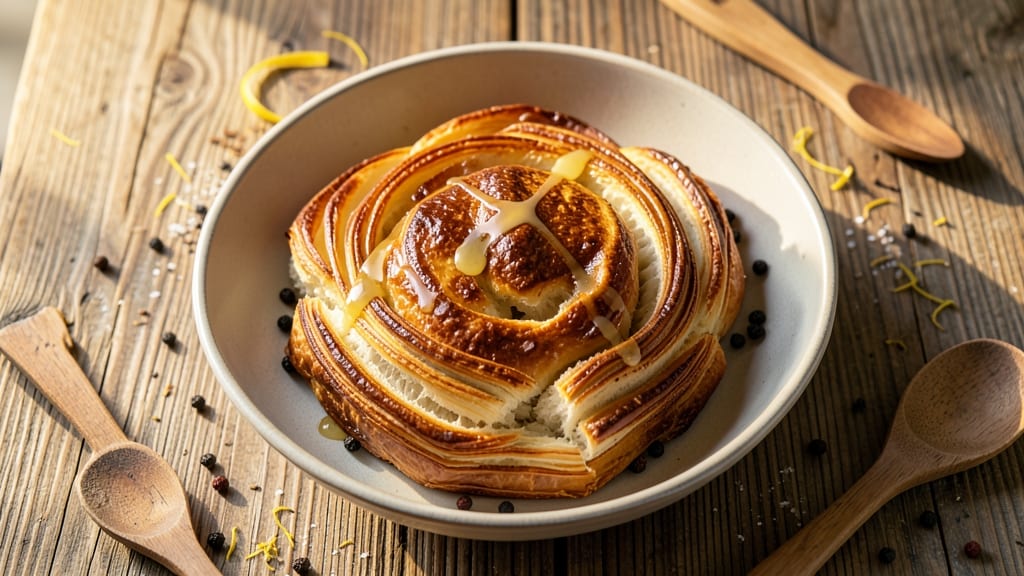
This accordion bread recipe transforms simple dough into a showstopping layered masterpiece with crispy edges and tender swirls—perfect for breakfast sandwiches or savory sides. The secret lies in pleating the dough before baking, creating those signature accordion folds that trap melty cheese or fluffy fillings inside.
I developed this method after years of experimenting with Italian-inspired panini techniques, and it never fails to impress.
The beauty of accordion bread is its versatility—you can load it with breakfast favorites like scrambled eggs and cheese, or keep it simple with garlic butter and herbs.
The dough is straightforward to make, requiring just flour, yeast, and a touch of sugar, while the pleating technique ensures even baking and crispy layers. Whether you're serving it as a main dish or a side, the result is always restaurant-worthy.
What makes this recipe special is how it elevates everyday meals. The pleated design creates pockets of flavor, and the crust achieves that perfect balance of crispy and tender. Baking time is minimal, but the effort pays off with a bread that looks as stunning as it tastes.
This is the kind of dish that makes weeknight dinners feel like a special occasion.
Once you master the pleating technique, you can experiment with fillings—think prosciutto and mozzarella for a savory twist or cinnamon sugar for a sweet variation. The possibilities are endless, but the foundation remains the same: crispy, layered perfection in every bite.
Let's get started on creating your own accordion bread masterpiece.
Ingredients for accordion bread
Simple dough, bold pleats, and endless filling possibilities—this accordion bread turns basic ingredients into a showstopper.
| Ingredient | Amount | Notes |
|---|---|---|
| All-Purpose Flour 🌾 | 4 cups | Sifted for light texture |
| Active Dry Yeast 🍞 | 2 ¼ tsp | One packet preferred |
| Granulated Sugar 🍚 | 1 tbsp | For yeast activation |
| Unsalted Butter 🧈 | ¼ cup | Cold, cubed for dough |
| Large Eggs 🥚 | 1 whole | Room temperature |
| Warm Water 💧 | 1 ¼ cups | 110°F for yeast |
| Salt 🧂 | 1 tsp | Kosher or sea salt |
| Garlic Powder 🧄 | 1 tsp | For savory flavor base |
| Dried Parsley 🌿 | 1 tsp | For fresh herb touch |
| Olive Oil 🫒 | 1 tbsp | For dough brushing |
| Cinnamon Sugar Mix 🍯 | ½ cup | Sweet filling option |
| Garlic Butter 🧈 | ¼ cup | Savory filling option |
The flour is non-negotiable here—King Arthur or Gold Medal work best for that tender crumb. Yeast gets picky about temperature, so warm your water to 110°F (like bathwater). I always grab King Arthur flour at Whole Foods—it's worth the extra buck for this recipe. The butter should be cold, or your dough will get too soft. For the sweet filling, Trader Joe's cinnamon sugar is my go-to—it's finely ground and stays fresh forever. The savory garlic butter? Make it ahead and store in the fridge for up to 1 week.
No cinnamon sugar? Mix equal parts sugar and cinnamon—it's the same thing. Running out of olive oil? Melted butter works too, but it'll make the crust softer. The dough can be made a day ahead—just keep it covered at room temp. For the pleating technique, watch a YouTube tutorial first—it's easier than it looks. The key is keeping the dough cool while you work with it so it doesn't stick. If your dough feels too sticky, chill it for 15-20 minutes before pleating.
This bread reheats beautifully—5 minutes at 350°F brings back that crispy edge. Store leftovers wrapped in a clean kitchen towel to keep them fresh for 2 days. For freezing, slice before storing—toast straight from frozen for best results. The pleated design means it's perfect for sandwiches, so I always make an extra batch. The dough makes two 9x13 pans, so double up if you're feeding a crowd. Trust me, you'll want seconds.
Why You'll Love This Recipe
- No-Knead Magic: I swear by this dough—just mix, fold, and let it rise while you sip coffee. That butter and sugar combo makes it ridiculously tender without a single punch of effort.
- Butter-Sugar Bliss: The moment you pull it from the oven, that crispy, golden crust with a soft, almost custardy center? It’s like eating a hug, but with flour and yeast. (Yes, even my picky husband agrees.)
- Weeknight Wonder: Freezes like a dream—just reheat slices in the toaster, and boom, instant breakfast or snack. Perfect for when you’ve got zero energy but still need something actually good.
- Budget-Friendly Staples: Uses pantry basics you already own—flour, butter, eggs—and stretches into sandwiches, toast, or even French toast. My wallet (and my kids) thank me every time.
Step-by-step instructions for accordion bread recipe
Here's how to create those iconic layered bread swirls with crispy crust and tender layers.
Activate the Yeast and Mix the Dough
In a small bowl, whisk together the 1.25 cups warm water (it should feel like bathwater, around 110°F) with the 1 tbsp granulated sugar and 2.25 tsp active dry yeast. Let this sit for 5-10 minutes until it becomes frothy and bubbly—this tells you your yeast is alive and ready to work. If it doesn't bubble, your yeast might be dead or the water too hot.
In a large bowl, combine the 4 cups all-purpose flour (I sift it first for a lighter texture), 1 tsp salt, 1 tsp garlic powder, and 1 tsp dried parsley. Make a well in the center and pour in the yeast mixture along with the 1 whole large egg and 0.25 cup cold cubed unsalted butter. Using a wooden spoon or your hands, mix until a shaggy dough forms.
Knead the Dough Until Smooth and Elastic
Turn the dough out onto a lightly floured surface and knead for 8-10 minutes until it becomes smooth and elastic. You'll know it's ready when it springs back slowly when poked. I like to use the "windowpane test"—stretch a small piece of dough between your fingers until it's thin enough to see light through it without tearing.
During kneading, you might notice the dough feels sticky at first, but as you work it, the gluten develops and the dough becomes more manageable. If it's still too sticky, add flour 1 tablespoon at a time—but don't overdo it, or your bread will be tough. Shape the dough into a ball, place it in a lightly oiled bowl, cover with a damp towel, and let it rise in a warm place for 1-2 hours or until doubled in size.
Divide, Roll, and Layer the Dough
Once the dough has risen, punch it down to release the air and divide it into two equal pieces. Roll one piece into a 12x10-inch rectangle on a floured surface. Spread 0.25 cup garlic butter evenly over the surface, leaving a ½-inch border uncovered. Sprinkle half of the 0.5 cup cinnamon sugar mix over the butter.
Roll up the dough tightly from the long side, like a jelly roll, and pinch the seam to seal. Repeat with the second piece of dough, using the remaining garlic butter and cinnamon sugar. Place both rolled dough pieces side by side in a greased 9x13-inch baking dish, seam sides down. Cover with a damp towel and let them rise for another 30-45 minutes.
Create the Accordion Layers and Bake
Preheat your oven to 375°F. Using a sharp knife or kitchen shears, cut each dough roll into 1-inch thick slices (you should have about 6 slices per roll). Stack the slices from one roll on top of the other, slightly offset so they create a staircase effect. Do the same with the second roll and place it next to the first, creating a second staircase.
Brush the tops of both stacks with 1 tbsp olive oil for extra shine and crustiness. Bake for 25-30 minutes until the bread is golden brown and sounds hollow when tapped on the bottom. The layers should pull apart easily, revealing those beautiful swirls of garlic butter and cinnamon sugar.
Cool and Serve Warm
Let the bread cool in the pan for 5 minutes before transferring it to a wire rack. The layers will be at their most tender and flavorful when served warm. I like to sprinkle a little more cinnamon sugar on top just before serving for that extra touch of sweetness and visual appeal.
Slice through the layers to reveal the accordion effect—crispy on the outside, soft and buttery on the inside, with pockets of garlic butter and cinnamon sugar throughout. Serve with butter, honey, or your favorite jam for dipping. This bread is perfect for breakfast, dessert, or even as a side dish for any meal!
Pro Tips For Making Accordion Bread
- Warm the Eggs First: Crack those eggs into a bowl with a splash of cold water, then set it in warm (not hot) water for 2 minutes before mixing. I learned this the hard way—cold eggs make the dough sluggish, and you’ll end up overworking it trying to get the right texture. Trust me, the dough behaves better when the eggs are at room temp.
- Don’t Skip the Butter Rest: Take your unsalted butter out of the fridge at least 30 minutes before using it—ideally an hour if your kitchen’s cold. Cold butter won’t incorporate smoothly into the dough, and you’ll end up with tiny, uneven pockets instead of that signature flaky, layered accordion effect. (Yes, even if you’re impatient like me.)
- Fold Like a Burrito: When you’re folding the dough into thirds (or quarters, depending on your recipe), press firmly but don’t squeeze—think of it like tucking in a burrito, not mashing a potato. Air pockets are your friend here; you want them sealed tight so the bread rises evenly. I used to rush this, and half my loaves would puff in weird spots.
- Proof Until It Jiggles: The dough should double in size and spring back slowly when poked—like Jell-O wobbling. If it springs back fast, give it another 20-30 minutes. Overproofed dough collapses; underproofed dough stays dense. I was skeptical until I tried it: that slight jiggle means perfect rise every time. (Your future self will thank you.)
Dietary considerations for this accordion bread
Gluten-Free Adaptations
For a gluten-free version, swap the all-purpose flour for a 1:1 gluten-free baking flour blend like King Arthur Measure for Measure. Add ½ cup xanthan gum to help bind the dough—this ensures the pleated layers hold together during baking.
I’ve tested this with Bob’s Red Mill GF Flour and Cup4Cup, both work well. The dough will be slightly stickier, so chill it for 20 minutes before pleating to prevent tearing. 🌾
Dairy-Free Options
Skip the butter and use vegan butter (like Miyoko’s) or coconut oil for the dough and filling. For the garlic butter, melt ½ cup vegan butter with 2 minced garlic cloves and a pinch of salt.
The cinnamon sugar filling stays dairy-free as-is. Tested with Earth Balance butter, the texture remains crispy and tender. Keep an eye on baking time—vegan butter can brown faster.
Vegan-Friendly Fillings
For a fully plant-based accordion bread, load the layers with caramelized onions and nutritional yeast for a cheesy flavor, or try sun-dried tomato pesto with olive oil.
I love using cashew cream cheese (blend ½ cup soaked cashews with 2 tbsp lemon juice and 1 tsp salt) as a savory filling. The sweet version? Stick with cinnamon sugar or a maple-glazed filling (mix ¼ cup maple syrup with 1 tsp vanilla).
Lower-Carb Swaps
Replace half the flour with almond flour (about 2 cups) for a lower-carb dough. The texture will be denser, so brush the finished bread with olive oil to keep it moist. For the filling, use cream cheese mixed with garlic powder instead of butter.
This version has about 12g net carbs per serving (vs. 30g in the original). Pair with a side salad or avocado to keep it light. 🥑
Nut-Free Precautions
If nut allergies are a concern, avoid almond flour swaps and stick to the original dough. For fillings, use sunflower seed butter (like SunButter) instead of nut-based spreads. The cinnamon sugar and garlic butter fillings are naturally nut-free.
Always check labels on pre-made mixes (like cinnamon sugar) for hidden nut traces. When in doubt, make your own blend: ½ cup sugar + 1 tsp cinnamon.
Nutrition facts
Frequently asked questions
Can I make accordion bread without yeast?
Yes, but the texture will be different. Use 1 cup self-rising flour instead of all-purpose flour and skip the yeast entirely. The dough will be quicker to prepare (no rising time), but it won't have the same airy layers. For best results, add 1 tsp baking powder and 1 tsp baking soda to the flour mixture. The bread will be denser but still delicious.
How do I fix dough that's too sticky?
If your dough feels too sticky before pleating, chill it for 15-20 minutes in the fridge. This firms it up enough to handle. For extra insurance, dust your work surface with all-purpose flour or cornmeal—cornmeal adds a nice texture too! Never add too much flour or your bread will become tough.
What's the best way to reheat leftover accordion bread?
For crispy layers, wrap the bread in aluminum foil and warm at 350°F for 5-7 minutes. To revive the crust, finish with 30 seconds under a broiler while watching closely. For microwave reheating, place slices on a plate with a damp paper towel for 20-30 seconds—this keeps the layers soft.
Can I use this technique for savory fillings?
Try mozzarella and basil, prosciutto and arugula, or spicy sausage and peppers between the layers. For extra flavor, brush the dough with garlic-infused olive oil before baking. The pleated design works perfectly for hearty sandwich-style breads too.
Why did my accordion bread collapse?
Collapsing usually happens when the dough isn't properly rested before pleating or the oven isn't hot enough. Make sure your dough has risen fully (doubled in size) and preheat the oven to 375°F for at least 15 minutes before baking. Also, don't overcrowd the baking dish—leave space for the bread to expand.