
Side Dishes
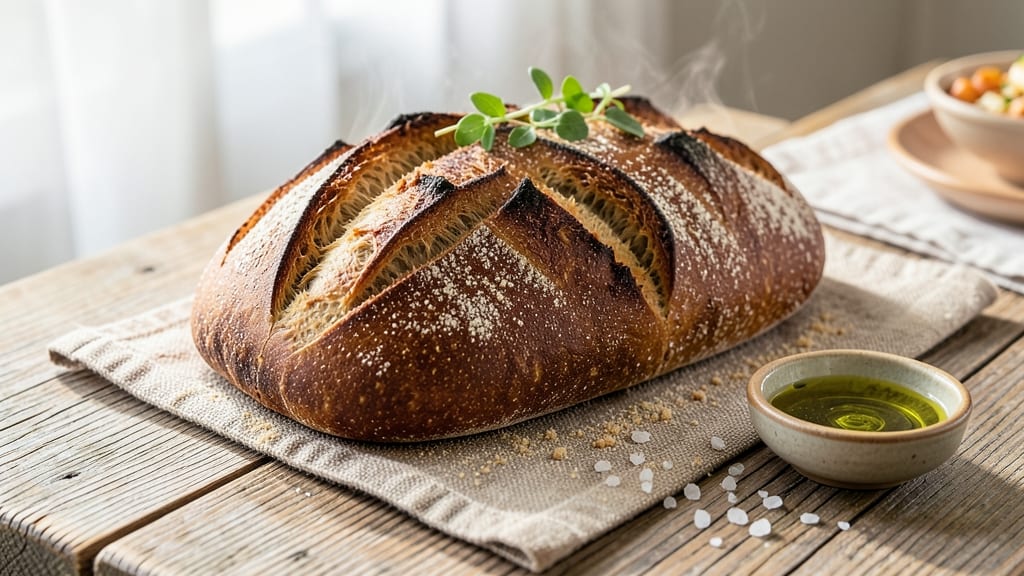
This All'Antico Vinaio bread recipe brings the rustic charm of Tuscany to your kitchen with its signature olive oil-infused crust and slow-fermented dough. 🌟 Born from the humble traditions of Italian bakeries, this bread delivers a crispy exterior, airy crumb, and a subtle olive oil richness that transforms simple meals into something extraordinary.
The secret lies in its long fermentation—allowing flavors to develop naturally over time.
What sets this Tuscan classic apart is its simplicity: just four core ingredients—flour, water, salt, and olive oil—work together to create a bread so versatile it can be enjoyed fresh, toasted, or used for bruschetta.
The dough’s natural fermentation process not only enhances flavor but also makes it easier to digest, a hallmark of traditional Italian baking techniques.
Baking this bread requires patience—letting the dough rise slowly at room temperature before a final proof in the fridge ensures maximum flavor and texture. The result? A loaf with a golden, shatteringly crisp crust that gives way to a soft, open crumb.
Every slice carries the essence of Tuscany, perfect for dipping in olive oil, pairing with cured meats, or serving alongside soups.
Once you master this recipe, you’ll understand why All'Antico Vinaio has been a staple in Italian homes for generations. The process is straightforward, but the reward—a loaf that tastes like a piece of Tuscany—is unmatched. Let’s get started on creating your own rustic masterpiece.
Ingredients for all antico vinaio bread
Four simple ingredients transform into Tuscan perfection with just time and olive oil.
| Ingredient | Amount | Notes |
|---|---|---|
| Unbleached All-Purpose Flour 🌾 | 4 cups | High-protein for structure |
| Extra-Virgin Olive Oil 🫒 | ½ cup | Fruity, not bitter |
| Instant Yeast 🍞 | ½ tsp | Not active dry |
| Fine Sea Salt 🧂 | 1 ½ tsp | Diamond Crystal preferred |
| Cold Water 💧 | 2 ½ cups | Chilled from tap |
| Cornmeal 🌽 | ¼ cup | For dusting baking sheet |
| Coarse Sea Salt 🧂 | 1 tbsp | For final crust |
| Semolina Flour 🌾 | 2 tbsp | For dusting loaf |
The flour is everything here—King Arthur or Caputo Tipo 00 if you can find it, but good all-purpose works too. Whole Foods or Italian specialty stores carry the Tipo 00, but don't stress if you can't get it. The olive oil? Use the good stuff—none of that cheap cooking oil. I grab mine from Trader Joe's (their Tuscan blend is perfect) or Costco for bulk. For the yeast, instant is non-negotiable—it dissolves faster and makes mixing easier. Keep it in a cool, dark place, and check the expiration date. Old yeast won't rise right.
No instant yeast? Active dry works at half the amount, but you'll need to dissolve it in warm water first. Short on olive oil? Avocado oil is a decent sub, but it won't have that same Tuscan richness. The cornmeal and semolina? Regular flour in a pinch, but they give that signature texture. For the salt, Diamond Crystal is ideal—it dissolves differently than table salt, so don't swap unless you adjust the measurement. The water? Cold is key—warm water kills the yeast before it even gets going.
This dough keeps for 3 days in the fridge if you want to slow-ferment longer. The baked loaf? Crisp for 2 days at room temp, then slice and freeze for up to 3 months. I like to wrap slices in parchment and freeze them individually—perfect for quick toast. The crust gets softer as it sits, so eat it fresh if you want that shatteringly crisp bite. Leftovers? Toast them and freeze for 1 month—they make amazing croutons.
Why You'll Love This Recipe
- It’s the bread that does it all: toast for breakfast, sandwiches for lunch, dipping for dinner. Freezes beautifully too, so you can bake a loaf on Sunday and pull out slices all week. Honestly, it’s my go-to for lazy days and busy ones alike.
- No-Knead Magic: Mixing takes five minutes—just flour, olive oil, yeast, and water. That’s it. No stand mixer, no overworking, no stress. The dough comes together smoother than you’d expect, and the slow rise means you can set it and forget it while dinner cooks.
- Olive Oil Luxury: That rich, fruity extra-virgin olive oil makes this bread taste like a Mediterranean vacation. The crust gets golden and crisp, while the crumb stays tender—no fancy ingredients, just pure, simple flavor that actually impresses guests.
- Weeknight Workhorse: It’s the bread that does it all: toast for breakfast, sandwiches for lunch, dipping for dinner. Freezes beautifully too, so you can bake a loaf on Sunday and pull out slices all week. Honestly, it’s my go-to for lazy days and busy ones alike.
Step-by-step instructions for fermented olive oil bread
Here's how to create that iconic Antico Vinaio texture with crispy crust and tender crumb.
👨🍳 Step 1: Mix the Dough with Olive Oil Infusion
In a large bowl, combine the 4 cups unbleached all-purpose flour and 1.5 tsp fine sea salt. Make a well in the center and add the 0.5 cup extra-virgin olive oil and 0.5 tsp instant yeast. The olive oil should be fruity, not bitter—this is what gives the bread its signature flavor.
Gradually pour in the 2.5 cups cold water while mixing with a wooden spoon. The dough will be shaggy at first, but keep stirring until it starts coming together. I like to use my hands here to really work the olive oil into the flour—this creates that signature tender crumb. Once combined, transfer to a clean surface and knead for 8-10 minutes until smooth and elastic.
🥘 Step 2: Bulk Ferment for Maximum Flavor
Shape the dough into a loose ball and place it in a lightly oiled bowl. Cover with a damp towel and let ferment at room temperature for 4-6 hours. This long fermentation is key—it develops those complex flavors and creates the perfect texture. You'll know it's ready when the dough has nearly doubled in size and springs back slowly when poked.
I usually set my timer for 4 hours first, then check. If it's not quite ready, give it another hour. The longer it ferments (up to 8 hours), the more flavorful the bread will be. Just don't let it overproof—it should still have some resistance when poked.
🍳 Step 3: Shape and Second Ferment
Turn the dough out onto a lightly floured surface and shape it into a 12-inch round loaf. I like to make a well in the center and gently pull the dough outward, creating that classic Antico Vinaio shape. Place it seam-side up in a lightly greased bowl, cover, and let it rise for another 1-2 hours until puffy.
While it's rising, preheat your oven to 425°F. This is where the magic happens—the high heat creates that signature crispy crust. Sprinkle 2 tbsp semolina flour on a baking sheet to prevent sticking.
🔥 Step 4: Bake with Cornmeal and Coarse Salt
Carefully transfer the shaped dough to the prepared baking sheet. Sprinkle 0.25 cup cornmeal evenly over the top, then score the dough with a sharp knife in a crosshatch pattern. This helps control expansion and gives that rustic look. Immediately sprinkle 1 tbsp coarse sea salt over the top—this creates that signature crunchy crust.
Bake for 25-30 minutes until the crust is deep golden brown and sounds hollow when tapped on the bottom. The interior should reach 190-200°F at the center. For that perfect crust, I like to bake it on the middle rack—hot air rises, creating that crispy top we all love.
⏰ Step 5: Cool and Enjoy (The Hardest Part!)
Let the bread cool on a wire rack for at least 1 hour before slicing. I know it's tempting to dig in immediately, but cooling properly prevents a gummy crumb. The bread will be at its best 2-3 hours after baking when the crumb has fully set and the flavors have melded.
Slice it thick—this bread is meant to be enjoyed in generous portions. The exterior should be crispy with that beautiful olive oil sheen, while the interior remains soft and slightly chewy. Serve warm with olive oil for dipping or enjoy it as-is—it's that good on its own.
Pro Tips For Making All Antico Vinaio Bread
- Mix by Hand: Skip the stand mixer—this dough needs the gentle, slow development only your hands can give. Knead for 8-10 minutes until it’s smooth but still slightly tacky; overworking it will make the bread dense and chewy.
- Use Cold Olive Oil: Chill that extra-virgin olive oil in the fridge for 20 minutes before mixing—it’ll temper the dough’s rise and keep the crust from spreading too fast. I learned this after my first batch turned into a pancake.
- Skip the Overproofing: Let the dough rise until it’s just puffy and springs back slowly when poked—about 1.5 to 2 hours at room temp. Overproofing (like I did the first three times) makes the bread gummy, not airy.
- Steam the Pan: Add a metal rack to your Dutch oven, then pour a cup of boiling water into the bottom before baking. The steam guarantees a crisp, golden crust without burning the bottom—no more sad, flat loaves.
Creative variations of this all antico vinaio bread
Olive Oil Variations
Swap the extra-virgin olive oil for avocado oil if you’re avoiding olive allergies, though the flavor will differ slightly. For a nutty twist, replace 2 tbsp of olive oil with 2 tbsp melted walnut oil—it adds depth but requires careful balancing with the salt.
If you love herbs, infuse the olive oil with 1 tsp dried rosemary or thyme before mixing into the dough for an aromatic boost. 🌿
Flour Swaps
For a gluten-free version, replace 1 cup of all-purpose flour with a 1:1 gluten-free blend (like Bob’s Red Mill) and add 1 tsp xanthan gum to mimic elasticity.
If you prefer a whole grain texture, substitute 1 cup of flour with whole wheat flour, but reduce the water by 2 tbsp—whole wheat absorbs more moisture. For a crispier crust, replace ½ cup of flour with ½ cup bread flour (higher protein = better structure).
Fermentation Adjustments
In colder kitchens? Extend the bulk fermentation to 8-12 hours for deeper flavor, but monitor closely—overproofing ruins the texture. For a faster rise, place the dough in a proofing box (or oven with light on) at 80°F for 2-3 hours.
If you’re short on time, use 1 tsp rapid-rise yeast (like Red Star Platinum) and cut fermentation to 2-3 hours, though flavor will be less complex. 🕒
Shape Innovations
Skip the round loaf and try a boule (batard shape) for a rustic French-Tuscan hybrid. Or flatten the dough into a thin disc, bake at 450°F for 12-15 minutes, then drizzle with olive oil and flaky sea salt for focaccia-style bruschetta.
For a multigrain twist, press sun-dried tomatoes or roasted garlic into the dough before shaping. Each variation keeps the olive oil magic intact!
Sweet & Savory Twists
Add 1 tbsp honey or maple syrup to the dough for a slightly sweet loaf—perfect with ricotta and jam. For savory depth, mix in 1 tbsp crushed black pepper or smoked paprika before shaping.
A cheesy variation? Press 2 oz shredded pecorino into the dough before baking. These tweaks keep the bread’s signature texture while expanding its versatility. 🧀
Global Inspired Mashups
Turn it into Tuscan-style sourdough by replacing ½ cup of water with ½ cup active sourdough starter (100% hydration). For a Mediterranean fusion, add 1 tbsp za’atar and 1 tsp sumac to the dough—score a star pattern before baking for a Middle Eastern-inspired crust.
A Mexican twist? Brush the baked loaf with chili-lime butter for a spicy-sweet kick. Every adaptation honors the original while exploring new flavors. 🌍
Nutrition facts
Frequently asked questions
Why does this Tuscan bread need such a long fermentation?
The extended 4-8 hour fermentation develops complex flavors and creates that signature tender crumb. The slow process breaks down gluten and starches, making the bread easier to digest while building depth. It's what gives All'Antico Vinaio bread its authentic taste—think of it as the bread's "flavor maturation" period.
Can I use this dough for other shapes besides round?
Try a boule shape (like French baguettes) or flatten it into a thin disc for focaccia-style bruschetta. The same dough works beautifully—just adjust baking time. For a rustic look, score different patterns (crosshatch, diagonal) before baking. The olive oil magic stays intact no matter the shape!
What's the secret to that perfect crispy crust?
The crust comes from three key elements: high heat (425°F), cornmeal/semolina coating, and coarse sea salt sprinkled right before baking. Bake on the middle rack and avoid opening the oven door during the first 20 minutes—steam is your friend for that shatteringly crisp exterior.
How do I store this bread to keep it crispy?
Wrap cooled loaves in parchment paper (not plastic) and store at room temperature for 2 days to maintain crispness. For longer storage, slice and freeze individual portions—thaw for 10 minutes before toasting. Pro tip: Toast slices directly from frozen for that perfect crunch!
What's the best way to revive stale bread?
Preheat oven to 350°F, wrap bread in foil, and bake for 5-8 minutes. Unwrap and broil for 1-2 minutes until crispy. For extra flavor, brush with olive oil before broiling. This works best within 3 days of baking—after that, it's time to make fresh dough!