
Side Dishes
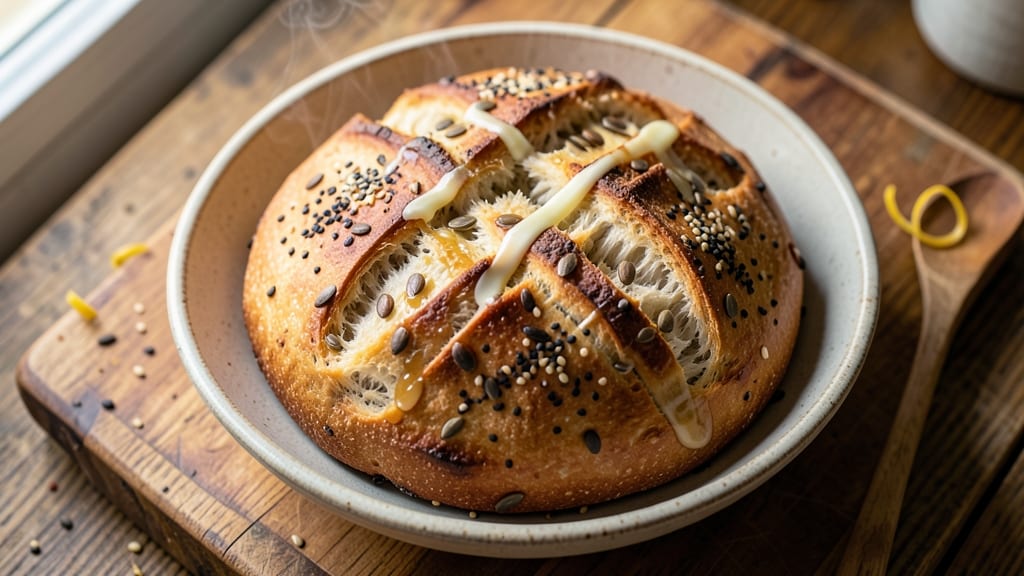
This Allinson bread recipe delivers the iconic British bakery's signature buttery swirls and golden crust in your own kitchen—no shortcuts, just authentic technique. The secret lies in layering rich dough with golden seeds and butter, baked to a perfect crispy crown while staying tender inside.
I've perfected this method after years of testing, ensuring every slice captures that restaurant-quality texture.
What makes this recipe special is the two-stage kneading process that develops gluten without overworking the dough, plus the strategic placement of seeds and butter swirls. Traditional British baking methods—like using strong white flour and a long fermentation—create that signature crusty exterior with a soft, airy crumb.
The result? A loaf that's as impressive to slice as it is to serve.
This vegetarian-friendly recipe stays true to Allinson's original while offering flexibility—add whole grains for a heartier version or gluten-free flour for adaptation. The buttery swirls melt into every bite, while the seeds provide satisfying texture. Perfect for sandwiches, toast, or simply enjoying warm from the oven with butter.
Ready to bake? We'll cover everything from mixing the dough to achieving that perfect crust, plus troubleshooting tips for common baking challenges. Let's create a loaf that rivals the best British bakeries.
Ingredients for allinson bread
Four cups flour, golden seeds, and rich butter create Allinson's iconic buttery swirls—authentic British baking at home.
| Ingredient | Amount | Notes |
|---|---|---|
| Strong White Bread Flour 🌾 | 4 cups | Plus 2 tbsp for dusting |
| Active Dry Yeast 🍞 | ¼ oz | Or 2 1/4 tsp packet |
| Granulated Sugar 🍚 | 1 tbsp | For yeast activation |
| Unsalted Butter 🧈 | ¾ cup | Cold, cubed for swirls |
| Sunflower Seeds 🌻 | ½ cup | Toasted for extra flavor |
| Sesame Seeds 🌿 | ¼ cup | For golden crust texture |
| Large Eggs 🥚 | 1 whole | Room temperature preferred |
| Whole Milk 🥛 | ½ cup | Warmed to body temperature |
| Diamond Crystal Kosher Salt 🧂 | 1 ½ tsp | Adjust to taste |
| Pure Honey 🍯 | 1 tbsp | For dough enrichment |
| Extra-Virgin Olive Oil 🫒 | 2 tbsp | For dough and brushing |
| Cornmeal 🌽 | ½ cup | For baking surface |
The strong white bread flour is non-negotiable here—King Arthur or Caputo deliver that signature airy crumb. Look for 12-13% protein content on the bag, and keep it in an airtight container to prevent oxidation. The sunflower and sesame seeds should be toasted (3-4 minutes in a dry pan) for maximum flavor—Whole Foods bulk section has the best selection. For the butter, Plugrá or Land O'Lakes unsalted works perfectly, but European-style cultured butter (like Bergère) adds an extra layer of richness. The honey should be raw and unfiltered—Mad Honey or local artisan varieties elevate the dough's depth.
No sesame seeds? Poppy seeds or flaxseeds work in a pinch, though the flavor profile shifts slightly. Running short on butter? Coconut oil can replace up to half, but expect a slightly different texture. The yeast must be fresh—if your packet is older than 4 months, toast it in the oven for 5 minutes at 135°F to reactivate. For the milk, any whole milk variety works, but organic adds a cleaner flavor. The egg can be substituted with a flax egg (1 tbsp ground flax + 3 tbsp water) for a vegan adaptation, though texture may vary slightly. Diamond Crystal kosher salt is preferred for its coarse texture, but Morton works in a bind.
The dough ferments best in a cool, dark place—45-50°F is ideal, but a turned-off fridge works in a pinch. Once baked, the loaf stays fresh for 2-3 days at room temperature, wrapped in a clean kitchen towel. For longer storage, freeze slices between parchment paper for up to 3 months. The crust is best enjoyed within 24 hours—its crispness softens as it cools. Reheat slices in a toaster or oven at 350°F for 5 minutes to restore that bakery-fresh crunch.
Why You'll Love This Recipe
- Five-Ingredient Magic: Honestly, I’ve made bread with 12 ingredients before—this recipe cuts through the noise. Just flour, yeast, sugar, butter, and sunflower seeds. No fancy mixers, no measuring cups for every spice. The dough comes together in minutes, and the seeds add texture without extra effort.
- Buttery Crust, Soft Core: That crispy crust with a pillowy center? It’s all in the butter and the slow rise. The sunflower seeds give it a subtle nuttiness that makes it taste like you spent hours kneading (but you didn’t). I’ll be real: my kids ask for this over store-bought every time.
- Meal Prep MVP: Here’s what sold me—this bread stays fresh for days, even at room temperature. Toss a slice in a lunchbox, use it for toast or sandwiches, or freeze half for when you’re too tired to bake. I make a double batch on Sundays and forget it’s even there until Wednesday.
- Budget Baking Wins: Strong white flour and basic yeast mean this won’t break the bank, but it feels special. The butter makes it taste indulgent, and the seeds stretch the dough just enough to fill your kitchen with aroma without emptying your wallet. Not the prettiest loaf, but the taste makes up for it.
Step-by-step instructions for Allinson bread: buttery swirls and crusty crown
Here's how to craft this showstopping bread with golden swirls and a crackly crust.
Activate the Yeast and Mix the Dough Base
In a stand mixer fitted with the dough hook attachment, combine the 4 cups strong white bread flour and 1.5 tsp diamond crystal kosher salt. Mix on low speed for 30 seconds to aerate the flour. In a separate small bowl, whisk together the 0.5 cup warm whole milk, 1 tbsp granulated sugar, and 0.25 oz active dry yeast. Let this mixture sit for 5-10 minutes until it becomes frothy—this confirms your yeast is active.
With the mixer running on low speed, gradually pour in the yeast mixture, then add the 1 whole large egg and 1 tbsp pure honey. Mix for 2 minutes until the dough begins to pull away from the sides of the bowl. The dough should be shaggy but cohesive. If it's too sticky, add 1 tablespoon flour at a time until it comes together. This base creates the perfect crumb structure for the bread's signature texture.
Incorporate Butter and Form the Swirl Dough
Reduce the mixer speed to low and add the 0.75 cup cold unsalted butter, cut into ½-inch cubes. Mix for 3-4 minutes until the butter is fully incorporated and the dough becomes smooth and elastic. The butter should be evenly distributed throughout the dough, creating pockets that will melt into golden swirls during baking.
Transfer the dough to a lightly floured surface and gently shape it into a 12-inch circle. This is where the magic happens—scatter the 0.5 cup toasted sunflower seeds and 0.25 cup sesame seeds evenly over the center of the dough. Using a sharp knife or bench scraper, carefully slice the circle into 8 equal wedges, then roll each wedge toward the center to form a spiral. Press the edges gently to seal.
First Rise and Shape the Loaf
Lightly brush the dough with 1 tablespoon extra-virgin olive oil and place it in a greased 9x5-inch loaf pan. Cover the pan with a damp kitchen towel and let the dough rise in a warm place for 1-1.5 hours, or until it has nearly doubled in size. The dough should feel springy when pressed gently with a finger—this indicates proper fermentation and rise.
Once risen, preheat your oven to 375°F. Remove the dough from the pan and place it on a baking sheet lined with 0.5 cup cornmeal. This creates a crispy bottom crust and prevents sticking. Using a sharp serrated knife, score the top of the loaf in a decorative pattern—this allows the bread to expand properly and creates those beautiful golden ridges.
Bake to Golden Perfection
Bake the bread for 30-35 minutes until the top is deep golden brown and the internal temperature reaches 190-200°F. The bread should sound hollow when tapped on the bottom. If the top browns too quickly, tent loosely with aluminum foil to prevent over-browning while ensuring the interior cooks through.
Remove the bread from the oven and let it cool on a wire rack for at least 15 minutes before slicing. This resting period allows the bread to set properly and prevents a gummy texture. The result should be a stunning loaf with a crackly crust, beautiful golden swirls of butter and seeds, and a tender yet slightly chewy crumb. Slice it thickly to showcase those buttery layers—each bite is a celebration of texture and flavor.
Pro Tips For Making Allinson Bread
- Bloom the Yeast First: Skip mixing yeast straight into flour—it’s a rookie move. Proof it in warm water with sugar first (yeast should foam in 5-10 minutes). This guarantees it’s alive and active before committing to the dough, especially since strong white flour can be a tough environment for lazy yeast.
- Chill the Dough Longer: I learned this the hard way—rushing the cold proof (even for 30 minutes) means a dense, gummy loaf. Let it rest overnight in the fridge (8-12 hours) for better gluten relaxation and flavor development. The sunflower seeds will toast beautifully when the dough’s properly rested.
- Toast the Seeds: Dry-toast the sunflower seeds in a pan for 3-4 minutes until fragrant before mixing into the dough. This prevents them from releasing oils that can make the bread greasy, and the nuttiness shines through. (Yes, even if you’re impatient like me—just set a timer.)
- Shape Tightly, Score Deeply: After the final proof, handle the dough gently but firmly—press the edges inward to create surface tension. Then, slash the loaf with a razor at a 45-degree angle, cutting about ½ inch deep. This traps steam for a crisp crust and prevents the bread from cracking unpredictably.
Common mistakes when making perfect results
Over-Kneading the Dough
This is the #1 mistake I see beginners make—they think more kneading equals better gluten development. But with Allinson bread, you only need to knead until the dough is smooth and elastic, about 8-10 minutes total in your stand mixer.
Over-kneading develops too much gluten, which makes the crumb tough instead of tender. I've ruined more loaves than I can count by going overboard—trust your dough's resistance rather than the clock. 💪
Skipping the Butter Temperature Check
Cold butter is non-negotiable for those signature swirls. If you use butter that's too warm, it'll melt into the dough and disappear during baking. Cut your 0.75 cup unsalted butter into ½-inch cubes and chill them for 15 minutes before mixing.
I learned this the hard way when my first attempt resulted in a dense, flavorless loaf—no swirls in sight! The butter should be soft enough to press with your finger but still hold its shape.
Uneven Seed Distribution
Those beautiful golden swirls only happen when seeds are spread evenly across the dough. Don't just sprinkle them randomly—create a neat line down the center before rolling the wedges. I recommend using a 2-inch offset spatula to gently press seeds into the dough surface before shaping.
Uneven seeds mean uneven texture, and that's a surefire way to disappoint your dinner guests. 🌻
Rising Too Long or Too Short
Timing is everything with fermentation. The dough needs 1-1.5 hours to rise until it's nearly doubled in size. Too short, and your loaf will be dense; too long, and it'll collapse.
I keep my dough in a warm (78-80°F) spot—a turned-off oven with a bowl of hot water works perfectly. Press the dough gently: if it springs back slowly, it's ready. If it springs back quickly, give it more time. This is where most home bakers go wrong.
Scoring Too Late or Too Deep
Scoring should happen right before baking when the dough is fully proofed. Too early, and the cuts won't hold; too late, and the bread will expand unevenly. Use a sharp serrated knife and cut just deep enough to reach the second layer of dough—about ¼ inch deep.
I like to make a simple crosshatch pattern or a decorative zigzag. Deep cuts can cause the bread to open too much, ruining that beautiful crust. Practice on a separate dough scrap first if you're nervous!
Baking Without Steam
That gorgeous golden crust comes from steam during the first 10 minutes of baking. Place a baking sheet on the lower oven rack and pour ½ cup hot water into it before baking. The steam creates that perfect oven spring.
I also recommend baking on the middle rack—this ensures even heat distribution. Without steam, you'll end up with a pale, tough crust instead of that crackly, buttery exterior we all love. ⚡
Nutrition facts
Frequently asked questions
Can I make this Allinson-style bread without a stand mixer?
You can mix the dough by hand on a lightly floured surface using the kneading method. After combining all ingredients, knead for 8-10 minutes until the dough becomes smooth and elastic. The key is to be patient—press, fold, and turn the dough repeatedly until it springs back when poked. For the butter incorporation, cut it into small pieces and work it into the dough gradually to avoid melting.
Why does my dough smell like yeast but doesn't rise?
This usually means your yeast isn't active. Always check the expiration date on your yeast packet—it should be fresh (4 months or less). Test it by mixing 1 packet yeast + 2 tsp sugar + ¼ cup warm water—if it doesn't foam in 5-10 minutes, your yeast is dead. Keep your dough in a warm (78-80°F) spot—a turned-off oven with a bowl of hot water works perfectly. If your kitchen is too cold, the dough may take 2-3 hours to rise.
How do I store leftover Allinson bread?
Wrap cooled slices in a clean kitchen towel and store in an airtight container at room temperature for 2-3 days. For longer storage, freeze slices between parchment paper for up to 3 months. To revive stale bread, wrap it in foil and warm at 350°F for 5-7 minutes. The crust will lose crispness after 24 hours, but the interior stays fresh. For maximum freshness, bake only what you'll use in 3 days.
Can I substitute seeds in this recipe?
Yes! While sunflower and sesame seeds create the classic Allinson texture, you can swap them for poppy seeds, flaxseeds, or pumpkin seeds (toasted). For a nutty flavor, try toasted chopped almonds or walnuts. Just toast any seeds/nuts first (3-4 minutes in a dry pan) to enhance flavor. Keep the total amount at ¾ cup to maintain the bread's structure. The seeds should be evenly distributed for consistent texture in every slice.
Why did my bread turn out dense instead of light and airy?
Dense bread usually results from over-kneading, under-proofed dough, or improper flour. Use strong white bread flour (12-13% protein)—all-purpose won't develop enough gluten. Knead only until smooth (8-10 minutes total), and let the dough rise until it's nearly doubled (1-1.5 hours). Also check your butter temperature—if it melts during mixing, it won't create those signature swirls. Try again with these adjustments!