
Main Courses
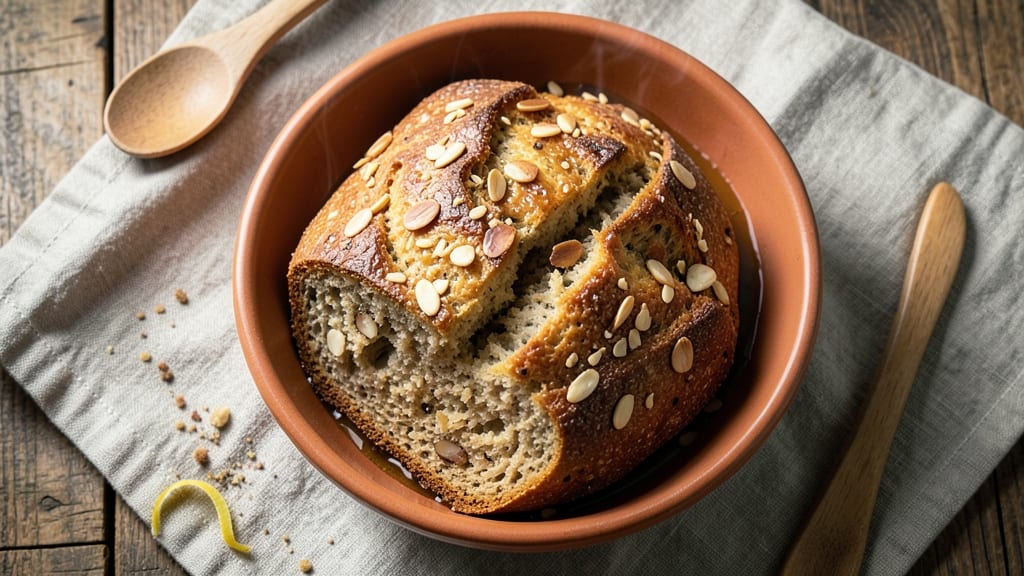
This almond bread recipe with yeast delivers the perfect balance of tender crumb and nutty richness—no special skills required. The secret lies in a simple dough enriched with ground almonds and a touch of honey, creating a moist, flavorful loaf with a golden crust. I've perfected this method over years of baking, ensuring every slice stays soft for days while delivering that signature almond aroma.
The beauty of this recipe is its flexibility—classic yeast dough handles substitutions beautifully. You can swap honey for maple syrup, use almond milk instead of dairy, or even add a pinch of cinnamon for warmth.
The dough comes together in under 15 minutes, then rests while you prepare the almond swirl filling, making it ideal for weekend baking projects.
What you'll end up with is a loaf that's impossibly tender inside with a crisp, crackly crust—each slice revealing those signature nutty swirls. The almond flavor shines without overpowering, making it perfect for breakfast toast, sandwiches, or simply enjoyed with butter.
This is the kind of bread that makes homemade baking feel effortless.
Whether you're a seasoned baker or just starting out, this recipe delivers professional-quality results with minimal fuss. The yeasted dough rises reliably, and the almond filling stays perfectly moist. Let's get started on creating your own crusty, nutty masterpiece that'll have everyone asking for seconds.
Ingredients for almond bread recipe with yeast
Fourteen simple ingredients for a loaf that's impossibly tender inside with a crisp, crackly crust.
| Ingredient | Amount | Notes |
|---|---|---|
| All-Purpose Flour 🌾 | 3 ½ cups | Sifted for light texture |
| Granulated Sugar 🍚 | ½ cup | White or light brown |
| Honey 🍯 | ¼ cup | Wildflower preferred |
| Unsalted Butter 🧈 | ½ cup | Softened to room temp |
| Active Dry Yeast 🍞 | 2 ¼ tsp | Freshly measured |
| Large Eggs 🥚 | 1 whole | Room temperature |
| Almond Milk 🥛 | ¾ cup | Unsweetened, chilled |
| Ground Almonds 🌰 | 1 cup | Finely ground, toasted |
| Vanilla Extract 🌿 | 1 tsp | Pure vanilla preferred |
| Salt 🧂 | ½ tsp | Fine sea salt |
| Cinnamon 🌶️ | ½ tsp | Optional for warmth |
| Powdered Sugar 🍚 | ¼ cup | For topping |
The ground almonds are your secret weapon here. Bob's Red Mill has the best-quality pre-ground almonds, but if you're grinding your own, toast them first for deeper flavor. The butter should be softened but not melted—room temperature is key. I always grab the organic unsalted butter from Whole Foods when I'm baking, but any good brand works. The yeast is non-negotiable for that perfect rise—make sure it's fresh, or your bread will be flat. For the almond milk, Blue Diamond is my go-to, but any unsweetened version will do.
No almond milk? Oat milk or soy milk works just fine—just make sure it's unsweetened. Running out of vanilla? Almond extract at half the amount gives a similar nutty depth. The honey can be swapped for maple syrup (use the same amount), but it'll change the flavor slightly. For the cinnamon, if you don't have it, nutmeg at a quarter teaspoon adds warmth without overpowering. The ground almonds can be pre-ground or finely chopped almonds—just pulse them in a food processor for consistency. And if you're feeling fancy, add a pinch of cardamom for an exotic twist.
The dough keeps beautifully in the fridge for up to 2 days wrapped in plastic, and the filling stays fresh for 3 days in an airtight container. For longer storage, freeze the dough for up to 3 months—just thaw overnight in the fridge before baking. The baked loaf? It stays moist for 5 days if wrapped tightly. I always slice it thin for toast—each slice is like a little hug of almond goodness. And trust me, the leftovers disappear faster than you can say 'second slice.'
Why You'll Love This Recipe
- No-Knead Magic: I swear by this dough—just mix, let it rise, and bake. That honey and butter combo makes the bread so tender, you’ll forget you didn’t spend hours kneading.
- Sweet Crunch Surprise: The almonds add a satisfying bite, but the real star is the caramelized honey crust. It’s like dessert for breakfast, and I’m not sorry about it.
- Breakfast or Snack Hero: Slice it fresh for toast, pack it for lunch, or serve warm with jam. Honestly, I’ve used it for everything from brunch to after-school treats without a second thought.
- Budget-Friendly Staple: Uses pantry basics—flour, sugar, butter—and stretches into multiple meals. Between us, this recipe saved me from buying overpriced bakery bread every week.
Step-by-step instructions for almond bread with yeast
Here's how to create a tender crumb with nutty swirls and a golden crust—all with one simple rise.
Activate the Yeast and Mix Wet Ingredients
In a small bowl, combine the 0.75 cup almond milk (just warm enough to touch with your finger—about 105°F) with the 0.25 cup honey and 2.25 tsp active dry yeast. Let this sit for 5-10 minutes until it becomes frothy. You'll see tiny bubbles forming—this means your yeast is alive and ready to work.
In a separate large bowl, whisk together the 1 whole large egg, 0.5 cup softened unsalted butter, 0.5 cup granulated sugar, 1 tsp vanilla extract, 0.5 tsp salt, and 0.5 tsp cinnamon until smooth. This mixture should be creamy and well combined. If the butter isn't softened, it won't blend properly, and your bread will turn out dense.
Combine Wet and Dry Ingredients
Gradually add the 3.5 cups sifted all-purpose flour to the wet mixture, stirring gently with a wooden spoon or rubber spatula until just combined. Don't overmix—you want a soft, shaggy dough. Once the flour is incorporated, pour in the yeast mixture and stir again until everything comes together into a cohesive dough.
Turn the dough out onto a lightly floured surface and knead gently for 2-3 minutes until smooth. You're not looking for a windowpane test here—just enough to develop the gluten lightly. The dough should be soft and slightly tacky but not sticky. If it's too dry, add a teaspoon of almond milk; if too sticky, add a bit more flour.
Create the Almond Swirl and First Rise
Divide the dough in half. Roll one half into a 12-inch log and place it on a parchment-lined baking sheet. In a small bowl, mix the 1 cup ground almonds with 0.25 cup powdered sugar to create your filling. Spread this mixture evenly over the dough log, leaving a ½-inch border uncovered.
Roll the second half of the dough into another 12-inch log and place it on top of the almond mixture. Press gently to seal the edges, then use a sharp knife to make 4-5 diagonal cuts (about ½-inch deep) along the top. This creates the classic swirl pattern. Cover the baking sheet with a clean kitchen towel and let the dough rise in a warm place for 1-1.5 hours until it's puffy and nearly doubled in size.
Shape and Final Rise
Preheat your oven to 350°F while the dough rises. Once the dough has puffed, gently shape it into a loaf by pressing the cuts down slightly and rounding the edges. Place the loaf seam-side down on the same parchment-lined baking sheet. Cover it again with the towel and let it rise for another 30-45 minutes until it's just about ready—it should spring back slowly when pressed gently with a finger.
Here's the thing—don't let it rise too long or it'll collapse in the oven. The final rise should be just enough to see it puff up slightly. Brush the top with a little almond milk for a golden finish, then sprinkle with an extra pinch of powdered sugar if you like.
Bake to Golden Perfection
Bake the loaf for 45-50 minutes until the top is golden brown and the internal temperature reaches 190°F. You'll know it's done when the bread sounds hollow when tapped on the bottom. If the top browns too quickly, tent it loosely with foil to prevent over-browning.
Let the bread cool on a wire rack for at least 15 minutes before slicing—this ensures clean cuts and prevents a gummy texture. The swirls should be visible, and each slice should reveal a tender crumb with pockets of nutty almond filling. Serve warm with butter or jam for the ultimate comforting treat.
Pro Tips For Making Almond Bread Recipe With Yeast
- Use Warm Honey: Mixing warm honey (about 110°F/43°C) into the liquid ingredients first cuts through butter faster and creates a smoother batter—no more lumps or extra mixing. I used to ignore this, and my dough always felt gummy until I tried it.
- Bloom Yeast in Sugar First: Skip the flour step—dissolve yeast in warm water with a pinch of sugar for 5 minutes before adding to the batter. This guarantees it’s active and saves you from dough that won’t rise. I learned this the hard way after baking a flat loaf once.
- Don’t Overmix the Dough: Once the flour is incorporated, stop mixing after 2-3 minutes—just until combined. Overworking the gluten makes almond bread dense. My first batch turned out like a brick until I stopped forcing it.
- Bake Until Internal Temp Hits 190°F: The bread’s done when a thermometer reads 190°F (93°C) at the center, not when it looks golden. Relying on color alone leads to a gummy middle. I now set a timer for 10 minutes after the internal temp hits—no more guesswork.
Dietary considerations for these flavors
Gluten-Free Adaptations
If you're avoiding gluten, swap the 3.5 cups all-purpose flour for a 1:1 gluten-free flour blend like King Arthur Measure for Measure. Add 1 extra teaspoon of xanthan gum to improve texture, as gluten-free flours lack the natural elasticity.
I've found that Bob's Red Mill gluten-free 1-to-1 baking flour works well too—just increase the almond milk by 2 tablespoons since gluten-free doughs tend to be drier. 🌾
Dairy-Free Options
This recipe already includes almond milk, but you can make it fully dairy-free by using vegan butter like Miyoko's or Earth Balance. For the egg, replace it with 1 flax egg (1 tablespoon ground flaxseed + 3 tablespoons water, mixed and rested for 5 minutes).
The honey can stay as-is, but if you prefer, swap it for agave syrup or maple syrup for a vegan-friendly option.
Nut-Free Substitutions
If almonds aren't an option, try sunflower seed butter (like SunButter) in place of the ground almonds. Mix 1 cup sunflower seed butter with 0.25 cup powdered sugar for the filling—it'll give a similar creamy texture.
For extra flavor, add ½ teaspoon vanilla extract to the filling. This works surprisingly well and keeps the bread moist and flavorful. 🌰
Egg-Free Adjustments
To replace the 1 large egg, use 1 tablespoon ground flaxseed + 3 tablespoons water (let it sit for 5 minutes to thicken). Alternatively, ¼ cup unsweetened applesauce works well for moisture.
If you're avoiding eggs for allergy reasons, also ensure your yeast is egg-free (most brands are, but always check). The dough will still rise beautifully with these substitutions. 🥚
Lower Sugar Options
Reduce the 0.5 cup granulated sugar to 0.35 cups and the 0.25 cup honey to 0.15 cups for a lower-sugar version. Boost the flavor with 1 teaspoon cinnamon or ½ teaspoon cardamom.
The almond filling can also be sweetened with 0.15 cup powdered sugar instead of 0.25 cups. This keeps the bread delicious while cutting back on refined sugar. 🍯
Yeast-Free Alternative
For a quick bread version, skip the yeast entirely and replace it with 1 teaspoon baking powder and ½ teaspoon baking soda. Mix the dough as directed but don't let it rise—bake immediately at 350°F for 40-45 minutes.
The texture will be denser but still tender, with those delicious almond swirls. This method is perfect for busy weekdays when you don't have time to wait for yeast to rise. ⏰
Nutrition facts
Frequently asked questions
Why does my almond bread dough feel too sticky?
This usually happens when the dough has too much liquid or not enough flour. Gradually add 1 tablespoon flour at a time while kneading until it becomes soft but manageable. If using almond milk, try reducing it by 1 tablespoon next time—it's more hydrating than regular milk.
Can I make this bread without a stand mixer?
This recipe is designed for hand mixing. Just use a sturdy wooden spoon or spatula to combine ingredients in the bowl, then turn the dough onto a floured surface and knead gently by hand for 2-3 minutes. The dough shouldn't need vigorous kneading—just enough to smooth it out.
How do I know when the dough has risen enough?
Look for the dough to puff up and nearly double in size. When you gently press it with one finger, it should spring back slowly (not immediately). If you press too hard and leave an indent, it's ready for shaping. Overproofing will cause the bread to collapse during baking.
What if my bread turns out dense instead of light?
Dense bread usually means the yeast didn't activate properly or the dough wasn't given enough time to rise. First, check your yeast—it should create bubbles in 5-10 minutes when mixed with warm liquid. If not, your yeast may be old. Also ensure your kitchen is warm enough (at least 75°F) for proper rising.
Can I make this bread in a loaf pan instead of free-form?
Yes, but you'll need to adjust the method slightly. After the first rise, shape the dough into a loaf and place it seam-side up in a greased 9x5-inch loaf pan. Let it rise again until puffy, then bake as directed. The crust will be smoother but less crackly than the free-form version.