
Side Dishes
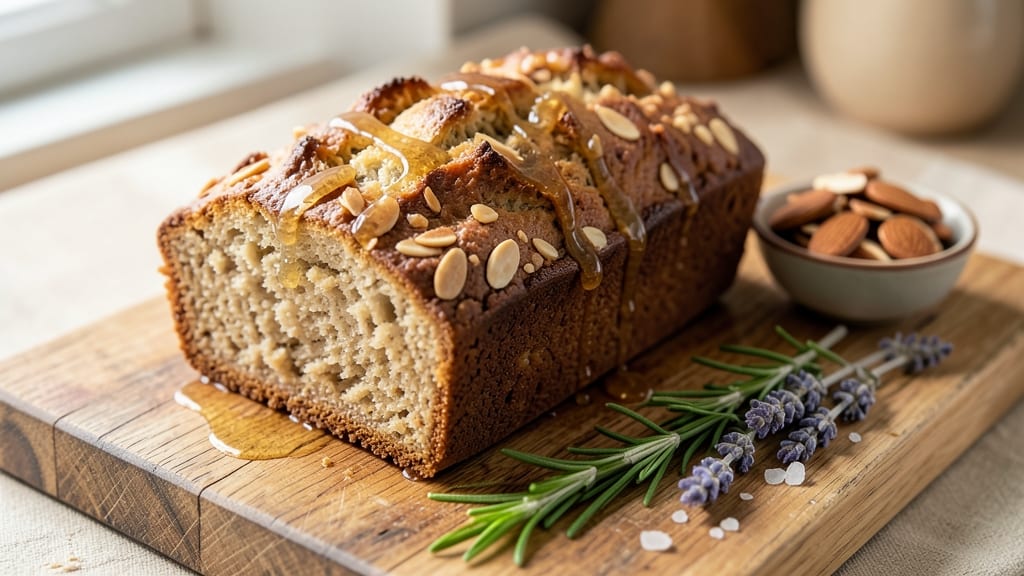
This almond loaf bread recipe delivers a nutty crunch and golden crust that transforms any meal into something special. 🌟 The secret lies in blending almond flour with traditional bread ingredients, creating a moist yet tender loaf with a satisfying crunch from toasted almonds.
Perfect for sandwiches, toast, or as a side, this recipe is designed to impress with minimal effort—just one bowl and one bake required.
The magic happens with a simple yet effective technique: combining almond flour with all-purpose flour for structure, while eggs and butter create a rich, moist crumb. The topping of crushed almonds and seeds adds texture and flavor, ensuring every slice is packed with nutty goodness.
Baking at a precise 350°F ensures a crispy crust without drying out the interior, resulting in a loaf that’s both elegant and foolproof.
What sets this recipe apart is its versatility—use it for savory sandwiches, sweet toast with jam, or even as a base for French toast. The almond flour adds a subtle richness that pairs beautifully with both sweet and savory toppings.
With just 5 key ingredients and a 45-minute bake time, you’ll have a showstopping loaf that tastes homemade yet requires no special skills.
For those with dietary restrictions, this recipe is naturally gluten-free when using almond flour exclusively, though the included all-purpose flour version ensures a perfect texture for everyone. Optional variations like adding honey or cinnamon for a sweet twist make it adaptable to any taste. Let’s get baking!
Ingredients for almond loaf bread
Five essential ingredients blend almond richness with classic bread structure for a loaf that delivers nutty crunch and golden perfection.
| Ingredient | Amount | Notes |
|---|---|---|
| Almond Flour 🥜 | 1 ½ cups | Blanched, finely ground preferred |
| All-Purpose Flour 🌾 | ½ cup | For structural balance |
| Large Eggs 🥚 | 2 whole | Room temperature for even baking |
| Unsalted Butter 🧈 | ½ cup | Softened to room temperature |
| Granulated Sugar 🍚 | ¼ cup | For subtle sweetness |
| Active Dry Yeast 🍞 | 1 tsp | Instant yeast preferred |
| Warm Water 💧 | ½ cup | 110°F for yeast activation |
| Salt 🧂 | ½ tsp | Diamond Crystal preferred |
| Crushed Almonds 🥜 | ¼ cup | Toasted for enhanced flavor |
| Sesame Seeds 🌿 | 1 tbsp | For decorative texture |
| Poppy Seeds 🌱 | 1 tbsp | Optional for additional crunch |
| Milk 🥛 | ¼ cup | For tender crumb |
| Vanilla Extract 🌸 | ½ tsp | Pure extract preferred |
The almond flour is non-negotiable here—Bob’s Red Mill or King Arthur brands ensure fine, consistent grind for optimal texture. For the yeast, Saf-Instant dissolves directly into dry ingredients, eliminating activation steps. The butter should be European-style if available—higher fat content yields a richer crumb. Toast the crushed almonds separately in a dry pan until golden for maximum flavor impact (about 3-4 minutes). Store-bought almond flour loses freshness quickly, so purchase in small quantities or freeze what you won’t use within 3 months.
No almond flour? Substitute with 1 cup additional all-purpose flour, but expect a denser texture. Swap sesame seeds for sunflower seeds if nut allergies are a concern. The vanilla extract can be omitted entirely if you prefer a neutral flavor profile, though it adds subtle depth. For a naturally sweetened version, reduce sugar by 0.125 cup and add 0.25 cup maple syrup. The milk can be any variety—dairy, almond, or oat—but whole milk produces the most tender crumb. If using gluten-free flour exclusively, increase the yeast to 1.5 tsp for proper rise.
Prepare the yeast mixture first and let it sit for 5-10 minutes until foamy before adding other ingredients. The dough should be thick but workable—overmixing develops gluten and makes the loaf dense. For best results, bake immediately after mixing, but the dough holds in the fridge for up to 24 hours if covered tightly. Once baked, store wrapped at room temperature for 2 days or freeze sliced portions for 3 months. The crust stays crisp for 1 hour after baking, then softens—best enjoyed fresh or lightly toasted.
Why You'll Love This Recipe
- No-Mixer Magic: I swear by this—just fold the wet and dry ingredients together with a spatula. No stand mixer, no fuss, and the almond flour keeps it light without overworking. The butter stays soft, the eggs bind it perfectly, and you’re done before your coffee gets cold.
- Buttery Almond Hug: That first bite? Rich, slightly sweet, with a nutty depth from the almond flour and a melt-in-your-mouth softness from the butter. It’s like a cross between a scone and a brioche, but with a texture that’s all its own—no dry crumbs here.
- Weeknight or Weekend Star: Slice it warm for breakfast with jam, toast it for a quick snack, or serve it with dinner—it’s my go-to for lazy mornings or when I need something that feels special without the effort. (Yes, even on a Tuesday night.)
- Leftovers That Last: This loaf keeps beautifully for days—crisp on the outside, tender inside—so I can bake one and stretch it through breakfasts, lunches, or even crumbs for meatballs. Plus, the almond flour makes it feel indulgent without breaking the bank.
Step-by-step instructions for almond loaf bread
Here's the method for crafting a tender loaf with nutty depth and a crackly crust.
👨🍳 Step 1: Activate the Yeast and Prepare the Dough Base
In a small bowl, combine the 1 tsp active dry yeast, 0.5 cup warm water (110°F), and 0.25 cup granulated sugar. Let it sit for 5-10 minutes until frothy—this confirms the yeast is active. If it doesn't bubble, your bread won't rise properly.
In a separate large bowl, whisk together the 1.5 cups almond flour, 0.5 cup all-purpose flour, 0.5 tsp salt, and 0.5 tsp vanilla extract. Create a well in the center and pour in the yeast mixture. Add the 2 whole large eggs and 0.25 cup milk, then gently mix until combined. The dough will be thick but not sticky.
🍳 Step 2: Incorporate Butter and Nutty Elements
Add the 0.5 cup softened unsalted butter to the dough and mix with a spatula until fully incorporated. The butter should be smooth and evenly distributed—this creates that tender crumb. Fold in the 0.25 cup crushed almonds, reserving a small handful for topping later.
Here's the thing—almond flour absorbs moisture differently than regular flour. If the dough feels too dry, add 1 tablespoon warm water at a time until it holds together when pressed. The texture should be like thick cookie dough, not crumbly or wet.
⏰ Step 3: First Rise and Shape the Loaf
Cover the bowl with a damp towel and let the dough rise in a warm place for 1-2 hours, or until it has visibly doubled in size. I place my bowl on top of my oven with the light on for consistent warmth. The dough should be light and airy—if it doesn't rise, your yeast may have been inactive.
Once risen, gently deflate the dough by pressing it down with your fingers. Transfer it to a lightly greased 9x5-inch loaf pan, smoothing the top. Sprinkle the reserved crushed almonds, 1 tbsp sesame seeds, and 1 tbsp poppy seeds evenly over the top. Press them in lightly so they adhere.
🔥 Step 4: Proof and Bake to Golden Perfection
Cover the loaf pan with a towel and let it proof for another 30-45 minutes until it rises about 1 inch above the pan's rim. Preheat your oven to 350°F while it proofs—this ensures even baking.
Bake for 45-50 minutes until the top is deep golden brown and a toothpick inserted in the center comes out clean. The loaf should smell nutty and sweet when done. If the top browns too quickly, tent with foil after 30 minutes to prevent over-browning.
⏰ Step 5: Cool and Slice for Maximum Flavor
Remove the loaf from the pan and transfer it to a wire rack. Let it cool completely for at least 1 hour before slicing—this prevents a gummy texture. The internal temperature should drop to 100°F for perfect slices.
Here's where patience pays off: The bread will continue to set as it cools, developing that perfect crumb structure. Slice into ¼-inch thick pieces and serve warm for the ultimate nutty, buttery experience. Store leftovers wrapped at room temperature for up to 3 days or freeze for longer storage.
Pro Tips For Making Almond Loaf Bread
- Whisk Eggs Until Ribbon Stage: Almond flour hates underworked eggs—stop when the mixture holds a slow ribbon off the whisk (about 2-3 minutes). I learned this the hard way after a batch turned dense and gummy; those eggs needed to coat every almond particle properly.
- Pulse Almond Flour Twice: Don’t just dump it in—pulse almond flour in your food processor two times, then let it sit for 5 minutes before mixing. The first pulse breaks clumps, the second ensures even moisture distribution, and the wait prevents a greasy loaf.
- Butter Must Be Cold: Unsalted butter straight from the fridge works best—cut it into ½-inch cubes and let them sit out for no more than 10 minutes before creaming. Room-temp butter makes the dough sticky and can cause a crumbly texture.
- Bake in Two Stages: Start at 350°F for 20 minutes, then crank to 375°F for the last 15. The lower heat builds structure, while the finish ensures a golden crust without burning. My first loaf cracked because I rushed the temperature jump.
Make-ahead tips for this recipe
Prep Ahead
Mix the dough up to 24 hours in advance and store it in an airtight container in the fridge. The flavors deepen overnight, and the almonds release their oils more fully. When ready to bake, let it sit at room temperature for 30 minutes before shaping—this makes handling easier. 🌟
Freezer-Friendly Dough
For long-term prep, freeze the shaped loaf (before baking) in a loaf pan wrapped tightly with plastic wrap and aluminum foil. Thaw completely in the fridge overnight, then bake as directed. The texture remains just as tender, and the nutty aroma fills your kitchen as it bakes. ❄️
Baked Loaf Storage
Once baked, let the loaf cool completely, then slice and wrap individual portions in parchment paper. Store in a ziplock bag at room temperature for up to 5 days or freeze for 3 months.
Toasting frozen slices directly in the toaster works—just add 5-10 seconds to the usual time. 🔥
Crust Revival
If your loaf’s crust softens after baking, don’t worry! Pop it in a 350°F oven for 5-10 minutes to crisp it up. For extra crunch, brush slices with melted butter before toasting. This trick works even with day-old bread. 💡
Batch Baking
Double the recipe for two loaves—just use a 9x5-inch pan and a 9x9-inch square pan. Bake the square pan for 50-55 minutes and slice into squares for bruschetta or garlic bread. The almond flavor shines in both shapes! 🍞
Make-Ahead Breakfast
Turn leftover slices into French toast the next morning. Dip in a mix of 2 eggs, 0.25 cup milk, and 1 tsp cinnamon, then cook in butter until golden. The almond richness adds a gourmet touch to your breakfast routine. 🥞
Nutrition facts
Frequently asked questions
Can I make this almond loaf bread without yeast?
Yes, but the texture will differ significantly. For a quick version, replace the yeast with 1 tsp baking powder and 1 tsp baking soda, reducing the warm water to 0.375 cup. The loaf will be denser but still delicious—ideal for sandwiches. For a more cake-like texture, consider using 1 cup almond flour and 1 cup all-purpose flour with 1.5 tsp baking powder.
How do I prevent my almond loaf from being too dry?
Almond flour absorbs moisture quickly, so the key is balance. Add 1 extra tablespoon of milk or water if the dough feels crumbly, but don't overdo it—the texture should resemble thick cookie dough. For extra moisture, replace 2 tablespoons of almond flour with 2 tablespoons of Greek yogurt or applesauce. Also, avoid overbaking: pull it out when the internal temperature reaches 190°F.
Can I substitute almond flour with other nut flours?
Try cashew flour or hazelnut flour in a 1:1 ratio, but expect subtle flavor differences. Cashew flour yields a slightly sweeter, richer loaf, while hazelnut adds earthy notes. For a lighter texture, blend 1 cup almond flour with 0.5 cup rice flour. Avoid walnut flour—it has a stronger flavor that can overpower the bread.
Why did my loaf collapse after baking?
Collapse usually means the yeast didn't activate properly or the oven temperature wasn't stable. First, ensure your yeast was fresh and dissolved in warm (110°F) water with sugar—it should bubble within 5-10 minutes. Use an oven thermometer to confirm your oven hits 350°F. If the loaf rose but collapsed during baking, it may have been overproofed. Next time, shape the dough and bake within 30 minutes of the second rise.
Can I make this gluten-free?
Yes! Replace the all-purpose flour with a 1:1 gluten-free baking flour blend (like Bob's Red Mill) and increase the yeast to 1.5 tsp. For better structure, add 1 tsp xanthan gum to the dry ingredients. The texture will be slightly denser, but the nutty flavor remains. Store-bought gluten-free flours vary in protein content, so expect minor adjustments to moisture levels.