
Side Dishes
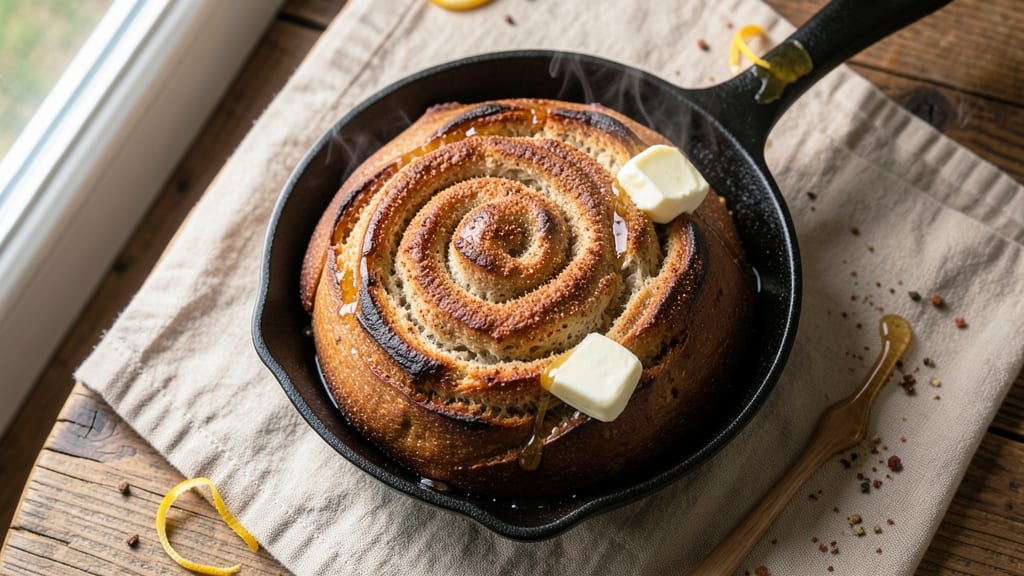
Amish sourdough cinnamon bread delivers the perfect marriage of rustic sourdough crust and warm, spiced swirls in every slice—just like Grandma used to make. This recipe combines traditional Amish baking techniques with modern adaptability, giving you a loaf with a crispy, golden crown and tender, pull-apart crumb. The secret lies in the slow fermentation of sourdough starter, which develops deep flavor and improves digestibility while creating that signature tang.
Unlike commercial cinnamon bread, this version relies on a natural sourdough starter—no yeast required—which means richer flavor and a lighter texture. The dough undergoes a long, cold proof overnight, allowing the flour to fully hydrate and the gluten to relax, resulting in a loaf that's both hearty and delicate.
The cinnamon-sugar swirls are folded in just before baking, ensuring they stay gooey and aromatic while the crust develops a satisfying crunch.
Baking in a Dutch oven mimics the wood-fired ovens used in Amish kitchens, trapping steam for an even rise and that coveted crispy crust. The result is a loaf with a caramelized top, a tender interior, and pockets of cinnamon-sugar that melt with every bite.
This bread is perfect for breakfast, snacking, or gifting—its rustic charm and warm spices make it a crowd-pleaser.
Whether you're a seasoned baker or new to sourdough, this recipe breaks down the process into manageable steps, including how to maintain your starter and troubleshoot common issues. The reward? A loaf that tastes like a slice of nostalgia, freshly baked from your own kitchen.
Ingredients for amish sourdough cinnamon bread
Eight essential ingredients transform humble pantry staples into a loaf of nostalgia-worthy Amish sourdough cinnamon bread.
| Ingredient | Amount | Notes |
|---|---|---|
| Active Sourdough Starter 🍞 | ½ cup | Unfed, 100% hydration, bubbly |
| All-Purpose Flour 🌾 | 5 cups | Bread flour preferred for structure |
| Granulated Sugar 🍚 | ¼ cup | White or light brown |
| Unsalted Butter 🧈 | ½ cup | Cold, cubed, full-fat |
| Large Eggs 🥚 | 2 whole | Room temperature |
| Milk 🥛 | ½ cup | Warm, whole preferred |
| Ground Cinnamon 🌿 | 2 tbsp | Freshly ground preferred |
| Granulated Sugar 🍚 | ½ cup | For cinnamon swirl |
| Coarse Salt 🧂 | 1 ½ tsp | Diamond Crystal preferred |
| Cornmeal 🌽 | 2 tbsp | For Dutch oven dusting |
The sourdough starter is non-negotiable here—it's the soul of this bread. King Arthur or Bob's Red Mill flours work beautifully, but if you're using all-purpose, add 1 tsp vital wheat gluten to mimic bread flour's strength. For the starter, look for that bubbly, jiggly texture right before using—it should smell tangy and slightly sweet. If your starter's sluggish, feed it 1:1:1 (flour:water:starter) by weight twice daily for 24 hours before baking. The butter should be cold and cubed—this prevents the dough from over-proofing during the cold proof. I always grab Plugrá brand butter from the refrigerated section at Whole Foods for its high fat content.
No bread flour? Add 1 tsp vital wheat gluten per cup of all-purpose flour—it's a game-changer for structure. The milk can be any kind, but whole milk gives richer flavor. For the cinnamon swirl, Trader Joe's ground cinnamon is my go-to—it's consistently fresh and potent. Running short on sugar? Maple syrup at 3:4 ratio works in a pinch, though it'll add moisture. The eggs should be room temperature—cold eggs can cause the dough to proof unevenly. If you're baking at high altitude, reduce the sugar by 1 tbsp and add 1 tbsp extra flour to compensate for the drier environment. For a deeper cinnamon flavor, toast the spice in a dry pan for 1 minute before adding to the dough.
The dough keeps beautifully in the fridge for 3 days wrapped tightly in plastic—pull it out 2 hours before baking to bring it to room temperature. For longer storage, freeze the shaped loaf (unbaked) for up to 3 months—thaw overnight in the fridge before baking. The baked loaf stays fresh for 5 days at room temperature wrapped in a clean kitchen towel. I always slice mine with a serrated knife and store in an airtight container to maintain that pull-apart texture. The cinnamon swirls freeze beautifully too—just reheat slices in the oven for 5 minutes at 350°F to revive their gooey goodness.
Why You'll Love This Recipe
- No-Fuss Dough: Mixing this takes all of five minutes—just fold in your starter, sugar, and butter until the dough pulls away cleanly. Honestly, the hardest part is waiting for it to rise, not kneading or shaping.
- Buttery Swirl Magic: That ribbon of cinnamon-sugar butter baked right into the loaf? It’s the kind of flavor that makes you reach for seconds without thinking. The tangy sourdough balances the sweetness so perfectly, it’s like a hug in bread form.
- Breakfast or Snack Hero: Slice it thick for French toast, toast it with jam for a quick breakfast, or pack it in lunchboxes—it’s my go-to for busy mornings. Between us, I’ve also used the leftovers to make cinnamon bread pudding (yes, it’s that good).
- Budget-Friendly Stretch: Uses pantry staples and stretches a loaf into days of meals. The butter and eggs make it feel special, but the flour and sugar keep costs low. Plus, the leftovers freeze beautifully—no sad crusts here.
Step-by-step instructions for Amish sourdough cinnamon bread
Here's how to craft that perfect swirl of cinnamon and sugar with a crusty exterior and tender crumb.
Prepare the Sourdough Dough
In a large mixing bowl, combine the 0.5 cup active sourdough starter, 5 cups all-purpose flour, 0.25 cup granulated sugar, and 1.5 tsp coarse salt. Mix until a shaggy dough forms, then add the 0.5 cup cold cubed unsalted butter and knead until fully incorporated. The butter should be cold enough to resist melting but soft enough to work with—this creates flaky layers later.
Add the 2 whole room-temperature eggs and 0.5 cup warm milk, mixing until the dough comes together. Knead on a lightly floured surface for 8-10 minutes until smooth and elastic. The dough should be slightly tacky but not sticky—if it's too dry, add a teaspoon of milk; if too wet, sprinkle a bit more flour. Shape into a round loaf, cover with a damp towel, and let rise at room temperature for 1-2 hours or until doubled in size.
Create the Cinnamon Swirl Filling
While the dough rises, prepare the cinnamon filling by mixing 0.5 cup granulated sugar and 2 tbsp ground cinnamon in a small bowl. This is the heart of your bread—sweet, fragrant, and perfectly balanced. The cinnamon should be freshly ground for maximum aroma, and the sugar should be fine to dissolve smoothly into the dough.
Once the dough has risen, gently flatten it into a 12x16-inch rectangle on a floured surface. Sprinkle the cinnamon-sugar mixture evenly over the dough, leaving a ½-inch border around the edges. This prevents the filling from leaking out during baking. Roll the dough tightly into a log, starting from the long side, and pinch the seam to seal.
Shape and Proof the Loaf
Place the rolled dough seam-side down in a 9x5-inch loaf pan that's been lightly dusted with 2 tbsp cornmeal. The cornmeal prevents sticking and adds a subtle texture to the crust. Cover the pan with a damp towel and let the dough proof for 1-1.5 hours at room temperature until it rises 2-3 inches above the pan.
Preheat your oven to 375°F while the dough proofs. The loaf should spring back slowly when pressed gently—this is your signal it's ready for the oven. For extra shine and color, brush the top with a beaten egg mixed with 1 tablespoon milk before baking. This creates that classic Amish bread crust.
Bake to Golden Perfection
Bake the loaf for 45-50 minutes until the top is deep golden brown and the internal temperature reaches 190°F. Tap the bottom of the loaf—it should sound hollow. If the top browns too quickly, tent the loaf with foil to prevent over-browning while the center finishes baking.
Remove from the oven and let the loaf cool in the pan for 15 minutes, then transfer to a wire rack. The bread will continue to set as it cools, making slicing easier. Once fully cooled, slice into ½-inch thick pieces to reveal those beautiful cinnamon swirls. Serve warm with butter or honey for the ultimate comfort experience.
Pro Tips For Making Amish Sourdough Cinnamon Bread
- Test Starter Temperature: Stick your finger in that sourdough starter before mixing—it should feel like warm bathwater, around 78-82°F. I learned this the hard way when my starter was sluggish because my kitchen was too cold; the dough never rose properly. If it’s cooler than room temp, pop it in a slightly warm oven (just the light on) for 10 minutes to wake it up.
- Whisk Butter and Sugar: Cream the butter and sugar together until it’s actually pale and fluffy, not just "lightened." I used to eyeball it, but skipping this step means your bread will taste more like a dense cake than the tender, buttery loaf it should be. Use a stand mixer for 3-4 minutes—yes, even if you’re impatient like me.
- Don’t Overmix the Dough: Once you fold in the flour and sourdough starter, stop mixing the second everything comes together. Overworking it develops gluten like crazy, and your bread will turn out tough instead of soft and pillowy. The dough should look shaggy but cohesive—like wet wool, not a stiff wall.
- Brush with Melted Butter: After baking, let the bread cool for 10 minutes, then brush the top with melted butter while it’s still warm. This isn’t just for looks—it seals in moisture and gives that classic Amish cinnamon bread shine. Use a pastry brush and about 1 tablespoon per loaf; don’t skimp, but don’t drown it either.
Storing and reheating your amish sourdough cinnamon bread
Fridge Storage Tips
Wrap your freshly baked loaf tightly in plastic wrap or a clean kitchen towel to lock in moisture. I store mine in the fridge for up to 5 days—the cinnamon swirls stay gooey and the crust remains crispy.
For extra freshness, place the wrapped loaf in a paper bag to absorb any excess moisture. Remember, the dough can be shaped and refrigerated overnight before baking for even better flavor development. 💫
Freezing for Later
Freeze the unbaked loaf in its pan for up to 3 months—this preserves texture perfectly. Wrap tightly with plastic wrap and aluminum foil to prevent freezer burn. When ready to bake, thaw overnight in the fridge, then bake as directed.
For pre-sliced bread, freeze individual slices between parchment paper and reheat at 350°F for 5 minutes to restore that warm, gooey magic. 🥖
Reviving Stale Bread
If your loaf loses its crunch, revive it by wrapping in damp paper towels and microwaving for 15-20 seconds. For a crispier texture, place slices on a baking sheet and warm at 375°F for 3-5 minutes.
I also love sprinkling a little cinnamon sugar on reheated slices to bring back that fresh-baked aroma. Store leftovers in an airtight container with a slice of apple to keep them soft longer. 🍎
Oven Reheating
Preheat your oven to 350°F and reheat slices for 3-5 minutes on a wire rack. This method maintains the crusty exterior while warming the interior. For extra shine, brush slices with melted butter before reheating.
If using a toaster, set to medium heat for 1-2 minutes—this works best for thicker slices. Always reheat from room temperature for even results. ✨
Cinnamon Swirl Preservation
The cinnamon-sugar filling stays fresh longest when stored in single slices. For maximum flavor retention, freeze slices individually between parchment paper and reheat at 300°F for 4 minutes to melt the filling without drying the bread.
I find that wrapping slices in foil before freezing prevents them from becoming tough. The secret? Don't overfill—leave that ½-inch border when rolling the dough to avoid leaks during baking. 🌿
Nutrition facts
Frequently asked questions
Can I make this bread without a sourdough starter?
Traditional Amish sourdough relies on the natural fermentation of the starter for that signature tang and improved digestibility. However, you can substitute 1 packet (2¼ tsp) active dry yeast for the starter. For best results, dissolve the yeast in the warm milk first, then proceed with the recipe. The flavor will be slightly different but still delicious!
Why does my dough smell sour before baking?
That's completely normal! The sourdough starter introduces beneficial bacteria that create lactic and acetic acids, giving the dough its characteristic tang. The longer the fermentation (especially overnight in the fridge), the more pronounced this aroma becomes. If the smell is overly sharp or vinegary, your starter may need refreshing before using.
How do I prevent the cinnamon filling from leaking?
Leave a ½-inch border around the edges when spreading the cinnamon-sugar mixture. Also, roll the dough tightly from the long side and pinch the seam securely. For extra insurance, chill the shaped loaf for 30 minutes before baking—this helps the dough firm up and contain the filling.
Can I use this recipe for a pull-apart loaf?
For a pull-apart version, shape the dough into a freeform round instead of a loaf pan. Place it on a parchment-lined baking sheet, cut a few shallow slits in the top, and bake as directed. The cinnamon swirls will peek through the crust, making it perfect for sharing.
What's the best way to test if my starter is ready?
Your starter should be bubbly, jiggly, and have doubled in size within 4-6 hours after feeding. It should also smell tangy and slightly sweet—not overly vinegary or flat. For baking, use it when it's at its peak, typically 4-6 hours after feeding, to ensure maximum activity in your dough.