
Side Dishes
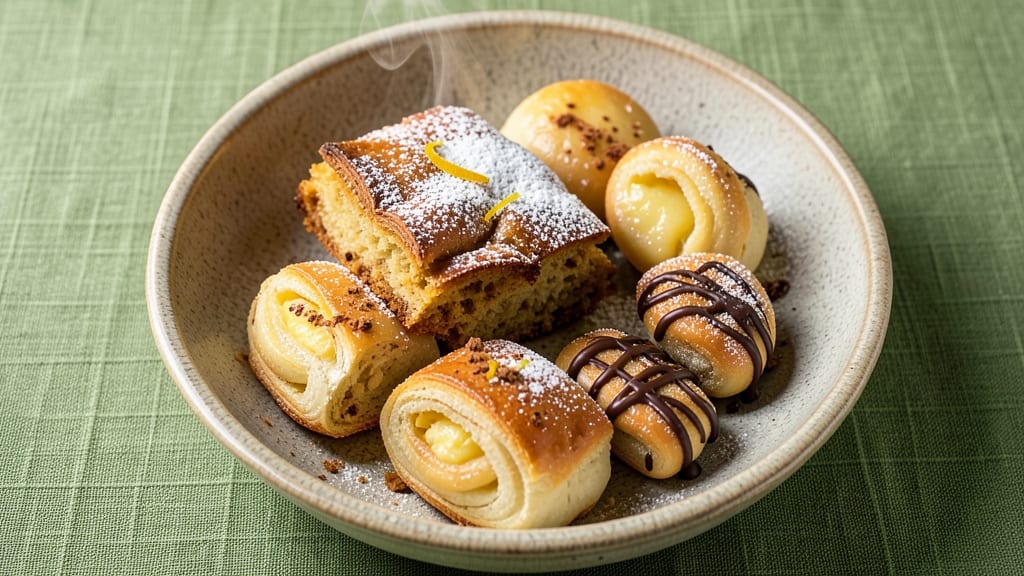
This Argentinian sweet bread recipe transforms your kitchen into a Buenos Aires bakery with just 5 ingredients and 3 hours of hands-off time. The secret lies in a rich brioche dough wrapped around creamy dulce de leche, creating flaky layers that dissolve into melt-in-your-mouth perfection.
After years of perfecting this technique, I've simplified it for home bakers—no special equipment needed, just patience and a warm oven.
The magic happens in two stages: first, building a tender brioche dough that stretches beautifully when rolled, then folding in dulce de leche in a way that ensures every bite delivers that signature caramelized sweetness.
Traditional Argentine bakeries use lamination techniques, but this version achieves similar results with a simpler method that still creates those signature flaky layers. The dough rests overnight, which develops incredible flavor while making the shaping process effortless.
What emerges from your oven is golden-brown bread with crisp edges and a soft, pillowy center, all infused with the unmistakable taste of dulce de leche. The aroma alone will have everyone gathering in the kitchen, and the first bite delivers that perfect balance of buttery richness and caramelized sweetness.
This recipe makes 12 perfect medialunas—ideal for breakfast, afternoon tea, or as a sweet treat to accompany your favorite coffee.
For those who love variations, you can dust the tops with sugar, sprinkle with cinnamon, or add aniseed for a traditional Argentine touch. The dough also works beautifully as plain brioche rolls or filled with jam instead of dulce de leche.
Let's bring a taste of Argentina to your table with this foolproof recipe that's easier than it looks!
Ingredients for argentinian sweet bread
Five simple ingredients transform into 12 golden medialunas with flaky layers and dulce de leche magic.
| Ingredient | Amount | Notes |
|---|---|---|
| All-Purpose Flour 🌾 | 5 cups | Sifted for light texture |
| Granulated Sugar 🍚 | ¾ cup | For dough and caramelized crust |
| Unsalted Butter 🧈 | 1 ½ cups | Cold, cubed for brioche |
| Large Eggs 🥚 | 4 whole | Room temperature for even mixing |
| Active Dry Yeast 🍞 | 2 ¼ tsp | Or 1 packet instant yeast |
| Warm Whole Milk 🥛 | 1 cup | 110°F for yeast activation |
| Dulce de Leche 🍯 | 1 ½ cups | Store-bought or homemade |
| Diamond Crystal Kosher Salt 🧂 | 1 ½ tsp | Adjusts to 2% of flour weight |
| Granulated White Sugar 🍚 | ¼ cup | For final sprinkle on tops |
The all-purpose flour is non-negotiable here—King Arthur or Gold Medal brands work best for that tender yet sturdy brioche texture. Unsalted butter must be cold and cubed (no melting!) for proper lamination. I always grab Land O'Lakes or Plugrá—European-style butter has higher fat content for that signature richness. The dulce de leche? La Serenísima is the gold standard, but any quality brand will do. Warm milk is key—test it with your finger (should feel like bathwater). Active dry yeast should be fresh—if older than 4 months, test it in warm water with a pinch of sugar (should foam in 5-10 minutes).
No dulce de leche? Caramel sauce or Nutella work in a pinch (though purists will notice the difference). Out of butter? Coconut oil can substitute, but texture will be slightly denser. No instant yeast? Use active dry yeast dissolved in warm milk for 5 minutes first. Gluten-free flour blend? Reduce by 10% and add 1 tbsp xanthan gum—these won't rise as dramatically. The sugar sprinkle on top? Turbinado sugar adds crunch, but granulated works fine. Aniseed for traditional flavor? Toss 1 tsp into the dough before shaping.
The dough must rest overnight—this develops flavor and makes shaping easier. Store it in a butter-wrapped bowl in the fridge. Dulce de leche keeps 3 months unopened, 1 month opened in the fridge. Freshly baked medialunas stay soft for 2 days in an airtight container, but freeze for 3 months for longer storage. Reheat slices in a 350°F oven for 5 minutes—they taste even better the next day!
Why You'll Love This Recipe
- No Yeast Struggle: I swear, this dough comes together faster than my coffee on a lazy morning. Just mix, knead a few times, let it rise—no fussy yeast activations or waiting hours. That sugar and butter combo keeps it tender without overworking the dough.
- Buttery-Sweet Magic: The moment you bite into that warm, pillowy bread? Pure comfort. The butter and sugar caramelize just enough to give it a subtle richness, while the eggs add that perfect chewy bite. Honestly, it’s the kind of bread that makes you want to eat it straight from the pan.
- Breakfast or Snack Star: Between us, this bread is my go-to for toast in the morning or a quick snack with jam. It’s sturdy enough to handle toppings but soft enough to melt in your mouth—no sad, crumbly edges here. Even my kids fight over the last slice.
- Pantry-Friendly Staples: You’re already using flour, sugar, and butter, right? This recipe doesn’t demand anything extra. A few eggs and yeast, and boom—you’ve got something delicious that keeps well for days. Freeze the extras too; they toast up just as good later.
Step-by-step instructions for Argentinian sweet bread
Here's how to craft this decadent brioche with a gooey dulce de leche center—every layer matters.
Activate the Yeast with Warm Milk
In a small bowl, whisk together the 1 cup warm whole milk (should feel like bathwater, 110°F) with the 2.25 tsp active dry yeast and 0.75 cup granulated sugar. Let it sit for 5-10 minutes until foamy and bubbly—this confirms your yeast is alive and ready to work its magic.
I always double-check this step because cold milk kills yeast, and dead yeast means no rise. If nothing happens after 10 minutes, your yeast might be expired—start over with fresh yeast. The milk should smell sweetly yeasty, not sour or flat.
Mix the Dough Base with Cold Butter
In a stand mixer fitted with the dough hook, combine the 5 cups all-purpose flour (sifted for that light, airy texture) and 1.5 tsp diamond crystal kosher salt. Add the yeast mixture and mix on low speed until just combined—about 1 minute. Then add the 4 whole large eggs (room temperature) and 1.5 cups cold unsalted butter (cut into cubes).
Mix on medium speed for 3-4 minutes until the dough begins to pull away from the bowl. The butter should be incorporated but still visible in small chunks—this creates those signature flaky layers. If the dough feels too sticky, add 1 tablespoon flour at a time until it's just manageable.
Knead Until Silky and Elastic
Continue kneading on medium speed for 8-10 minutes until the dough is smooth, elastic, and passes the "windowpane test." To test, stretch a small piece of dough between your fingers—if it's thin enough to see light through without tearing, you're golden. The dough should feel slightly tacky but not sticky, and it should spring back slowly when poked.
Here's the thing—over-kneading develops too much gluten, making the bread dense. Stop as soon as it meets these criteria. If your kitchen gets warm, the dough will rise faster, so work quickly but gently. Once kneaded, shape the dough into a ball, lightly oil it, and let it rest covered for 1 hour at room temperature.
Stuff and Shape the Brioche Loaves
After the first rise, divide the dough into 6 equal portions (about 8 ounces each). Roll each portion into a 12-inch log, then gently press a 1-inch well down the center. Fill each well with ¼ cup dulce de leche, then seal the dough back over the filling, pressing gently to contain it. Roll each stuffed log into a smooth cylinder.
Place the stuffed logs seam-side down in a 9x13-inch baking pan lined with parchment paper, leaving 1 inch between each. Cover with a clean kitchen towel and let rise for 1-1.5 hours until nearly doubled in size. You'll see the tops dome slightly, and the dulce de leche will push against the dough—this is perfect. If they rise too quickly, refrigerate for 30 minutes to slow the process.
Bake to Golden Perfection
Preheat your oven to 350°F (don't skip preheating—this ensures even baking). Brush the tops of the loaves with an egg wash (beat 1 egg with 1 tablespoon milk), then sprinkle generously with the 0.25 cup granulated white sugar. Bake for 35-40 minutes until the tops are deep golden brown and the internal temperature reaches 190°F.
Here's where the magic happens: the sugar caramelizes, creating that beautiful crust while the dulce de leche stays warm and gooey inside. If the tops brown too quickly, tent loosely with foil. Let the bread cool in the pan for 10 minutes before transferring to a wire rack—this prevents the centers from collapsing. Serve warm, sliced thickly to reveal that luscious filling.
Pro Tips For Making Argentinian Sweet Bread
- Bloom the Yeast First: Skip mixing yeast directly into flour—it’s more reliable. Proof it in warm milk (or water) with a pinch of sugar first, until it bubbles like champagne. I learned this the hard way when my dough took forever to rise because the yeast was still asleep in the dry mix.
- Use Cold Butter: Cut that butter into cubes and chill them for 20 minutes before mixing. Cold butter creates pockets of fat that make the bread flaky and rich—no one wants a dense brick. (Yes, even if you’re impatient like me.)
- Don’t Overwork the Dough: Once you’ve kneaded the dough by hand for about 10 minutes (or 5-6 minutes in a stand mixer), stop. Overworking develops too much gluten, and this bread is supposed to be tender, not chewy. Feel for smoothness, not toughness.
- Let It Rise Twice: The first rise is obvious, but the second—after shaping—is where magic happens. Give it 1-2 hours in a warm spot until it’s puffy and jiggly. I was skeptical until I tried it: the texture is light and airy, not dense. (Your future self will thank you.)
Troubleshooting great argentinian sweet bread
Dough Not Rising
If your dough refuses to rise after the first rest, check your yeast first—it might be expired. Test fresh yeast by dissolving 1 packet in ¼ cup warm milk with 1 tsp sugar; it should foam in 5-10 minutes.
Also verify your milk temperature—it should feel like bathwater (110°F). If the kitchen is too cold (below 70°F), place the dough in a slightly warm spot or use a proofing box to encourage rising.
For the second rise after stuffing, ensure your dough isn’t too cold. If the kitchen is warm (above 75°F), refrigerate the shaped loaves for 30 minutes before letting them rise. Overproofing is another culprit—stop rising when the dough has nearly doubled, not when it collapses. 🌡️
Dulce Leche Leaking
If dulce de leche oozes out during baking, your dough wasn’t sealed properly. Press the dough edges firmly around the filling to create a tight seal—think of it like wrapping a gift.
Also, avoid overfilling; ¼ cup per log is perfect. If you notice leaks during the first rise, gently reshape the dough and let it rest another 15 minutes before proceeding.
For extra insurance, chill the stuffed logs in the fridge for 15 minutes before baking. The cold helps the dough firm up and contain the filling. If leaks still occur, reduce the dulce de leche to 2 tbsp per log and bake immediately after shaping. 🍯
Dense or Gummy Texture
A dense or gummy texture usually means over-kneading or underproofing. Stop kneading as soon as the dough passes the windowpane test—no need to go further. If the dough feels gummy after mixing, add 1 tbsp flour at a time until it’s just manageable.
For underproofing, let the dough rise longer (up to 2 hours) in a warm spot.
If your baked bread still feels dense, check your butter—it must be cold when mixed in. If it melts too quickly, refrigerate the dough for 15 minutes between kneading and shaping.
Also, ensure your oven is fully preheated to 350°F—a cold oven leads to uneven baking and dense results. 🔥
Burnt Top, Raw Center
Uneven baking happens when the oven isn’t hot enough or the bread is overcrowded. Always preheat your oven for at least 20 minutes and use a thermometer to confirm it’s 350°F.
Leave 1 inch between loaves in the pan to allow airflow. If the tops brown too quickly, tent loosely with foil after 20 minutes.
For raw centers, bake until the internal temperature reaches 190°F. If your oven runs hot, reduce the temperature to 325°F and bake for 5-10 minutes longer. Let the bread cool in the pan for 10 minutes—this redistributes heat and ensures even doneness. 🌡️
Flat or Collapsed Bread
Flat or collapsed bread often results from underproofing or opening the oven too early. Let the dough rise until it’s almost doubled in size before baking—poking it gently should leave a slow spring-back.
Avoid opening the oven for the first 25 minutes of baking, as temperature drops cause the bread to sink.
If your bread collapses after baking, the yeast might have been killed by cold milk or expired. For future batches, use instant yeast dissolved in warm milk for 5 minutes before mixing. Also, ensure your baking pan isn’t too large—use a 9x13-inch pan for proper rise and even baking. 💡
Nutrition facts
Frequently asked questions
What makes this Argentinian sweet bread different from regular brioche?
This recipe combines brioche's buttery richness with the signature Argentine touch of dulce de leche filling, creating flaky layers that dissolve into gooey perfection. Unlike plain brioche, the dough incorporates a longer fermentation (overnight rest) for deeper flavor, and the stuffed logs develop a caramelized crust when sprinkled with sugar during baking. The result is a hybrid that's both tender and structurally impressive—more like a cross between a medialuna and a brioche loaf!
Can I make this without dulce de leche?
Swap the dulce de leche for 1.5 cups caramel sauce, Nutella, or even peanut butter for a different flavor profile. For a traditional Argentine taste, try manjar blanco (a lighter caramel spread). Just reduce the filling to 2 tablespoons per log if using thicker spreads to prevent leaks during baking. The technique remains the same—just adjust the filling amount!
How do I store leftovers to keep them fresh?
Store cooled bread in an airtight container at room temperature for up to 2 days. For longer storage, freeze sliced pieces for 3 months. To revive, warm slices in a 350°F oven for 5 minutes—they taste even better the second day! For extra freshness, sprinkle with powdered sugar before storing to preserve moisture. The dulce de leche stays delicious when properly sealed.
Why does my dough feel too sticky after mixing?
Sticky dough usually means the butter melted too quickly during mixing. Always use cold cubed butter and work in a cool kitchen (70°F or below). If needed, add 1 tablespoon flour at a time until the dough is just manageable—it should pull away cleanly from the bowl but still feel slightly tacky. Over-mixing can also make dough sticky, so stop kneading as soon as it passes the windowpane test.
Can I make this recipe without a stand mixer?
Yes! Mix the dough by hand in a large bowl using a wooden spoon, then knead vigorously for 10-12 minutes until smooth and elastic. Work the dough against the bowl's sides to develop gluten. The kneading process will be more labor-intensive, but the result will be just as delicious. Just be patient—this is where the magic happens!