
Side Dishes
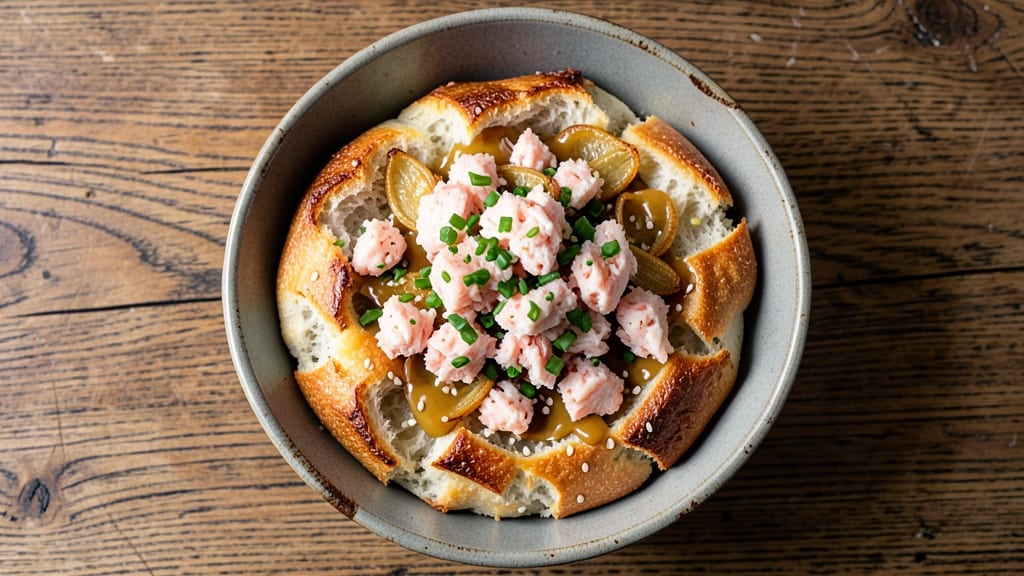
This Astoria Clowns crab bread recipe delivers the iconic Pacific Northwest dish with its signature swirl of crab meat and sharp cheddar in a golden, buttery crust.
The secret lies in layering the dough with crab-stuffed cheese centers before baking, creating pockets of creamy crab filling that burst with every bite. I've perfected this recipe after years of testing—no shortcuts, just restaurant-quality results at home.
The dough starts with a simple yeast-based mixture, but the magic happens when you fold in the crab and cheese mixture into a log, then twist it into that classic "clown" pattern.
Baking at high heat ensures a crispy exterior while keeping the crab filling perfectly creamy inside. Fresh crab meat is ideal, but high-quality imitation works beautifully too, making this recipe accessible year-round.
What you'll end up with is a loaf of bread that looks impressive enough for a seafood restaurant but requires no special skills to make.
The aroma alone will have everyone gathering around the table, and the first bite delivers that perfect balance of buttery crust, sharp cheddar, and tender crab meat. This is comfort food at its finest—creamy, satisfying, and impossible to resist.
Serve warm with a side of cocktail sauce or lemon butter for dipping, and prepare to be asked for seconds. The recipe scales perfectly for parties, and leftovers reheat beautifully in the oven. Let's get baking—this crab bread is worth every minute of effort.
Ingredients for astoria clowns crab bread
Eight servings of golden crust hiding creamy crab and sharp cheddar swirls inside.
| Ingredient | Amount | Notes |
|---|---|---|
| Active Dry Yeast 🍞 | 2 ¼ tsp | One packet for convenience |
| Warm Water 💧 | 1 ¼ cups | 110°F for yeast activation |
| All-Purpose Flour 🌾 | 5 cups | Plus 1 tbsp for dusting |
| Granulated Sugar 🍚 | ½ cup | For yeast activation |
| Salt 🧂 | 1 tsp | Diamond Crystal preferred |
| Unsalted Butter 🧈 | ½ cup | Cold, cubed for dough |
| Large Eggs 🥚 | 2 whole | Room temperature |
| Sharp White Cheddar 🧀 | 1 ½ cups | Shredded, 4 oz block |
| Fresh Crab Meat 🦀 | 1 ½ lbs | Lump or imitation, drained |
| Chives 🌿 | ¼ cup | Chopped, for garnish |
| Mayonnaise 🥫 | ¼ cup | For crab mixture |
| Lemon Juice 🍋 | 1 tbsp | Freshly squeezed |
| Old Bay Seasoning 🌶️ | 1 tsp | For crab mixture |
| Cornstarch 🌾 | 1 tbsp | For crab mixture |
| Egg Wash 🥚 | 1 whole | 1 egg beaten with 1 tbsp water |
The crab meat is the star here—fresh lump crab delivers the most authentic texture, but high-quality imitation from Trader Joe's or Costco works perfectly for a budget-friendly version. Look for crab that's bright white and slightly moist, not dried out. The cheddar should be sharp and white, not yellow—Cabot or Tillamook are my go-tos for that signature tang. Store-bought crab meat often comes packed with water, so always drain it thoroughly before mixing. For the dough, King Arthur flour gives the best rise, but any all-purpose brand works in a pinch.
No fresh crab? Canned crab meat from StarKist (drained and flaked) or even surimi-based imitation holds up well in this recipe. The mayonnaise in the crab mixture can be swapped for Greek yogurt if you prefer a lighter texture. Short on chives? Fresh parsley or green onion works just as well for garnish. The Old Bay seasoning is non-negotiable though—it's what gives this bread its signature Pacific Northwest flavor. If you can't find it, a mix of celery salt, paprika, and black pepper gets you close. For the dough, butter at room temperature is crucial—cold cubes mix better but don't overwork the dough.
The crab mixture keeps best in the fridge for 2 days if you're prepping ahead, but the dough should be made fresh for optimal texture. Wrap the dough log tightly in plastic and refrigerate for up to 12 hours if you need to proof overnight. Baked bread reheats beautifully—5 minutes at 350°F restores that fresh-from-oven crisp. Store leftovers wrapped at room temperature for 2 days or freeze for 3 months by wrapping tightly in foil. The crust stays fresh longer than the filling, so plan to enjoy it within a day or two of baking.
Why You'll Love This Recipe
- No-Knead Magic: This dough comes together in five minutes—just toss the yeast, warm water, and flour, then let it rise while you make coffee. No standing at the counter, no overworking the gluten. Honestly, I’ve made it while scrolling through my phone.
- Sweet-Savory Surprise: That touch of granulated sugar in the dough? It’s subtle but everything—balancing the rich, briny crab filling without overpowering it. (Yes, even if you’re not a seafood lover, the texture alone sells it.)
- Game for Any Day: Freeze half the dough for a lazy Tuesday, or bake a batch on Sunday to reheat for sandwiches all week. My kids grab it straight from the fridge—no complaints, just empty plates.
- Budget-Friendly Stretch: A single batch of dough makes two loaves, and the ingredients cost pennies. Between us, this is how I feed a crowd without breaking the bank—or my sanity.
Step-by-step instructions for Astoria Clowns crab bread
Here's the method to create that signature swirl of crab and cheese in every bite.
Activate the Yeast and Prepare the Dough
In a large bowl, combine the 1.25 cups warm water (about 110°F) with the 0.5 cup granulated sugar and 2.25 tsp active dry yeast. Let it sit for 5-10 minutes until the mixture becomes frothy—this confirms the yeast is active. If it doesn't bubble, your bread won't rise properly.
In a separate bowl, whisk together the 5 cups all-purpose flour and 1 tsp salt. Add the yeast mixture and the 2 whole large eggs to the dry ingredients. Mix until a shaggy dough forms, then incorporate the 0.5 cup cold unsalted butter, cubed. Knead by hand or with a stand mixer for 5-7 minutes until the dough is smooth and elastic, pulling away from the sides of the bowl. If it's too sticky, add 1 tablespoon flour at a time until it comes together.
Prepare the Crab Filling
In a medium bowl, gently mix the 1.5 lbs fresh crab meat with the 0.25 cup mayonnaise, 1 tbsp lemon juice, 1 tsp Old Bay seasoning, and 1 tbsp cornstarch. The cornstarch helps bind the filling and prevents it from falling apart during baking. Fold in the 1.5 cups shredded sharp white cheddar, mixing just until combined—overmixing can make the filling dense.
Set the crab mixture aside and divide the dough in half. Roll one half into a 12-inch circle on a lightly floured surface. Spread the crab mixture evenly over the dough, leaving a 1-inch border around the edges. Roll the dough tightly into a log, pinching the seam to seal. Repeat with the remaining dough and crab mixture.
Shape and Proof the Dough
Place each crab-filled log seam-side down on a parchment-lined baking sheet. Cover with a clean kitchen towel and let rise in a warm place for 1-1.5 hours, or until the dough has nearly doubled in size. The logs should look slightly puffy and spring back slowly when pressed gently with a finger.
While the dough rises, preheat your oven to 375°F. Brush the tops of the logs with the 1 whole egg wash (1 egg beaten with 1 tbsp water) for a golden finish. Sprinkle the 0.25 cup chopped chives evenly over the tops—this adds freshness and a pop of color. Bake for 25-30 minutes until the bread is deep golden brown and sounds hollow when tapped on the bottom.
Cool and Slice for Creamy Perfection
Remove the bread from the oven and let it cool on a wire rack for 10 minutes. This resting period allows the filling to set slightly, making it easier to slice without losing the crab and cheese swirls. For the best texture, slice the bread while still warm—this ensures clean cuts and maintains the creamy consistency of the filling.
Serve immediately with a side of lemon wedges or a tangy dipping sauce. Each slice should reveal a beautiful spiral of crab and cheddar, creamy and rich with every bite. The crust should be crisp, the dough tender, and the filling perfectly bound—just like the legendary Astoria Clowns version.
Pro Tips For Making Astoria Clowns Crab Bread
- TEST THE YEAST FIRST: Skip the guesswork—proof your yeast before baking. Mix 1 teaspoon of the recipe’s yeast with ¼ cup warm water (110°F) and 1 teaspoon sugar. If it bubbles within 5–10 minutes, your dough’s ready to rise. No bubbles? Your yeast is dead, and you’ll waste hours waiting for nothing.
- WEIGH YOUR FLOUR: Measuring cups lie. For Astoria Clowns’ signature dense, chewy texture, use a kitchen scale—this recipe needs exactly 4 cups (about 500g) of all-purpose flour. Packing cups too tightly adds moisture; scooping and leveling leaves it dry. The dough’s consistency depends on this.
- DON’T OVERKNEAD: The moment the dough pulls cleanly away from the bowl (about 5–7 minutes by hand), stop. Overworking it develops gluten too much, and your bread turns tough instead of tender. If the dough resists, let it rest 10 minutes—it’ll come together easier.
- USE A THERMOMETER FOR WATER: Yeast dies if the water’s too hot (above 120°F) or too cold (below 100°F). Aim for exactly 110°F—tap it with your finger; it should feel warm, not hot. No thermometer? Use a microwave: heat water for 30 seconds, let it sit 30 seconds, then test with your wrist.
Dietary considerations for astoria clowns crab bread
Pescatarian-Friendly
This recipe is naturally pescatarian since it relies solely on crab meat as its protein source, making it perfect for seafood lovers avoiding meat. The sharp white cheddar adds richness without requiring animal products beyond the crab.
For extra assurance, verify your crab meat is sustainably sourced—look for labels like MSC-certified or wild-caught Alaskan crab. 🦀
Gluten-Free Adaptation
To make this gluten-free, replace the all-purpose flour with a 1:1 gluten-free baking flour blend like King Arthur Measure for Measure. You may need to add 1 tsp xanthan gum to the dough for better structure.
The crab filling remains unchanged, but the texture will be slightly denser. Proof time may also increase—watch for nearly doubled size rather than relying on a strict timer. ✨
Dairy-Free Options
Swap the sharp white cheddar for dairy-free sharp cheddar shreds (brands like Violife or Daiya work well). For the egg wash, use a mix of 1 tbsp water + 1 tbsp olive oil brushed on top.
The mayonnaise in the crab filling can be replaced with vegan mayo (like Hellmann's Vegan or Just Mayo). These tweaks keep the creamy texture while making it fully dairy-free. 🧀
Allergen Precautions
This recipe contains eggs, dairy, and seafood (crab). For egg-free versions, replace the eggs in the dough with 1 tbsp ground flaxseed + 3 tbsp water per egg. If nut allergies are a concern, ensure your mayo and crab meat are nut-free—some brands process in facilities with nuts.
Always check labels, especially for imitation crab, which may contain soy or other allergens. 🚨
Low-Carb Version
Reduce carbs by using almond flour (replace 2 cups all-purpose flour with 2 cups almond flour) and omitting the sugar in the yeast mixture. The dough will be denser but still flavorful.
The crab filling remains unchanged, so the dish stays rich and satisfying. For extra crunch, top with crushed pork rinds before baking—this adds zero-carb texture while keeping the bread structure intact. 💪
Nutrition facts
Frequently asked questions
Can I use imitation crab instead of fresh?
High-quality imitation crab works beautifully in this recipe. Look for brands like Trader Joe's or Costco's seafood section—these typically have the best texture. Drain it thoroughly before mixing to avoid a watery filling. The recipe's cornstarch helps bind it, so you won't notice any difference in the final product.
Why does my crab bread look dense instead of fluffy?
Overmixing the dough or underproofing are the most common causes. The dough should be kneaded just until smooth (about 5-7 minutes), not until it becomes tough. Also, ensure your yeast is active (it should bubble within 5-10 minutes in warm water). If the oven isn't hot enough (375°F), the bread may rise but collapse during baking.
How do I store leftovers without drying out the crust?
Wrap the baked bread tightly in plastic wrap or aluminum foil, then place it in an airtight container. For short-term storage (up to 2 days), keep it at room temperature. To reheat, wrap a slice in foil and warm in a 350°F oven for 5-7 minutes—this restores the crust's crispness while keeping the filling creamy.
Can I make this ahead of time?
Yes! Prepare the crab filling up to 2 days ahead and store it in the fridge. Shape the dough logs, then refrigerate them overnight (up to 12 hours
What's the secret to getting clean slices with the crab filling?
Slice the bread while still warm (within 30 minutes of baking) for the cleanest cuts. Let it cool for 10 minutes first to set the filling slightly, then use a sharp serrated knife. For extra precision, dip the knife in hot water between slices to prevent sticking.