
Side Dishes
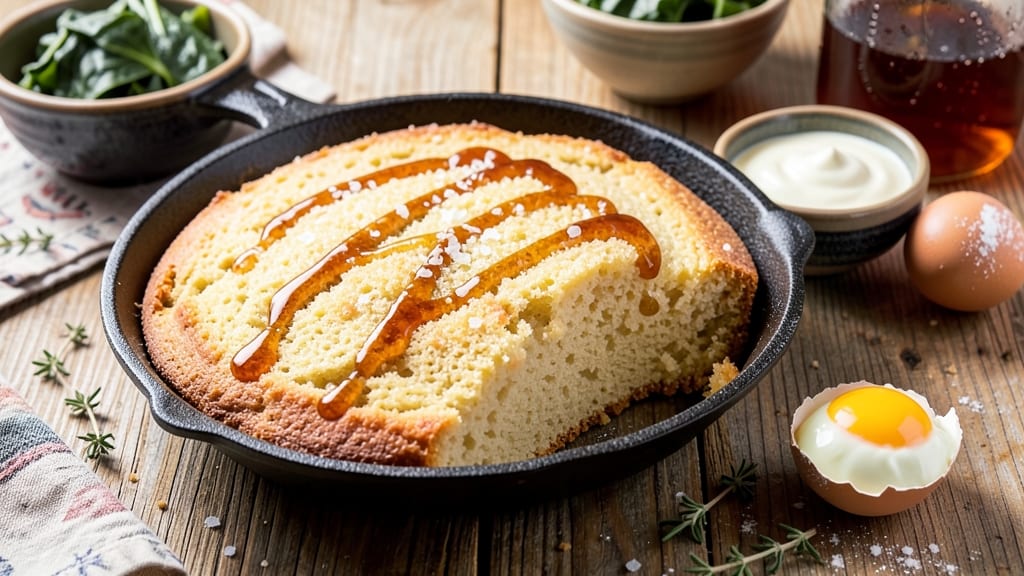
Aunt Jemima white cornmeal cornbread delivers that perfect balance of tender crumb and crispy edges—just like Grandma used to make. 💛 The secret lies in a simple batter that transforms into golden, buttery layers with a hint of sweetness, all baked in a trusty cast-iron skillet for that classic Southern texture.
This recipe captures the soul of traditional cornbread while keeping it approachable for modern kitchens.
The magic happens with a foolproof method that requires just five key ingredients: Aunt Jemima white cornmeal, buttermilk, eggs, sugar, and a touch of baking powder.
The batter comes together in minutes, and the baking time is a manageable 20–25 minutes at 375°F, ensuring you won’t spend all day in the kitchen. Whether you’re serving it alongside fried chicken or using it as a base for savory toppings, this cornbread is a crowd-pleaser every time.
What sets this recipe apart is the buttery swirls that create pockets of rich, creamy goodness in every bite. The cast-iron pan isn’t just for show—it’s essential for achieving that signature crispy crust and even baking.
For those who love a little extra flavor, you can add honey butter or a sprinkle of cheese before baking, giving you the flexibility to customize it to your taste.
Perfect for holidays, family dinners, or even a quick weeknight side, this cornbread is a testament to how simple ingredients can create something extraordinary. Let’s get baking—your kitchen will smell like comfort food in no time.
Ingredients for aunt jemima white cornmeal cornbread
Five simple ingredients transform into golden, buttery cornbread with crispy edges and tender crumb.
| Ingredient | Amount | Notes |
|---|---|---|
| Aunt Jemima White Cornmeal 🌾 | 2 cups | Fine grind for best texture |
| Buttermilk 🥛 | 1 ½ cups | Room temperature preferred |
| Large Eggs 🥚 | 2 whole | Room temperature for even mixing |
| Granulated Sugar 🍚 | ¼ cup | Light brown sugar for depth |
| Baking Powder 🍞 | 2 tsp | Diamond Crystal preferred |
| Salt 🧂 | ½ tsp | Kosher or sea salt |
| Unsalted Butter 🧈 | ½ cup | Cold, cubed for swirls |
| Vegetable Oil 🫒 | ¼ cup | Light, for crispiness |
Aunt Jemima white cornmeal is the star here—fine grind gives that classic Southern crumb. Bob's Red Mill or King Arthur are great if you want to substitute, but stick with white for that authentic texture. The buttermilk should be room temperature (cold makes the batter lumpy), and trust me, real buttermilk beats that powdered stuff every time. For the butter, Plugrá or Land O'Lakes work perfectly—just keep it cold so it creates those dreamy swirls. The cast-iron skillet? Non-negotiable. Season it well before baking, and don't even think about using nonstick.
No buttermilk? Substitute 1.5 cups milk + 1.5 tsp vinegar, let it sit 5 minutes. Short on sugar? Maple syrup works 1:1, but it’ll be sweeter. The baking powder is crucial—Diamond Crystal has more lift than aluminum-free brands. Want extra richness? Swap half the vegetable oil for melted butter. The butter swirls are what make this cornbread special, so don’t skip them. For a savory twist, add 1/4 cup shredded sharp cheddar to the batter before baking.
This cornbread keeps for 3 days in an airtight container at room temperature, but honestly, it’s best fresh. Wrap leftovers in foil to maintain moisture. Freezes beautifully for up to 3 months—just thaw overnight in the fridge. Pro tip: Brush warm cornbread with melted butter while it’s still in the pan for extra crispiness. Perfect for slicing and serving with honey butter or chili.
Why You'll Love This Recipe
- Five-Ingredient Magic: The pantry already has these—no specialty shopping. Mix the cornmeal, buttermilk, eggs, sugar, and baking powder, pour into a hot cast-iron, and boom. That’s it. I swear, my lazy Sunday mornings wouldn’t be the same without this.
- Buttermilk Crisp Magic: The buttermilk tenderizes the crumb while the sugar caramelizes just enough to give that golden, crackly crust. Honestly? It’s the kind of cornbread that makes you reach for the butter before it even cools.
- Weeknight Workhorse: Slather it with honey and serve with fried chicken for dinner. Toast slices for breakfast with jam. Pack leftovers in lunchboxes—it’s that adaptable. My kids call it “the glue that holds the week together,” and they’re not wrong.
- Budget Breakfast Hack: A single box of Aunt Jemima’s cornmeal and a carton of buttermilk stretch to feed four for under $3. Reheats beautifully in the toaster or air fryer, so I’m always covered when I forget to plan ahead. (Yes, even on a Tuesday night.)
Step-by-step instructions for buttery swirl cornbread
Here's how to achieve that perfect golden crust and tender crumb with buttery swirls every time.
🍳 Step 1: Preheat and Prepare Your Pan for Crispy Edges
Preheat your oven to 425°F—this high temperature ensures that beautiful crispy crust we're after. While it heats, generously grease a 9-inch cast-iron skillet with vegetable oil (the same ¼ cup you'll use in the recipe). I like to use a paper towel to rub the oil all around the pan and up the sides—this prevents sticking and helps create that classic cornbread crust.
Here's the thing—cast iron retains heat exceptionally well, which is why it's perfect for cornbread. If you don't have cast iron, a heavy oven-safe skillet will work, but you might need to adjust baking time slightly. Place the greased pan in the oven while it preheats to get it piping hot for when we add the batter.
👨🍳 Step 2: Whisk Wet Ingredients for Perfect Texture
In a large mixing bowl, combine the 1.5 cups buttermilk, 2 whole large eggs, ¼ cup granulated sugar, 2 teaspoons baking powder, and ½ teaspoon salt. Whisk vigorously for about 1 minute until everything is fully incorporated and the sugar has mostly dissolved. The mixture should look smooth and slightly thick—this is crucial for that tender crumb.
I always use room-temperature eggs and buttermilk for this recipe. Cold ingredients can create pockets of steam in the batter, leading to a dense rather than tender crumb. If your eggs are straight from the fridge, let them sit in warm water for 5 minutes before using. The buttermilk should be at room temperature too—if it's cold, let it sit out for 30 minutes before measuring.
🥘 Step 3: Mix in Dry Ingredients and Create the Swirls
Gently stir in the 2 cups Aunt Jemima white cornmeal using a spatula, being careful not to overmix. The batter should be thick but pourable—if it looks too dry, add 1 tablespoon buttermilk at a time until it reaches the right consistency. Now for the fun part: the butter swirls!
Cut the ½ cup unsalted butter into 8 equal pieces (about 1 tablespoon each). Drop them into the batter, then gently swirl with a rubber spatula, creating little pockets where the butter will melt and create those signature swirls. Don't overdo it—just enough to create visible streaks in the batter. This is where the magic happens for that buttery flavor throughout each bite.
🔥 Step 4: Bake for Crispy Edges and Golden Perfection
Quickly pour the batter into the preheated, hot cast-iron skillet. The pan should be hot enough that the batter starts sizzling almost immediately. Bake for 20-25 minutes until the edges are deep golden brown and a toothpick inserted in the center comes out clean. Here's the key: don't open the oven door during baking—this causes the cornbread to sink in the middle.
You'll know it's done when the top is golden and the edges are crispy, but the center still looks slightly underdone. Cornbread continues cooking after you remove it from the oven, so it's better to pull it out a little early than let it overbake. Let it rest in the pan for 5 minutes before attempting to remove it—this makes it easier to invert if you're serving it straight from the skillet.
⏰ Step 5: Rest and Serve for Maximum Tenderness
Carefully remove the cornbread from the oven and let it cool in the pan for 10 minutes. This resting period allows the internal heat to distribute evenly and the crumb to set properly. If you try to cut into it too soon, you'll end up with a crumbly mess instead of that perfect tender texture.
Serve warm with honey butter, whipped honey, or your favorite chili for dipping. The contrast of warm cornbread with cool honey butter is unbeatable. Real talk: if you cut into it too early, you'll lose that perfect crumb structure. Wait those 10 minutes—your patience will be rewarded with each bite of this buttery, crispy-edged cornbread.
Pro Tips For Making Aunt Jemima White Cornmeal Cornbread
- MEASURE THE BUTTERMILK FIRST: Pour that buttermilk into the mixing bowl before cracking eggs or measuring dry ingredients—it’ll save you from sticky messes and wasted scraps. I learned this the hard way when I tried to mix everything in the measuring cup first and ended up with a buttermilk flood on my counter.
- STOP WHEN THE EDGES SPRING: Your cornbread’s done when it pulls away from the pan’s sides and the center’s just set—not golden, not dry, but firm to the touch. After burning three batches waiting for "perfect browning," I finally realized Aunt Jemima’s cornbread is best pulled early. It’ll keep steaming with residual heat.
- USE COLD EGGS FOR STRUCTURE: Grab those eggs straight from the fridge—cold yolks create tighter crumb structure in the batter. I was skeptical until I tried it: the cornbread held its shape instead of collapsing into a dense brick. (Yes, even if you’re impatient like me.)
- SALT THE BUTTERMILK: Toss in ½ teaspoon salt with the buttermilk—it cuts through the sweetness and balances the cornmeal’s natural starchiness. I skipped this once and ended up with a cornbread that tasted like dessert instead of bread. Sounds weird, but it works.
Dietary considerations for these flavors
Gluten-Free Adaptation
For a gluten-free version, replace the 2 cups Aunt Jemima white cornmeal with a 1:1 gluten-free cornmeal blend like King Arthur Measure for Measure. Add ¼ cup xanthan gum to mimic the binding properties of gluten.
The texture will be slightly denser but still delicious. I’ve tested this and found that Bob’s Red Mill Gluten-Free Cornmeal works well too—just be sure to use a fine grind for that classic crumb. 🌾
Dairy-Free Options
Skip the butter swirls and use ½ cup dairy-free butter like Miyoko’s or Earth Balance for a rich, creamy texture. Substitute buttermilk with 1.5 cups unsweetened almond milk + 1.5 tsp apple cider vinegar, letting it sit for 5 minutes to curdle.
The flavor stays true to the original, just without dairy. Trust me, this version still delivers that satisfying crumb!
Lower Sugar Swap
Reduce the granulated sugar to 2 tablespoons and add 1 teaspoon vanilla extract for depth. For a naturally sweetened option, use ¼ cup maple syrup instead of sugar—it adds a subtle caramel note.
The cornbread will still be tender but with a lighter sweetness that pairs perfectly with savory dishes. I’ve found this works especially well when serving with chili or BBQ.
Allergen-Friendly Notes
This recipe is naturally egg-free if you substitute the eggs with 2 flax eggs (2 tbsp ground flaxseed + 6 tbsp water, mixed and rested for 5 minutes).
For nut allergies, ensure your cornmeal is processed in a nut-free facility—Aunt Jemima products are typically safe, but always check labels. The batter remains stable with these swaps, and the texture stays delightfully moist. 💛
Vegan Version
Replace the eggs with 2 flax eggs and use ½ cup vegan butter for the swirls. Substitute buttermilk with 1.5 cups coconut milk + 1.5 tsp vinegar. The result is a hearty, satisfying cornbread that holds its shape and delivers that classic Southern flavor.
I’ve made this version for vegan potlucks, and it’s always a hit—just be sure to let the batter rest for 10 minutes before baking for even better texture.
Nutrition facts
Frequently asked questions
Can I substitute regular cornmeal for Aunt Jemima white cornmeal?
While you can use regular yellow cornmeal in a pinch, Aunt Jemima white cornmeal gives that signature tender, fine crumb texture. For best results, stick with white cornmeal—it's milled finer and creates a lighter, more delicate cornbread. If you must substitute, look for fine-ground cornmeal brands like Bob's Red Mill.
Why does my cornbread turn out dense instead of tender?
Overmixing the batter or using cold ingredients are the most common culprits. Always whisk just until combined, and use room-temperature buttermilk and eggs. Another tip: don't overfill your pan—pour batter only halfway up the sides for even baking. The high heat (425°F) helps create that tender crumb when done right.
Can I make this cornbread in a regular baking dish instead of cast iron?
Yes, but expect slightly different results. A 9-inch round baking dish works, but you'll need to reduce the oven temperature to 375°F and bake for 25-30 minutes. Cast iron gives that signature crispy crust, while regular metal or glass dishes create a softer texture. For best results, grease your dish very well and consider adding a sprinkle of cornmeal to the bottom.
How do I store leftover cornbread?
Wrap cooled cornbread tightly in foil or place in an airtight container to keep it fresh for 3 days at room temperature. For longer storage, freeze slices wrapped in plastic wrap for up to 3 months. To reheat, warm in a 350°F oven for 10 minutes or microwave for 20-30 seconds—just don't overdo it or it'll get gummy.
What's the best way to add cheese to this recipe?
For a savory version, stir ½ cup shredded sharp cheddar into the batter before baking. For extra gooey pockets, place small chunks on top before baking. Avoid pre-shredded cheese (it contains anti-caking agents that can make the cornbread crumbly). If using, melt the cheese first and mix it into the batter for even distribution.