
Side Dishes
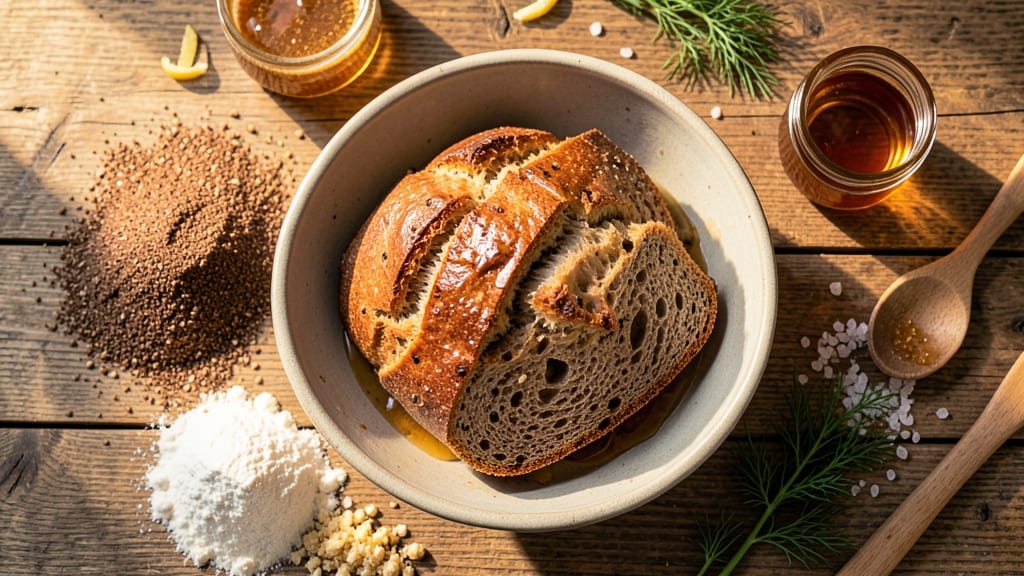
Authentic German rye bread delivers the deep, malty flavor and dense texture that defines traditional Roggenbrot. This recipe captures the essence of German baking with a dark, crisp crust and a crumb packed with seeds and subtle sourness—just like the bread you'd find in a Munich bakery. The secret lies in proper fermentation and hydration, creating that signature hearty texture.
The process begins with a sourdough starter or pre-fermented dough, which develops the bread's characteristic tang and open crumb structure. German rye bread often uses a mix of rye and wheat flour for balance, and we'll incorporate seeds like caraway, flax, or sesame for that classic seedy texture.
The dough requires careful kneading and shaping to achieve the right density before baking.
Once baked, you'll have a loaf with a rich, dark crust that's slightly crisp and a moist, flavorful interior with pockets of air and visible seeds. This bread pairs beautifully with German sausages, cheeses, or even as a base for open-faced sandwiches.
The aroma alone will transport you to a German countryside bakery.
For best results, store the bread wrapped in a towel to maintain freshness for up to a week. The longer it sits, the more complex the flavors become—this is bread that improves with age. Let's get started on creating your own authentic German rye loaf.
Ingredients for authentic german rye bread
Dark rye flour, toasted seeds, and a tangy starter—this is your Munich bakery in a loaf.
| Ingredient | Amount | Notes |
|---|---|---|
| Rye Flour 🌾 | 3 cups | Dark rye for authentic flavor |
| All-Purpose Flour 🌾 | 1 cup | Balances rye's density |
| Active Dry Yeast 🍞 | ¼ oz | Or 2 packets instant yeast |
| Warm Water 💧 | 1 ½ cups | 105-110°F for activation |
| Honey 🍯 | 2 tbsp | Feeds yeast and adds sweetness |
| Salt 🧂 | 1 ½ tsp | Kosher or sea salt preferred |
| Caraway Seeds 🌿 | 1 tbsp | Toasted for enhanced aroma |
| Flaxseeds 🌾 | 1 tbsp | Ground or whole for texture |
| Sesame Seeds 🌾 | 1 tbsp | Toasted for nutty flavor |
| Dark Molasses 🍯 | 2 tbsp | Adds depth and moisture |
| Sourdough Starter 🍞 | 1 cup | Active starter or pre-ferment |
| Cornmeal 🌽 | ¼ cup | For dusting and crust |
The rye flour is non-negotiable here—King Arthur or Bob's Red Mill dark rye are my go-tos, but any dark rye works. If you can't find it, swap in whole wheat at a 2:1 ratio with all-purpose, but you'll lose that authentic malty depth. Caraway seeds are key for that classic German flavor—toast them lightly in a dry pan first to really wake up their aroma. The sourdough starter? If you don't have one, store-bought active dry yeast plus an extra 30 minutes of proofing gets you close, though purists will notice the difference. For the flax and sesame seeds, Trader Joe's or bulk bins are your best bets for freshness and price.
No dark molasses? Maple syrup works in a pinch, though it won't have the same depth of flavor. Running low on caraway? Celery seeds at half the amount mimic that earthy note, though it's not identical. The honey can be swapped for agave or light corn syrup, but honey's floral notes pair beautifully with the rye. For the yeast, if your starter isn't active, proof it in warm water with a pinch of sugar first—it should bubble within 10 minutes. And if you're short on time, instant yeast works too, just mix it directly into the dry ingredients. The cornmeal? Any coarse meal works, but skip it if you're really pressed—just brush the loaf with water before baking.
This dough is a beast—it needs time. Let it ferment 12-18 hours in the fridge for maximum flavor development. The longer it sits, the better it gets. Once baked, store it wrapped in a clean kitchen towel at room temperature—it'll stay fresh for 5-7 days, and the crust gets even more amazing as it stales. For freezing, slice the loaf first, then wrap each slice in parchment and store in a bag. Toast straight from frozen for crispy perfection. And trust me, the first slice out of the oven? Worth every minute of waiting.
Why You'll Love This Recipe
- No-Knead Magic: I swear by this—just mix, let it rise overnight, and bake. The rye flour does all the heavy lifting while you sleep, so you wake up to a warm, crusty loaf with zero effort. Honestly, my lazy Sundays now include this as a given.
- Honey-Rich Depth: That touch of honey isn’t just sweet—it caramelizes into a subtle, complex flavor that lingers. The rye’s earthy bite balances the warmth perfectly, and the yeast gives it a light chew that’s addictive. (Yes, even on a Tuesday night.)
- Bread for Everything: Slice it for breakfast toast, pack it for lunch, or serve thick cuts with butter at dinner. It’s the one loaf that works for charcuterie boards, sandwiches, or just eating straight from the pan. My freezer’s always stocked with extras.
- Budget-Friendly Staple: Rye flour might seem pricey, but a little goes a long way, and this recipe stretches further than most. A single batch feeds my family for days—no wasted crusts or sad leftovers here. Plus, it’s cheaper than buying store-bought German bread that’s half as good.
Step-by-step instructions for authentic German rye bread
Let's create a hearty, traditional German rye loaf with a dark malty crust and nutty crumb.
Activate the Yeast and Prepare the Dough
In a large mixing bowl, combine the 1.5 cups warm water (between 105-110°F), 2 tbsp honey, and 1 cup sourdough starter. Stir until the honey dissolves completely. Sprinkle the 0.25 oz active dry yeast over the surface and let it sit for 5-10 minutes until it becomes frothy—this confirms the yeast is alive and ready to work.
In a separate bowl, whisk together 3 cups rye flour, 1 cup all-purpose flour, 1.5 tsp salt, and the 1 tbsp caraway seeds, 1 tbsp flaxseeds, and 1 tbsp sesame seeds. Toast the seeds in a dry skillet over medium heat for 2 minutes until fragrant, then let them cool before mixing. Pour the dry ingredients into the yeast mixture and stir until a shaggy dough forms. The rye flour will make this dough denser than typical bread dough, so don't worry if it feels stiff.
Knead and Rest the Dough
Turn the dough onto a lightly floured surface and knead for 8-10 minutes by hand (or use a stand mixer with a dough hook for 5-6 minutes). You're aiming for a smooth, slightly tacky dough that's elastic but not overly springy—rye dough behaves differently than wheat dough. If it feels too dry, add 1 tsp warm water at a time until it comes together.
Shape the dough into a loose ball, place it back in the bowl, and cover with a damp towel. Let it rest at room temperature for 1 hour, or until it rises by about 50%. The dough should feel slightly puffy and jiggly when pressed gently. This rest allows the gluten to relax, making it easier to shape later. Real talk: Rye dough doesn't rise as dramatically as wheat dough, so don't stress if it doesn't double in size.
Shape and Proof the Loaf
After the rest, turn the dough onto a lightly floured surface and divide it into 4 equal pieces (about 1 cup each). Roll each piece into a 12-inch rope, then coil them into loose rounds. Place each round seam-side down in a 9x5-inch loaf pan that's been lightly greased with butter or lined with parchment paper. The dough will look underproofed, but that's normal—rye dough doesn't expand much during proofing.
Cover the pans with a damp towel and let the dough proof at room temperature for 2-3 hours, or until it rises just above the rim of the pan. The surface should look slightly domed and feel firm to the touch. If your kitchen is cold, proofing may take longer—just check for readiness by pressing gently. If the dough springs back slowly, it's ready. Here's the thing—overproofing is more of a risk with rye, so don't let it sit too long.
Preheat and Score the Bread
Preheat your oven to 375°F with a Dutch oven inside for 30 minutes. This step is crucial for creating that signature dark, malty crust. While the oven heats, mix 2 tbsp dark molasses with 1 tbsp warm water to create a glaze. Brush this generously over the top of each loaf, then sprinkle 0.25 cup cornmeal evenly on top for texture and color.
Remove the Dutch oven from the oven and carefully transfer the loaves inside. Immediately use a sharp serrated knife or lame to score each loaf in a crosshatch pattern (about ¼-inch deep). This allows the bread to expand properly and creates those beautiful crusty ridges. If you don't have a lame, a sharp knife works—just make sure to angle it correctly to avoid dragging the dough.
Bake to Perfection
Bake the loaves covered for 30 minutes, then remove the lid and bake uncovered for another 20-25 minutes, until the crust is deep brown and almost black in spots, and the internal temperature reaches 205°F (use an instant-read thermometer). The bread should sound hollow when tapped on the bottom. If the crust isn't dark enough after 20 minutes, broil for 1-2 minutes to intensify the color.
Remove the bread from the oven and let it cool in the pan for 10 minutes, then transfer to a wire rack. The crust should be crisp and dark, with a nutty, malty aroma that fills your kitchen. If you're making multiple loaves, bake them one at a time—the oven temperature will drop when you remove the Dutch oven, and you want to maintain that high heat for proper baking. Slice when completely cool for the best texture—this bread is worth the wait!
Pro Tips For Making Authentic German Rye Bread
- Mix the Yeast Wet: Skip the dry mix—dissolve the yeast in the warm water with honey first, then let it foam for 5–10 minutes. I learned this the hard way: adding it directly to the rye flour kills it faster, and rye’s acidity makes yeast sluggish. This step guarantees it’s active before meeting the dense rye.
- Use Lukewarm Water: Test the water—it should feel like bath water (105–110°F/40–43°C). Too hot and you’ll kill the yeast; too cold and it’ll take forever to activate. I used to eyeball it and end up with a sad, flat loaf. A thermometer is worth it here.
- Knead Less, Rest More: Rye dough is stubborn—don’t overwork it. After mixing, let it rest 20 minutes, then do a gentle stretch-and-fold every 30 minutes for 2 hours. Over-kneading makes it tough, and rye’s high fiber needs patience to develop flavor.
- Steam the Oven: Place a metal tray on the oven rack, pour boiling water into it, then slide in your shaped loaf. The steam mimics a bakery’s deck oven and gives that classic dense, chewy crumb. I skipped this once—my bread turned out dry and cracked. Worth the 5 minutes.
Dietary considerations for authentic german rye bread
Gluten-Free Adaptations
For a gluten-free version, replace the 3 cups rye flour with a 1:1 gluten-free rye flour blend (like Bob's Red Mill GF Rye Mix) or a mix of buckwheat flour and gluten-free all-purpose flour.
Add 1 tsp xanthan gum to help bind the dough, as gluten-free flours lack elasticity. The texture will be denser, but still hearty. I’ve tested this with King Arthur GF Measure for Measure, and it works beautifully—just expect a slightly shorter rise time. 🌾
Low-Carb Options
To reduce carbs, swap 2 cups of rye flour for almond flour or coconut flour (use ½ cup coconut flour per cup of rye, as it absorbs more liquid). Add an extra ¼ cup warm water to compensate for the dryness.
The bread will be lower in carbs but higher in fat—perfect for keto diets. For flavor, boost the caraway seeds to 2 tbsp and add 1 tsp cinnamon to mimic rye’s depth. The crust will be nuttier, not malty, but still delicious.
Allergen-Friendly Swaps
If nut allergies are a concern, skip the almond flour and use sunflower seed flour instead—it’s nut-free and adds a mild earthiness. For dairy-free baking, ensure your butter or oil is plant-based (like coconut oil), and use vegan honey (agave or maple syrup) if needed.
The dark molasses is naturally vegan, so no adjustments are necessary there. For egg-free binding, add 1 flax egg (1 tbsp ground flaxseed + 3 tbsp water) to the dough. Trust me, these swaps keep the bread’s soul intact while accommodating dietary needs. ✨
Sourdough-Free Version
No sourdough starter? No problem! Replace the 1 cup starter with an extra ½ cup warm water and 1 tbsp apple cider vinegar to mimic the tang. Add 1 tsp instant yeast directly to the dry ingredients for a quicker rise.
The bread will be slightly less sour but still packed with flavor. For extra depth, add 1 tbsp brewers yeast (available at health stores)—it adds a malty note that’s hard to beat. This version is ready in 3-4 hours, not 18! 💪
Seed-Free Texture
Skip the seeds entirely and boost the flavor with 1 tbsp poppy seeds or 1 tsp smoked paprika instead. For a smoother crumb, omit the seeds and add 2 tbsp chopped walnuts (toasted) for crunch. The dough will still be dense, but the texture will be more uniform.
If you’re avoiding seeds for allergies, the smoked paprika adds a subtle depth that’s surprisingly close to the original. Honestly, this version is my go-to when I’m short on time. 🌟
Nutrition facts
Frequently asked questions
Can I make this German rye bread without a Dutch oven?
Line a baking sheet with parchment paper and bake the loaves uncovered at 375°F for 50-55 minutes, spraying them with water every 10 minutes for steam. The crust won't be as dark, but the texture will still be excellent. For extra crispiness, broil for 2-3 minutes at the end. Just monitor closely—rye bread burns easily!
Why does my rye dough smell so sour?
The tangy aroma comes from the sourdough starter and fermentation process—it's completely normal and actually enhances flavor! If it smells overly vinegary or rotten, your starter may be overfermented. For a milder taste, reduce the starter to ½ cup or proof the dough for less time. The longer it ferments, the more complex (and sour) the flavor becomes.
How do I store German rye bread to keep it fresh?
Wrap the cooled loaf in a clean kitchen towel and store at room temperature for 5-7 days. The crust will harden slightly but softens beautifully when toasted. For longer storage, slice and freeze individual pieces wrapped in parchment—reheat straight from frozen for crispy perfection. Pro tip: The flavor actually improves over 2-3 days as the starches break down!
Can I substitute pumpernickel flour for rye flour?
Pumpernickel is a type of rye flour, but it's darker and sweeter due to added molasses. Use it 1:1, but reduce the molasses in the recipe by 1 tbsp to avoid over-sweetness. The bread will have a deeper color and richer flavor, but the texture may be slightly denser. For authentic results, stick with dark rye flour—it's the heart of German rye bread!
What's the best way to slice this bread for sandwiches?
Use a sharp serrated knife and cut the bread ¼-inch thick for open-faced sandwiches or ½-inch thick for heartier slices. For extra crispiness, toast the slices for 2-3 minutes before assembling. The dense crumb holds up beautifully to toppings like smoked salmon, cream cheese, or German mustard—just don't overfill or it'll fall apart!