
Side Dishes
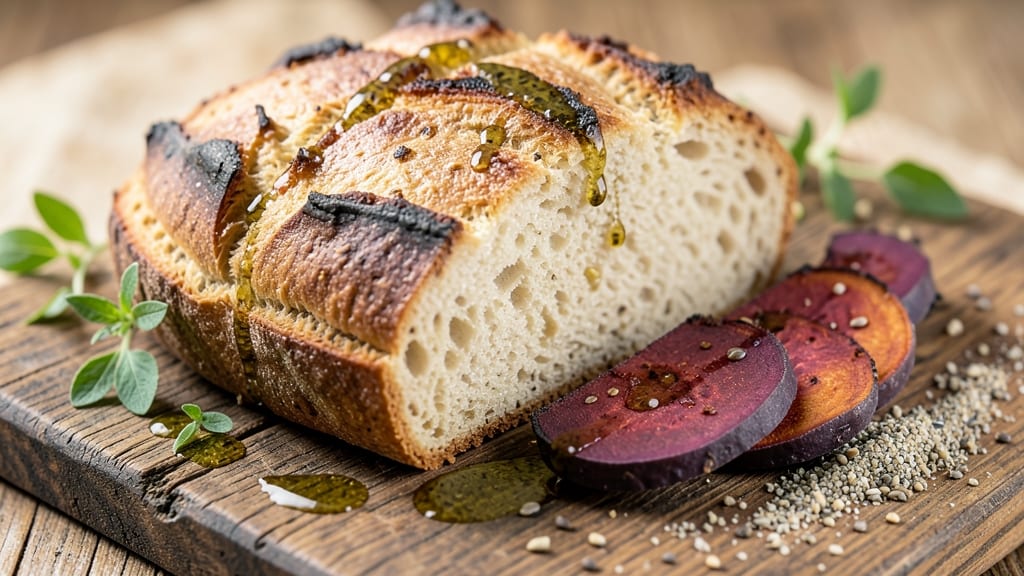
This Akasha bread recipe delivers a vibrant twist on traditional vegan bread with its signature purple sweet potato swirls and perfectly crispy crown. 💫 The combination of rice flour, millet, and sweet potatoes creates a bread that’s not only visually stunning but packed with nutrients and earthy flavor.
What sets this apart is the unique swirl technique that makes every slice a colorful masterpiece.
The beauty of this recipe lies in its simplicity—no yeast, no kneading, and no complicated steps. You’ll mix the dough, shape it into a round loaf, and let the magic happen in the oven where the sweet potatoes caramelize while the crust achieves that coveted crispy texture.
The result is a bread that’s hearty enough to stand alone but perfect for pairing with soups, vegan spreads, or fresh salads.
What makes Akasha bread truly special is its cultural significance as a nourishing, gluten-free staple in many traditional diets. The purple sweet potato swirls add a touch of whimsy while providing extra vitamins, making this more than just bread—it’s a celebration of flavor and nutrition.
Each bite delivers a satisfying crunch from the crown and a tender, slightly sweet interior that keeps everyone coming back for more.
The best part? This recipe is designed to be foolproof, ensuring you achieve that crispy crown every time without the guesswork. Whether you’re baking for a special occasion or simply craving something wholesome, this Akasha bread will elevate any meal with its striking appearance and delicious taste.
Ingredients for akasha bread
Sixteen ingredients transform into vibrant, gluten-free Akasha bread with stunning purple swirls.
| Ingredient | Amount | Notes |
|---|---|---|
| Rice Flour 🌾 | 2 cups | Fine grind for best texture |
| Millet Flour 🌾 | 1 cup | Ensures proper crumb structure |
| Purple Sweet Potatoes 🍠 | 1 ½ lbs | Organic preferred, peeled |
| Flaxseed Meal 🌱 | ¼ cup | For binding, ground fresh |
| Water 💧 | 1 ½ cups | Room temperature preferred |
| Olive Oil 🫒 | ¼ cup | Extra-virgin for richness |
| Baking Powder 🧂 | 1 tsp | Aluminum-free preferred |
| Salt 🧂 | ½ tsp | Fine sea salt |
| Ground Cinnamon 🌿 | 1 tsp | For subtle sweetness |
| Maple Syrup 🍯 | ¼ cup | Pure, grade B preferred |
| Nutritional Yeast 🧀 | ¼ cup | For cheesy flavor depth |
| Sesame Seeds 🌻 | 2 tbsp | For crispy topping |
The purple sweet potatoes are the star here—organic varieties from Whole Foods or your local farmers market deliver the most vibrant color. Look for firm, unblemished tubers with deep purple skin; avoid any with soft spots. Millet flour can be tricky to find, but Bob's Red Mill carries it online or at most natural food stores. For the rice flour, white rice flour works best for that tender crumb, though you can substitute with jasmine rice flour if that's what's available. If you can't find flaxseed meal, ground flaxseeds work just as well—just grind them fresh in a coffee grinder right before mixing.
No purple sweet potatoes? Regular orange sweet potatoes will still give you that sweet, moist interior, though the visual impact will be less dramatic. Swapping millet flour? Buckwheat flour at half the amount works in a pinch, but the texture will be denser. For the nutritional yeast, Fortified brand adds extra B vitamins, but any brand will work. The sesame seeds can be omitted if you're avoiding nuts/seeds, but they add that perfect crunch to the crown. If you're short on time, pre-cook the sweet potatoes by microwaving them whole for 8-10 minutes before peeling and mashing.
Store the dough in an airtight container in the fridge for up to 24 hours before baking—this actually improves the flavor. Once baked, let it cool completely before slicing to prevent crumbly texture. The bread keeps at room temperature for 3 days wrapped in a clean kitchen towel, or you can freeze slices for 3 months. For that perfect crispy crown, brush the top with a little olive oil right before baking—worth the extra minute. I always make a double batch; the extra loaf freezes beautifully for quick toast or sandwiches.
Why You'll Love This Recipe
- No-Fuss Mix-In: I swear by this combo of rice and millet flour—just whisk, pour, and bake. The flaxseed meal adds that subtle nuttiness without extra effort, and honestly, the purple sweet potatoes give it a pop of color that makes even lazy weeknights feel special.
- Earthy Sweet Crunch: That roasted purple sweet potato purée? It’s the star—slightly caramelized, with a texture that’s crisp on the outside and tender inside. Between us, the flaxseed meal gives it a toasty depth that pairs perfectly with soups or just as a snack.
- Meal Prep MVP: Slice it fresh, and it’s toast-worthy for days. Stale? Toss it in a casserole or blend into breadcrumbs—this stuff doesn’t waste. I’ll be real: my lunchbox has never been more exciting (or filling) with these leftovers.
- Pantry Staple Magic: Rice flour, millet, sweet potatoes—ingredients you’re probably already buying. No fancy substitutions, no last-minute grocery runs. The flaxseed meal is the only splurge, but it’s worth it for that satisfying chew and the way it stretches every bite.
Step-by-step instructions for purple sweet potato swirl bread
Transform humble ingredients into a stunning purple swirl loaf with a crispy golden crown.
👨🍳 Step 1: Prepare the Sweet Potato Purée
Preheat your oven to 400°F and pierce the 1.5 lbs purple sweet potatoes several times with a fork. Place them on a baking sheet and roast for 45-50 minutes until completely tender when pierced with a knife. The skin should be slightly charred, adding depth of flavor.
Once cooled enough to handle, peel off the skin and transfer the sweet potatoes to a food processor. Add 0.25 cup maple syrup and 0.25 cup nutritional yeast, then blend until completely smooth. This purée will form the vibrant swirls in your bread. Taste and adjust sweetness if needed—you want it to complement, not overpower, the bread's flavor.
👨🍳 Step 2: Mix the Dry and Wet Ingredients Separately
In a large mixing bowl, whisk together the 2 cups rice flour, 1 cup millet flour, 1 tsp baking powder, 0.5 tsp salt, and 1 tsp ground cinnamon. The millet flour adds a subtle nutty flavor and helps create the perfect crumb structure. Sift the dry ingredients to eliminate any lumps that could affect the bread's texture.
In a separate bowl, combine the 1.5 cups water, 0.25 cup olive oil, and 0.25 cup flaxseed meal. Let this mixture sit for 5 minutes to thicken slightly—the flaxseed acts as a natural binder. The olive oil adds richness that balances the sweetness of the purée while keeping the bread moist.
🥘 Step 3: Combine and Create the Swirl Pattern
Gradually pour the wet ingredients into the dry ingredients while stirring gently with a wooden spoon. Mix just until combined—overmixing develops gluten and can make the bread dense. Once fully incorporated, fold in half of the sweet potato purée using a spatula, being careful not to overwork the dough.
Transfer the dough to a lightly greased loaf pan. Using the back of your spoon, create gentle swirls in the dough, distributing the remaining purée evenly throughout. The swirls should be visible but not forced—they'll spread slightly during baking. Lightly press down on the dough to remove any air bubbles and create a smooth surface for the crispy crown.
🔥 Step 4: Bake to Golden Perfection
Preheat your oven to 375°F with the rack positioned in the middle. Place the loaf pan in the oven and bake for 35-40 minutes until the top is deep golden brown and a toothpick inserted into the center comes out clean. The bread should have risen noticeably, filling about 80% of the loaf pan.
For that signature crispy crown, sprinkle the 2 tbsp sesame seeds evenly over the top during the final 5 minutes of baking. The seeds will toast beautifully, adding both texture and visual appeal. If the top browns too quickly, tent loosely with aluminum foil to prevent over-browning while maintaining crispiness.
⏰ Step 5: Cool and Slice for Maximum Enjoyment
Remove the bread from the oven and let it cool in the pan for 10 minutes before transferring to a wire rack. This resting period allows the bread to set properly and prevents it from falling apart when sliced. The interior should be tender with moist crumb, while the exterior maintains that crispy texture you worked so hard to achieve.
Slice the bread into 6 equal portions (about 1-inch thick each) and serve warm. The contrast between the crispy crown, tender crumb, and vibrant purple swirls makes this bread truly special. Store any leftovers in an airtight container at room temperature for up to 3 days, or freeze for longer storage.
Pro Tips For Making Akasha Bread
- STEAM FIRST, BAKE SECOND: I learned this the hard way—skipping the steaming step makes your bread dense and gummy. Cook the purple sweet potato cubes in a steamer for 10 minutes first (until they’re fork-tender but not mushy), then finish baking. The steam softens them just enough to blend smoothly without turning the batter gluey.
- GRIND FLAXSEED FRESH: Store-bought flaxseed meal goes rancid fast, and stale flax makes your bread taste bitter. Grind whole flaxseeds in a spice grinder right before mixing—just 30 seconds—and keep the rest in the freezer. Freshly ground flax also binds better, so your bread holds shape without crumbling.
- WEIGH FLOURS SEPARATELY: Mixing rice and millet flour by volume leads to uneven texture—one batch turns out crumbly, the next gummy. Weigh them separately (rice flour needs ~1.5 cups, millet ~1 cup for a standard recipe) and sift them together. Millet flour is heavier, so eyeballing it ruins the balance.
- DON’T OVERMIX THE BATTER: This gluten-free dough gets sticky fast, and overworking it turns your bread into a dense brick. Mix just until the flaxseed meal is incorporated—about 2 minutes with a fork. Let the batter rest 5 minutes before shaping; the flours absorb moisture better when they’re calm.
Regional styles of this dish
Indian Ayurvedic Roots
Akasha bread originated in traditional Ayurvedic diets as a nourishing, gluten-free staple made with millet and rice flours. The name "Akasha" means "ether" or "space" in Sanskrit, reflecting its light yet satisfying nature.
In South India, this bread was often served with lentil stews or coconut-based curries, providing sustained energy for daily activities. 🌱
Middle Eastern Millet Bread
Middle Eastern cultures adapted Akasha-style bread using millet flour as a base, creating flatbreads with similar nutritional benefits. These versions often included sesame seeds for extra crunch, much like our recipe. In Lebanon and Syria, millet bread was a common breakfast item, paired with olive oil and fresh vegetables.
The technique of swirling sweet potato purée into the dough became popular in modern vegan adaptations.
Modern Vegan Adaptations
Today's vegan versions of Akasha bread often incorporate sweet potatoes for natural sweetness and vibrant color. This adaptation aligns with contemporary health trends while maintaining the bread's gluten-free, nutrient-dense qualities. Many home bakers now use flaxseed meal as a binder, replacing traditional eggs.
The purple sweet potato swirls in this recipe add an artistic touch while keeping the bread's earthy, wholesome profile. 💫
Japanese Sweet Potato Bread
Japanese sweet potato bread (satsumaimo pan) shares similarities with Akasha bread, though typically made with wheat flour. The technique of roasting sweet potatoes before blending them creates a moist, flavorful interior. In Japan, this bread is often served warm with butter or jam.
Our Akasha version takes this concept further by combining Japanese roasting methods with Ayurvedic millet flour for a gluten-free twist.
African Millet Loaves
West African countries like Nigeria and Ghana have long used millet flour in traditional bread-making. These loaves often feature a crispy crust and soft interior, similar to our Akasha bread.
The addition of sweet potatoes in this recipe draws inspiration from African dishes like sweet potato fufu, where starchy vegetables are combined with grains. The result is a fusion of African and Ayurvedic baking traditions. 🌍
Global Gluten-Free Trends
Akasha bread has gained popularity worldwide as part of the gluten-free movement. Modern adaptations like this purple sweet potato version appeal to health-conscious bakers seeking visually striking, nutrient-rich alternatives.
The use of millet and rice flours provides a perfect balance of texture and nutrition, making it a favorite in gluten-free bakeries across Europe and North America. The swirl technique adds an artistic element that makes this bread perfect for special occasions or everyday enjoyment.
Nutrition facts
Frequently asked questions
Can I make Akasha bread without sweet potatoes?
If you can't find purple sweet potatoes, substitute with 1.5 cups mashed regular sweet potatoes or even 1 cup pumpkin purée for a similar texture. For extra flavor, add 1 tsp vanilla extract or 0.5 tsp cinnamon to the purée. Just reduce the maple syrup to 0.125 cup since orange sweet potatoes are naturally sweeter.
Why does my Akasha bread turn out dense?
Overmixing the dough develops gluten, making the bread dense. Mix just until combined—stop when no dry spots remain. Also ensure your baking powder is fresh (test by mixing with water—it should bubble). Using white rice flour instead of brown helps create a lighter texture, and don't skip the 10-minute cooling period before slicing.
How do I achieve the perfect crispy crown?
Brush the top with 1 tsp olive oil right before baking, then sprinkle sesame seeds during the final 5 minutes. Preheat your oven thoroughly to 375°F and use a dark-colored loaf pan (light pans can cause uneven browning). If the top browns too quickly, tent loosely with foil to maintain crispiness while cooking through.
Is Akasha bread truly gluten-free?
Yes, this recipe is naturally gluten-free as it uses only rice flour and millet flour. Always check your flours for cross-contamination warnings if you have celiac disease. The flaxseed meal and nutritional yeast are also gluten-free. For extra safety, prepare the bread in a clean kitchen where no gluten-containing foods have been recently baked.
Can I make Akasha bread without a loaf pan?
Certainly! Shape the dough into a round free-form loaf on a parchment-lined baking sheet. For a rustic look, dimple the top with your fingers before baking. Bake at 375°F for 30-35 minutes until golden, rotating halfway for even browning. The texture will be slightly denser than pan-baked but still delicious—perfect for serving with soups or dips!