
Side Dishes
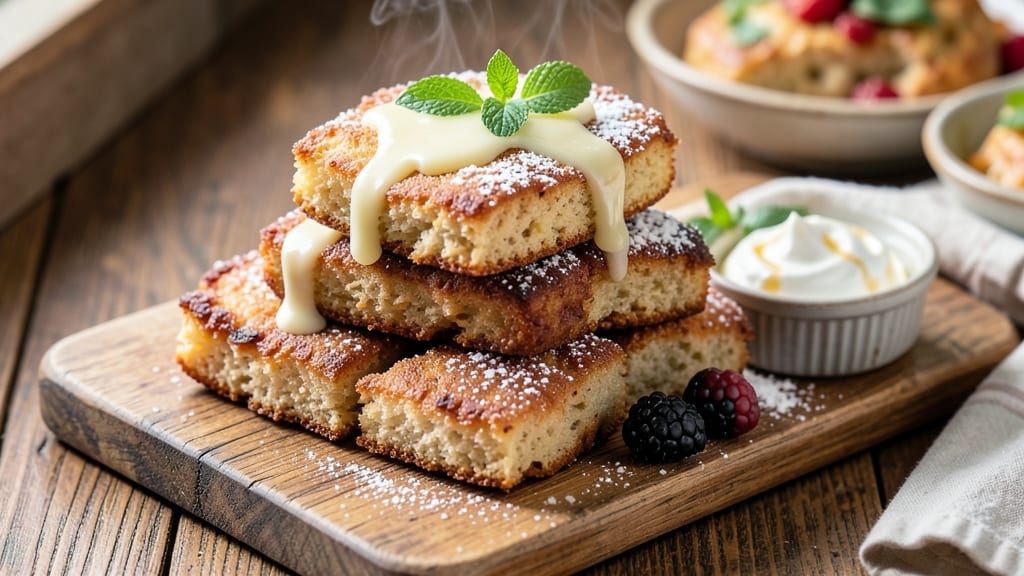
This Amish fritter bread recipe delivers the perfect balance of crispy golden crust and tender, fluffy centers—just like the version you'd find at a Pennsylvania Dutch country breakfast. 🌟 The secret lies in the dough's unique texture, achieved through a precise mix of flour, baking powder, and a touch of sour cream that keeps it moist while the edges develop that signature crunch.
What makes this recipe special is its versatility—traditionally pan-fried in lard or butter for an extra-rich flavor, but equally delicious when baked for a lighter option.
The dough is simple to prepare, requiring just a few pantry staples and about 30 minutes of active time, making it perfect for both weeknight dinners and holiday gatherings.
By the time you pull it from the oven or skillet, you'll have a batch of fritter bread that's crisp enough to hold its shape yet soft enough to melt in your mouth.
The aroma alone—warm, buttery, and just slightly sweet—will have everyone asking for seconds. Serve it alongside eggs, sausage, or even as a dessert with a dusting of powdered sugar.
Whether you're recreating a classic Amish tradition or simply craving a comforting side dish, this recipe delivers restaurant-quality results with a homestyle touch. The best part? It freezes beautifully, so you can make a double batch and enjoy it all week long.
Ingredients for amish fritter bread
Golden crust meets fluffy centers—just these 11 ingredients transform into Amish fritter bread magic.
| Ingredient | Amount | Notes |
|---|---|---|
| All-Purpose Flour 🌾 | 4 cups | Sifted for light texture |
| Granulated Sugar 🍚 | ¼ cup | Light brown preferred |
| Baking Powder 🧂 | 1 tbsp | Aluminum-free preferred |
| Salt 🧂 | ½ tsp | Fine sea salt |
| Sour Cream 🥛 | ½ cup | Full-fat for richness |
| Unsalted Butter 🧈 | ½ cup | Cold, cubed for dough |
| Large Eggs 🥚 | 1 whole | Room temperature |
| Vanilla Extract 🌸 | 1 tsp | Pure, not imitation |
| Milk 🥛 | ¼ cup | Whole milk preferred |
| Lard or Vegetable Shortening 🧈 | ½ cup | For frying or baking |
| Powdered Sugar 🍚 | ¼ cup | For dusting (optional) |
The flour is your foundation—King Arthur or Gold Medal work best for that tender crumb. Sift it first to avoid dense fritters. For the lard or shortening, Amish Country or Crisco are classic choices (lard gives the most authentic flavor). If you're baking instead of frying, reduce the fat by 2 tbsp—the dough will still crisp beautifully. The sour cream keeps things moist while the baking powder ensures that signature rise. Full-fat is non-negotiable here—it's what makes the crust so irresistible.
No lard? Vegetable shortening or even extra butter works in a pinch (though purists might argue). Short on baking powder? Double-check your supply—old powder loses potency. The vanilla extract should be pure—no imitation nonsense here. For the milk, whole milk gives the best texture, but 2% works fine if that's what you've got. If you're making a double batch, divide the dough into balls and freeze them on a tray before bagging—saves time later. The powdered sugar is optional but worth the extra minute for that restaurant-quality finish.
Dough keeps best in the fridge for up to 24 hours—wrap tightly in plastic. For longer storage, freeze the dough balls for 3 months. When ready to cook, let them sit at room temp for 10 minutes before frying or baking. Leftover fritters? Reheat in a 350°F oven for 5-7 minutes—they taste even better the second time around. And trust me, they freeze beautifully—perfect for lazy mornings when you're craving that warm, buttery crunch.
Why You'll Love This Recipe
- No Mixer Needed: I’ll admit, I don’t own a stand mixer, and this dough comes together just fine with a wooden spoon and my hands. The sour cream keeps it tender without requiring a single extra step—just fold, shape, and fry.
- Sweet-Tart Magic: That sugar crust caramelizing on the outside while the inside stays soft? It’s like biting into a golden hug. The baking powder gives it a light lift, but honestly, the real star is how the sour cream keeps it from being too heavy.
- Breakfast or Dessert: Serve them warm with jam for a lazy Sunday morning, or dust with powdered sugar for a quick dessert when company drops by. I’ve even thrown them in a lunchbox—kids devour them cold, and they’re still delicious.
- Fridge Stash Winner: They freeze like a dream, so I make a batch on weekends and pull them out whenever I need a fast, budget-friendly snack. No fancy ingredients, no wasted dough—just pure, crispy satisfaction.
Step-by-step instructions for Amish fritter bread
Here's how to make this golden, crispy bread with soft centers—just like Amish bakeries!
👨🍳 Step 1: Mix the Dough for Perfect Texture
In a large mixing bowl, combine the 4 cups all-purpose flour, 1 tablespoon baking powder, and ½ teaspoon salt. Whisk these dry ingredients together until evenly distributed—this ensures your bread rises properly. In a separate bowl, beat the ½ cup unsalted butter (cold and cubed), ½ cup sour cream, 1 whole egg, 1 teaspoon vanilla extract, and ¼ cup milk until smooth and creamy.
Now gradually pour the wet mixture into the dry ingredients while stirring gently with a wooden spoon. Mix just until combined—you should still see small flour streaks. This prevents overworking the dough, which can make the bread dense. Add the ½ cup lard or vegetable shortening and mix again until fully incorporated. The dough will be slightly sticky, but that's perfect for those crispy edges!
🍳 Step 2: Shape and Chill for Golden Crust
Turn the dough onto a lightly floured surface and knead it gently for about 2 minutes until it comes together. Divide the dough into 4 equal portions (about 1 cup each) and roll each into a 1-inch thick log. Place them on a parchment-lined baking sheet, spacing them about 2 inches apart—this gives them room to expand and crisp.
Cover the shaped dough with plastic wrap and refrigerate for at least 1 hour (or up to 24 hours). Chilling firms up the dough, which helps it hold its shape and creates that beautiful golden crust. I like to let mine chill overnight—it makes all the difference in texture!
🔥 Step 3: Bake to Crispy Perfection
Preheat your oven to 375°F. Once preheated, bake the dough logs for 20-25 minutes until they're deep golden brown on top and the edges are crispy. You'll know they're done when they sound hollow when tapped on the bottom. Rotate the baking sheet halfway through for even browning—this is key to getting that classic Amish fritter bread look!
Here's the thing—don't overbake! The centers should still be soft and slightly gooey inside. If you're unsure, cut one open with a serrated knife. The outside should be crisp, while the inside stays tender and moist. That contrast is what makes this bread so special!
⏰ Step 4: Cool and Dust for Final Touches
Remove the bread from the oven and let it cool on the baking sheet for 5 minutes before transferring to a wire rack. While still warm, dust the tops generously with ¼ cup powdered sugar using a fine-mesh sieve. This adds that signature sweet touch and gives the bread a beautiful finish.
Serve the fritter bread warm for the best experience—it's perfect with butter, jam, or even as a side to hearty breakfasts. The contrast of crispy outside and soft inside is what makes this recipe so irresistible. Store any leftovers in an airtight container for up to 3 days, though I doubt they'll last that long!
Pro Tips For Making Amish Fritter Bread
- MEASURE SOUR CREAM COOL: I learned this the hard way—straight from the fridge, sour cream’s too cold and makes the batter stiff. Let it sit in the bowl for 10 minutes first, or even better, warm it slightly in the microwave for 15 seconds. The batter should be thick but still pourable, not like glue.
- SIFT DRY INGREDIENTS TOGETHER: Skip the "just dump it in" approach. Sift the flour, sugar, baking powder, and salt together in one go—this prevents lumps and ensures even distribution of leavening. I used to measure by scooping, and my fritters turned out dense in spots.
- FRIZZLE IN HOT OIL: The first batch is always the hardest—wait until the oil in your pan is smoking just a little before adding the batter. If it’s not hot enough, the fritters will absorb oil like a sponge instead of getting that crispy crust. A splatter test (drop a bit of batter in—if it sizzles immediately, you’re good).
- DON’T OVERMIX THE BATTER: After adding the sour cream, stir just until combined—maybe 10-12 strokes with a wooden spoon. Overmixing develops gluten, and your fritters will turn out tough instead of light and tender. The batter should look shaggy, not smooth.
Troubleshooting your amish fritter bread
Dough Too Sticky?
If your dough feels too sticky after mixing, resist the urge to add more flour—it can make the bread dense. Instead, wet your hands slightly and work the dough gently on a floured surface.
I find 1-2 extra tablespoons of flour is usually enough to help it come together without overdoing it. Chilling the dough for at least 1 hour also helps it firm up, making it easier to handle when shaping. 🥣
Uneven Browning
For even golden-brown color, rotate your baking sheet halfway through baking. If the top isn't browning enough, tent the bread with aluminum foil for the last 5-10 minutes to prevent over-browning. I also recommend using a light-colored baking sheet—dark pans can cause uneven cooking.
If your bread turns out pale, try increasing the oven temperature to 390°F for the final 5 minutes of baking. 🌟
Dense or Flat Fritters
Dense or flat fritters usually mean the baking powder lost potency or the dough was overmixed. Always use fresh baking powder (test by mixing 1 tsp with water—it should bubble vigorously). Mix the dough just until combined, avoiding overworking.
For extra lift, add ½ teaspoon more baking powder if your batch feels heavy. Also, ensure your oven is fully preheated—cold spots can cause uneven rising. ⚡
Oil Splattering When Frying
If you're frying instead of baking, splattering happens when moisture hits hot oil. Pat the shaped dough logs dry with a paper towel before frying, and keep the oil temperature between 350-375°F. Use a deep, heavy pot (like a cast-iron skillet) and fry in batches to avoid overcrowding.
For extra safety, place a splash guard or wire rack over the pot. I like to fry mine in ½ inch of oil until golden brown on all sides. 🔥
Dough Not Holding Shape
If your dough collapses or loses shape during baking, it likely wasn’t chilled long enough. Let the dough rest in the fridge for the full 1-2 hours to firm up.
For extra stability, shape the logs slightly thicker (1.25 inches instead of 1 inch) and space them farther apart on the baking sheet. If the dough feels too soft, chill it an additional 30 minutes before baking. 💪
Crust Too Hard
A hard crust often means overbaking or too much fat in the dough. Reduce baking time by 2-3 minutes and check for doneness early. If using lard or shortening, stick to the ½ cup measurement—excess fat can make the crust tough.
For a softer crust, brush the baked fritters lightly with melted butter while still warm. If the dough feels greasy, let it rest uncovered in the fridge for 10 minutes before shaping to help absorb excess fat. 🧈
Nutrition facts
Frequently asked questions about Amish fritter bread
Can I make Amish fritter bread without lard?
While lard gives the most authentic flavor, you can substitute with ½ cup vegetable shortening or even extra butter (reduce other fats by 1 tbsp). For a lighter option, use ½ cup olive oil—just know the texture will be slightly different. The key is keeping the fat content consistent for that signature crispy crust.
How do I store leftover fritter bread?
Keep it fresh in an airtight container at room temperature for up to 3 days. For longer storage, freeze the baked fritters (wrapped tightly) for up to 3 months. Reheat in a 350°F oven for 5-7 minutes or microwave for 10-15 seconds—they taste just as good warmed up! The powdered sugar dusting stays best if added fresh after reheating.
Can I use this recipe for a gluten-free version?
Not traditionally, but you can adapt it! Replace the all-purpose flour with a 1:1 gluten-free baking flour blend (like Bob's Red Mill) and add ½ tsp xanthan gum if your blend doesn't include it. Expect a slightly denser texture—these won't be as crispy as the original. For best results, use a gluten-free baking powder and reduce the milk by 2 tbsp to account for moisture differences.
What's the best way to serve Amish fritter bread?
Warm fritters are perfect with butter, jam, or honey for breakfast, or alongside sausage, eggs, or gravy for a hearty meal. For dessert, dust with extra powdered sugar or serve with whipped cream. The contrast of crispy outside and soft inside makes it ideal for holiday gatherings or as a comforting side. Pro tip: Try it with apple butter for a Pennsylvania Dutch twist!
Why does my fritter bread turn out greasy?
Greasy fritters usually mean too much fat in the dough or insufficient baking time. Stick to the ½ cup fat measurement (lard/shortening/butter) and bake until golden brown (20-25 minutes). If your dough feels overly greasy, let it rest uncovered in the fridge for 10 minutes before shaping to help absorb excess fat. For extra crispiness, brush with egg wash before baking.