
Desserts
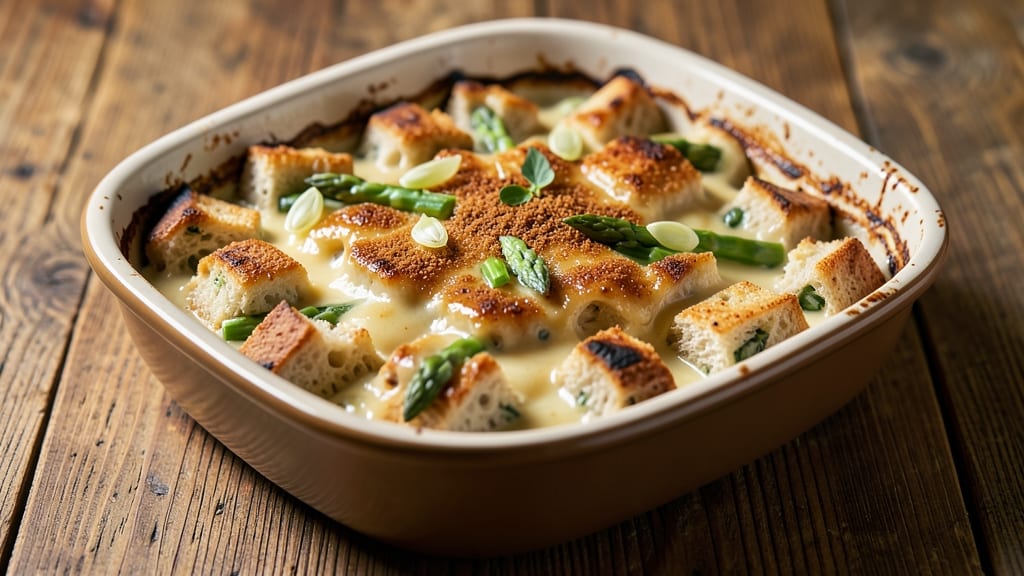
This asparagus bread pudding recipe redefines dessert by blending tender bread, creamy custard, and earthy asparagus into one unforgettable dish. 💛 The secret lies in using day-old bread for perfect texture and folding in blanched asparagus for a subtle, savory depth that elevates every bite.
It’s the kind of recipe that transforms a simple pantry staple into something extraordinary—comfort food meets unexpected sophistication.
The magic happens in the custard, where eggs and milk create a rich, velvety base that soaks into the bread while keeping the asparagus tender and vibrant. A sprinkle of parmesan or herbs adds another layer of complexity, making this pudding feel both nostalgic and refreshingly modern.
The result? A dish that’s restaurant-quality without the fuss, perfect for brunch or a light dinner.
What makes this recipe stand out is its balance—sweet enough to satisfy dessert cravings but with enough savory character to hold its own as a main.
The asparagus adds a bright, fresh contrast to the warm, custardy bread, while a touch of honey or caramelized onions can take it even further. It’s the kind of dish that sparks conversation and leaves everyone asking for seconds.
Whether you’re serving it warm with a drizzle of honey or chilled with a sprinkle of flaky salt, this asparagus bread pudding proves that comfort food can be anything but ordinary. Let’s get started—your taste buds will thank you.
Ingredients for asparagus bread pudding
Six ingredients transform ordinary bread into restaurant-quality asparagus bread pudding.
| Ingredient | Amount | Notes |
|---|---|---|
| Day-Old Bread 🍞 | 8 cups | Crusts removed, cubed into 1-inch pieces |
| Fresh Asparagus 🌱 | 1 lb | Trimmed, blanched for 2 minutes |
| Large Eggs 🥚 | 6 whole | Room temperature for even baking |
| Whole Milk 🥛 | 2 cups | Full-fat for creamy texture |
| Granulated Sugar 🍚 | ½ cup | Adjust to taste for sweetness |
| Unsalted Butter 🧈 | ½ cup | Cold, cubed for custard |
| Vanilla Extract 🌸 | 1 tbsp | Pure, high-quality extract |
| Salt 🧂 | ½ tsp | Fine sea salt preferred |
| Freshly Grated Parmesan Cheese 🧀 | ½ cup | From block, not pre-grated |
| Fresh Thyme Leaves 🌿 | ¼ cup | Chopped, or 1 tsp dried thyme |
| Flaky Sea Salt 🧂 | 1 tbsp | For finishing, Maldon preferred |
| Honey 🍯 | 2 tbsp | For drizzling, local preferred |
The bread is non-negotiable—day-old works best for texture, but if you're fresh out, toast slices first to mimic the same dryness. Sourdough or brioche adds depth, but a good French or Italian loaf is perfect. For the asparagus, trim the woody ends and blanch just 2 minutes—any longer and it turns mushy. Most grocery stores carry asparagus in bunches of 1 lb, but if you're at Whole Foods, grab the pre-trimmed kind for convenience. The Parmesan? Grate it yourself—pre-grated cheese packs too much anti-caking salt and lacks flavor. Store it in the freezer to keep it extra fresh.
No day-old bread? Toast stale bread slices or use baguette scraps—just make sure they're dry. Swap the asparagus for zucchini or green beans, but blanch them first. Running low on vanilla? Vanilla bean paste works in a pinch. The custard can be made ahead—just whisk eggs and milk separately until combined, then fold in the butter at the last minute. For extra richness, replace half the milk with heavy cream. If you're feeling adventurous, add a pinch of nutmeg to the custard for warmth.
This pudding is best served the next day—flavors meld overnight like magic. Store leftovers in an airtight container for 4 days in the fridge, or freeze for 3 months. Reheat in a 350°F oven for 15 minutes with a splash of milk to revive moisture. The honey drizzle keeps for 6 months in a sealed jar, and the thyme stays potent for 3 weeks in the fridge if wrapped tightly. Portion into ramekins before baking for individual servings—great for brunch or holiday gatherings.
Why You'll Love This Recipe
- No-Bake Magic: I swear by this—just toss in stale bread, whisk eggs and milk, and bake. Zero chopping (the asparagus stays whole), zero stress. Honestly, the hardest part is deciding whether to use sourdough or brioche.
- Sweet-Savory Balance: That caramelized asparagus—tender but still crisp in spots—cuts through the custardy richness like a fresh breeze. The sugar in the custard makes the asparagus taste luxurious, not like a side dish.
- Weeknight Reinvented: I make this on Thursdays when I’m too tired for dinner plans. Serve it warm with a sprinkle of Parmesan, or let it cool for a breakfast-for-dinner twist. Even my picky husband asks for seconds.
- Zero-Waste Winner: Uses up day-old bread and asparagus stalks (yes, the woody ends go in the custard—trust me). Leftovers? Just reheat with a splash of milk. Budget-friendly, too—eggs and milk stretch this into a crowd-pleaser.
Step-by-step instructions for asparagus bread pudding
Transform simple ingredients into a rich, savory-sweet bread pudding with vibrant asparagus and herbal notes.
👨🍳 Step 1: Blanch and Chop the Asparagus
Start by trimming the tough ends from the 1 lb fresh asparagus, leaving you with about 10-12 inches of tender spear. Bring a pot of salted water to a boil and blanch the asparagus for exactly 2 minutes—this preserves color and texture. Immediately plunge into ice water to stop cooking, then drain well.
Using a sharp knife, cut the blanched asparagus into ½-inch pieces. Set aside—you'll use these later for both flavor and visual appeal. The bright green color will infuse the custard beautifully, but don't skip the blanching step. Raw asparagus will make the pudding bitter and watery.
🍳 Step 2: Prepare the Custard Base
In a large mixing bowl, whisk together the 6 whole large eggs (room temperature), 2 cups whole milk, 0.5 cup granulated sugar, 1 tbsp vanilla extract, and 0.5 tsp salt until completely smooth. The mixture should be pale yellow and evenly combined—no streaks of egg or sugar.
Melt the 0.5 cup unsalted butter in a small saucepan over low heat until fully liquid but not browned. Let it cool slightly, then whisk it into the egg mixture. This butter adds incredible richness that balances the savory asparagus. The custard should now have a velvety, slightly thickened consistency.
🥘 Step 3: Assemble the Bread Pudding
In a greased 9x13-inch baking dish, combine the 8 cups day-old bread cubes (crusts removed) with the chopped asparagus pieces and 0.25 cup chopped fresh thyme leaves. Pour the custard mixture evenly over the bread, pressing down gently to ensure all pieces are saturated. Let it sit for 10 minutes—this allows the bread to absorb some of the liquid before baking.
Sprinkle the top evenly with 0.5 cup freshly grated Parmesan cheese. This adds a sharp, salty contrast that complements the sweet custard and asparagus. Press down lightly so it adheres to the top layer. The cheese will melt into a golden, flavorful crust during baking.
🔥 Step 4: Bake Until Golden and Set
Preheat your oven to 350°F. Bake the bread pudding for 45-50 minutes until the edges are golden brown and the center just barely jiggles when shaken. A toothpick inserted should come out with a few moist crumbs—not wet batter.
Real talk: Your oven might run hot, so start checking at the 40-minute mark. If the top browns too quickly, tent loosely with foil. The pudding should be custardy in the center but set enough to hold its shape when served. Remove from oven and let rest for 10 minutes—this prevents crumbling when you slice.
🍽️ Step 5: Finish and Serve Warm
Drizzle the warm pudding with 2 tbsp honey and sprinkle generously with 1 tbsp flaky sea salt. The honey adds a bright contrast to the savory flavors, while the salt enhances all the components. Serve immediately while still warm from the oven.
Cut into squares and arrange on warm plates. Each bite should deliver tender bread soaked in rich custard, bright asparagus flecks, and the sharp bite of Parmesan. The contrast of sweet honey and salty flakes on top makes this savory bread pudding truly special—comfort food elevated.
Pro Tips For Making Asparagus Bread Pudding
- Bake at 325°F—Not Higher: I learned this the hard way—rushing the temperature turns the bread pudding gummy inside while burning the edges. The asparagus needs time to soften properly, and 325°F gives it that perfect custardy center without drying out the bread. (Yes, even if you're impatient like me.)
- Blanch Asparagus First: Skip the raw, tough spears—blanch them for 2 minutes in boiling salted water, then shock in ice water. This softens them just enough to melt into the custard without making the pudding watery. Pro move: Trim the ends after blanching so you don’t waste time.
- Soak Bread in Cold Milk: I used to pour hot milk over the bread cubes, thinking it’d speed things up. Wrong. Cold milk absorbs evenly without turning the bread soggy or steaming the eggs prematurely. Let it sit for 10 minutes—just enough to soak but not drown.
- Add a Pinch of Salt to the Egg Mixture: The bread and milk already carry some salt, but the eggs? Often bland. A tiny pinch (1/8 tsp) in the egg-sugar mix balances the sweetness and rounds out the flavor. Trust me, your taste buds will notice the difference—it’s not just about sugar here.
Regional styles of this recipe
Southern U.S. Style
In the American South, bread pudding often leans sweeter with a touch of bourbon or cornmeal. For a regional twist, fold in 2 tbsp bourbon with the custard and add ¼ cup cornmeal to the bread cubes.
Top with a sprinkle of pecans and a drizzle of maple syrup instead of honey. The bourbon adds depth, while the cornmeal gives the pudding a subtle crunch. Serve warm with a scoop of vanilla ice cream for a true Southern dessert experience. 🌶️
French-Inspired Version
For a French-inspired take, replace the thyme with 1 tbsp fresh tarragon and add ½ tsp ground nutmeg to the custard. Swap the Parmesan for ½ cup grated Gruyère cheese> and finish with a dusting of powdered sugar> and a few extra tarragon leaves.
The Gruyère adds a nutty, creamy richness that pairs beautifully with the asparagus. This version works wonderfully as a brunch dish, especially when served with a side of crispy bacon. 🥖
Italian Herb Twist
Inspired by Italian flavors, this variation swaps thyme for 1 tbsp fresh rosemary and 1 tbsp fresh basil, finely chopped. Add ¼ cup sun-dried tomatoes>, chopped, to the bread cubes for a tangy, umami kick. Top with extra Parmesan and a drizzle of balsamic glaze> before serving.
The herbs brighten the dish, while the sun-dried tomatoes add a pop of color and acidity. This version is perfect for a light dinner or as a side to grilled meats. 🌿
German-Inspired Savory
For a heartier, savory take, reduce the sugar to ¼ cup> and add ½ tsp smoked paprika> to the custard. Replace the honey with a drizzle of Dijon mustard> and top with crumbled feta cheese> and extra flaky salt.
This version leans into the asparagus's earthy notes, making it a great side for roasted meats or a vegetarian main. The smoked paprika adds warmth, while the feta brings a salty tang that balances the dish beautifully. 🍖
Mediterranean Fusion
Bring Mediterranean flavors to the table by adding ½ cup chopped kalamata olives> and 2 tbsp capers> to the bread cubes. Use feta cheese> instead of Parmesan and finish with a drizzle of extra virgin olive oil> and a sprinkle of crumbled za’atar>.
The olives and capers add briny depth, while the za’atar brings a nutty, herby finish. This version is perfect for a light lunch or as a side to grilled fish. 🌊
Nutrition facts
Frequently asked questions
Why does the recipe call for day-old bread?
Day-old bread is ideal because it's drier and absorbs the custard better than fresh bread, creating a perfect texture. Fresh bread can turn soggy during baking. If you only have fresh bread, toast the slices first to remove excess moisture before cubing. This ensures your asparagus bread pudding stays tender and not gummy.
Can I substitute frozen asparagus?
Fresh asparagus is best for this recipe because it maintains its vibrant color and texture. However, if you must use frozen, thaw it completely first, then blanch for 3 minutes instead of 2 to ensure it's fully cooked. Avoid using thawed frozen asparagus straight from the package—it can make the pudding watery and lose its bright green hue.
How do I make this recipe vegetarian?
This recipe is already vegetarian-friendly since it doesn't include meat or fish. The custard uses eggs and milk, which are dairy products. For a vegan version, replace eggs with ½ cup aquafaba (chickpea brine) or a flax egg (1 tbsp ground flaxseed + 3 tbsp water), and use a dairy-free milk alternative like almond or oat milk. The texture may be slightly different but still delicious!
Can I make this ahead of time?
This asparagus bread pudding tastes even better the next day as the flavors meld. Assemble it in the baking dish, cover, and refrigerate for up to 24 hours before baking. For best results, bake it straight from the fridge—just add 5-10 extra minutes to the cooking time. Leftovers keep well in an airtight container for 4 days in the fridge.
What if my bread pudding is too dry?
If your pudding turns out dry, it likely absorbed too much custard during baking. Next time, try adding 2 tbsp extra milk to the custard mixture before pouring it over the bread. You can also brush the top with a little milk or cream before baking to add moisture. Avoid overbaking—remove it when the center is just set and let it rest for 10 minutes before slicing.